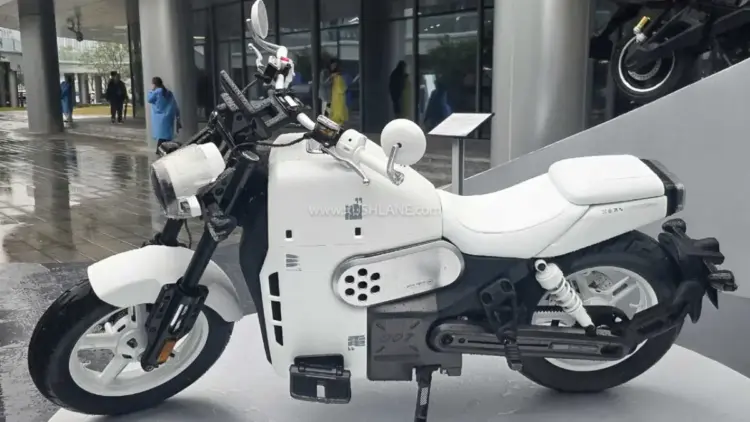
WUHU, CHINA – Chery Holding Group, the Chinese automotive powerhouse behind globally recognized brands such as Omoda, Jaecoo, and Jetour, has officially signaled its aggressive entry into the electric two-wheeler sector. In a move that mirrors the diversification strategies of global giants like BMW and Honda, Chery is transitioning from a pure-play passenger vehicle manufacturer to a comprehensive mobility provider. By leveraging its expertise in New Energy Vehicle (NEV) technology, the company aims to disrupt the premium electric motorcycle market with advanced artificial intelligence (AI) integration and range-extending technology.
The announcement, made during a high-profile technology event at Chery’s headquarters in Wuhu, introduces the "Cinnox" brand—a dedicated subsidiary focused on high-end, tech-heavy electric bikes. With the recent approval from China’s Ministry of Industry and Information Technology (MIIT) to commence motorcycle production, Chery is no longer just a spectator in the micro-mobility space but a formidable new contender.
1. Main Facts: A Dual-Track Strategy for Market Penetration
Chery’s entry into the motorcycle industry is characterized by a dual-track strategy. On one hand, the company is addressing regulatory requirements and low-end market demand with a budget-friendly electric moped. On the other, it is showcasing its technological prowess through the Cinnox brand, targeting the "prosumer" and enthusiast segments with high-performance machines.
The Cinnox Grow C3: The World’s First AI-Powered EREV Cruiser
The flagship of Chery’s new venture is the Grow C3. Positioned as a "Range-Extended Electric Vehicle" (EREV) cruiser, the Grow C3 addresses the primary hurdle of electric motorcycling: range anxiety. Unlike traditional Battery Electric Vehicles (BEVs) that rely solely on a plug-in charge, the Grow C3 utilizes a small, highly efficient petrol generator that charges the battery while the bike is in motion. This ensures that the propulsion remains 100% electric, but the operational range is significantly extended, making it viable for long-distance touring.
The Electric ADV Scooter
Complementing the cruiser is a pure electric Adventure (ADV) scooter. This model is designed for the modern urban commuter who occasionally ventures onto unpaved trails. Boasting a range of 150 to 200 kilometers per charge, the ADV scooter is notable for its compatibility with automotive-grade charging infrastructure, allowing it to utilize the same charging stations as Chery’s SUVs.

The Regulatory "Trojan Horse"
MIIT filings have also revealed a low-cost electric moped that bears a striking resemblance to the classic Yamaha Vino. Analysts suggest this is a tactical move. By registering a high-volume, low-cost moped, Chery can streamline the acquisition of manufacturing licenses and establish supply chain logistics before scaling up production for its premium Cinnox lineup.
2. Chronology: From SUV Dominance to Two-Wheeled Ambition
The journey of Chery into the motorcycle sector has been a calculated progression over the last 24 months, coinciding with the global shift toward electrification.
- Late 2022 – Early 2023: Chery’s R&D departments began exploring "last-mile" mobility solutions to complement their SUV lineups, specifically for the Omoda and Jaecoo brands which target younger, tech-savvy demographics.
- Early 2024: Chery’s commercial vehicle division formally applied for a motorcycle manufacturing license from the Chinese government. This was a critical legal step, as motorcycle production in China is strictly regulated and requires separate certification from passenger car production.
- Mid-2024: First sightings of the Yamaha-styled moped appeared in MIIT regulatory filings. These filings confirmed that Chery had secured the necessary permits to move forward with mass production.
- October 2024: At a dedicated technology showcase in Wuhu, Chery officially unveiled the Cinnox brand. This event served as the global debut for the Grow C3 and the ADV scooter, moving the project from "rumor" to "reality."
- Looking Ahead (2025-2026): Chery is expected to begin domestic sales in China before exploring export markets in Southeast Asia, Europe, and potentially India, where the company has already shown interest in the automotive sector.
3. Supporting Data: Specifications and Market Context
The technical specifications revealed during the Wuhu event highlight Chery’s intent to lead through innovation rather than just price competition.
Technical Breakdown of the Grow C3
| Feature | Specification |
|---|---|
| Powertrain | Range-Extended Electric (EREV) |
| Propulsion | High-torque Electric Motor |
| Generator | Small-displacement Petrol Engine (Charging only) |
| Connectivity | AI-Integrated Dashboard with OTA Updates |
| Features | V2L (Vehicle-to-Load) Capability, Digital Console |
| Style | Low-slung Cruiser |
The V2L (Vehicle-to-Load) capability is a standout feature, allowing the motorcycle to act as a mobile power bank. This enables riders to power camping equipment, laptops, or even other electric bikes, effectively positioning the Grow C3 as a lifestyle tool rather than just a vehicle.
The Moped Segment: A Tactical Baseline
The registered electric moped is expected to utilize:

- Battery Type: Lead-acid (for cost-efficiency) or low-capacity Lithium-ion.
- Motor: Hub-mounted motor to maximize space and reduce maintenance.
- Target Price: Estimated at approximately CNY 2,000 to 3,500 (USD $280 – $490), placing it in direct competition with local giants like Yadea and Emma.
Market Dynamics
The Chinese electric two-wheeler market is the largest in the world, with over 30 million units sold annually. However, the market is currently bifurcated between ultra-cheap delivery mopeds and high-end performance bikes from brands like CFMoto or Zeeho. Chery’s entry via the Cinnox brand aims for the "middle-upper" segment, where tech integration (AI, OTA, EREV) provides a unique selling proposition.
4. Official Responses and Strategic Vision
During the technology event, Chery executives emphasized that the move into motorcycles is a natural extension of their "461" strategy, which focuses on multi-dimensional growth across different mobility sectors.
A Chery Spokesperson stated:
"Our entry into the two-wheeler space is not merely about adding a new product line. It is about creating a mobility ecosystem. By bringing automotive-grade intelligence, AI, and range-extending technology to motorcycles, we are solving the pain points that have traditionally held back the electric motorcycle industry."
Industry analysts have noted that Chery’s use of the EREV (Range Extender) system is particularly savvy. While BEV motorcycles struggle with the weight-to-range ratio (adding more batteries adds too much weight), an EREV system allows for a smaller, lighter battery while maintaining a total range that exceeds 400-500 kilometers. This mirrors the success seen in the Chinese SUV market, where EREV models from brands like Li Auto have outsold many pure-electric competitors.
Regarding the "cloned" moped design, officials remained tight-lipped, but insiders suggest the design is a "placeholder body" intended to house Chery’s proprietary electrical architecture while they finalize the aesthetic design for the production version.

5. Implications: A Disruptor on the Horizon
Chery’s foray into motorcycles carries significant implications for both the domestic and international markets.
Impact on Established Motorcycle Manufacturers
Traditional manufacturers like Honda, Yamaha, and Kawasaki have been slow to transition their high-performance lineups to electric. By introducing an EREV cruiser, Chery is bypassing the "battery-only" limitations that have hindered traditional brands. If Chery can successfully scale this technology, it may force Japanese and European manufacturers to accelerate their own hybrid or range-extended projects.
The "Automotive-Two-Wheeler" Synergy
Chery’s ADV scooter’s ability to use automotive chargers is a pivotal development. Standardizing charging ports across cars and bikes reduces "range anxiety" and simplifies the infrastructure requirements for cities. It also allows Chery to offer "bundle" deals—imagine purchasing a Chery Tiggo SUV and receiving a Cinnox electric scooter as a secondary vehicle, both sharing the same home charging ecosystem.
Global Expansion and the Indian Market
Chery has long harbored ambitions for the Indian market, particularly through its Omoda and Jaecoo brands. Given India’s massive appetite for two-wheelers and the government’s push for electrification via the FAME schemes, the Cinnox brand could serve as Chery’s "wedge" into the subcontinent. A high-tech, long-range electric cruiser would appeal to India’s growing "premium biking" culture, currently dominated by Royal Enfield and KTM.
Conclusion: The Tech-First Approach
Chery is not trying to build a traditional motorcycle; it is building a "smartphone on two wheels." By integrating AI, OTA updates, and EREV technology, the company is targeting a new generation of riders who prioritize connectivity and convenience over mechanical nostalgia. As the Cinnox brand prepares for its commercial launch, the global motorcycle industry will be watching closely to see if a car company can truly master the art of the ride.