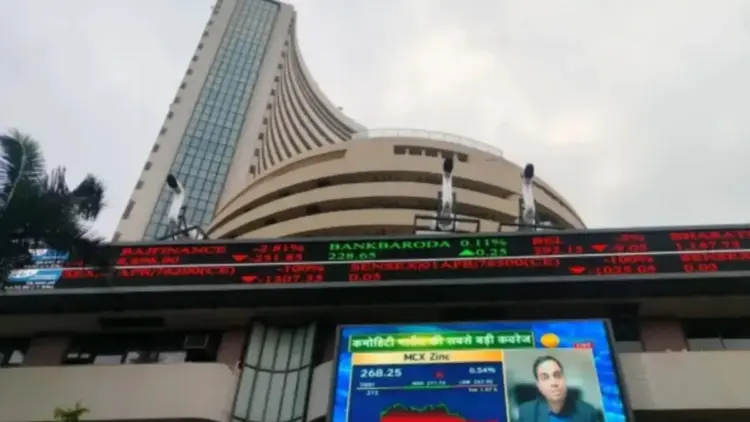
Mumbai, India – India’s benchmark equity indices, the Sensex and Nifty 50, closed significantly lower in a recent trading session, succumbing to a confluence of adverse global and domestic factors. A sharp surge in crude oil prices, particularly Brent crude breaking past the $114 per barrel mark, coupled with weak international market sentiment and widespread selling pressure across key sectors, rattled investor confidence on Friday. The Indian rupee simultaneously weakened against the US dollar, while gold and silver prices also registered declines, painting a somber picture for the country’s financial landscape.
The market downturn was broad-based, with nearly all sectoral indices on the National Stock Exchange (NSE) ending in negative territory. The Nifty Metal and Nifty Consumer Durables indices bore the brunt of the selling, experiencing the steepest declines. This pronounced correction highlights growing concerns over inflation, rising input costs, and the potential impact on corporate earnings and consumer demand.
A Day of Red on Dalal Street
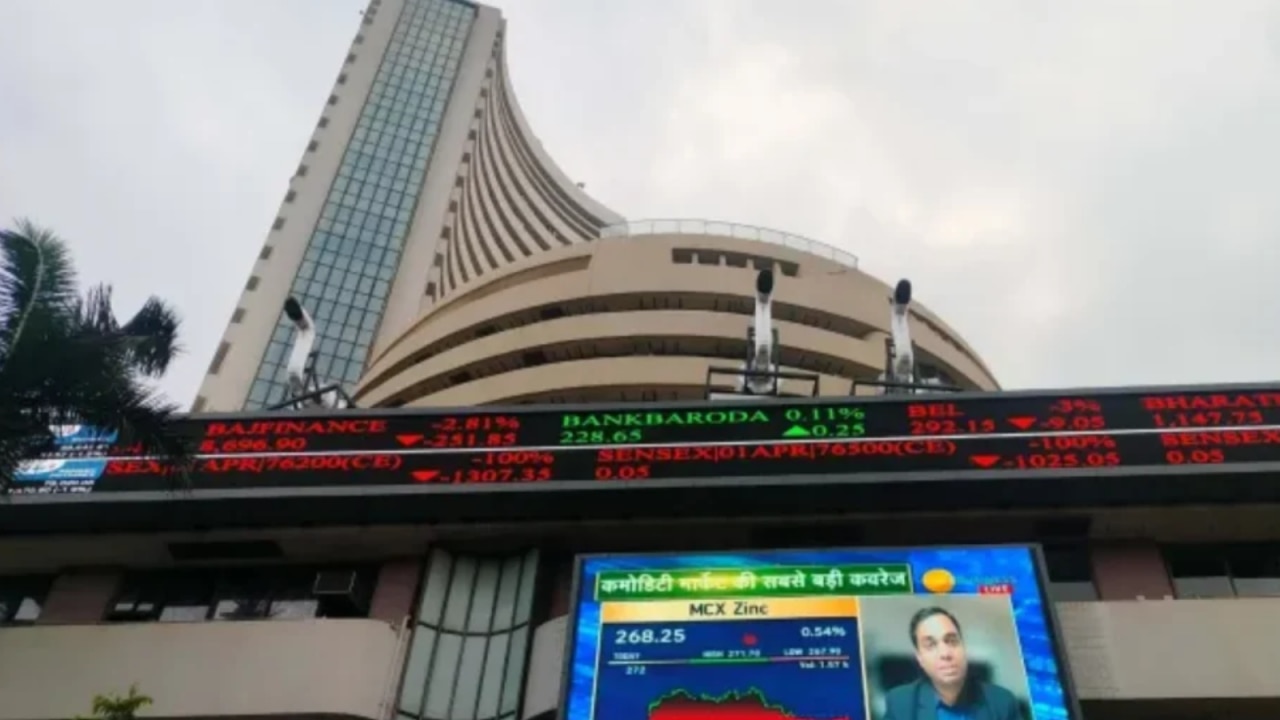
The recent trading session proved challenging for Indian equities as benchmark indices registered notable declines. The NIFTY 50 index concluded the day at 22,600, shedding 87.65 points, or 0.39 per cent, from its previous close. Similarly, the BSE SENSEX settled at 73,123.83, down 125.56 points, representing a 0.17 per cent fall. This downward trajectory was driven by a potent mix of external pressures and internal market dynamics, chief among them being the relentless rise in global crude oil prices, which directly impacts India’s import bill and inflationary outlook.
Adding to the domestic woes, a broad-based selling spree was observed across various sectors, signaling a cautious, if not outright bearish, sentiment among investors. This market correction was not isolated to India, reflecting a broader global trend of risk aversion triggered by a complex interplay of geopolitical tensions, economic uncertainties, and monetary policy concerns from major central banks. The rupee’s depreciation and the fall in precious metal prices further underscored the prevailing market anxiety, indicating a flight to safety in the dollar and a general unwinding of riskier assets.
Chronology of a Downturn: Intraday Dynamics and Contributing Factors
Friday’s trading session for Indian equities was characterized by persistent selling pressure, reflecting a cautious mood that permeated global markets. The day’s trajectory saw an initial bout of optimism quickly dissipate, giving way to a sustained decline as investors reacted to unfolding economic and geopolitical developments.
Pre-Market Jitters and Opening Bell
The trading day commenced with an undercurrent of apprehension, largely influenced by overnight developments in international markets and commodity prices. Asian markets offered mixed cues, with Japan’s Nikkei 225 already showing weakness, while some other indices like Hong Kong’s Hang Seng and South Korea’s KOSPI managed marginal gains. However, the overarching concern was the trajectory of global crude oil prices, which had been steadily climbing, signaling potential inflationary headwinds. This pre-market anxiety translated into a subdued opening for Indian indices, with the Sensex and Nifty opening flat to marginally lower. Early trades saw some attempts at recovery, particularly in select defensive sectors, but these were short-lived as the weight of negative news began to assert itself.

Mid-Day Pressure and Intensifying Sell-Off
As the trading session progressed towards mid-day, the selling pressure intensified, particularly as news of Brent crude oil prices breaching the $114 per barrel mark became a dominant narrative. This critical psychological and economic threshold triggered a wave of concern among market participants, especially given India’s heavy reliance on oil imports. The surge in crude was attributed to escalating tensions in the Middle East, including reports of tanker strikes, which threatened global supply chains.
Simultaneously, "weak global cues" began to weigh more heavily on sentiment. Concerns surrounding the potential for aggressive interest rate hikes by major central banks, driven by persistent inflation, coupled with worries about the global economic growth trajectory, dampened investor appetite for risk. This translated into a broader market sell-off, with specific sectors showing pronounced weakness. Metal stocks, highly sensitive to commodity prices and global demand, began their sharp descent. Consumer durables, often a bellwether for discretionary spending, also came under significant pressure as fears of inflation impacting household budgets mounted. The India VIX, a key indicator of market volatility, also showed an upward trend, signaling increased investor apprehension and an expectation of greater price swings in the near term.

Closing Bell: A Bleak Friday for Investors
The latter half of the trading session saw no significant respite, with selling pressure sustaining until the closing bell. Retail and institutional investors alike seemed keen to offload positions, particularly in mid- and small-cap segments, which experienced a disproportionately sharp correction compared to the benchmark indices. This indicated a potential unwinding of leveraged positions and growing valuation concerns in the broader market. The Nifty 50 and BSE Sensex ultimately closed firmly in the red, marking a difficult end to the trading week. The overall market breadth remained negative, with a significantly higher number of declining stocks compared to advancing ones. The day’s performance underscored the market’s vulnerability to external shocks and the sensitive balance between global economic realities and domestic investor sentiment.
Deeper Dive: Unpacking the Data and Drivers
The market’s performance on Friday was a direct consequence of several interconnected global and domestic factors, each contributing to the prevailing bearish sentiment. Understanding these drivers is crucial to appreciating the full scope of the financial movements observed.

The Relentless Ascent of Crude Oil
The most immediate and impactful catalyst for the market’s decline was the dramatic surge in crude oil prices. Brent crude, the international benchmark, gained 1 per cent to reach $114.31 per barrel at the time of reporting. This significant rise was primarily fueled by escalating geopolitical tensions in the Middle East, including reports of tanker strikes and ongoing regional conflicts, which threaten to disrupt vital supply routes and reduce global supply. Beyond immediate events, the broader supply-demand dynamics also play a role, with global demand gradually recovering while OPEC+ nations maintain a cautious approach to increasing output. For India, a net importer of over 80% of its crude oil needs, such a surge has profound implications. It directly inflates the country’s import bill, widens the current account deficit (CAD), and exerts immense pressure on the rupee. More critically, higher crude prices translate into increased domestic fuel costs, which then feed into broader inflation, affecting everything from transportation to manufacturing and consumer goods prices.
Global Cues: A Web of Worries
The term "weak global cues" encompasses a range of international developments that collectively dampened investor sentiment. Foremost among these are concerns surrounding the monetary policy stance of major central banks, particularly the US Federal Reserve. Persistent inflation figures globally suggest that central banks might be compelled to adopt a more aggressive stance on interest rate hikes, potentially leading to a slowdown in global economic growth. Such a scenario typically prompts investors to shift away from riskier emerging markets like India towards safer assets.

Furthermore, specific regional anxieties contribute to the global unease. Economic slowdown fears in China, geopolitical instability in Europe, and ongoing supply chain disruptions continue to cast a shadow over the global recovery. The expert commentary also alluded to a "global equity sell-off led by concerns around artificial intelligence." This likely refers to worries about the rapid valuation increases in AI-related stocks, potentially signaling a bubble or a need for a market correction in that segment, which can have ripple effects across technology-heavy indices globally.
Sectoral Carnage: Metals and Consumer Durables Bear the Brunt
The selling pressure on Friday was not uniform but was particularly pronounced in certain sectors. Nifty Metal emerged as the worst performer, plummeting by 2.98 per cent, followed closely by Nifty Consumer Durables, which declined by 2.93 per cent.

The metal sector’s vulnerability stems from its high sensitivity to global commodity prices and demand. Rising energy costs, a key input for metal production, directly impact profit margins. Furthermore, any slowdown in global manufacturing or construction activity, often anticipated during periods of economic uncertainty, directly translates to reduced demand for metals. For consumer durables, the impact is more direct on the demand side. Higher inflation, driven by rising crude and other factors, erodes household purchasing power. This leads consumers to cut back on discretionary spending, making big-ticket purchases like consumer durables less attractive, thereby hitting sales and profitability for companies in this sector. Other sectors like Nifty PSU Bank (-2.52%), Nifty FMCG (-1.46%), Nifty Pharma (-1.46%), Nifty Private Bank (-1.13%), Nifty Media (-1.12%), Nifty Auto (-0.90%), and Nifty IT (-0.33%) also saw significant declines, indicating a broad-based market correction rather than isolated incidents.
Rupee’s Retreat: A Battle Against the Dollar
The Indian rupee, a critical barometer of the nation’s economic health, also came under pressure. It traded in a narrow band for much of the session, opening 3 paise firmer at 94.78 against the US dollar before weakening to 95.15 by the afternoon. Rajeev Sharan, Head of Research at Brickwork Ratings, highlighted that rising Brent crude prices, exacerbated by Middle East tanker strikes, were a primary driver of the rupee’s depreciation. This is because India’s oil import bill swells with higher crude prices, increasing demand for dollars and thus weakening the rupee.

Furthermore, the "energy shock" is reviving global inflation concerns, which, in turn, pushes up US bond yields. Higher US yields make dollar-denominated assets more attractive to international investors, leading to capital outflows from emerging markets like India and further pressurizing the rupee. Sharan cautioned that the rupee could face resistance around 95.30 if oil prices remain elevated, indicating a potential breach of key psychological levels if the external environment does not improve.
Gold and Silver: Losing Their Sheen Amidst Market Volatility
Even traditional safe-haven assets like gold and silver failed to buck the trend of decline. Gold prices fell by 0.31 per cent to Rs 1,42,871 per 10 grams for 24-carat gold, while silver declined by a more significant 1.84 per cent to Rs 1,95,927 per kg. The fall in precious metals might seem counterintuitive during periods of market volatility. However, the expert analysis from Rajeev Sharan offers an explanation: the revival of global inflation concerns and the consequent rise in US bond yields weigh on gold prices. Gold, which offers no yield, becomes less attractive when alternative safe assets like US Treasury bonds offer better returns. While gold typically acts as an inflation hedge, its appeal can diminish when real interest rates rise or are expected to rise. Sharan did suggest that gold could find support near current levels due to anticipated Dhanteras demand, indicating that domestic festival-driven buying might absorb some of the temporary decline.

Performance Snapshot: Leaders and Laggards
Among the NIFTY 50 constituents, a few stocks managed to defy the broader market trend and close higher. Eternal, Apollo Hospitals, Asian Paints, TCS, UltraTech Cement, and Maruti were among the top gainers. Their resilience could be attributed to defensive positioning, strong company-specific fundamentals, or positive news flow, even in a challenging environment. For instance, some IT stocks like TCS might have seen selective buying on expectations of robust earnings or a weaker rupee benefiting their export-oriented businesses.
Conversely, Shriram Finance, Adani Enterprises, JSW Steel, Jio Finance, Tata Steel, Adani Ports, and TMPV were among the top losers. The presence of metal companies like JSW Steel and Tata Steel among the losers directly reflects the sector-wide decline. Other infrastructure or finance-related stocks might have been impacted by concerns over higher interest rates, project costs, or overall economic slowdown.

Expert Perspectives and Official Scrutiny
The market’s performance elicited detailed analyses from leading financial experts, shedding light on both immediate triggers and underlying structural concerns. While direct official responses from government or regulatory bodies were not immediately available, the implications for their policy decisions were clear.
Analyst Insights: Valuations, Volatility, and VIX
Vinod Nair, Head of Research at Geojit Investments, articulated key concerns driving the market’s downturn. He pointed out that the "disproportionately sharp correction in mid- and small-caps relative to the Nifty" remained a significant worry. This suggests that while benchmark indices showed moderate declines, the broader market, particularly segments popular with retail investors, experienced much steeper losses. Nair attributed this to a combination of "valuation concerns and unwinding of leveraged positions," indicating that some stocks might have been trading at unsustainable prices, and investors using borrowed money were forced to sell as prices fell.

He further linked the market pressure to "surging crude prices and weak global cues," echoing the common sentiment. The rise in the India VIX, a volatility index, was another critical observation from Nair, signaling that "near-term volatility could persist." A higher VIX often indicates increased investor fear and uncertainty, leading to larger price swings. He also emphasized that "continued tensions in the Middle East could keep crude prices elevated," reinforcing the external geopolitical risk factor. Looking ahead, Nair stressed that "inflation trends and the response of major central banks in balancing inflation and growth would be critical for market direction." He concluded by suggesting that "stock- and sector-specific opportunities were likely to dominate, with earnings visibility and valuations emerging as key factors for investors," implying a more discerning approach would be required in the current market.
Rupee Under Pressure: Brickwork Ratings’ Outlook
Rajeev Sharan of Brickwork Ratings provided a focused analysis on the Indian rupee’s performance. He reiterated that the "rising Brent crude prices amid Middle East tanker strikes were putting pressure on the rupee through India’s oil import bill." This direct linkage between global energy prices and the domestic currency is a constant challenge for India. Sharan also highlighted that the "energy shock was reviving global inflation concerns, pushing up US bond yields and weighing on gold prices." This creates a dual challenge for the rupee: a higher import bill and capital outflows attracted by better yields in the US.

His assessment of the rupee’s technical levels was also crucial, stating that it "could face resistance around 95.30 as long as oil prices remained elevated." This indicates a potential psychological barrier that, if breached, could lead to further depreciation. While acknowledging the decline in gold, Sharan offered a glimmer of domestic resilience, suggesting that "gold could find support near current levels as Dhanteras demand absorbed the temporary decline," underscoring the role of seasonal domestic demand in India’s gold market.
Policy Watch: The Central Bank’s Conundrum
While the article did not include direct official responses from the Reserve Bank of India (RBI) or the government, the market conditions implicitly highlight the immense pressure on policymakers. The RBI faces a delicate balancing act between controlling inflation, which is exacerbated by rising crude prices, and supporting economic growth. Aggressive interest rate hikes to tame inflation could stifle economic activity, while inaction risks runaway price increases. The weakening rupee adds another layer of complexity, making imports more expensive and potentially fueling imported inflation. The government, on its part, will be scrutinizing the impact of higher crude prices on its fiscal deficit and subsidy burden, which could constrain its ability to undertake growth-boosting expenditure. The interplay between global commodity prices, inflation, exchange rates, and domestic economic policy will be a central theme for official scrutiny in the coming weeks and months.

Far-Reaching Implications: What Lies Ahead for India and Global Markets
The recent market turbulence and commodity price movements carry significant implications for India’s economy, corporate sector, investor sentiment, and global financial stability. Understanding these potential repercussions is crucial for stakeholders.
Economic Headwinds: Inflation and Trade Balance
For India, the most immediate economic implication is the exacerbation of inflationary pressures. Higher crude oil prices directly translate into increased fuel costs, which then ripple through the economy, affecting transportation, manufacturing, and consumer goods. This could push India’s Consumer Price Index (CPI) higher, potentially above the RBI’s comfort zone. The weakening rupee further amplifies this "imported inflation." Concurrently, a ballooning oil import bill will inevitably widen India’s current account deficit (CAD). A larger CAD indicates that the country is importing more than it is exporting, putting further downward pressure on the rupee and making the economy more vulnerable to external shocks. Sustained high crude prices could also impact the government’s fiscal calculations, potentially leading to a higher fiscal deficit if it chooses to absorb some of the burden through subsidies or tax cuts on fuel.

Corporate Earnings and Investment Climate
The corporate sector faces a dual challenge. On one hand, rising input costs, particularly for energy-intensive industries like metals and manufacturing, will squeeze profit margins. Companies that cannot fully pass on these costs to consumers will see their profitability eroded. On the other hand, the inflationary environment, coupled with potential interest rate hikes, could dampen consumer demand, particularly for discretionary items like consumer durables. This creates a challenging operating environment, potentially leading to lower earnings growth.
The investment climate is also likely to be affected. Foreign institutional investors (FIIs), already cautious due to global uncertainties, might further reduce their exposure to Indian equities, leading to capital outflows and additional pressure on the market. Domestic investment could also slow down as businesses adopt a wait-and-see approach amidst heightened uncertainty.

Investor Sentiment and Market Outlook
The "disproportionately sharp correction in mid- and small-caps" highlighted by experts signals a shift in investor sentiment from risk-taking to caution. Valuation concerns will become paramount, with investors scrutinizing company fundamentals more closely. The rise in the India VIX suggests that market volatility is here to stay for the near term, making it a challenging environment for short-term traders. For long-term investors, the focus will shift towards companies with strong earnings visibility, robust balance sheets, and those that can effectively navigate a high-cost and potentially low-demand environment. Thematic investing might see a tilt towards defensive sectors or those less exposed to commodity price fluctuations and global trade uncertainties.
Global Repercussions: A Connected World
The events in the Indian market are not isolated. They are part of a broader global narrative of economic uncertainty. The surge in crude oil prices, driven by geopolitical tensions, impacts economies worldwide, fueling inflation and potentially triggering synchronized monetary tightening by central banks. This could lead to a global economic slowdown or even a recession. The "global equity sell-off led by concerns around artificial intelligence" indicates that even high-growth sectors are not immune to re-evaluation, suggesting a broader risk-off sentiment in global markets. The interconnectedness of financial markets means that economic shocks in one region can quickly spill over, affecting trade, capital flows, and investor confidence globally.

Navigating the Uncertainty: Strategies for the Road Ahead
In this challenging environment, policymakers, corporations, and investors will need to adopt adaptive strategies. For the RBI, carefully balancing inflation control with growth support will be critical, requiring nuanced decisions on interest rates and liquidity management. The government may need to explore fiscal measures to mitigate the impact of high crude prices on vulnerable populations and industries, while maintaining fiscal prudence.
Corporations will focus on cost efficiencies, supply chain resilience, and strategic pricing to protect margins. Investors, on the other hand, might consider a more diversified portfolio, with a focus on quality stocks with strong fundamentals, a long-term investment horizon, and perhaps a cautious allocation to safe-haven assets, while remaining watchful of global macroeconomic trends and geopolitical developments. The current market scenario underscores the enduring lesson that financial markets are inherently dynamic, sensitive to a complex web of factors, and require continuous monitoring and judicious decision-making.

(This article has been enriched and rewritten based on content provided by DNA/ANI, with additional context and analysis added by the editorial team.)