MUMBAI – In a landmark achievement for the Indian automotive industry, Tata Motors has reported a historic surge in its domestic passenger vehicle (PV) business. By the end of October 2026, the homegrown automaker had already surpassed its entire sales performance for the previous calendar year, signaling a significant shift in market dynamics and consumer preference toward the brand’s diversified portfolio of internal combustion engine (ICE) and electric vehicles (EV).
According to the latest wholesale data, Tata Motors recorded 6,49,477 domestic passenger vehicle units between January and October 2026. This figure represents a staggering 37.81% year-on-year (YoY) increase compared to the 4,71,290 units sold during the same ten-month period in 2025. More importantly, this volume has already eclipsed the full-year 2025 total of 5,78,772 units by a margin of 70,705 units, or approximately 12.22%, with two full months of the year still remaining.
Chronology of a Record-Breaking Year: Month-by-Month Momentum
The year 2026 began on a high note for Tata Motors, characterized by aggressive production ramping and a refreshed product lineup. In January, the company set a strong precedent with 70,222 units, marking a 46.07% jump from the 48,075 units recorded in January 2025. This early momentum was crucial in establishing the brand’s dominance in the sub-compact and compact SUV segments.
The first half of the year saw some fluctuations typical of the Indian market’s cyclical nature. February volumes eased to 62,329 units, followed by a recovery in March to 66,192 units as the company fulfilled fiscal-year-end orders. April witnessed a seasonal dip to 59,000 units, which remains the lowest monthly volume for the company in 2026 thus far.
However, from May onwards, Tata Motors entered a period of uninterrupted monthly growth. June 2026 emerged as a standout month for growth percentage, posting a 67.40% YoY increase as volumes jumped from 37,083 units (in June 2025) to 62,076 units. This resurgence was largely attributed to the stabilization of supply chains and the increasing availability of the facelifted Punch EV and the newly introduced Sierra.
The momentum culminated in October 2026, which proved to be the most successful month of the year. The company dispatched 73,894 units in October, a 20.87% increase over the 61,134 units sold in October 2025. This peak was also a 7.39% improvement over the previous month (September 2026: 68,810 units), driven by the festive season demand that traditionally sweeps the Indian market during this period.
Supporting Data: The Pillars of Growth
The exponential growth of Tata Motors in 2026 is not the result of a single "silver bullet" model but rather a multi-pronged success across various segments. The brand’s "New Forever" philosophy has ensured that its portfolio remains fresh, technologically advanced, and safety-focused.
The SUV Dominance: Punch and Nexon
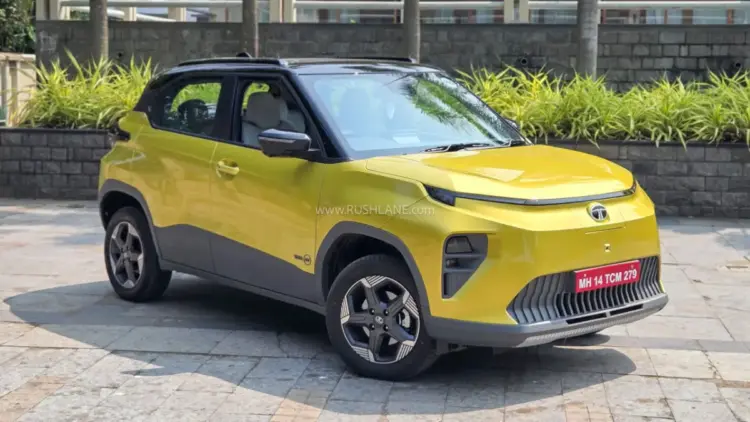
The Tata Punch has firmly established itself as the crown jewel of the portfolio. Between January and October 2026, the Punch (including its EV and ICE variants) recorded 2,02,794 units. This figure alone is nearly 30,000 units higher than its entire 2025 performance. Following closely is the Nexon, which recorded 1,96,490 units.

Combined, the Punch and Nexon accounted for 3,99,284 units, representing 61.48% of Tata’s total domestic wholesales. This highlights the brand’s strategic pivot toward the SUV segment, which continues to be the fastest-growing category in the Indian automotive space.
The Resurgence of the Sierra and New Entrants
One of the most notable stories of 2026 is the successful revival of the Sierra nameplate. After a soft launch in late 2025, the Sierra has rapidly climbed the charts, reaching 69,779 units in the first ten months of 2026. It is currently locked in a close battle with the Tiago (70,555 units) for the third spot in Tata’s internal sales rankings.
Furthermore, new additions to the fleet have begun to contribute meaningful volumes. The Aeris, a newer entry into the lineup, contributed 6,411 units in just the two months of September and October, suggesting a strong initial market reception. The Curvv, Tata’s foray into the coupe-SUV segment, also maintained a steady presence with 18,447 units.
Performance of Legacy and Premium Models
While the compact segments thrived, the premium SUV duo—Harrier and Safari—also showed resilience. The Harrier surpassed its full-year 2025 tally of 27,410 units by reaching 31,810 units by the end of October. The Safari, while slightly behind its 2025 total at 17,088 units, is expected to cross that threshold by the end of November.
The Electric Revolution: One in Five Vehicles is an EV
A critical component of Tata Motors’ strategy is its undisputed leadership in the electric vehicle (EV) sector. In the January–October 2026 period, Tata’s electric passenger vehicle volume reached 1,24,792 units. This translates to approximately 19.21% of the company’s total domestic wholesales.
Essentially, nearly one out of every five vehicles sold by Tata Motors in 2026 was electric. This level of penetration is significantly higher than the national average and underscores the success of the Tiago.ev, Punch.ev, and Nexon.ev. The company’s investment in a dedicated EV architecture (Acti.ev) and its efforts to expand the charging infrastructure through Tata Power have created a formidable moat against competitors.
Official Context and Market Strategy
While official statements from the board emphasize "cautious optimism," the internal sentiment at Tata Motors is clearly one of triumph. Industry analysts suggest that Tata’s success in 2026 stems from three core pillars:
- Product Diversification: Unlike many competitors who focus on one or two "hero" models, Tata has managed to sustain high volumes across four distinct nameplates (Punch, Nexon, Tiago, and Sierra).
- Powertrain Flexibility: By offering Petrol, Diesel, CNG, and Electric options often within the same model shell, Tata has effectively captured various consumer demographics, from the budget-conscious commuter to the tech-savvy early adopter.
- Safety as a Brand Identity: Consistent five-star GNCAP and BNCAP ratings across its lineup have made "safety" synonymous with the Tata brand, a factor that has become a primary deciding variable for Indian car buyers.
Implications for the Indian Automotive Landscape
Tata Motors’ performance in 2026 has profound implications for the broader industry. Firstly, it narrows the gap between Tata and the second-largest automaker in India, putting immense pressure on traditional market leaders to accelerate their EV and SUV roadmaps.

Secondly, the 37.81% YoY growth indicates that Tata is growing much faster than the overall market, which is estimated to be growing at a high single-digit rate. This suggests a significant gain in market share, likely at the expense of manufacturers who have been slow to transition away from hatchbacks or have delayed their EV entries.
The "Sierra Effect" also proves that there is immense value in heritage nameplates when combined with modern technology. The fact that a premium-positioned vehicle like the Sierra can move nearly 70,000 units in ten months suggests that Indian consumers are willing to pay a premium for lifestyle-oriented vehicles that offer a unique identity.
The Road Ahead: Targets for Year-End
As Tata Motors enters the final two months of 2026, the focus shifts to two major milestones: the 7-lakh and 8-lakh unit marks.
To reach the 7,00,000-unit milestone for the calendar year, Tata needs to sell an additional 50,523 units across November and December. Given that the company has averaged over 64,000 units per month throughout the year, this target is virtually guaranteed.
The more ambitious goal of 8,00,000 units would require a total of 1,50,523 units in the final two months. This necessitates an average of 75,262 units per month—a figure slightly higher than the record-breaking October performance. While challenging, the momentum from the festive season and the potential year-end discounts could bring the company within striking distance of this historic number.
Regardless of whether the 8-lakh mark is breached, 2026 will be remembered as the year Tata Motors transformed from a strong contender into a dominant force, redefining what is possible for an Indian automaker in the modern era. The focus for 2027 will likely shift toward international expansion and the further scaling of its EV ecosystem, as the brand continues to outpace its own records.