The Indian automotive sector in late 2026 continues to be a battlefield of technological transitions and evolving consumer preferences. In this high-stakes environment, the Renault-Nissan Alliance has emerged as a resilient player, leveraging its shared manufacturing prowess and refreshed product portfolios to capture market share. The sales figures for October 2026 provide a comprehensive look at how these two brands are navigating the post-festive season lull and preparing for a future defined by hybridization and performance-oriented powertrains.
While the broader industry has seen fluctuations, both Renault India and Nissan India reported healthy month-on-month (MoM) growth in October. This sequential recovery is largely attributed to the sustained popularity of established nameplates like the Renault Triber and Nissan Magnite, alongside the successful introduction of newer models like the Nissan Gravite and the Renault Duster Hybrid.
Main Facts: A Tale of Two Brands and One Factory
In October 2026, the Renault-Nissan manufacturing facility in Oragadam, Chennai—a plant owned by Renault but serving both partners—became a hive of activity as dispatches increased to meet demand.
Renault India reported a total of 4,577 units sold in October 2026. While this represents a marginal 2% decline compared to the 4,672 units sold in October 2025, the real story lies in the sequential data. The brand achieved a staggering 35% MoM recovery over the 3,399 units dispatched in September 2026. This indicates that Renault has successfully cleared inventory bottlenecks and is seeing renewed interest in its utility-focused lineup.
Nissan India, on the other hand, outperformed its year-on-year (YoY) benchmarks significantly. The company reported total sales of 3,594 units, marking a robust 37% growth over the 2,615 units sold in the same month the previous year. Sequentially, Nissan recorded a 9% improvement over its September 2026 performance of 3,300 units.
The Power Players
The volume drivers for both brands remain distinct yet complementary:
- Renault Triber: Accounted for 56.5% of Renault’s total sales.
- Nissan Magnite: Remained the cornerstone of Nissan’s volume, despite a YoY dip.
- Nissan Gravite: Emerging as a heavy hitter, contributing 42.6% to Nissan’s total monthly volume.
- Renault Kwid: Showed surprising resilience with a 46% YoY growth.
Chronology of Market Strategy: Leading Up to October 2026
To understand the October performance, one must look at the strategic moves made by both companies throughout the 2026 calendar year.

- Q1 2026: The "New Value" Offensive: Renault began upgrading its entry-level Kwid and Triber models with enhanced safety features and updated infotainment systems to meet the tightening Bharat NCAP standards.
- Q2 2026: Nissan Gravite Launch: Nissan expanded its portfolio with the Gravite, a model designed to sit above the Magnite, targeting the premium compact SUV segment. This move was crucial in diversifying Nissan’s reliance away from a single model.
- Q3 2026: The Performance Pivot: Renault launched the Triber Turbo. For years, the Triber was criticized for being underpowered when fully loaded; the 1.0L Turbo engine addressed this grievance directly, leading to the 48% MoM growth seen in October.
- September 2026: The Hybrid Milestone: Renault officially commenced deliveries of the Duster Hybrid. This marked the return of the iconic "Duster" nameplate to India, now equipped with a sophisticated petrol-hybrid system aimed at fuel-conscious yet performance-oriented buyers.
- October 2026: Festive Consolidation: Both brands maximized their retail reach during the peak festive weeks, resulting in the strong MoM growth figures reported.
Supporting Data: A Deep Dive into the Models
Renault India: Triber and Kwid Lead the Charge
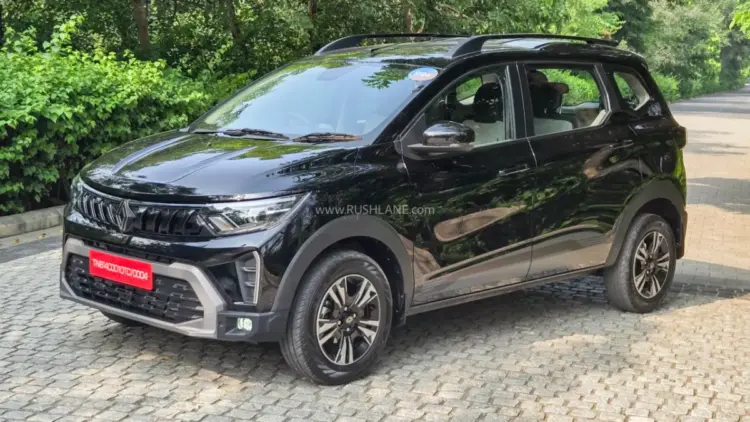
The Renault Triber continues to be the brand’s most vital asset. In October 2026, it found 2,588 buyers. While this was an 18% decline YoY, the 48% MoM jump suggests that the new Turbo variant is successfully attracting a new demographic of buyers who previously found the naturally aspirated version lacking. Looking ahead, the upcoming Triber CNG Turbo—currently in testing with ARAI—is expected to further cement the model’s dominance in the affordable MPV space.
The Renault Kwid, often written off in a market shifting toward SUVs, staged a remarkable comeback. Selling 808 units, it grew by 46% YoY and 40% MoM. This suggests that there is still a significant "first-time buyer" market in Tier 2 and Tier 3 cities that Renault is successfully tapping into.
The Duster, in its new avatar, recorded 601 units. While the numbers are modest compared to the Triber, the 29% MoM growth indicates a steady ramp-up in production and delivery. The Duster Hybrid is positioned as a technology flagship for Renault in India.
Conversely, the Renault Kiger faced headwinds. With only 580 units sold, it saw a 39% YoY decline and a 6% MoM slide. The Kiger is currently facing intense competition from newer entrants in the sub-4-meter SUV segment, suggesting a need for a mid-life refresh or more aggressive pricing.
Nissan India: The Rise of the Gravite
Nissan’s strategy to expand its lineup is paying off. The Magnite, while down 37% YoY with 1,656 units, still managed a 10% MoM growth. The decline in YoY figures can be attributed to the "internal competition" from the Gravite and the general aging of the Magnite platform.
The Nissan Gravite is the standout performer for the brand. Selling 1,532 units in October, it is now nearly neck-and-neck with the Magnite. Its 10% MoM growth signifies strong market acceptance of Nissan’s newer design language and premium interior packaging.
The Nissan Tekton, a niche offering, moved 406 units. While its volumes are low, it serves a specific segment of the market looking for advanced tech features. Nissan’s future plans for a 7-seater SUV based on the Tekton platform (expected in H1 2027) suggest that the Tekton is the foundation for a larger family-oriented strategy.

Official Responses and Strategic Positioning
While official press statements often highlight the positives, the underlying strategy from the Renault-Nissan Alliance is clear: Product Lifecycle Management and Localization.
Sources close to the Alliance indicate that the focus for the remainder of the 2026-27 fiscal year will be on "Powertrain Democratization." This involves taking the Turbo and Hybrid technologies currently found in premium models and trickling them down to more affordable segments.
"The growth we see in the Triber and the Kwid is a testament to our understanding of the Indian value proposition," a Renault spokesperson noted during a recent dealership event. "With the Duster Hybrid, we are proving that performance and efficiency can coexist. Our Chennai plant is operating at high efficiency to ensure that the waiting periods for these new technologies are kept to a minimum."
Nissan India’s leadership has echoed similar sentiments, focusing on the "Premiumization" of the brand. The success of the Gravite is seen as a green light to proceed with more expensive, feature-rich models like the upcoming 7-seater Tekton derivative.
Implications: What This Means for the Indian Market
The October 2026 sales figures carry several broader implications for the Indian automotive industry:
1. The Survival of the Entry-Level Segment
Renault’s success with the Kwid proves that the entry-level hatchback segment is not dead; it has simply evolved. Buyers in this segment now demand better safety and more features, and brands that can provide "big car features" in a small package will continue to find volume.
2. Turbocharging as a Standard
The 48% MoM growth of the Triber following its Turbo launch highlights a shift in consumer expectations. Indian buyers are no longer willing to sacrifice driveability for utility. Turbocharging is becoming the "new normal" for small-displacement engines to meet both performance demands and stringent emission norms.

3. The "Alliance" Synergy
The shared manufacturing facility in Chennai remains a massive competitive advantage. By sharing platforms and production lines, Renault and Nissan can maintain lower overheads and respond more quickly to market shifts. The fact that Nissan can grow 37% YoY while Renault focuses on sequential recovery shows how the two brands can balance each other’s market cycles.
4. Preparation for 2027
The data suggests that both brands are in a "bridge year." 2026 is about stabilizing current models and introducing new powertrains (Turbo/Hybrid), while 2027 will be about major body-style expansions, such as the 7-seater SUVs and dedicated CNG-Turbo offerings.
Conclusion
October 2026 has been a month of consolidation and cautious optimism for Renault and Nissan in India. By leaning on their core strengths—the versatility of the Triber and the rugged appeal of the Magnite—while successfully introducing new-age models like the Gravite and Duster Hybrid, the Alliance is well-positioned.
As the industry moves toward the final quarter of the fiscal year, the focus will shift toward the launch of the Triber CNG Turbo and the development of Nissan’s 7-seater SUV. For Renault and Nissan, the path forward is clear: innovate on the powertrain, diversify the portfolio, and leverage the Chennai manufacturing hub to turn sequential growth into long-term market dominance.