The Indian automotive landscape is no stranger to the dominance of Maruti Suzuki, but even by its high standards, the Brezza stands as a titan. As a high-volume offering that consistently tops sales charts, the Brezza has become synonymous with the sub-4-meter SUV segment. While the vehicle received a significant update in early 2026—complete with a facelift, a new engine, and enhanced equipment—the discovery of heavily camouflaged test mules on Indian roads has sent the industry into a frenzy of speculation.
The sighting of these test units suggests that Maruti Suzuki is not resting on its laurels. Despite the recent launch of the 2026 facelift, the company appears to be fast-tracking a suite of advanced technological updates that could redefine the "compact SUV" category. From sophisticated hybrid powertrains and plug-in systems to democratized safety tech, the next iteration of the Brezza aims to maintain its crown in an increasingly electrified and safety-conscious market.
I. Main Facts: What the Spy Shots Reveal
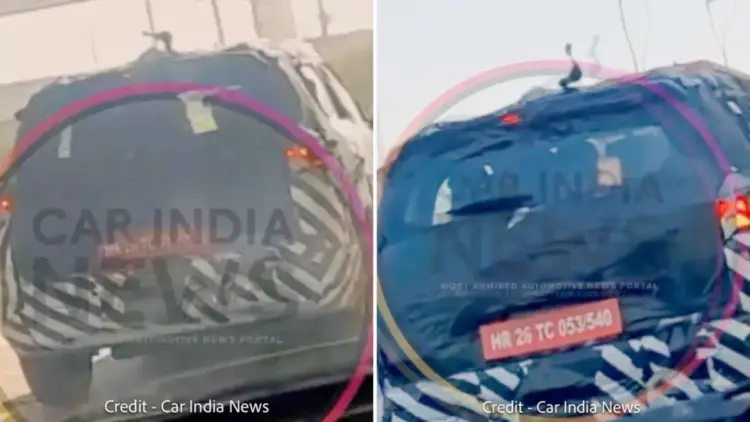
The latest spy shots, captured in Haryana, depict a vehicle that is unmistakably a Brezza. Despite the dense camouflage wrapping every panel, the iconic upright silhouette, the boxy proportions, and the signature lighting elements remain visible.
Key Observations from the Field:
- Registration Status: The test mule was spotted sporting red registration plates, typically issued by the Haryana RTO for manufacturer testing purposes.
- Visual Consistency: The headlamp signatures and LED tail-lamp clusters appear identical to the 2026 facelift model. This suggests that the primary focus of this testing phase is not aesthetic, but mechanical and technological.
- The "Under-the-Hood" Mystery: Since the exterior remains largely unchanged from the recently launched version, industry experts believe Maruti is testing a new "beating heart"—specifically, a powertrain from Suzuki’s global portfolio or a new ADAS (Advanced Driver Assistance System) suite tailored for Indian conditions.
The presence of these mules so soon after a major update indicates a mid-cycle "tech-refresh" or the introduction of a new high-end variant that could sit above the current ZXi+ trim.
II. Chronology: The Road to the 2026/2027 Update
To understand why these spy shots are significant, one must look at the recent timeline of Suzuki’s global and domestic strategy.

- Early 2026: The Indian Facelift: Maruti Suzuki launched the updated Brezza in India. It featured a refined aesthetic, a more premium interior, and an updated engine designed to meet stricter emission norms while offering better fuel efficiency.
- Mid-2026: Suzuki Technology Strategy Briefing (Japan): Suzuki Motor Corporation held a high-level briefing in Japan. During this event, the company unveiled its roadmap for the next five years, emphasizing carbon neutrality and advanced propulsion. Key reveals included a new series of "Z-Series" engines and modular hybrid systems.
- Late 2026: The Sighting: Following the Japan briefing, camouflaged units of the Brezza appeared on Indian roads. This suggests a rapid transfer of technology from Suzuki’s global R&D centers to its Indian subsidiary, Maruti Suzuki.
- 2027 and Beyond: The testing phase currently observed is expected to culminate in a market launch by late 2027, aligning with India’s potential shift toward even more stringent fuel economy standards (CAFE norms).
III. Supporting Data: Exploring the Potential Powertrains
The most compelling theory regarding the test mules involves a radical overhaul of the engine bay. Based on the Suzuki Technology Strategy Briefing, several powertrain options are now on the table for the Indian market.
1. The 1.2L Z12E Hybrid System
This is perhaps the most likely candidate for the Indian Brezza. The Z12E system is a "strong hybrid" configuration designed to offer diesel-like fuel efficiency in a petrol-only market.
- Engine Output: 60 kW (80 bhp) and 108 Nm of torque.
- Electric Component: A 65 kW (87 bhp) traction motor powered by a 0.6 kWh battery pack.
- Total System Dynamics: This setup allows for short bursts of pure EV driving and significant assistance during stop-and-go traffic, which could push the Brezza’s fuel economy figures beyond the 28-30 km/l mark.
2. The Plug-In Hybrid (PHEV) Powerhouse
In a move that would shock the segment, Maruti could be testing a high-performance PHEV variant. Based on a turbocharged 1.2L engine, this system is a significant step up.
- Peak Power: 130 kW (174 bhp).
- Capability: Unlike standard hybrids, this system features a larger battery that can be charged via an external wall socket. It offers a substantial electric-only range, making it ideal for urban commuters who want to avoid using petrol entirely for daily runs.
3. The REEV (Range Extended Electric Vehicle)
Suzuki also proposed a 114 bhp REEV system. In this configuration, the 1.2L engine does not drive the wheels directly. Instead, it acts as an on-board generator to charge a large battery, which then powers the electric motors. This "Series Hybrid" approach eliminates range anxiety while maintaining the smooth driving characteristics of an EV.
4. Turbocharged Petrol Options
For enthusiasts, the testing could involve the new 1.2L and 1.5L Turbo Petrol engines. With competitors like the Tata Nexon and Mahindra XUV 3XO offering potent turbocharged units, Maruti needs a high-torque alternative to its naturally aspirated K-Series engines.

5. E85 Compliance
With the Indian government pushing for higher ethanol blending, the test mule might be validating an E85-compliant engine. This would allow the Brezza to run on fuel containing up to 85% ethanol, significantly reducing its carbon footprint and potentially lowering running costs.
IV. Official Responses and Strategic Vision
While Maruti Suzuki has not issued a specific statement regarding the latest spy shots, the company’s leadership has been vocal about its broader goals.
The ADAS Push
A key pillar of Maruti’s future strategy is the democratization of safety. During the Japan briefing, Suzuki announced plans to introduce a "low-cost ADAS system" across its global lineup, with a specific focus on India.
- The Tech: Unlike the expensive radar-based systems found in luxury cars, Maruti is reportedly developing a camera-based or simplified sensor-based ADAS.
- Features: This could include Autonomous Emergency Braking (AEB), Lane Departure Warning, and Adaptive Cruise Control, all calibrated for the chaotic nature of Indian traffic.
- Official Stance: Maruti Suzuki has often stated that they will only introduce technology when it becomes "affordable for the Indian consumer." The current testing of the Brezza may be the final validation phase for this mass-market ADAS.
The Green Strategy
Maruti Suzuki remains committed to a multi-pathway approach to decarbonization. While other manufacturers are betting solely on Battery Electric Vehicles (BEVs), Maruti is prioritizing Hybrids, CNG, and Bio-fuels (Ethanol/Biogas) alongside their upcoming EV models like the eVX. The Brezza is the perfect platform to pilot these diverse green technologies due to its high sales volume.
V. Implications: What This Means for the Indian Market
The appearance of a technologically superior Brezza has far-reaching implications for consumers, competitors, and the industry at large.

1. Heightened Competition
The sub-4m SUV segment is the most contested space in India. If Maruti successfully integrates a 174 bhp PHEV or a 30 km/l Strong Hybrid into the Brezza, it will force rivals like Hyundai (Venue), Kia (Sonet), and Tata (Nexon) to accelerate their own hybrid and EV plans.
2. The End of Diesel?
For years, the Brezza’s biggest strength was its frugal DDiS diesel engine. Since Maruti exited the diesel market, it has relied on CNG to fill the gap. However, a Strong Hybrid Brezza would offer the torque and efficiency of a diesel without the associated emission hurdles, effectively providing a modern successor to the "National Engine" of the past.
3. Safety as a Standard
By introducing low-cost ADAS, Maruti Suzuki is challenging the perception that it lags in safety technology. If the Brezza—a car that sells tens of thousands of units monthly—comes equipped with active safety features, it will set a new baseline for the entire Indian automotive industry.
4. Pricing Pressures
The integration of hybrid batteries and ADAS sensors inevitably increases costs. The challenge for Maruti will be maintaining its "value-for-money" reputation. We may see a wider price spread for the Brezza, with entry-level variants remaining affordable and top-tier "Tech-Packs" pushing into the 18-20 lakh (ex-showroom) territory.
Conclusion
The camouflaged Brezza roaming the streets of Haryana is more than just a test car; it is a signal of intent. Maruti Suzuki is preparing to pivot from being a manufacturer of reliable, efficient commuters to a provider of high-tech, electrified, and safe mobility.

Whether it is the raw power of the 174 bhp plug-in hybrid system, the efficiency of the Z12E engine, or the safety of a localized ADAS, the next iteration of the Brezza is poised to bridge the gap between the internal combustion era and the electric future. For the Indian car buyer, the message is clear: the country’s favorite SUV is about to get a lot more sophisticated.