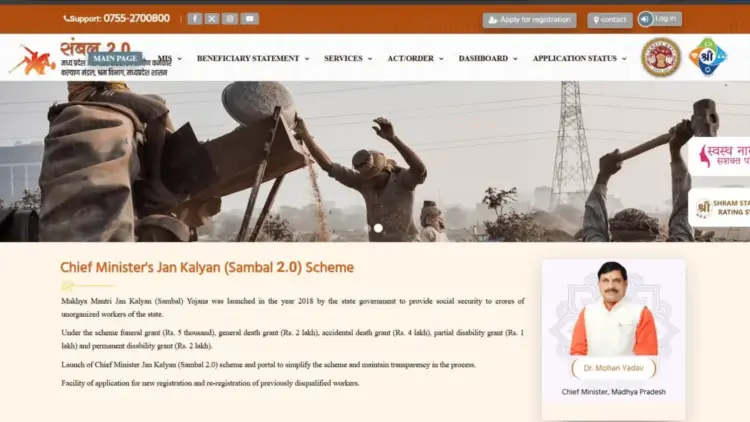
In the heart of Madhya Pradesh, millions of workers—from masons and domestic helps to small-scale artisans—form the backbone of the state’s informal economy. However, these individuals often operate without the safety nets enjoyed by formal sector employees, such as Provident Fund (PF) contributions or comprehensive health insurance. To bridge this gap, the Government of Madhya Pradesh spearheaded the Mukhyamantri Jan Kalyan (Sambal 2.0) Yojana. This initiative is designed to provide a robust social security framework for unorganised workers, ensuring that a sudden crisis does not push a family into a cycle of poverty.
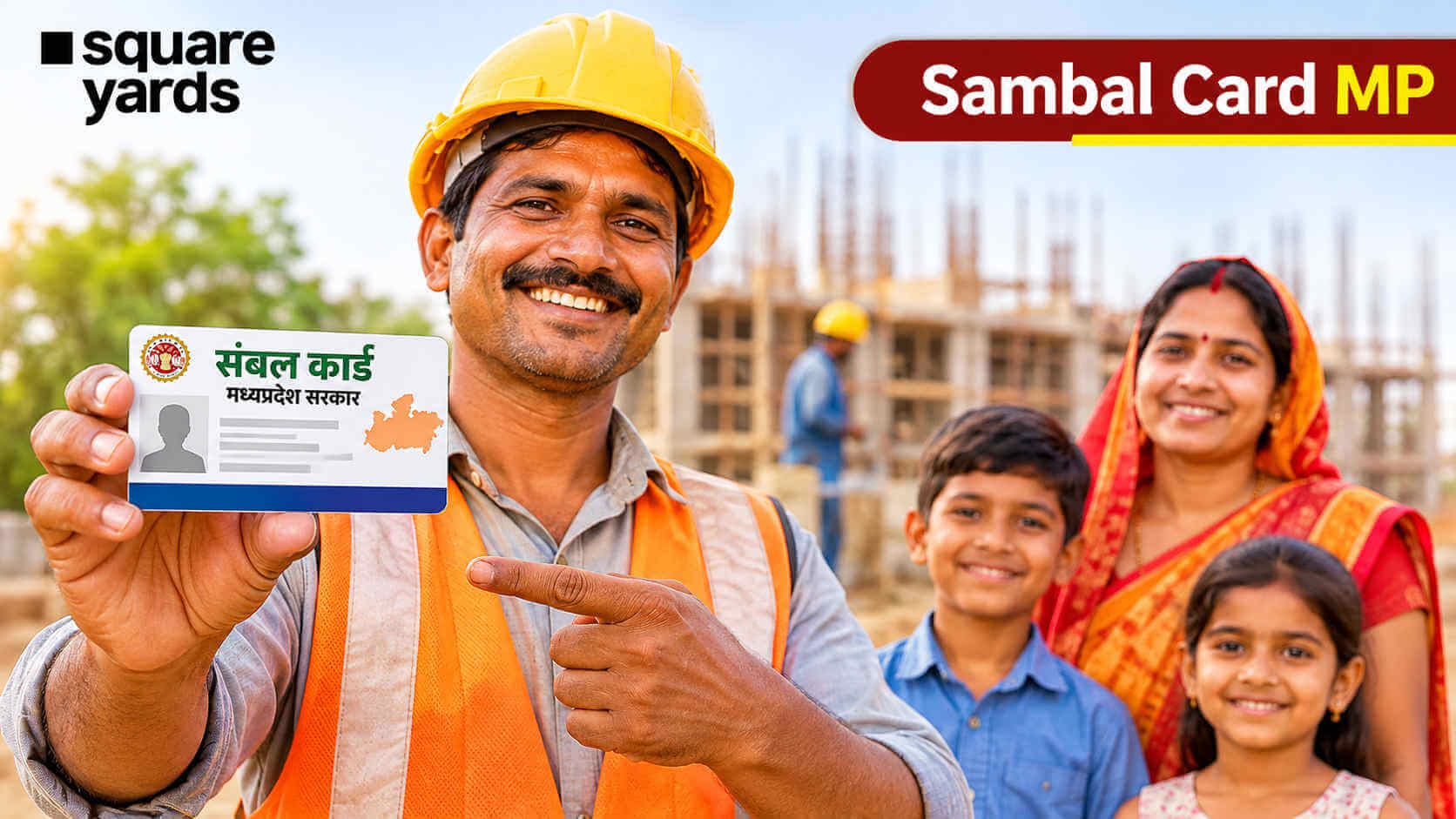
The Sambal Card serves as the digital gateway to these benefits, acting as a formal recognition of an individual’s contribution to the state’s workforce. This report provides an in-depth exploration of the scheme, its evolution, the registration process, and its broader implications for social welfare.
I. Main Facts: Understanding the Sambal 2.0 Framework
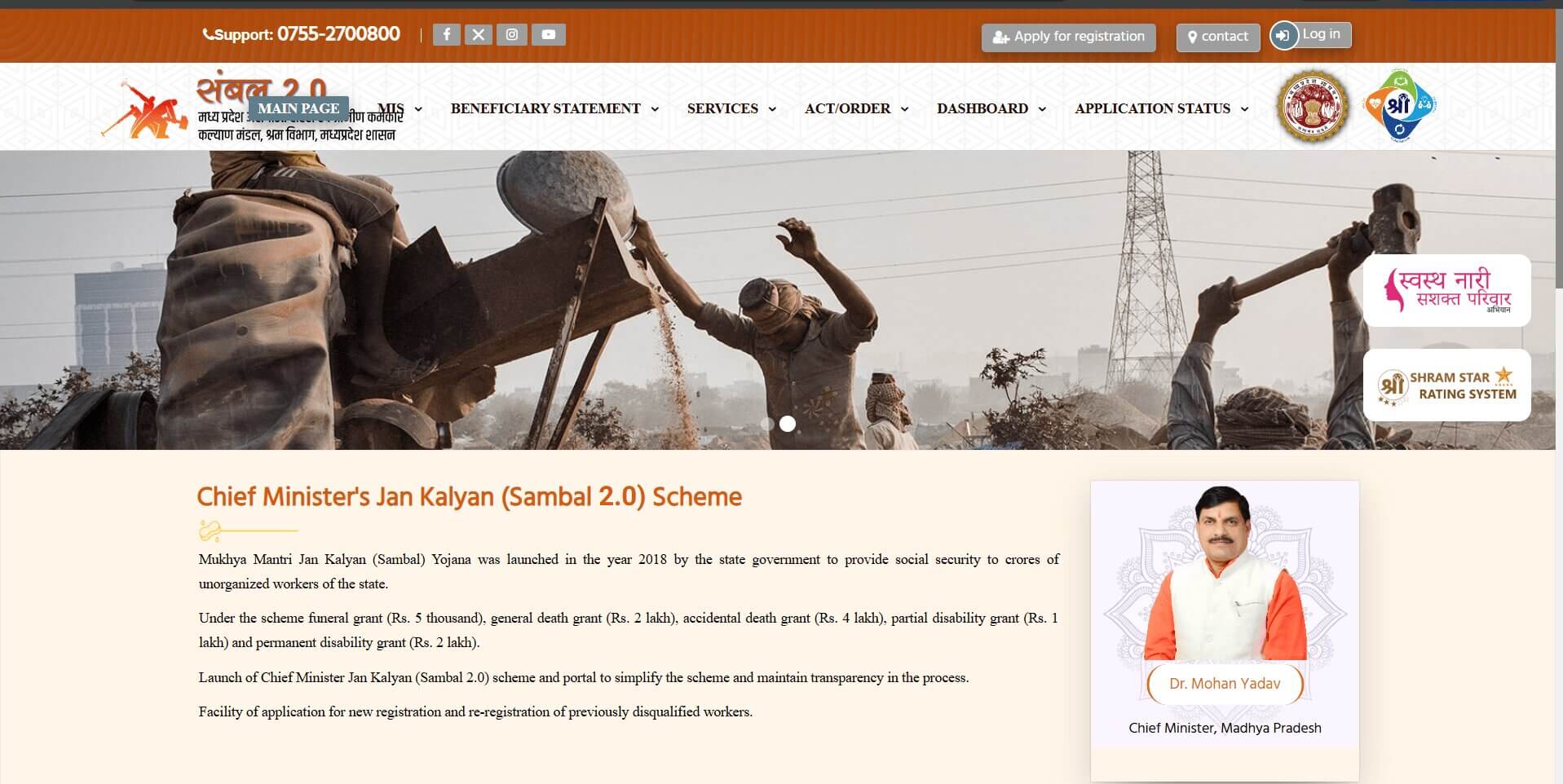
The Sambal 2.0 scheme is more than just a registration portal; it is a multi-layered financial assistance program managed by the Unorganised Urban and Rural Workers Welfare Board under the State Labour Department. At its core, the scheme aims to provide immediate financial relief during life’s most challenging moments, such as disability or the death of a primary breadwinner.
Key Financial Provisions
The scheme offers specific ex-gratia payments based on the nature of the incident:
- Funeral Assistance: A sum of ₹5,000 is provided to the family for the last rites of a registered worker.
- Normal Death: In the event of a natural death, the nominee receives ₹2,00,000.
- Accidental Death: To mitigate the sudden loss of income, families are eligible for ₹4,00,000.
- Permanent Disability: Workers facing total permanent disability receive ₹2,00,000.
- Partial Permanent Disability: For qualifying partial disabilities, a sum of ₹1,00,000 is granted.
All payments are processed through Direct Bank Transfer (DBT), ensuring that the funds reach the beneficiary’s Aadhaar-linked bank account without the interference of intermediaries.
The Digital Identity: The e-Sambal Card
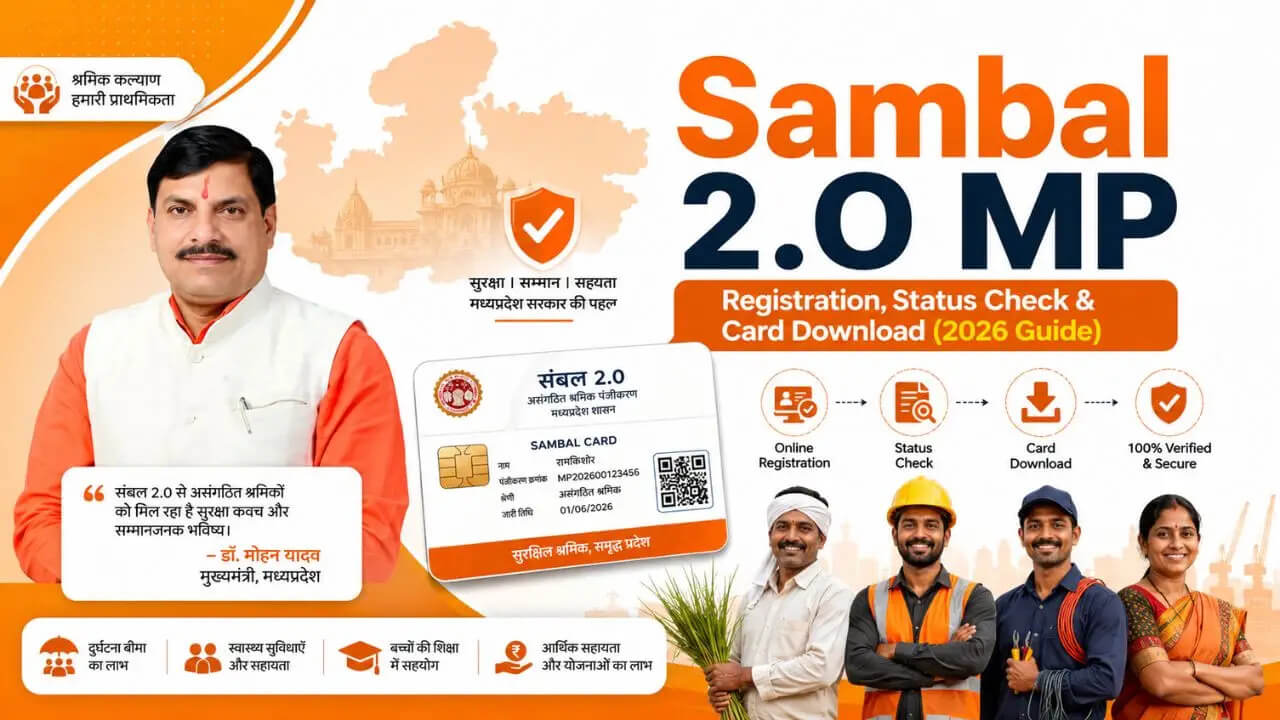
The e-Sambal Card is the tangible output of this registration. It contains critical data including the worker’s Sambal ID, Samagra ID, category, and type of work. The presence of a QR code on the back of the card allows for easy verification by local authorities. It is important to note that the card itself is not a payment voucher but a "proof of eligibility" that streamlines the claim process when needed.
II. Chronology: The Evolution of Social Security in MP
The journey of the Sambal scheme has seen significant shifts in policy and implementation, reflecting the state’s changing approach to digital governance.
- April 1, 2018: The original Sambal Yojana was launched to provide a social security net for the unorganised sector.
- 2019–2021: The scheme faced various administrative challenges, leading to many applications being rejected or put on hold during transitions in state leadership and policy adjustments.
- May 5, 2022: The state government issued fresh orders to revamp the scheme into "Sambal 2.0." This version was designed to be more inclusive, specifically allowing workers whose applications were previously rejected to re-apply.
- August 29, 2022: Further administrative orders were released to streamline the digital verification process, mandating Aadhaar-based e-KYC to eliminate ghost beneficiaries and ensure data integrity.
- November 2024 (Current Status): The portal (sambal.mp.gov.in) serves as a unified platform for registration, tracking, and claims, integrating Samagra and Aadhaar databases for real-time verification.
III. Supporting Data: Eligibility and Documentation
To maintain the integrity of the welfare fund, the Labour Department has established strict eligibility criteria. The scheme is exclusively for those who do not have access to formal social security.
Eligibility Criteria
- Residency: The applicant must be a permanent resident of Madhya Pradesh.
- Employment Status: Must be an unorganised worker (daily wager, artisan, etc.).
- Land Ownership: Neither the applicant nor their spouse should own more than one hectare (approx. 2.5 acres) of agricultural land.
- Taxation and Service: The applicant must not be an income tax payer and must not be in government service.
- Exclusion from Other Benefits: Individuals covered under the Employee Provident Fund (EPF) or Employee State Insurance (ESI) are ineligible.
- Age Bracket: While the official summary is broad, administrative guidelines generally target the working age group of 18 to 60 years.
Necessary Documentation
Before initiating the digital application, workers are advised to keep the following information ready:
- 9-Digit Samagra ID: The primary identification for all state-run schemes in MP.
- 8-Digit Family ID: To verify the household unit.
- Aadhaar Number: Required for mandatory e-KYC.
- Mobile Number: Must be linked to Aadhaar to receive the One-Time Password (OTP).
IV. The Application and Claim Process: A Step-by-Step Guide
The transition to Sambal 2.0 has moved the entire process online, though offline assistance remains available through state-authorized kiosks.
Step 1: Aadhaar e-KYC (The Prerequisite)
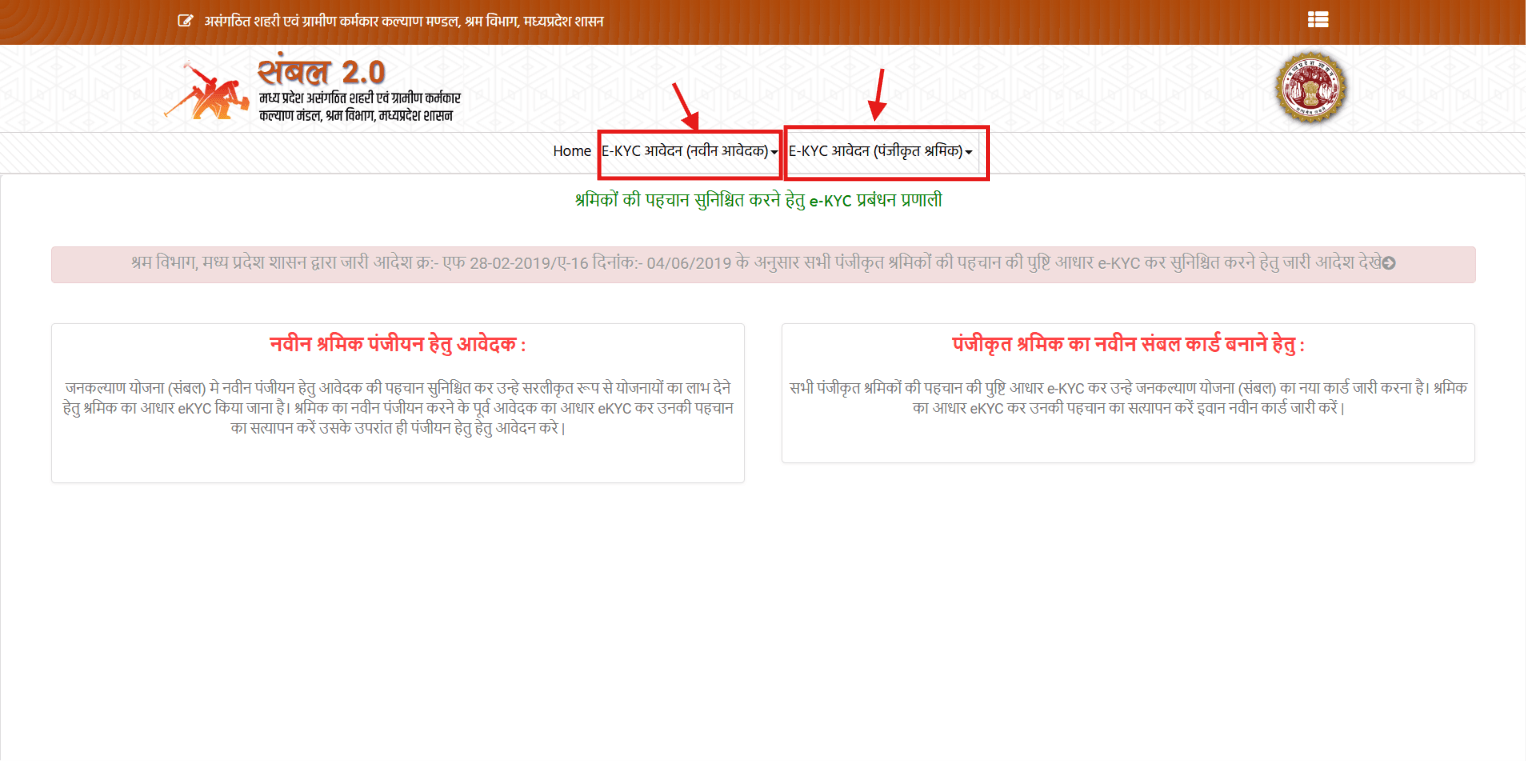
Before a worker can register, they must complete the Aadhaar e-KYC on the Sambal portal. This step verifies that the Samagra data matches the Aadhaar record. If the mobile number is not linked to Aadhaar, the worker must visit an MP Online or Lok Seva Kendra to use biometric (fingerprint) authentication.
Step 2: Online Registration
Once e-KYC is successful, the applicant fills out the registration form on sambal.mp.gov.in. They must select their specific type of unorganised work (e.g., construction, tailoring, small-scale vending). After checking the self-declaration boxes, the application is submitted, and a unique application number is generated.
Step 3: Verification Hierarchy
The application does not result in an instant card. It undergoes a two-tier verification:
- Inquiry Officer: A local official (often at the ward or village level) reviews the documents and physical eligibility.
- Local Body Approval: The Janpad Panchayat (rural) or Nagar Palika/Nagar Nigam (urban) provides the final digital approval.
Step 4: Claiming Financial Assistance
A common misconception is that the card automatically triggers payments. In reality, a separate claim must be filed within specific timelines:
- Funeral Assistance: Should be reported immediately; typically processed within 7 working days.
- Ex-gratia (Death/Disability): The claim must generally be filed within 180 days of the incident through the "Anugrah Application" menu on the portal.
V. Official Responses and Grievance Redressal
The Government of Madhya Pradesh has emphasized transparency in the Sambal 2.0 rollout. To address the issue of "stuck" applications, the portal now features a public dashboard showing pending cases at various administrative levels.
Official Contact Channels
The Labour Department has provided dedicated channels for workers facing technical or administrative hurdles:
- Helpline Number: 0755-2700800
- Official Email: [email protected]
- CM Helpline: 181 (For escalating unresolved grievances)
Appellate Authority
If an application is rejected, the worker has the right to appeal. The designated appellate officers are:
- In Rural Areas: The Sub-Divisional Officer (SDO).
- In Urban Areas: The Additional Collector or Deputy Collector.
This ensures that local-level biases or clerical errors do not permanently deprive a worker of their rights.
VI. Implications: The Socio-Economic Impact
The enrichment of the Sambal scheme into its 2.0 version has several long-term implications for the state of Madhya Pradesh.
1. Formalization of the Informal Sector
By requiring Samagra and Aadhaar integration, the state is creating a comprehensive database of its unorganised workforce. This data is invaluable for future urban planning, healthcare resource allocation, and targeted welfare delivery.
2. Reduction in Debt Vulnerability
For a low-income family, the death of a breadwinner often leads to high-interest borrowing from private moneylenders. The provision of ₹2 lakh to ₹4 lakh acts as a critical buffer, allowing the family to maintain stability without falling into a debt trap.
3. Digital Literacy and Inclusion
The mandate for e-KYC and online tracking encourages workers to engage with digital governance. While this creates an initial barrier, the proliferation of Lok Seva Kendras ensures that even those without smartphones are not left behind.
4. Accountability in Governance
The public nature of the Sambal 2.0 portal—where one can check the status of "Grace Applications" and see district-wise payment reports—sets a high standard for administrative accountability. It minimizes the scope for local corruption, as the money moves directly from the state treasury to the worker’s bank account.
VII. Frequently Asked Questions (FAQ)
Q1: Is there a fee for applying for the Sambal Card?
No. The official CM Helpline and the Sambal portal confirm that the application fee is nil. Workers should avoid paying agents for registration.
Q2: Can I apply if I have a BPL Card?
While many unorganised workers hold BPL (Below Poverty Line) cards, it is not a mandatory requirement for Sambal 2.0. The primary criteria are the nature of work and the land-holding limit.
Q3: What should I do if my Samagra details (like age or name) are wrong?
You must first update your Samagra Profile. The Sambal portal has a "Request to update information from Samagra" option in the Services menu to sync the corrected data.
Q4: Does the Sambal Card provide health insurance like Ayushman Bharat?
The Sambal Card primarily provides ex-gratia payments for death and disability. While it may assist in eligibility for other schemes, it is distinct from the Ayushman Bharat health insurance program.
Q5: What is the time limit for death benefit claims?
Most ex-gratia claims must be submitted within 180 days of the date of death or the date the disability certificate was issued.
Conclusion
The Mukhyamantri Jan Kalyan (Sambal 2.0) Yojana represents a significant step toward a more equitable social structure in Madhya Pradesh. By digitizing the identification and assistance process, the state has moved away from discretionary welfare toward a rights-based system for the unorganised sector. For the mason, the tailor, or the street vendor, the Sambal Card is not just a piece of plastic; it is a promise of dignity and security for their family’s future. Workers are encouraged to complete their e-KYC and ensure their Samagra data is accurate to take full advantage of this state-sponsored safety net.