As the first heavy rains of the monsoon sweep across the mist-shrouded hills of Darjeeling and the rugged highlands of Manipur, a prehistoric ritual begins. From the damp crevices of the forest floor and the shadows of moss-covered rocks, a creature of ancient lineage emerges. It is the Himalayan salamander, a "living fossil" that has survived for millions of years, now facing an existential crossroads in the modern era.
In India, a country celebrated for its charismatic megafauna like tigers and elephants, these secretive amphibians often go unnoticed. Yet, they represent a critical link in the evolutionary chain. With only two species identified within the nation’s borders—the Himalayan salamander (Tylototriton himalayanus) and the recently discovered Manipuri newt (Tylototriton zaimeng)—the stakes for their survival have never been higher.
Main Facts: The Biology of a Living Relic
Salamanders belong to the order Caudata, a group of amphibians characterized by their lizard-like appearance, including slender bodies, blunt snouts, and long tails. Globally, there are approximately 830 species, with the vast majority concentrated in the temperate zones of North America and Eurasia. India’s two representatives are members of the Tylototriton genus, often referred to as "crocodile newts" due to their rugged, warty skin and primitive appearance.
The Himalayan Salamander (Tylototriton himalayanus)
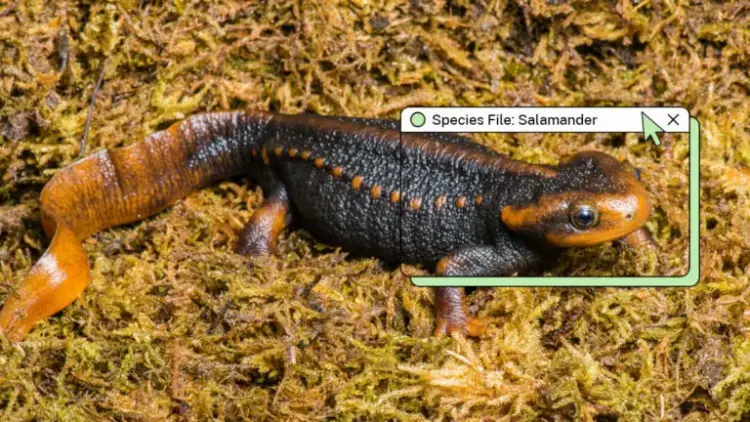
Found across eastern Nepal, the Darjeeling district of West Bengal, and western Bhutan, this species is a master of adaptation. It is easily identified by its dark brown, almost black body, and the distinct rows of knobby warts running along its spine and flanks. These warts serve a defensive purpose; when the animal is threatened or squeezed, they can secrete a milky, toxic fluid to deter predators.
The lifecycle of the Himalayan salamander is a delicate balance between land and water. For most of the year, adults are terrestrial, dwelling in the moist leaf litter or under rotting logs. However, the arrival of the monsoon (typically late April to early October) triggers a migration toward pokhris—small, often ephemeral mountain ponds.
The Manipuri Newt (Tylototriton zaimeng)
For decades, it was believed that India held only one species of salamander. That changed in 2023 with the formal description of the Manipuri newt, or Zaimeng newt. Named after the Zaimeng Lake in the Khongtheng mountain range, this species is a stunning example of "cryptic diversity"—species that look similar to the naked eye but are genetically distinct.
The Manipuri newt is distinguished by its broad head and striking orange-yellow markings that contrast against its dark brown skin. These markings appear on the head, the ridge of the back, and even the palms and soles of its feet. Currently, its known range is incredibly restricted, found only in a handful of high-altitude lakes and seasonal ponds in Manipur.
Chronology: From Ancient Origins to Modern Discovery
The story of India’s salamanders is one of deep time meeting modern science.
- Evolutionary Origins: Salamanders as a group emerged during the Middle Jurassic period, roughly 160 million years ago. The Tylototriton genus represents one of the most primitive lineages of the Salamandridae family, having remained largely unchanged in their morphology for millions of years.
- Early Records: While local communities in the Himalayas have long been aware of the "crocodile newts," scientific documentation in India remained sparse for much of the 20th century. They were often grouped under the species Tylototriton verrucosus, a wider-ranging species found across Southeast Asia.
- The Taxonomic Split: In the early 21st century, advancements in molecular phylogenetics allowed scientists to take a closer look at the "Himalayan salamander." Research revealed that the populations in the Eastern Himalayas were genetically distinct from their Southeast Asian cousins, leading to the naming of Tylototriton himalayanus.
- 2023: The Discovery of T. zaimeng: A team of researchers, conducting surveys in the Khongtheng mountain range of Manipur, identified a population with unique morphological and genetic traits. The description of the Manipuri newt in 2023 was a landmark moment for Indian herpetology, highlighting how much of the Northeast’s biodiversity remains hidden.
- 2026: Recognition of Conservation Efforts: In April 2026, Barkha Subba, a dedicated conservation scientist, was awarded the prestigious Whitley Award (often called the "Green Oscars") for her work in protecting the Himalayan salamander. This brought much-needed international attention to the plight of India’s amphibians.
Supporting Data: A Habitat Under Siege
Despite their hardiness, salamanders are incredibly sensitive to environmental changes. As amphibians, they possess permeable skin that makes them "biological indicators"—the proverbial canaries in the coal mine for ecosystem health.
Shrinking Breeding Grounds
The primary threat to both species is the loss of pokhris. These small ponds are frequently viewed by developers as "wastelands." Data suggests that a significant percentage of these wetlands are being drained to make way for:
- Tourism Infrastructure: The boom in Himalayan tourism has led to the construction of hotels and homestays directly on former breeding sites.
- Housing: Urban expansion in Darjeeling and Manipur often involves filling in seasonal ponds.
- Pollution: Runoff from wastewater and agricultural pesticides can decimate larval populations, which are entirely aquatic and lack the lungs to survive outside of clean, oxygenated water.
The Peril of the Road
Migration is the most dangerous time for a salamander. To reach their ancestral breeding ponds, they must often cross roads that have been carved through their forest habitats. Because they move slowly, they are frequently victims of "roadkill." In some studied segments of Himalayan roads, researchers have documented dozens of fatalities in a single night of heavy rain.

Protected Status vs. Reality
Both the Himalayan salamander and the Manipuri newt are listed under Schedule I of the Wildlife (Protection) Act, 1972. This provides them with the same level of legal protection as the Bengal tiger. However, there is a massive gap between legal status and physical protection.
- Protected Areas: Only a small fraction of salamander habitats fall within National Parks or Wildlife Sanctuaries.
- Private Land: The majority of breeding ponds exist on private land, community forests, or within tea estates. In these areas, the Wildlife Protection Act is difficult to enforce without the active cooperation of landowners.
Official Responses and Conservation Strategies
The recognition of the salamander’s vulnerability has spurred a wave of conservation action, led by both the scientific community and grassroots organizations.
The Whitley Award and Community Conservation
Barkha Subba’s 2026 Whitley Award win highlights a shift toward community-led conservation. Subba’s work focuses on "citizen science," where local residents and tea estate workers are trained to monitor ponds and report sightings.
"Meeting a salamander feels like meeting a messenger from deep evolutionary time," Subba noted in a 2026 interview. "It is a reminder of how long nature has endured and how quickly we can lose it." Her initiatives have led to the creation of "salamander-friendly" tea estates, where ponds are preserved and pesticide use is restricted near breeding sites.
Scientific Recommendations
Scientists who described the Manipuri newt have urgently called for its classification as "Vulnerable" on the IUCN Red List, matching the status of its Himalayan cousin. They argue that because Tylototriton zaimeng is restricted to such a small geographic area, a single catastrophic event—such as an oil spill, a major landslide, or a disease outbreak—could wipe out the entire species.
Government and NGO Interventions
In Manipur, local NGOs are working with the state forest department to designate Zaimeng Lake and its surrounding wetlands as community reserves. This would allow for legal protection while maintaining the traditional rights of the indigenous communities who have lived alongside these creatures for generations.
Implications: Why the Salamander Matters
The disappearance of the salamander would be more than just the loss of a single species; it would signal the collapse of a unique mountain ecosystem.
Ecological Balance
Salamanders play a dual role in the food web. As larvae, they are voracious predators of mosquito larvae, helping to control water-borne diseases. As adults, they consume a wide variety of forest floor invertebrates. In turn, they are a food source for birds, snakes, and small mammals. Removing them disrupts this delicate balance.
Climate Change Sentinels
The Eastern Himalayas are on the frontline of climate change. Rising temperatures and erratic monsoon patterns directly impact the availability of seasonal ponds. If the rains come too late, or the ponds dry up too early, an entire generation of larvae can perish. Monitoring salamander populations provides scientists with critical data on how climate change is altering high-altitude water cycles.
A Test of Conservation Will
The struggle to save India’s salamanders is a litmus test for the country’s conservation priorities. It asks whether we can value a 15-centimeter-long amphibian as much as a 200-kilogram tiger. Protecting the salamander requires protecting the "small" things: the roadside ditches, the seasonal puddles, and the damp corners of private gardens.
As the 2026 monsoon season approaches, the survival of these ancient "messengers from deep time" remains uncertain. Their future depends on a combination of rigorous scientific study, strong legal enforcement, and, perhaps most importantly, a shift in human perspective—learning to see the extraordinary value in the small, the warty, and the secretive inhabitants of our shrinking wild spaces.