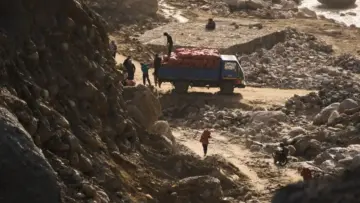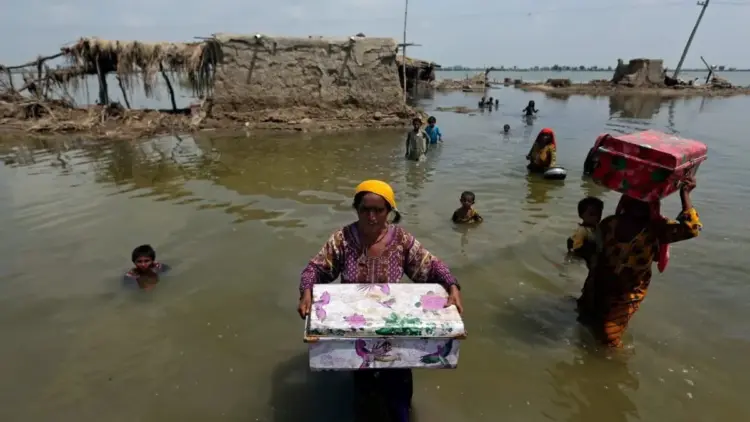
“Our farms were underwater. The water entered our houses. Everything was destroyed,” Laghari says, his voice echoing the frustration of millions across the Global South. Today, his struggle has moved from the muddy fields of Sindh to the diplomatic corridors of Antalya, where nearly 200 nations are gathered for the latest United Nations climate summit.
As delegates debate the nuances of "Loss and Damage"—the technical term for the irreversible destruction caused by climate change—the gap between diplomatic rhetoric and the reality on the ground has reached a breaking point. The summit in Antalya faces a stark ultimatum: transform a fledgling, underfunded relief mechanism into a functional lifeline, or witness the systemic collapse of vulnerable agrarian and coastal societies.
The Current Crisis: A World in Permanent Recovery
The fundamental challenge of the Antalya summit is the recognition that climate damage is not a momentary shock but a compounding tragedy. The experience of farmers like Laghari demonstrates that a disaster’s reach extends far beyond the initial impact. When a crop is destroyed, a family loses the capital required for the next planting season, forcing them into predatory lending cycles. When a coastal well is tainted by saltwater, a community loses its health. When an island is reclaimed by the sea, a nation loses its history.
The scientific backdrop for the summit is grim. According to the World Meteorological Organization’s (WMO) latest climate update, released as the Antalya plenary opened, the past 12 years are on track to be the warmest on record. Ocean heat and sea levels have shattered previous benchmarks, creating a "new normal" of volatility. The Intergovernmental Panel on Climate Change (IPCC) has reaffirmed that human-induced climate change is no longer a future threat; it is a present reality causing "widespread losses and damage to people and nature."

For the delegates in Türkiye, the "human cost" is no longer a theoretical talking point. It is represented by the 176 urgent funding requests sitting on the desk of the newly established Fund for Responding to Loss and Damage (FRLD).
Chronology of a Crisis: From 2022 to the Antalya Summit
The path to the current deadlock began in earnest in 2022 at COP27 in Egypt, where a historic agreement was reached to create a fund for vulnerable nations. This was seen as a victory for developing countries that had spent three decades arguing that emissions reductions (mitigation) and building sea walls (adaptation) were no longer enough to address the destruction already occurring.
However, the timeline of the fund’s implementation has been marred by delays:
- 2022–2023: The fund is formally established, but remains an empty vessel with no clear source of long-term revenue.
- 2024–2025: Voluntary pledges begin to trickle in, primarily from developed nations. However, the mechanism for disbursing these funds remains bogged down in bureaucratic "readiness" requirements.
- August 2026: A devastating glacier collapse in Nepal’s Bhote Koshi valley serves as a brutal stress test for the international system. The disaster kills over 1,400 people and causes an estimated $4.8 billion in damages.
- Late 2026 (Present): As the Antalya summit opens, the FRLD reveals it has received requests totaling $2.8 billion from 119 countries. It has only $342 million available for immediate allocation.
This chronology highlights a recurring theme in climate diplomacy: the "speed of the needle" in negotiations is far slower than the "speed of the water" in a flash flood.
Supporting Data: The Financial Abyss
The disparity between the needs of affected nations and the resources provided by the international community is staggering. A deep dive into the financial records of the UN climate negotiations reveals a systemic failure of follow-through.

While governments have publicly pledged approximately $822.71 million to the Loss and Damage fund, the actual cash received by the secretariat as of July 31, 2026, stood at just $485.77 million. This means that nearly half of the "promised" aid remains tied up in domestic budgetary approvals or political maneuvering in the Global North.
The case of Nepal illustrates this gulf with painful clarity. Following the Bhote Koshi disaster, the World Bank estimated that reconstruction would require $4.8 billion—nearly 15% of Nepal’s entire GDP. In response, the FRLD provisionally set aside $21.6 million. While significant as a symbolic gesture, this represents less than 0.5% of the total recovery cost.
"I come here from a nation still in grief," Nepal’s Foreign Minister Shisir Khanal told the summit. "This is the time to put sympathy into the system, and promises into action."
Furthermore, the nature of the funding is under fire. Harjeet Singh, global convenor of the "Fill the Fund" campaign, describes the current FRLD as a "lifeboat with no oars." He argues that providing aid in the form of loans rather than grants is counterproductive. "Vulnerable countries need grants on a much larger scale, not loans that deepen their debt and force them to choose between rebuilding a school or paying interest to a foreign bank," Singh said.
Official Responses and the Legal Frontier
The official response from developed nations has centered on the "replenishment process," which is not scheduled to begin until 2027. A draft decision currently before the Antalya summit calls for "new, substantial, and predictable" grants, but it lacks the binding enforcement mechanisms that developing countries demand.

In the absence of sufficient state-led funding, the battle for compensation has moved into the courtrooms. On Pari Island in Indonesia, residents have seen their 41-hectare home slowly devoured by tidal flooding. Large-scale inundations, which became severe in 2021, have threatened the island’s primary industries of fishing and tourism.
In a landmark move, four residents filed a lawsuit against the Swiss cement giant Holcim, seeking compensation for climate-related damages. The case, declared admissible in 2025, represents a new frontier in "polluter pays" logic. While Holcim has appealed, the legal challenge signals a shift: if governments will not provide the funds through the UN, affected communities will attempt to seize them from the corporations most responsible for historic emissions.
"This is not just about one island or community," says Boy Jerry Even Sembiring of the Indonesian environmental group WALHI. "It is about establishing that there is a legal price to be paid for the destruction of a way of life."
Implications: What Money Cannot Replace
The most haunting aspect of the Loss and Damage debate is the category of "non-economic losses." These are the costs that no amount of World Bank financing can truly remediate.
In the Pacific, the Secretariat of the Pacific Regional Environment Programme (SPREP) recently released a report documenting the erosion of cultural identity across 14 island nations. When a community is forced to relocate because their ancestral burial grounds are underwater, they lose their "connection to generations before us," as Marshall Islands coordinator Kirsten Madison put it.

In South Asia, a 2026 study in Bangladesh’s coastal Shyamnagar region found that saltwater intrusion was not just killing rice crops; it was destroying the social fabric of the community. Increased health problems among women, the loss of traditional medicinal plants, and the migration of young men have led to a breakdown in local cultural practices and social ties.
The implications for the Antalya summit are clear. If the Loss and Damage fund remains a mere "emergency response" tool for repairing physical infrastructure, it will fail to address the existential crisis of climate change.
Conclusion: The Choice in Antalya
As the negotiations in Türkiye enter their final week, the international community faces a choice between two paths. The first is to maintain the status quo: a system of voluntary, piecemeal pledges that arrive too late and offer too little, leaving farmers like Abdul Khalique Laghari to fend for themselves in a landscape of salt and debt.
The second path requires a radical restructuring of global finance. This would include the implementation of international levies on shipping, aviation, or fossil fuel profits to provide the "predictable" funding the FRLD currently lacks. It would also require a streamlined approval process to ensure that money reaches families in the weeks, not years, following a disaster.
For the residents of Pari Island, the grieving families in Nepal, and the farmers of Sindh, the technicalities of the Antalya text are secondary to the survival of their homes. As Harjeet Singh noted, "We cannot put a price tag on existence and identity." The summit in Antalya may be the last chance to prove that the international system values both.