ANTALYA, TÜRKİYE – The international community’s efforts to maintain the momentum of the Paris Agreement suffered a historic setback this week as the COP31 UN climate summit in Antalya concluded in an absolute deadlock. For the first time since the landmark "transitioning away from fossil fuels" agreement was reached in Dubai three years ago, nations were unable to produce a consensus political declaration, failing even to reaffirm previous commitments to decarbonize the global energy system.
The collapse of the talks signals a profound shift in the geopolitical landscape, where the immediate pressures of energy security and economic development appear to have eclipsed the scientific urgency of the 1.5°C warming threshold. As delegates departed the Turkish Mediterranean coast, the prevailing sentiment was one of "profound frustration," according to UN Secretary-General António Guterres, who warned that the interests of the fossil fuel industry are increasingly dictating the terms of global climate policy.
Main Facts: A Convergence of Crisis and Contradiction
The failure in Antalya was not merely a dispute over technicalities or the placement of a comma; it was a fundamental breakdown of the "Dubai Consensus." In 2023, COP28 in the United Arab Emirates achieved a historic first by explicitly calling for a "transition away from fossil fuels in energy systems." Antalya was intended to be the summit where that transition was operationalized. Instead, it became the site of its erasure.
Three primary factors defined the collapse:
- The Erasure of Fossil Fuel Language: Successive drafts of the summit’s "Antalya Pact" saw the systematic removal of references to fossil fuels, moving from a reaffirmation of Dubai to a final text that omitted the term entirely.
- The Shenzhen Declaration: In a move that stunned climate diplomats, the leaders of China, Russia, and the United States—the world’s three largest energy players—issued a separate declaration during the summit pledging to increase the production and supply of refined petroleum products.
- The Finance Schism: A deep divide persisted between developed and developing nations over "historical responsibility" and the scale of climate finance, with the Like-Minded Developing Countries (LMDC) group, led by India, arguing that the transition is impossible without massive, unconditional financial support.
Chronology of a Collapse: From Optimism to Inertia
The trajectory of COP31 was marked by a rapid deterioration of diplomatic goodwill over its twelve-day duration.

The Opening Phase (November 11–16)
The summit began with a focus on the "Implementation Gap." The initial draft of the Antalya Pact, released by the Turkish presidency on November 16, was seen as a baseline. It reaffirmed the Dubai commitment to move away from fossil fuels and called for "accelerated action" to phase them out in this critical decade. At this stage, the European Union and vulnerable island nations expressed cautious optimism that the summit would strengthen the 1.5°C pathway.
The Mid-Summit Pivot (November 17–19)
The atmosphere shifted dramatically on November 19. While negotiators in Antalya were debating emission reduction targets, a parallel diplomatic event in Shenzhen, China, produced a joint statement from the heads of state of China, Russia, and the U.S. This declaration focused on "stable energy flows" and the expansion of petroleum supply.
Simultaneously, a revised draft of the Antalya Pact was released. To the dismay of environmental advocates and the High Ambition Coalition, the references to "transitioning away from fossil fuels" had been stripped from the text. This was widely interpreted as a concession to major oil and gas producers and emerging economies concerned about the costs of a rapid energy shift.
The Final Deadlock (November 20–22)
As the summit entered its final scheduled days, the negotiations stalled over two main pillars: mitigation and finance. The final proposal presented on November 22 was a "skeleton" text. It contained no mention of fossil fuels and lacked any concrete timeline for emission reductions.
The European Union, alongside several climate-vulnerable nations, refused to sign the document, arguing that a weak statement was worse than no statement at all, as it would effectively signal a retreat from the Paris Agreement. Conversely, the LMDC group refused to move on mitigation without firm, legally binding commitments on climate finance from the Global North. By the late hours of November 22, the talks were formally declared ended without an overarching political pact.

Supporting Data: The Economic and Human Cost of Inaction
The deadlock in Antalya stands in stark contrast to the escalating physical and economic data regarding climate impacts. The failure to agree on a fossil fuel phase-out comes at a time when the "1.5°C limit" is moving from a target to a historical milestone.
The Carbon Budget and Emission Realities
To maintain a 50% chance of limiting warming to 1.5°C, the world has a remaining carbon budget of approximately 200-250 gigatonnes of CO2. At current emission rates, this budget will be exhausted within the next five to seven years. Despite this, the Shenzhen declaration by the U.S., Russia, and China suggests that global petroleum production is set to rise, not fall, in the immediate future.
The Case of India: Lost Hours and Income
The human cost of this diplomatic inertia is already being measured in the Global South. According to the 2025 Lancet Countdown assessment for India—a key data point cited during the negotiations—rising temperatures are devastating the workforce:
- Labor Loss: In 2024, heat exposure resulted in the loss of 247 billion potential work hours in India.
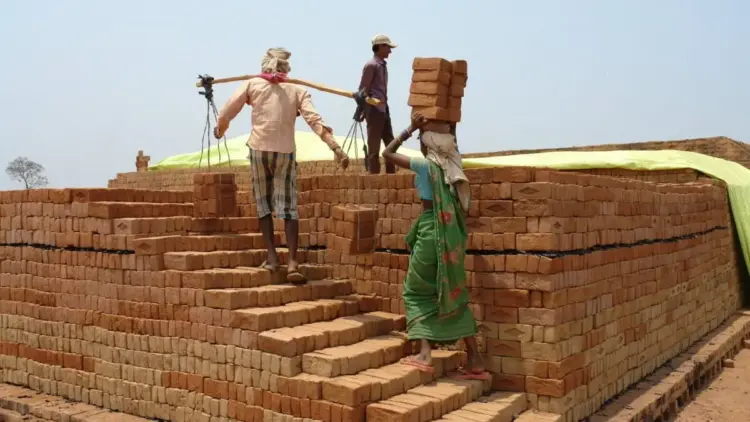
- Sectoral Impact: The agricultural sector bore the brunt, accounting for 66% of these lost hours, followed by the construction sector at 20%.
- Economic Impact: The potential income loss associated with these lost hours is estimated at $194 billion, a figure that rivals the entire annual climate finance demands of many developing nations.
Financial Shortfalls
While the summit failed on a political declaration, it highlighted the "Finance Gap." Developing nations estimate they need upwards of $1 trillion annually by 2030 to transition their economies. Currently, climate finance flows remain a fraction of that, with much of it delivered as loans rather than grants, further straining the debt profiles of the world’s poorest countries.
Official Responses: A House Divided
The reactions to the Antalya failure reflect the deep ideological and economic schisms that now define the UN climate process.

The United Nations: A Call to Action
UN Secretary-General António Guterres did not mince words in his closing remarks. "I share the very profound frustration of all those who expected governments to rise to the moment," Guterres stated. He pointedly criticized the influence of the energy industry, saying, "Those who profit from the destruction of our planet must never dictate the terms of the fight to save it."
India and the LMDC: The Equity Argument
Bhupender Yadav, India’s Environment Minister, emerged as a leading voice for the developing world. He emphasized that climate action cannot be divorced from the right to development. "Developing countries cannot be asked to choose between climate action and their right to development, decent living standards, health, and education," Yadav stated. He also warned against "green protectionism"—trade measures like carbon borders that penalize developing nations for their carbon footprints while they lack the capital to modernize.
The High Ambition Coalition (EU and Vulnerable Nations)
Representatives from the European Union expressed "deep disappointment," noting that the final proposed text was a "betrayal of the science." They argued that ignoring the 1.5°C threshold and the role of fossil fuels in the final document would have undermined the credibility of the entire UNFCCC process.
Implications: The Road to Ethiopia and the Future of Paris
The collapse in Antalya leaves the international climate regime in a state of crisis. The implications of this deadlock will resonate far beyond the conference halls of Türkiye.
1. The Erosion of Multilateralism
The fact that China, Russia, and the U.S. issued a petroleum-positive declaration during a climate summit suggests a move toward "minilateralism," where major powers set energy policy outside the UN framework. This undermines the "all-in-this-together" spirit of the Paris Agreement and suggests that energy security has returned as the primary driver of national policy.

2. The Finance-Mitigation Deadlock
Antalya has proven that the "Dubai Consensus" was fragile. Developing nations are no longer willing to sign onto ambitious mitigation targets (cutting emissions) without "New Collective Quantified Goals" (NCQG) on finance. Until the Global North provides a clear, transparent, and massive increase in funding, the "transition away from fossil fuels" remains a theoretical goal rather than a practical reality.
3. Economic Competitiveness and Trade
The dispute over trade measures mentioned by Minister Yadav suggests that climate policy is becoming a tool of economic warfare. As the EU and U.S. implement carbon-related trade barriers, developing nations view these as "walls" designed to protect Western industries under the guise of environmentalism. This trade friction will likely be a major hurdle at the next summit.
4. The Burden on Ethiopia
The next climate summit (COP32) is scheduled to be held in Ethiopia. The African host will inherit a fractured process. Ethiopia will face the monumental task of bridging the gap between the "energy realism" of the superpowers and the existential "climate urgency" of the Global South.
The technologies required for a green transition—solar, wind, and battery storage—are cheaper and more available than ever before. However, as Antalya demonstrated, technology is not the bottleneck; politics is. The world is currently caught between two competing realities: a planet that is heating at an unsustainable rate and a global economy that remains stubbornly tethered to the fuels that cause it. Until the international community can resolve the question of who pays for the transition, the deadlock of Antalya may become the new status quo.