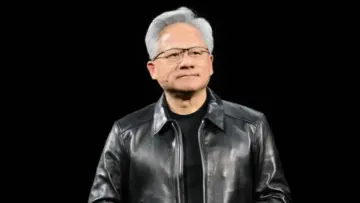
San Francisco, CA – November 17, [Current Year] – In a development sending ripples through the high-stakes world of artificial intelligence and semiconductor manufacturing, prominent short-selling firm Muddy Waters Research has disclosed a short position in Nvidia Corporation and leveled serious questions against Jay Puri, until recently the third-highest-ranking executive at the tech giant. The firm’s report, titled "NVIDIA: More China," specifically probes Puri’s alleged personal connections to Cenly Chen, a former senior official at Super Micro Computer Inc. (SMCI), who is implicated in a civil lawsuit concerning alleged illicit sales of advanced servers and Graphics Processing Units (GPUs) to entities in China, totaling an estimated $2.5 billion.
The allegations surface at a time of heightened geopolitical tensions and strict export controls governing advanced technology sales to China, placing Nvidia, a cornerstone of the global AI boom, directly in the crosshairs of intense scrutiny. Muddy Waters’ report leverages photographic evidence and details from an ongoing civil lawsuit against Super Micro to construct a narrative suggesting a potential nexus between high-ranking executives at critical nodes of the AI supply chain and a multi-billion-dollar scheme to circumvent U.S. export regulations.

The Allegations Unveiled: Muddy Waters’ Explosive Report
Muddy Waters Research, known for its aggressive investigative reports targeting companies it believes are overvalued or engaged in questionable practices, published its detailed findings on November 17. The report immediately drew attention, not least for its focus on Nvidia, a company whose market valuation has soared on the back of the AI revolution.
At the core of the firm’s inquiry is the relationship between Jay Puri, who served as Nvidia’s Executive Vice President of Worldwide Field Operations for over two decades, and Cenly Chen. Chen, until her departure in late April or early May of this year, held the influential position of Senior Vice President and Chief Growth Officer at Super Micro, a key supplier of server infrastructure often integrated with Nvidia’s powerful GPUs.

Muddy Waters’ report directly asks whether the woman identified in several high-society photographs alongside Puri as "Cenly Chen" or "Cenly Puri" is, in fact, the same Cenly Chen formerly employed by SMCI. The firm meticulously cross-referenced video stills of Super Micro’s Cenly Chen, taken during an interview at an Nvidia GTC event, with socialite photographs from prestigious gatherings. These images, captured between 2024 and 2026, include the San Francisco Opera’s Masked Ball in 2024 and the Big Bang Gala and Party After Dark on April 23 of the current year, where Puri’s companion was explicitly tagged as "Cenly Chen" and "Cenly Puri."
Crucially, the short-selling firm indicated that upon the publication of its report, it intended to begin covering a substantial majority or possibly all of its short positions in Nvidia. This strategic move, cited as a measure to manage fiduciary risk, is a common tactic for Muddy Waters, designed to capitalize on immediate market reactions to their reports while mitigating prolonged exposure to market volatility.

A Tapestry of Events: The Chronology of Allegations
The unfolding narrative is a complex web of corporate roles, personal connections, and serious legal challenges. Understanding the timeline is crucial to grasping the gravity of Muddy Waters’ questions.
- Pre-2024: Nvidia’s Ascendancy and Super Micro’s Partnership: For years, Nvidia solidified its position as the undisputed leader in GPU technology, particularly for AI workloads. Super Micro Computer Inc. emerged as a vital partner, specializing in high-performance server solutions that frequently incorporate Nvidia’s advanced GPUs. This symbiotic relationship placed both companies at the forefront of the burgeoning AI hardware supply chain. Jay Puri, as Nvidia’s EVP of Worldwide Field Operations, played a pivotal role in establishing and managing these global sales and partner alliances. Cenly Chen, as SMCI’s SVP and Chief Growth Officer, was instrumental in the company’s growth strategies and its acquisition of critical components like Nvidia GPUs.
- 2024-2026: Social Engagements and Professional Intersections: During this period, Puri maintained his executive role at Nvidia, overseeing vast global operations. The photographs highlighted by Muddy Waters were taken, depicting Puri with a woman identified as Cenly Chen or Cenly Puri at prominent social events. These years also saw the deepening of the commercial ties between Nvidia and Super Micro, making the alleged personal connection between executives overseeing key aspects of this relationship particularly noteworthy.
- Late April/Early May [Current Year]: Cenly Chen’s Departure from SMCI: Cenly Chen abruptly left her position as Senior Vice President and Chief Growth Officer at Super Micro. This departure reportedly occurred roughly a month after the public disclosure of an export diversion scheme involving Super Micro servers. According to former Super Micro employees cited in court filings, Chen’s departure was widely understood internally to be linked to the unfolding scandal, specifically due to her alleged involvement in requesting Nvidia chips with serial numbers associated with illegally diverted GPUs.
- June [Current Year]: Jay Puri’s Transition at Nvidia: Just weeks after Chen’s departure from Super Micro, Jay Puri stepped down from his operational post as Nvidia’s Executive Vice President of Worldwide Field Operations after 21 years of service. He transitioned into a role as a senior adviser to the company, retaining a substantial stake in Nvidia stock. While such transitions are not uncommon for long-serving executives, the timing, juxtaposed with the allegations surrounding Chen and SMCI, has now come under intense scrutiny.
- October [Current Year]: The Consolidated Class Action Complaint Against Super Micro: A significant legal development occurred with the filing of a consolidated class action complaint against Super Micro. This lawsuit included testimony from former SMCI employees who detailed an alleged scheme to illicitly sell servers and GPUs to China. Crucially, these former employees explicitly named Cenly Chen, alleging her direct involvement in managing SMCI’s acquisition and distribution of Nvidia GPUs, and claiming she possessed knowledge of the illicit sales.
- November 17 [Current Year]: Muddy Waters Publishes "NVIDIA: More China": The release of Muddy Waters’ report brought these disparate threads together, presenting a compelling, albeit unproven, case for a deeper investigation into the alleged connections and their implications for Nvidia. The report’s timing, following the class action lawsuit and the executive departures, suggests a calculated effort to highlight what Muddy Waters perceives as significant governance and compliance risks.
Deep Dive into the Supporting Evidence
Muddy Waters’ report draws on multiple strands of evidence, aiming to build a comprehensive picture of potential impropriety and governance failures.

Muddy Waters’ Reputation and Methodology
Muddy Waters Research, founded by Carson Block, has a reputation for forensic analysis and aggressive short-selling. The firm meticulously researches public and sometimes private documents, employing on-the-ground investigations to uncover alleged fraud or significant operational weaknesses. Their reports often trigger sharp declines in targeted companies’ stock prices, validating their short positions. Their past targets have included prominent companies across various sectors, demonstrating their capacity to influence market sentiment through detailed, often controversial, findings. The firm’s decision to target Nvidia, a darling of the current tech market, underscores the perceived significance of their findings.
Nvidia’s Strategic Importance and China Ties
Nvidia’s position in the global technology landscape is unparalleled. Its GPUs are the foundational technology for artificial intelligence, underpinning everything from advanced data centers to autonomous vehicles. The company’s market capitalization has soared, reflecting its indispensable role in the AI revolution. However, this prominence also exposes Nvidia to significant geopolitical risks, particularly concerning U.S.-China tech relations.

The U.S. government has imposed stringent export controls on advanced semiconductor technology to China, citing national security concerns. These regulations aim to prevent China from acquiring cutting-edge chips that could enhance its military capabilities. For Nvidia, navigating this complex regulatory environment while maintaining access to the vast Chinese market has been a delicate balancing act. Any credible allegation of illicit sales or circumvention of these controls poses a severe threat to Nvidia’s reputation, regulatory standing, and market access.
The Super Micro Scandal and its Ramifications
The civil lawsuit against Super Micro, which forms a critical backdrop to Muddy Waters’ report, details a far-reaching alleged scheme. The lawsuit follows a U.S. federal indictment of three individuals with ties to Super Micro: company co-founder Liaw, Taiwan manager Chang, and a third-party broker named Sun. These individuals are accused of selling approximately $2.5 billion worth of Super Micro servers, equipped with Nvidia GPUs, to buyers in China through a Southeast Asian front company, identified in a footnote as Bangkok-based OBON Corp. Of the three criminal defendants, one has pleaded guilty, one has pleaded not guilty, and one is reported to be on the run.

The consolidated class action complaint against SMCI further amplifies these allegations. Former Super Micro employees provided testimony claiming that Cenly Chen "managed SMCI’s acquisition of GPU chips from NVIDIA" and "decided how to distribute NVDA GPUs among Super Micro’s customers." These employees explicitly alleged that "there was no way Cenly Chen lacked knowledge of SMCI’s illicit sales." One former staffer recounted that Chen left Super Micro in May, roughly a month before Puri’s transition at Nvidia, following the public disclosure of the export diversion scheme. This employee further claimed it was widely known internally that Chen had to leave "because she had sent emails requesting that NVIDIA release chips with serial numbers associated with the GPUs illegally diverted to customers in China."
Further explosive allegations in the civil complaint include a report from another former employee who claimed to have heard of an incident "in which Cenly Chen handed NVIDIA chips to a CoreWeave executive boarding a plane to China in order to win CoreWeave’s business." Additionally, Chen allegedly warned staff during Friday sales meetings that they would be fired if they discussed company scandals, suggesting an awareness of illicit activities and an attempt to suppress internal dissent.

It is critical to note, as Muddy Waters itself highlighted, that "Nobody by the name of Cenly Chen has been indicted or otherwise accused of criminal conduct by any government," and that the allegations contained within the civil class action lawsuit remain unproven.
The Profiles: Jay Puri and Cenly Chen
Jay Puri: A veteran of the technology industry, Jay Puri dedicated 21 years to Nvidia, rising to become the Executive Vice President of Worldwide Field Operations. In this capacity, he was responsible for Nvidia’s global sales, partner alliances, and other critical operational areas, effectively making him the third most senior executive, behind CEO Jensen Huang and CFO Colette Kress. His influence within Nvidia and across its global network of partners, including server manufacturers like Super Micro, was immense. Between 2024 and 2026, Puri’s total compensation even exceeded that of CFO Kress, underscoring his strategic importance. Following his transition in June of the current year, he continues to serve as a senior adviser to Nvidia and, as of June 17, held 3,665,220 shares of Nvidia stock, valued at approximately $570 million at the market close on November 16.

Cenly Chen: Until her departure in late April or early May, Cenly Chen served as Senior Vice President and Chief Growth Officer at Super Micro Computer Inc. Her role placed her at the nexus of Super Micro’s strategic growth initiatives and its crucial component procurement, particularly of Nvidia GPUs. Post-Super Micro, Chen currently serves as Chief Executive Officer of Chronoscale, an investor relations firm. Her alleged role in managing the acquisition and distribution of Nvidia GPUs for Super Micro, as detailed in the civil lawsuit, is central to the current controversy.
The Photographic Link: A Visual Investigation
Muddy Waters’ report places significant weight on photographic evidence. The firm presented a direct comparison between video stills of Super Micro’s Cenly Chen, purportedly from an interview at an Nvidia GTC event, and high-society photographs featuring Jay Puri. These social event photos, from gatherings like the San Francisco Opera’s Masked Ball in 2024 and the Big Bang Gala and Party After Dark on April 23 of this year, clearly show Puri with a companion identified in accompanying tags as "Cenly Chen" or "Cenly Puri." The visual similarity, according to Muddy Waters, raises the direct question of whether these are indeed the same individual, thereby establishing a potential personal relationship between two executives whose professional roles intersected directly at a critical point in the AI supply chain. Muddy Waters stated that it reached out to the investor relations firm representing Chronoscale, where Cenly Chen is CEO, to clarify the identity of the individual in the photographs but received no response.

Silence and Statements: Official Responses
The response, or lack thereof, from the implicated parties has been a notable aspect of the unfolding story.
- Nvidia: As of the publication of Muddy Waters’ report, Nvidia has not issued a specific statement directly addressing the allegations concerning Jay Puri or the purported link to Cenly Chen. Companies often take time to review such reports before issuing a formal response, if any, particularly when they involve former executives and unproven allegations. Nvidia’s standard public statements typically emphasize its commitment to compliance with all international trade laws and regulations.
- Super Micro Computer Inc. (SMCI): Super Micro has been embroiled in its own legal battles regarding the alleged illicit sales. While the company is likely to be vigorously defending itself against the civil class action lawsuit and cooperating with federal investigations, specific responses concerning Cenly Chen’s alleged actions or her relationship with Jay Puri have not been widely publicized. Their legal posture would typically involve denying wrongdoing or emphasizing that any alleged actions were not condoned by the company.
- Jay Puri: Jay Puri has not publicly commented on the allegations raised by Muddy Waters. Given his current advisory role and substantial shareholding in Nvidia, any statement would likely be carefully considered and potentially issued through legal counsel.
- Cenly Chen / Chronoscale: As highlighted by Muddy Waters, attempts to elicit a response from Chronoscale, where Cenly Chen serves as CEO, regarding the identity of the individual in the photographs were unsuccessful. This lack of response leaves the firm’s central question unanswered from Chen’s side.
- Muddy Waters Research: The firm’s statement regarding its intention to cover its short position after publication, citing fiduciary risk management, is an integral part of its strategy. It suggests that while they believe in the validity of their report’s findings to trigger an initial market reaction, they are not necessarily committing to a long-term bet against Nvidia, acknowledging the complexities and potential for recovery.
Far-Reaching Implications
The Muddy Waters report, coupled with the ongoing legal challenges faced by Super Micro, carries significant implications across various domains.

Market Impact and Investor Confidence
The immediate market reaction to such reports often includes increased volatility and a downward pressure on the target company’s stock. For Nvidia, a company whose valuation rests heavily on investor confidence in its growth trajectory and ethical conduct, these allegations could erode trust, at least temporarily. Investors will be closely watching for official responses, further investigations, and any concrete evidence either substantiating or refuting the claims. The potential for reputational damage could translate into sustained market skepticism, affecting Nvidia’s stock performance even if no wrongdoing is definitively proven. Super Micro, already facing a federal indictment and civil lawsuit, could see further pressure on its stock and business operations.
Reputational Risk and Corporate Governance
For Nvidia, the mere questioning of a former high-ranking executive over alleged ties to a multi-billion-dollar illicit sales scheme poses a significant reputational risk. It raises questions about internal oversight, compliance mechanisms, and the ethical conduct of its senior leadership, even if the alleged actions occurred outside official corporate channels. The interconnectedness of the tech industry means that the actions of one executive, even after their operational departure, can reflect poorly on the entire organization. This incident could prompt a deeper review of corporate governance practices at both Nvidia and Super Micro, particularly concerning executive relationships with partners and adherence to export regulations.

Regulatory Scrutiny and Geopolitical Context
The allegations directly touch upon the sensitive issue of U.S. technology exports to China. The U.S. government has been increasingly aggressive in enforcing export controls to prevent advanced chips from reaching Chinese entities that could pose national security risks. Any indication that these controls were circumvented, especially on such a large scale, will inevitably lead to heightened scrutiny from regulatory bodies like the Department of Justice, the Department of Commerce, and the Treasury Department. This could trigger broader investigations into the supply chain, impacting not only Nvidia and Super Micro but potentially other companies involved in the semiconductor ecosystem. The case further underscores the complex geopolitical environment in which global tech companies operate, where business decisions are increasingly intertwined with national security concerns.
Legal Ramifications and Burden of Proof
The ongoing civil lawsuit against Super Micro and the federal indictment against individuals linked to it will continue to unfold. The allegations against Cenly Chen, while unproven, are serious and could lead to further legal actions or expansions of existing cases. For Jay Puri, while not accused of criminal conduct, the public questioning by Muddy Waters could expose him to further scrutiny, potentially impacting his advisory role at Nvidia and his personal reputation. The burden of proof in these cases is high, and the outcome will depend on the ability of prosecutors and plaintiffs to present compelling evidence that stands up in court.

Industry Standards and Compliance
This saga serves as a stark reminder to the technology industry about the critical importance of robust compliance programs and stringent ethical standards. As supply chains become more complex and global, and as geopolitical tensions rise, companies must ensure their internal controls are impenetrable to illicit activities. The allegations might prompt a wider re-evaluation of how tech companies manage relationships with partners, monitor executive conduct, and ensure adherence to export controls, ultimately shaping future industry standards for accountability and transparency.
In conclusion, Muddy Waters’ report has injected a new layer of complexity and controversy into the already volatile intersection of technology, finance, and geopolitics. While the allegations against Jay Puri and Cenly Chen remain unproven, the questions raised are substantial, carrying significant weight for Nvidia, Super Micro, and the broader semiconductor industry. The coming months will likely see further developments as legal processes unfold and the implicated parties respond to the intense scrutiny now upon them.