Introduction
At the 2026 Guangzhou International Auto Show, a pivotal moment in the automotive calendar, Hyundai Motor Company took a decisive step in its aggressive "China-first" strategy. The South Korean automotive giant officially pulled the wraps off the Mercury Concept, a striking, compact electric SUV designed specifically to cater to the unique tastes and technological demands of the Chinese consumer. Previewing a production model slated to be called the Ioniq M, the Mercury Concept is more than just a design study; it is a manifesto of Hyundai’s intent to regain its footing in the world’s largest electric vehicle (EV) market. With a scheduled launch in the first half of 2027, the Ioniq M will introduce a suite of localized technologies, most notably a battery-swapping architecture developed in collaboration with global battery leader CATL.
Main Facts: The Mercury Concept and the Birth of the Ioniq M
The Mercury Concept serves as the spiritual and technical successor to a series of China-centric prototypes. It expands upon the foundation laid by the Ioniq V sedan, which debuted earlier this year, and continues the "planetary" nomenclature previously seen with the Earth and Venus concepts. However, the Mercury represents a significant evolution in aesthetic and functional philosophy.

"The Origin" Design Language
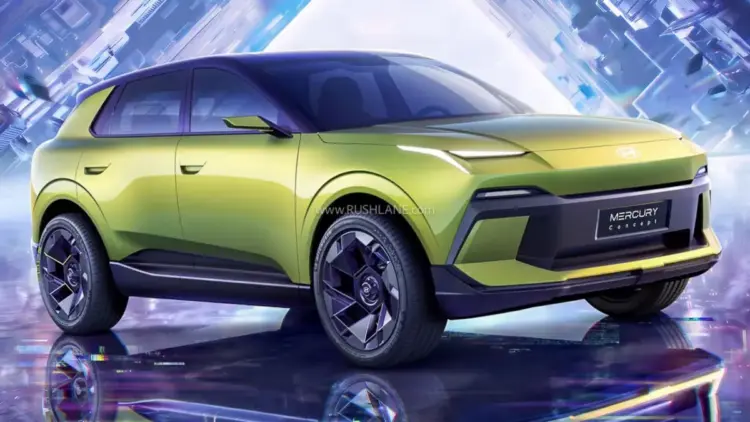
The visual identity of the Mercury is defined by a new design language Hyundai calls "The Origin." This philosophy moves away from the global "Sensuous Sportiness" seen in models like the Ioniq 5 and 6, opting instead for a more aggressive, angular, and layered look that aligns with current Chinese trends. The concept is finished in a high-visibility "Citrine Neon" shade, a color choice intended to emphasize the vehicle’s sharp creases and geometric proportions.
Key design elements include:
- Front Fascia: A steeply sculpted bonnet leads down to slim, angular daytime running lights (DRLs) that frame a dark, multi-layered bumper section. The lighting is pushed to the extreme edges to emphasize the vehicle’s width.
- Profile: The SUV features pronounced, squared-off wheel arches and flush-fitting door handles. The glasshouse is defined by a steeply raked windscreen and a contrasting roof and pillar treatment that creates a "floating" effect.
- Rear Aesthetics: The rear is dominated by a full-width light bar featuring integrated "Ioniq" lettering. A prominent roof spoiler and a complex lower bumper with a vertical red fog light emphasize the sporty, tech-forward nature of the SUV.
Technological Ecosystem
Beyond its shell, the Mercury is a vessel for Chinese-developed technology. Hyundai has abandoned its traditional reliance on proprietary global software for this project, choosing instead to partner with local giants. The vehicle’s "Smart Cockpit" will be powered by a conversational AI model from ByteDance (the parent company of TikTok), ensuring that the infotainment system feels native to Chinese users. Furthermore, the Advanced Driver Assistance Systems (ADAS) are being developed by ZYT, a local specialist in autonomous driving sensors and algorithms.
Chronology: Hyundai’s Roadmap to 2030
The unveiling of the Mercury Concept is a single, albeit vital, milestone in a multi-year rollout strategy. To understand the Mercury, one must look at the timeline of Hyundai’s recent and future activities in the Chinese market.

- September 2026: Hyundai launches the Ioniq V sedan in China. This marked the beginning of the brand’s localized Ioniq sub-brand, utilizing platforms and features specifically tuned for local infrastructure.
- November 2026: The Mercury Concept debuts at the Guangzhou International Auto Show, signaling the move into the high-volume compact SUV segment.
- First Half of 2027: The production version of the Mercury, the Ioniq M, is scheduled to go on sale. Alongside it, Hyundai plans to introduce an Extended-Range Electric Vehicle (EREV) version of the Ioniq V to address "range anxiety" in regions with less developed charging infrastructure.
- 2028: The production version of the Earth Concept—a larger, family-oriented SUV—is slated for launch.
- 2029: Hyundai plans to debut two additional electrified models, further diversifying its portfolio into niche segments.
- 2030: Hyundai aims to have a total of 24 models available in the Chinese market, spanning both internal combustion engine (ICE) successors and a comprehensive suite of EVs and hybrids.
Supporting Data: The CATL Partnership and Financial Backing
One of the most significant technical revelations accompanying the Mercury Concept is the confirmed collaboration with Contemporary Amperex Technology Co. Limited (CATL) for battery-swapping technology.
The Battery-Swapping Advantage
In China, battery swapping has emerged as a viable and popular alternative to traditional DC fast charging, championed by brands like Nio. Hyundai’s decision to develop a battery-swapping derivative of the Ioniq M is a strategic masterstroke. It allows the vehicle to appeal to urban dwellers who may not have access to home charging. While specific battery capacities have not been disclosed, the integration with CATL suggests the Ioniq M will utilize the "Choco-SEB" (Swapping Electric Block) technology or a similar modular architecture, allowing for rapid exchanges at automated stations.
Financial Foundations
This product offensive is backed by substantial financial commitments. In 2025, Hyundai and its joint venture partner, BAIC (Beijing Automotive Group), injected 8 billion yuan (approximately USD 1.2 billion or Rs 11,147.54 crore) into Beijing Hyundai. This capital was specifically earmarked for the "next phase" of development, which focuses on the transition from traditional manufacturing to a "Tech-First" automotive company. This investment has allowed the brand to pivot its R&D centers in China to focus almost exclusively on electrification and smart connectivity.
Official Responses: A "In China, For China" Mentality
While Hyundai executives at the Guangzhou show remained tight-lipped about specific performance metrics like horsepower or exact range, their rhetoric focused heavily on localization and partnership.

A spokesperson for Beijing Hyundai noted during the press conference:
"The Mercury Concept is not just a car designed in Korea for the Chinese market. It is a product of deep collaboration with our local partners—CATL, ByteDance, and ZYT. We are listening to the Chinese consumer who demands more than just a mode of transport; they want a seamless extension of their digital life. The Ioniq M will represent the pinnacle of this ‘In China, For China’ philosophy."
Analysts at the show observed that Hyundai is deliberately distancing the China-market Ioniq models from the global E-GMP (Electric-Global Modular Platform) models sold in Europe and North America. This allows for a more flexible cost structure and faster integration of local tech trends, which move at a much higher velocity than in Western markets.
Implications: The Global and Local Impact
The debut of the Mercury Concept and the roadmap for the Ioniq M carry heavy implications for both the Chinese domestic market and Hyundai’s global operations.
1. Reclaiming Market Share
Following years of declining sales in China due to geopolitical tensions and the rise of domestic champions like BYD and Tesla, Hyundai is attempting a "reset." By adopting battery swapping and local AI, they are directly challenging the Unique Selling Propositions (USPs) of Chinese EV startups. If the Ioniq M can be priced competitively against the likes of the Zeekr 7X or the Nio ONVO L60, it could mark the return of Hyundai as a volume player.

2. The Rise of the EREV
The mention of an EREV version of the Ioniq V in 2027 is a significant admission of the current market reality. While pure BEVs are the long-term goal, EREVs (where a small petrol engine acts as a generator) are currently surging in popularity in China. Hyundai’s pivot to this technology shows a pragmatic approach to capturing market share in Tier 2 and Tier 3 cities.
3. China as an Export Hub
Perhaps the most far-reaching implication is Hyundai’s plan to use its Chinese manufacturing base for global exports. The technology developed for the Mercury and Ioniq M—particularly the cost-effective battery solutions and advanced software—could eventually find its way into vehicles bound for Southeast Asia, the Middle East, and potentially Europe. By leveraging China’s mature EV supply chain, Hyundai can produce high-tech vehicles at a lower cost than its South Korean or European plants.
4. The Battery-Swapping Standard
By partnering with CATL, Hyundai is throwing its weight behind a specific battery-swapping standard. This could help consolidate the fragmented swapping market in China and set a precedent for other international legacy automakers to follow suit, rather than trying to develop proprietary, incompatible systems.
Conclusion
The Hyundai Mercury Concept is a bold declaration of resilience. It acknowledges that to succeed in China, a global automaker cannot simply "globalize" its products; it must "localize" them to the point of transformation. With its striking "Citrine Neon" angularity, its ByteDance-powered brain, and its CATL-developed heart, the upcoming Ioniq M is poised to be the most "Chinese" vehicle ever produced by a foreign brand. As the industry moves toward 2027, all eyes will be on whether this high-stakes gamble on local partnerships and battery swapping can restore Hyundai to its former glory in the East.