

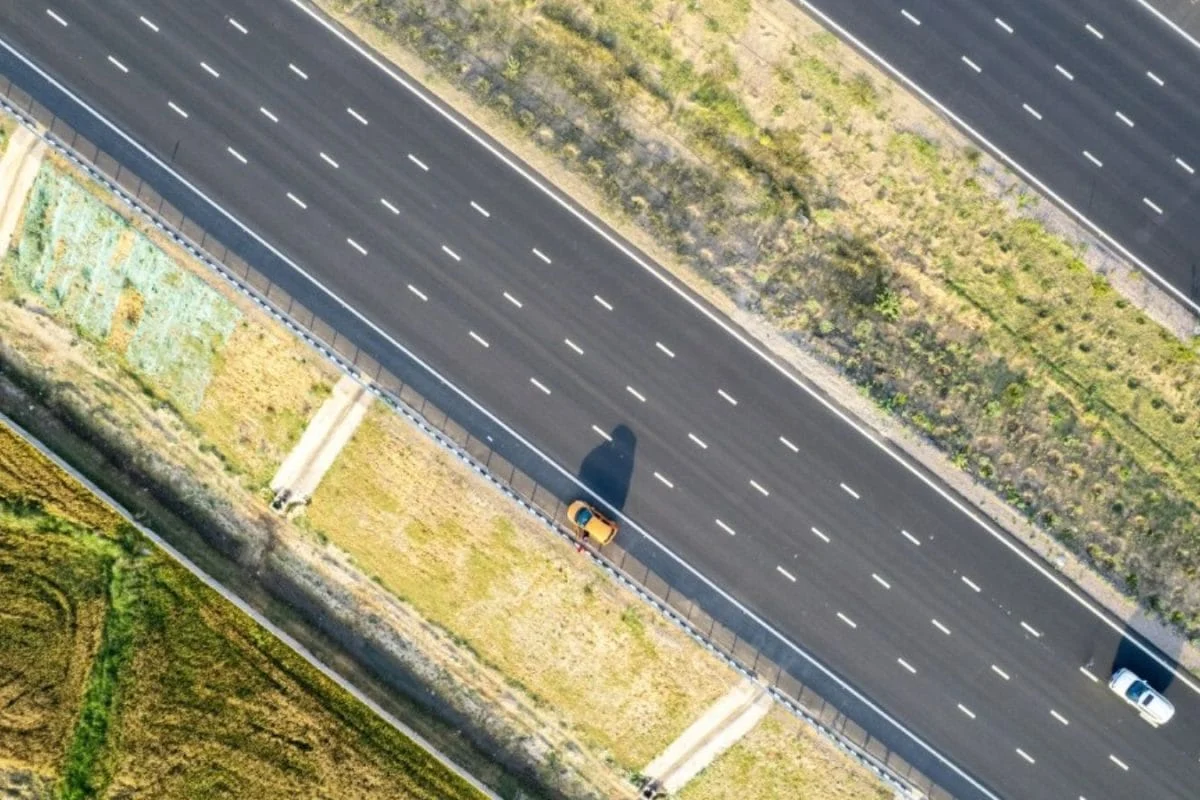
The landscape of Indian infrastructure is undergoing a tectonic shift, and at the center of this transformation lies the 1,386-km Delhi-Mumbai Expressway (DME). Long envisioned as a mere transit corridor to link the national capital with the financial capital, the project has evolved into a massive economic engine. As of mid-2026, with the expressway nearing full completion, it is no longer just a feat of engineering; it is the primary catalyst for a real estate revolution that is breathing new life into Tier-II cities and transforming the "hinterlands" into high-value investment hubs.
From the outskirts of Gurugram to the industrial belts of Gujarat, the "Expressway Effect" is manifesting in double-digit price appreciations, a surge in industrial demand, and a fundamental shift in where Indians choose to live and work.
Main Facts: The Economic Velocity of the DME
The Delhi-Mumbai Expressway is India’s longest expressway, designed to slash travel time between the two megacities from 24 hours to approximately 12 hours. With a design speed of 120 kmph and an initial eight-lane configuration (expandable to 12), the corridor traverses six states: Delhi, Haryana, Rajasthan, Madhya Pradesh, Gujarat, and Maharashtra.
However, the most striking data point for investors isn’t the speed of the cars, but the speed of capital appreciation. Recent market reports indicate that land prices within a 50-km radius of the corridor have surged by 30% to 40% in several stretches. This growth is driven by three distinct pillars:
- Industrial and Logistics Demand: The expressway is the backbone of the Delhi-Mumbai Industrial Corridor (DMIC). Massive demand for "Grade A" warehousing and Multi-Modal Logistics Parks (MMLPs) has turned previously agricultural land into prime commercial real estate.
- The Tier-II Pivot: Cities like Jaipur, Indore, and Vadodara are seeing a residential boom. As connectivity improves, these cities are offering a high quality of life at a fraction of the cost of Tier-I metros.
- The Rise of Satellite Townships: Areas like Sohna (South of Gurugram), Dausa, and Bharuch are evolving from transit points into self-sustaining ecosystems with gated communities, schools, and hospitals.
In the first half of 2025, land deals in Tier-II and Tier-III cities across India reached 1,907 acres, significantly outpacing the 991 acres recorded in Tier-I cities. This data signals a clear trend: institutional money and smart retail investors are moving toward the periphery, following the trail of the expressway.
Chronology: From Blueprint to Backbone
The journey of the Delhi-Mumbai Expressway is a study in rapid infrastructure execution and its immediate impact on market sentiment.
- 2018–2019: Inception and Land Acquisition: The project was conceptualized under the Bharatmala Pariyojana. Land acquisition began across six states, sparking the first wave of speculative investment in rural Rajasthan and Haryana.
- 2023: The First Spark: In February 2023, the 246-km Sohna-Dausa-Lalsot section was inaugurated. This immediately brought Jaipur within a three-hour drive of Delhi. Within six months of this opening, property prices in Sohna jumped by 20%, and interest in Jaipur’s luxury residential market spiked.
- 2024: Connectivity Expansion: Phased openings in Madhya Pradesh and Gujarat linked key industrial hubs like Ratlam and Vadodara. This period saw a massive influx of logistics players (such as DHL and Reliance) securing land for distribution centers.
- 2025: The Institutional Surge: By early 2025, over 80% of the project funds were utilized, and more than 65% of the stretch became operational. Institutional investors shifted focus from land banking to project development, leading to the rise of integrated townships.
- 2026: The Final Stretch: As of May 2026, the expressway is in its final stages of completion. The focus has moved to "last-mile connectivity"—the feeder roads that link the expressway interchanges to the hearts of nearby cities.
Supporting Data: A City-Wise Breakdown
The impact of the DME is not uniform; it varies based on existing infrastructure and the economic profile of the specific region.
1. Jaipur: The New Suburban Extension of NCR
Jaipur has emerged as perhaps the biggest beneficiary. Residential property prices in the Pink City have climbed 12–18% in the last year alone. The city is no longer just a tourist destination; it is becoming a viable satellite for Delhi-based professionals.
- Office Space Growth: Office stock is projected to grow from 7.8 million sq. ft. to 13 million sq. ft. by 2030.
- Cost Advantage: Office rentals in Jaipur remain roughly 54% cheaper than in the Delhi-NCR region, attracting IT firms and startups looking to optimize operational costs.
2. Indore: The Logistics Heart of India
Located centrally, Indore’s proximity to the DME has solidified its status as a premier logistics hub.
- Price Appreciation: Residential prices rose 10–15% in 2025.
- Commercial Appeal: IT and enterprise rentals are currently hovering between Rs 150–200 per sq. ft., making it an attractive "work-from-anywhere" destination for tech talent in Central India.
3. The Sohna-Gurugram Belt: The Luxury Frontier
Sohna, once considered the "far end" of Gurugram, is now the gateway to the DME.
- Land Rates: Prices have jumped a staggering 60–70% since the project’s inception.
- Residential Benchmarks: Property prices in Sohna have touched or exceeded Rs 15,000 per sq. ft., rivaling established sectors of Gurugram.
4. Vadodara and Bharuch: The Industrial Corridor
In Gujarat, the expressway is augmenting an already strong industrial base.
- Projections: Analysts forecast an 8–10% annual price appreciation in Vadodara’s prime areas.
- Long-term Outlook: Newer localities near the expressway interchanges are expected to deliver 20–25% returns over the next 3–5 years as the "Golden Quadrilateral" and DME synergy takes full effect.
Official Responses and Expert Insights
Government officials and industry experts view the expressway as a "multiplier" for the national GDP.
Nitin Gadkari, Union Minister for Road Transport and Highways, has frequently emphasized that the expressway is designed to create "New Cities." In recent statements, the Ministry has highlighted that the DME will save approximately 320 million liters of fuel annually and reduce CO2 emissions by 850 million kg, aligning with India’s green energy goals.
Urban Planning Experts suggest that the expressway is facilitating "Rurbanization"—the development of rural areas with urban amenities. "We are seeing a shift in the developer mindset," says a senior analyst at a leading real estate consultancy. "Instead of building vertical boxes in congested metros, developers are launching ‘plotted developments’ and ‘gated farmhouses’ along the DME, catering to a post-pandemic desire for space and connectivity."
CREDAI (Confederation of Real Estate Developers’ Associations of India) officials have noted that the reduction in transportation costs is a "game-changer" for the construction industry itself. Lower logistics costs for cement and steel are helping developers maintain margins even as they expand into newer, more affordable territories.
Economic and Social Implications: The Road Ahead
The long-term implications of the Delhi-Mumbai Expressway extend far beyond real estate prices.
1. Decentralization of the Economy
For decades, India’s economic growth was concentrated in 5-6 "Tier-I" megacities. The DME is effectively "flattening" the economic map. By providing world-class connectivity to cities like Alwar, Ratlam, and Dausa, the government is encouraging businesses to move away from the saturated markets of Mumbai and Delhi.
2. Reverse Migration and Employment
The rise of industrial parks and IT hubs in Tier-II cities is facilitating a "reverse migration." Professionals who previously had to move to Delhi or Mumbai for high-paying jobs can now find similar opportunities in Jaipur or Indore, enjoying a lower cost of living and better air quality.
3. The "Warehouse Revolution"
With the implementation of GST and the completion of the DME, India’s warehousing sector is moving from fragmented, small-scale godowns to massive, tech-enabled fulfillment centers. This is a critical component for the e-commerce boom, allowing companies like Amazon and Flipkart to promise faster delivery times to a larger portion of the population.
4. Risk of Speculative Bubbles
While the growth is impressive, experts warn of "irrational exuberance." In some stretches, land prices have risen faster than the supporting infrastructure (electricity, water, and local sewage). Investors are cautioned to look for "exit-ready" properties—those with clear titles and proximity to planned interchanges—rather than speculative agricultural land in deep interiors.
Conclusion: The Closing Window of Opportunity
The Delhi-Mumbai Expressway is more than a road; it is a 1,300-kilometer-long corridor of opportunity. As the final sections prepare for their grand opening in late 2026, the "early-mover advantage" for property buyers is rapidly narrowing.
For the smart investor, the map of the expressway is essentially a map of India’s future growth. Whether it is a warehouse in Vadodara, a tech-park office in Jaipur, or a residential plot in Sohna, the value proposition is clear: connectivity creates value. As India races toward a $5 trillion economy, the Delhi-Mumbai Expressway is the fast lane that will get it there, and the real estate market is simply keeping pace.
