

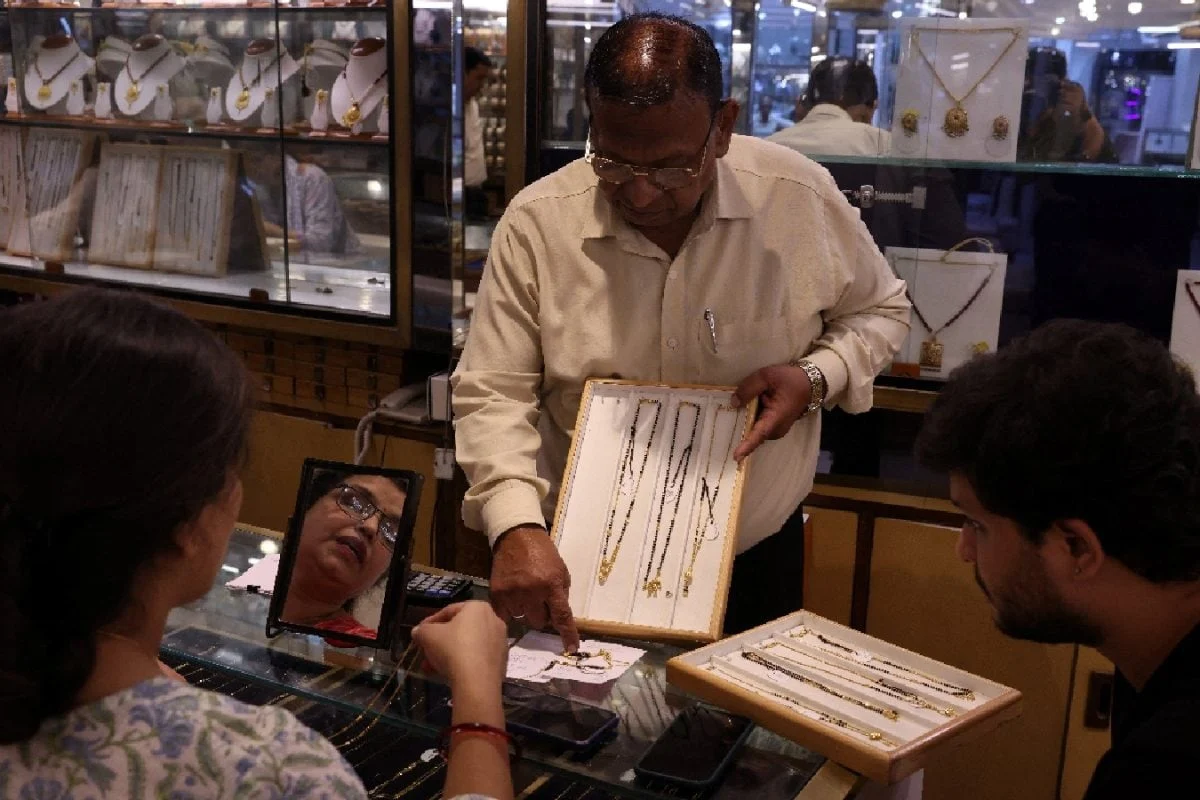
NEW DELHI, India – In a significant move aimed at reining in the burgeoning current account deficit and stabilizing the national economy amidst escalating global uncertainties, the Indian government has dramatically increased the customs duty on imports of gold, silver, and an array of related precious metal products. Effective from midnight on May 13, 2026, the revised rates will see the import duty rise to a flat 10% across multiple tariff categories, a decision communicated through a series of notifications issued by the Ministry of Finance’s Department of Revenue.
This decisive action comes at a critical juncture for the Indian economy, which has witnessed a record surge in gold imports, coupled with a direct appeal from Prime Minister Narendra Modi to citizens to exercise prudence in gold purchases and non-essential foreign travel. The heightened duty is poised to significantly impact bullion traders, jewellery manufacturers, industrial refiners, and ultimately, the end consumer, signaling the government’s firm resolve to manage its external finances.
Main Facts: A Bold Stroke to Control Precious Metal Inflows
The core of the government’s latest economic intervention lies in the immediate increase of customs duty on a broad spectrum of precious metal imports. As per the notifications issued on Tuesday, May 13, 2026, the customs duty on gold, silver, platinum, and various associated products has been uniformly raised to 10%. This revision marks a substantial uptick and is designed to make these imports considerably more expensive, thereby discouraging their inflow into the country.
The scope of this duty hike is extensive, encompassing not just raw bullion but also critical components used in the vibrant Indian jewellery manufacturing sector. Items such as "jewellery findings" – which include essential elements like hooks, clasps, clamps, pins, and screw backs – will now attract a 10% customs duty. Previously, some of these components had varying, often lower, duty structures, making the current across-the-board increase particularly impactful. Platinum findings, for instance, will also fall under this enhanced duty regime.
Furthermore, the revised duty structure extends to industrial imports, specifically "spent catalysts or ash containing precious metals meant for recovery and recycling purposes." These crucial raw materials for precious metal refiners will also now face a 10% customs duty, subject to specified conditions. While the ‘Rapid Read’ summary in earlier reports mentioned a concessional duty of 4.35% for spent catalysts, the detailed notifications confirm the general increase to 10%, indicating that any concessional rates would be highly specific and conditional, with the broader intent being to apply the higher rate.
This government intervention is not merely a revenue-generating exercise but a strategic fiscal maneuver. It underscores a broader policy objective to address the nation’s soaring import bill for non-essential items, reduce the widening current account deficit, and strengthen the rupee against global currencies. The timing of this announcement, amidst ongoing geopolitical tensions in West Asia, further highlights the government’s proactive stance in safeguarding the domestic economy from external shocks.
Chronology: A Pattern of Intervention and Escalating Concerns
The decision to raise import duties on precious metals is not an isolated event but rather the latest in a series of policy adjustments by the Indian government over the years, reflecting a persistent concern over the volume of gold and silver imports.
May 13, 2026: The current set of notifications from the Department of Revenue, Ministry of Finance, formally announce the revised customs duty rates, bringing them into effect from midnight. These amendments specifically modify earlier customs notifications issued in 2000, 2018, 2021, and 2025, indicating a continuous review and recalibration of import policies for precious metals. The explicit mention of modifying previous notifications underscores the dynamic nature of India’s trade policy in this sector, adapting to evolving economic conditions and global market trends.
Prior to May 13, 2026: While specific previous rates for each category are not detailed in the rapid read, the general increase to 10% from unspecified lower rates signifies a notable jump. Historically, India has adjusted gold import duties multiple times, sometimes increasing them to curb imports during periods of high current account deficit, and occasionally reducing them to prevent smuggling or support the legitimate jewellery trade. The continuous tweaking of these duties highlights the government’s struggle to balance economic stability with the deeply ingrained cultural demand for gold.
Late 2025 – Early 2026: Leading up to this announcement, the government had already begun expressing concerns over the escalating gold import figures. The Prime Minister’s public appeal to delay gold purchases and cut down on foreign travel came as a direct response to these growing anxieties, setting the stage for more concrete fiscal measures. This public communication served as an early warning signal of impending policy changes.
Fiscal Year 2025-26: This period marked an unprecedented surge in India’s gold imports, reaching a record $71.98 billion. This alarming figure, significantly higher than previous years, acted as a primary catalyst for the government’s latest intervention. The trajectory of these imports has been a consistent upward trend over the past few years, making it an unsustainable burden on the nation’s foreign exchange reserves.
Supporting Data: Unpacking India’s Gold Addiction
The government’s drastic measure is underpinned by compelling and increasingly concerning statistical data regarding India’s precious metal imports. The nation’s insatiable demand for gold, driven by cultural significance, investment hedging, and traditional gifting, has placed an enormous strain on its external finances.
Record Gold Imports in FY 2025-26: The most striking figure that has prompted this policy shift is the staggering $71.98 billion worth of gold imported into India during the fiscal year 2025-26. This represents a substantial increase of over 24% from the previous fiscal year’s figure of $58 billion, and marks an all-time high for the country. Such an immense outflow of foreign exchange for a single commodity, much of which is considered non-essential for industrial production, has become economically unsustainable.
Escalating Trend in Recent Years: The import data reveals a consistent and accelerating upward trend:
- FY 2022-23: Approximately $35 billion
- FY 2023-24: $45.54 billion
- FY 2024-25: $58 billion
- FY 2025-26: $71.98 billion
This near-doubling of gold imports in just four years illustrates the severity of the challenge confronting policymakers. Each billion dollars spent on gold imports represents foreign exchange that could otherwise be utilized for crucial infrastructure development, industrial raw materials, or investment in export-oriented sectors.
India: A Global Gold Powerhouse: India remains the world’s second-largest consumer of gold, trailing only China. This position underscores the deep-seated cultural and economic role gold plays in the country. Demand is predominantly driven by the jewellery sector, which is a major employer and a significant contributor to the informal economy. Additionally, gold is traditionally viewed as a safe-haven asset, particularly during times of economic uncertainty or high inflation, serving as a popular form of household savings and investment, especially in rural areas.
The country’s substantial reliance on imports to meet this demand, given its limited domestic gold production, makes it highly vulnerable to global gold price fluctuations and exerts constant pressure on its trade balance. The new duty structure aims to temper this demand by making imports more expensive, thereby nudging consumers and investors to reconsider their purchasing patterns or explore alternative domestic investment avenues.
Official Responses and Rationale: A Multi-pronged Strategy
The government’s decision to hike import duties is a clear articulation of its economic priorities, backed by official notifications and high-level appeals. The rationale behind this move is multi-faceted, addressing both immediate economic pressures and long-term structural concerns.
Finance Ministry Notifications: The formal announcement came through a set of notifications issued by the Department of Revenue under the Customs Act. These legal instruments amend previous customs notifications from 2000, 2018, 2021, and 2025, establishing the legal framework for the revised 10% duty on gold, silver, platinum, jewellery findings, and spent catalysts. The specificity of amending prior notifications highlights a careful, legally sound approach to policy implementation rather than an ad-hoc decision. The immediate effect from May 13 midnight underscores the urgency perceived by the government.
Prime Minister’s Appeal: Preceding the official duty hike, Prime Minister Narendra Modi made a significant public appeal to Indian citizens. He urged them to "delay gold purchases and cutting down on foreign travel" as the government endeavors to "shield the economy from the fallout of the conflict" in West Asia. This direct address from the nation’s highest office is highly unusual for such specific consumer behavior and underscores the gravity of the economic situation.
The Prime Minister’s appeal serves several purposes:
- Direct Communication: It directly communicates the seriousness of the economic challenges to the populace, encouraging voluntary behavioral changes.
- Moral Suasion: It leverages the Prime Minister’s authority to encourage nationalistic economic discipline, framing personal financial decisions within the broader context of national economic stability.
- Pre-emptive Measure: It was likely a pre-cursor to the duty hike, preparing the public for stricter measures and explaining the necessity behind them.
- Addressing Geopolitical Risks: The explicit mention of "tensions continuing to escalate in West Asia" highlights the government’s concern over global instability impacting India’s energy security, trade routes, and the general investment climate. Gold, as a safe-haven asset, often sees increased demand during such periods, further exacerbating import pressures.
Addressing the Current Account Deficit (CAD): A primary driver for the duty hike is the government’s persistent effort to manage and reduce the Current Account Deficit. The CAD represents the difference between a country’s total exports and imports of goods, services, and transfers. A widening CAD, heavily influenced by large gold imports, puts pressure on the national currency and foreign exchange reserves. By making gold imports more expensive, the government hopes to curb demand and thereby alleviate pressure on the CAD.
Stabilizing the Rupee: High import bills, especially for non-essential items like gold, necessitate greater outflow of foreign currency (primarily US dollars). This increased demand for dollars weakens the Indian Rupee against the dollar. A depreciating rupee makes all imports, including crucial industrial raw materials and crude oil, more expensive, contributing to inflationary pressures. The duty hike is thus a measure to support the rupee’s stability.
Promoting Domestic Savings and Investment: By making physical gold more expensive, the government may also implicitly encourage citizens to divert their savings towards other financial instruments or productive investments within the domestic economy, rather than locking up capital in unproductive gold assets. This aligns with broader government initiatives to formalize the economy and channel savings into growth-oriented sectors.
Implications: Far-Reaching Effects on Economy, Industry, and Consumers
The government’s decision to increase customs duty on precious metals to 10% will trigger a cascade of economic and market implications, affecting various stakeholders from the largest bullion dealers to the individual consumer.
Impact on Consumers:
- Higher Jewellery Prices: The most direct and immediate impact will be on the price of gold, silver, and platinum jewellery. With a 10% duty, manufacturers will invariably pass on the increased input costs to consumers, making precious metal articles more expensive. This could dampen demand, especially during peak seasons like festivals and weddings.
- Investment Choices: For those who view gold as an investment, the higher price might reduce its attractiveness, potentially prompting a shift towards other financial assets like equities, bonds, or real estate, provided these offer competitive returns and stability.
- Inflationary Pressure: While the intent is to curb imports, the higher cost of gold can contribute to overall inflation, particularly if gold is seen as a benchmark for wealth.
Impact on the Jewellery Industry:
- Increased Input Costs: Jewellery manufacturers, who rely heavily on imported gold and silver, will face significantly higher raw material costs. This could squeeze profit margins, especially for smaller players with limited working capital.
- Demand Slowdown: Higher retail prices are likely to lead to a slowdown in demand for jewellery, impacting sales volumes and potentially leading to job losses in a labor-intensive sector.
- Shift in Product Mix: Manufacturers might focus on lighter jewellery designs, pieces with higher craftsmanship but less gold content, or explore alternative materials to manage costs and maintain consumer interest.
- Impact on Exports: While the duty primarily targets imports for domestic consumption, it can indirectly affect the competitiveness of Indian jewellery exports if the domestic price of gold becomes too high relative to international benchmarks, although exporters typically operate under duty drawback schemes.
- Formalization vs. Informal Channels: The increased duty could inadvertently boost the informal gold market or encourage smuggling, as individuals and businesses might seek cheaper, illicit sources to bypass the higher official costs. This would negate the government’s revenue objectives and make it harder to track transactions.
Impact on Bullion Traders and Importers:
- Higher Working Capital Requirements: Importers will need more capital to finance their purchases due to the higher duty, potentially straining liquidity for some businesses.
- Reduced Volumes: The increased cost is expected to reduce overall import volumes, impacting the turnover and profitability of bullion trading firms.
- Market Dynamics: The duty hike will likely lead to a premium on domestic gold prices compared to international rates, creating arbitrage opportunities but also potential market distortions.
Economic Implications:
- Current Account Deficit (CAD) Reduction: The primary aim is to curb gold imports, which are a major component of India’s non-oil, non-gold import bill. A reduction in gold imports should directly contribute to narrowing the CAD, improving the nation’s balance of payments.
- Rupee Stability: By reducing the demand for foreign currency to pay for gold imports, the measure is expected to support the Indian Rupee and prevent further depreciation against major global currencies.
- Government Revenue: The higher duty rate will also result in increased customs revenue for the government from the gold that is still imported legally.
- Inflationary Pressure: While the immediate effect on overall inflation might be limited given gold’s weight in the CPI basket, the psychological impact and the ripple effect through the economy cannot be ignored.
- Formalization vs. Smuggling: A critical long-term implication will be the battle against gold smuggling. Historically, higher duties have often correlated with an increase in illicit gold inflows, posing challenges for law enforcement and undermining legitimate trade. The government will need robust measures to counter this potential rise in smuggling activities.
Impact on Industrial Refiners:
- The 10% duty on "spent catalysts or ash containing precious metals" will increase the raw material costs for refiners specializing in recovering precious metals. This could affect their operational viability and the competitiveness of the domestic refining industry, unless specific conditional exemptions or subsidies are provided for certain critical industrial applications.
Overall Economic Sentiment:
The move signals a government keen on macroeconomic stability, even if it means taking tough decisions that might be unpopular with certain sectors or consumers. It reflects a cautious approach to managing the economy in an uncertain global environment, prioritizing fiscal prudence over unbridled consumption.
Conclusion: A Strategic Imperative with Unforeseen Challenges
India’s decision to increase import duties on gold, silver, and precious metal components to 10% is a powerful statement of its economic priorities. Driven by record-high gold imports, a widening current account deficit, and the backdrop of global geopolitical instability, the government is making a concerted effort to stabilize its external finances and protect the rupee.
While the move is expected to rein in imports and bolster government revenues, its success hinges on several factors, including the elasticity of demand for gold in India, the effectiveness of anti-smuggling measures, and the ability of the domestic industry to adapt. The long-term implications for the jewellery sector, consumer behavior, and the informal economy will be closely watched. This bold fiscal intervention marks a pivotal moment in India’s ongoing endeavor to balance its deeply entrenched cultural affinity for gold with the pressing demands of modern economic management.
