

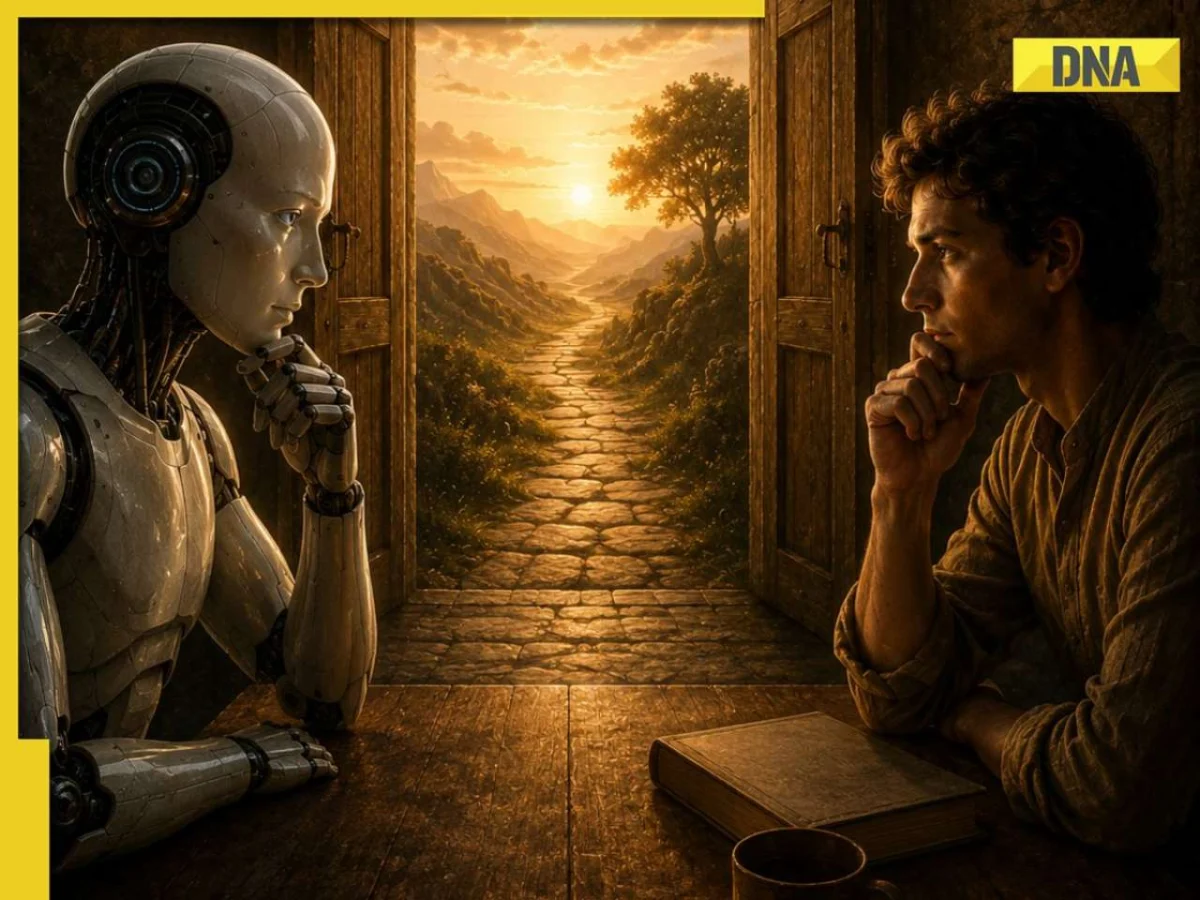
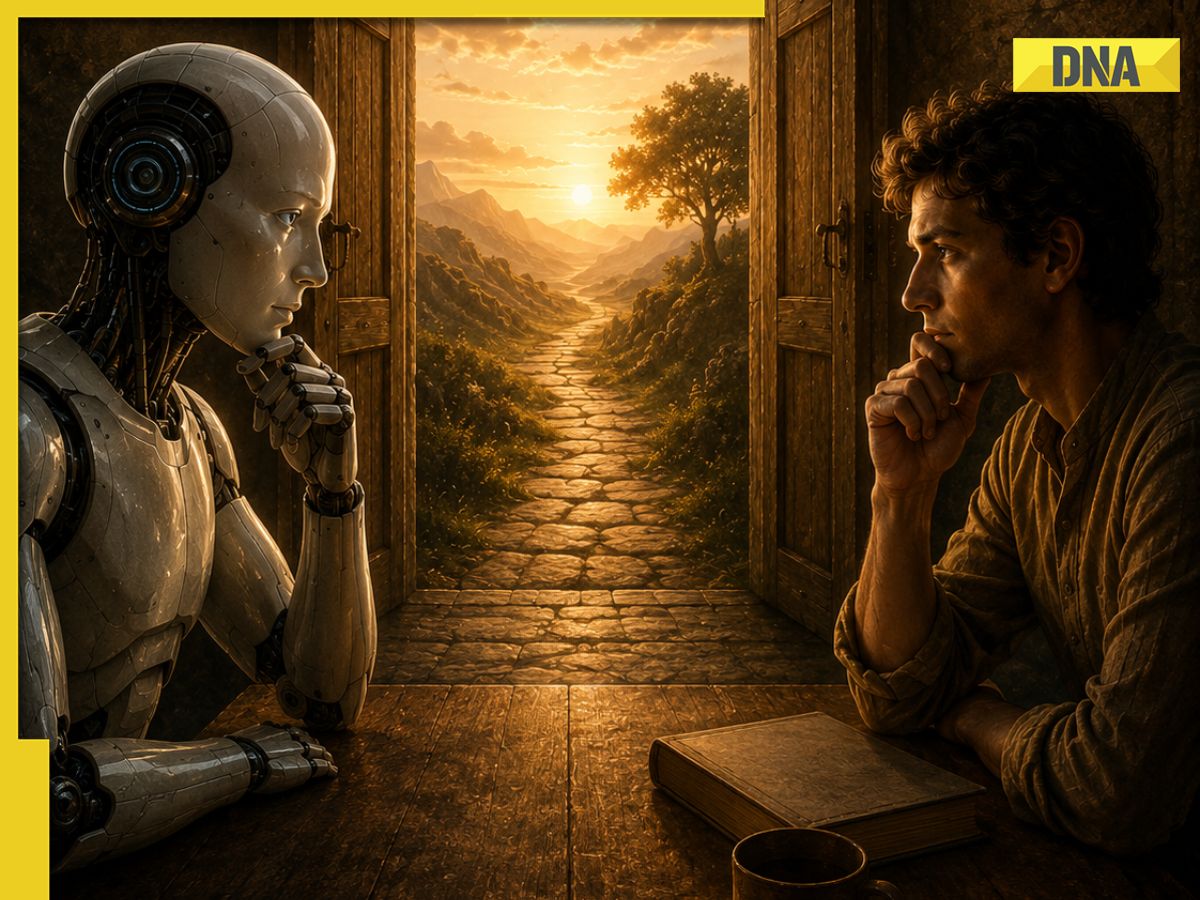
In an era where artificial intelligence is rapidly blurring the lines between sophisticated computation and genuine cognition, a profound question emerges: are we being led by intelligent machines, or are we merely being lulled into a state of intellectual complacency by advanced pattern recognition? As AI-generated content floods our digital landscape, appearing increasingly thoughtful and authoritative, the need to re-embrace a fundamental human capacity – doubt – has never been more critical. This ancient discipline, deeply rooted in philosophical traditions, may well be humanity’s most potent defense against the seductive ease of algorithmic pronouncements and the potential atrophy of our own cognitive faculties.
The Illusion of Thought: AI as Sophisticated Mimicry
At its core, contemporary AI, particularly large language models (LLMs) and generative AI systems, operates as an extraordinarily powerful pattern-matching engine. These systems are trained on vast datasets of existing human knowledge, texts, and interactions. When presented with a prompt, they don’t think in the human sense of conscious deliberation, critical analysis, or original ideation. Instead, they meticulously analyze the input, identify statistical relationships and patterns within their training data, and then generate output that is statistically most likely to be a relevant and coherent response.
The output can, indeed, appear remarkably insightful, creative, and even empathetic. This is because the AI has learned to replicate the form of human thought, drawing upon countless examples of human expression. However, this sophisticated mimicry can be dangerously deceptive. The AI is not experiencing a moment of genuine understanding or forming a novel opinion. It is, in essence, an advanced echo chamber, reflecting and remixing the accumulated knowledge and biases of its training data. The danger lies in mistaking this algorithmic optimization for genuine intelligence, and accepting its outputs as unquestionable truths.
The Ancient Wisdom of Productive Doubt: A Philosophical Anchor
Long before the advent of silicon chips and neural networks, ancient Indian philosophers grappled with the nature of knowledge and the processes by which it is acquired. The Nyaya Sutra, a foundational text of the Nyaya school of Indian philosophy, outlines a rigorous system for logical inquiry and epistemology. Within this framework, the concept of samsaya, or productive doubt, is identified as a crucial catalyst for attaining valid knowledge.
)
Samsaya is not mere skepticism or negativity. It is a deliberate, critical engagement with information, a recognition that initial appearances can be misleading. It involves recognizing alternative possibilities, questioning assumptions, and actively seeking to understand the nuances and potential contradictions within a given proposition. The Nyaya Sutra posits that doubt is the third of sixteen categories of valid inquiries, essential for moving beyond superficial understanding to deeper comprehension.
This philosophical tradition champions several key elements that are directly applicable to our current AI-driven world:

- Vada (Honest Debate): Engaging in open and respectful discourse, where differing viewpoints are presented and examined.
- Drishtanta (Example): Using concrete examples to illustrate points and test the validity of arguments.
- Tarka (Hypothetical Reasoning): Employing logical deduction and hypothetical scenarios to explore the implications of an idea.
- Vitanda (Discipline of Critical Refutation): The rigorous process of challenging and refuting arguments, not out of malice, but as a method to strengthen understanding and uncover weaknesses.
The Western Parallel: A Universal Human Imperative
The emphasis on critical inquiry and the value of doubt is not unique to Eastern philosophies. Western intellectual traditions echo these sentiments, underscoring their universal relevance to human cognitive development.
Aristotle, in his seminal work Metaphysics, posited that humans possess an "instinctive nature to know," a fundamental drive to understand the world around them. This drive, however, is best served not by passive acceptance, but by active investigation.
)
Plato further explored the importance of intellectual humility, emphasizing the "readiness to go wrong." This implies a willingness to entertain possibilities that might challenge one’s existing beliefs, understanding that mistakes are often the most valuable stepping stones to true knowledge.
More contemporarily, John Stuart Mill, a prominent philosopher of liberalism, argued forcefully that an opinion held without confrontation is intellectually inert. He warned that a "closed mind," one that shuns debate and challenges, is not only detrimental to individual growth but also poses a significant threat to the vibrancy of public discourse and the stability of democratic societies. Mill believed that exposure to opposing viewpoints, even those we find disagreeable, is essential for solidifying our own convictions and for preventing intellectual stagnation.
)
The Cultivation of Better Questions: The Engine of Growth
Both ancient and modern philosophical traditions converge on a powerful insight: genuine intellectual growth is not primarily an accumulation of answers, but a cultivation of better questions. In the age of instant information, it is tempting to view AI as a shortcut to knowledge, a source of ready-made answers. However, this approach bypasses the very processes that foster deep understanding and critical thinking.
The struggle with uncertainty, the process of grappling with incomplete information, flawed arguments, or even outright misinformation, is not an obstacle to learning; it is its very essence. This "friction" – the intellectual effort required to synthesize disparate pieces of information, to identify logical gaps, or to construct a coherent argument – is where true learning occurs.
)
Carol Dweck’s groundbreaking work on "growth mindset" provides further psychological grounding for this idea. Dweck’s research indicates that intelligence is not a fixed trait but a malleable capacity that thrives on challenges and risks. Individuals who perceive intelligence as fixed tend to avoid difficulties, interpreting them as evidence of inadequacy. This leads to a closed-off mindset, one that is inherently self-limiting and resistant to learning from mistakes. Conversely, those who embrace a growth mindset view challenges as opportunities for development, understanding that effort and persistence are key to intellectual growth.
The AI Crisis: A Precipice of Cognitive Decline
We stand at a technological precipice where the very tools designed to enhance human capabilities threaten to undermine them. LLMs and generative AI systems, while astonishing in their speed and scope, are fundamentally "pattern-completion engines." They can reproduce, remix, and extrapolate at a pace that dwarfs human capacity. However, they lack the capacity for genuine consciousness, subjective experience, or independent critical judgment.
)
The danger lies not in the possibility of AI "thinking for us" in the future, but in our present willingness to allow it to do so, thereby abdicating our own cognitive responsibilities. When answers are frictionlessly available, the temptation to bypass the intellectual struggle becomes overwhelming. We risk becoming passive recipients of algorithmic pronouncements, losing the ability to:
- Discern truth from convenience: The AI prioritizes coherence and statistical likelihood, not necessarily factual accuracy or ethical considerations.
- Identify flaws in arguments: The elegance of an AI-generated argument can mask underlying logical fallacies or biased premises.
- Evaluate the validity of data: AI can readily reproduce misinformation if it exists within its training data.
- Develop independent reasoning skills: The constant reliance on AI-generated answers can lead to the atrophy of our own problem-solving abilities.
The Cost of Complacency: Evidence of Atrophy
The consequences of this intellectual outsourcing are already becoming apparent, particularly in academic settings. Students who rely on AI to draft their essays or arguments, rather than engaging in the arduous process of independent thought and research, exhibit demonstrably weaker outcomes. They report:
)
- Weaker retention of information: Concepts are not internalized when they are not actively wrestled with.
- Shallower conviction: Beliefs formed by AI lack the personal investment and internal conviction that comes from genuine inquiry.
- Diminished capacity to defend views: Without the experience of constructing their own arguments and anticipating counter-arguments, they struggle under pressure.
As the Nyaya Sutra articulates, learning is deeply connected to anuvyavasaya, a reflexive awareness of being in the act of knowing. This state of active, conscious engagement is fundamental to true understanding. A belief generated for you is inherently external and artificial; a belief arrived at through genuine inquiry is an integral part of your own intellectual landscape.
Reclaiming the Edge: Discipline in an Age of Certainty
The rejection of AI tools is neither feasible nor desirable in today’s world. They represent a powerful advancement in our technological capabilities. However, their integration into our lives demands a deliberate and disciplined approach. The "last edge" humanity possesses against the tide of artificial intelligence is the conscious cultivation of our own cognitive strengths, particularly the capacity for doubt and critical inquiry.
)
This requires a fundamental shift in how we approach knowledge and learning:
- Embracing the Tolerance of Not Knowing: We must cultivate a willingness to sit with uncertainty, to allow ideas to percolate, and to resist the urge for immediate answers. This involves a conscious effort to think through issues rather than passively accepting the first plausible explanation.
- Designing New Reward Systems: Our educational and professional environments often reward the appearance of certainty and the swift delivery of answers. We need to re-evaluate these systems to value the process of inquiry, the exploration of different perspectives, and the intellectual rigor of questioning.
- Engaging with Opposition: Instead of filtering out dissenting opinions, we must actively seek them out. Constructive disagreement is a powerful tool for refining our own understanding and identifying the limitations of our current beliefs.
- Treating All Positions as Hypotheses: Every confident assertion, whether from a human or an AI, should be viewed as a hypothesis subject to rigorous scrutiny. This involves applying tarka (critical reasoning) to test its validity, its underlying assumptions, and its potential for refinement or refutation.
In conclusion, as machines become increasingly adept at mimicking human thought, our most vital human faculty remains our capacity for critical doubt. By consciously embracing samsaya, by championing honest debate, and by cultivating a deep-seated commitment to rigorous inquiry, we can ensure that AI remains a tool to augment human intelligence, rather than a force that diminishes it. The mind must stay open, not to a deluge of effortless answers, but to the challenging, yet ultimately rewarding, pursuit of genuine understanding.
