

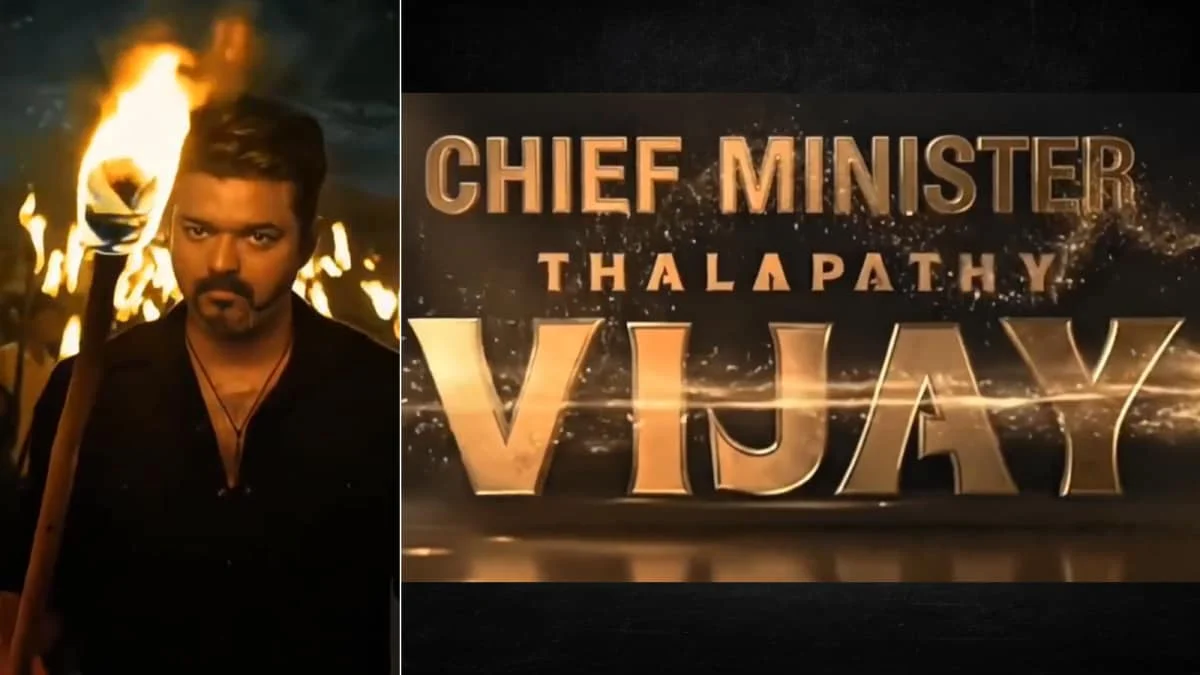
CHENNAI, INDIA – May 17, 2026 – Two years ago, a fleeting scene in a Tamil film quietly depicted a car bearing the registration "TN 07 CM 2026." Today, that cinematic premonition has startlingly materialized, as actor-turned-politician C. Joseph Vijay, known to millions as ‘Thalapathy’ Vijay, has been sworn in as the Chief Minister of Tamil Nadu. The convergence of reel and real life has ignited a viral firestorm across India, transforming a seemingly innocuous film detail into the most discussed political clip in recent memory.
His ascent marks a historic shift in Tamil Nadu’s political landscape, a state long accustomed to the dramatic interplay between cinema and governance. Vijay’s victory, and the subsequent online frenzy, are not merely about a celebrity transitioning into power; they represent a captivating narrative woven from foresight, fervent fan devotion, and the undeniable power of popular culture in shaping political destiny.
The Main Facts: A Prophecy Fulfilled
On May 10, 2026, C. Joseph Vijay took the oath of office, formally assuming the mantle of Chief Minister of Tamil Nadu. His entry into the state’s highest political office, following the resounding success of his party, Tamilaga Vettri Kazhagam (TVK), in the recent assembly elections, has captivated national attention. What amplified this political triumph into a cultural phenomenon was the immediate resurgence of a particular clip from his 2024 blockbuster film, "The Greatest of All Time" (GOAT).
In the now-ubiquitous video, Vijay is seen driving a car whose license plate prominently displays "TN 07 CM 2026." The interpretation was instant and unambiguous: "TN" for Tamil Nadu, "CM" for Chief Minister, and "2026" for the election year. This uncanny alignment has sparked intense debate and disbelief, with netizens and political observers grappling with whether it was a stunning coincidence, a meticulously planned cinematic prophecy, or a bold statement of intent. The viral clip has become a symbol of Vijay’s extraordinary journey, blurring the lines between his storied career as a cinematic icon and his new reality as a political leader.
Beyond the number plate, other elements of Vijay’s filmography and personal life have intertwined with his political narrative, creating a tapestry of interwoven coincidences and calculated moves. From a controversial "Chief Minister" title card for an unreleased film to the emotional revival of an iconic song, and the deeply personal stories of his newly elected MLAs, Vijay’s political debut is proving to be as dramatic and engaging as any of his on-screen blockbusters.
A Chronology of Cinematic Ascendance
Vijay’s journey from a young actor to the Chief Minister of Tamil Nadu is a meticulously crafted narrative that began long before his formal political announcement.
Early Glimmers and Fan Base Mobilization (Pre-2010s):
Born Joseph Vijay Chandrasekhar, he debuted in the early 1990s, slowly but steadily building a formidable fan base. By the turn of the millennium, he had cemented his position as ‘Ilayathalapathy’ (Young Commander), known for his mass appeal, energetic dance moves, and relatable characters. His fan clubs, initially focused on promoting his films, gradually began undertaking social welfare activities, laying the groundwork for a broader public connect. These activities, often conducted under the banner of "Vijay Makkal Iyakkam" (Vijay People’s Movement), were the first subtle indicators of his latent political aspirations.
Subtle Political Messaging in Cinema (2010s-Early 2020s):
As his stardom grew, so did the political undertones in his films. Movies like Kaththi (2014), Mersal (2017), and Sarkar (2018) were notable for their strong social commentary, often criticizing governmental policies, corruption, and corporate greed. These films resonated deeply with the common populace, positioning Vijay as a voice for the voiceless and a potential leader for change. His on-screen persona increasingly mirrored that of a vigilante hero challenging systemic injustices, implicitly preparing his audience for a real-life transition. During this period, the "Thalapathy" (Commander/Leader) moniker gained widespread currency, reflecting the growing political expectations surrounding him.
The Formal Political Launch (Early 2024):
The whispers turned into roars in early 2024 when Vijay officially announced the formation of his political party, Tamilaga Vettri Kazhagam (TVK), signifying his clear intent to contest the 2026 assembly elections. This announcement was met with a mix of excitement, skepticism, and anticipation, immediately drawing comparisons to legendary actor-politicians M.G. Ramachandran and J. Jayalalithaa. Vijay’s decision to focus solely on politics after completing his ongoing film commitments, including "The Greatest of All Time" (GOAT) and "Jana Nayagan," underscored his seriousness.
The "GOAT" Prophecy and Campaign Trail (2024-2026):
The release of "The Greatest of All Time" in 2024 became a pivotal moment. The now-infamous car number plate "TN 07 CM 2026" was, at the time, seen by many as a bold cinematic flourish or a hopeful Easter egg. However, in hindsight, it became the most potent symbol of his meticulously planned political strategy. The image went viral immediately, fueling discussions about Vijay’s ambition and foresight.
Throughout the 2025-2026 campaign cycle, TVK leveraged Vijay’s immense popularity and digital savvy. His rallies drew massive crowds, dominated by enthusiastic youth and first-time voters. The party’s messaging focused on clean governance, youth empowerment, and a departure from traditional Dravidian politics. Vijay strategically introduced candidates like Sabarinathan, the son of his long-time driver, and the eight-month pregnant homemaker MR Pallavi, transforming the campaign into a series of relatable, inspiring human stories that resonated deeply with the electorate.
Election Victory and Swearing-in (May 2026):
The culmination arrived in May 2026, as TVK swept the assembly elections, securing a comfortable majority. The victory was historic, marking a significant disruption to Tamil Nadu’s decades-long political duopoly of the DMK and AIADMK. On May 10, 2026, C. Joseph Vijay took his oath, formally becoming the Chief Minister, with the "CM 2026" number plate clip flooding social media as the ultimate testament to a political dream turned reality.
Supporting Data: The Digital Deluge and Cinematic Connections
The viral phenomenon surrounding Vijay’s political ascension is rooted in several interconnected elements: the undeniable power of social media, the unique relationship between cinema and politics in Tamil Nadu, and the deep emotional connection fans have with their idols.
The "CM 2026" Number Plate: Coincidence or Calculation?
The "TN 07 CM 2026" number plate from GOAT rapidly became a global trending topic. On platforms like X (formerly Twitter) and Instagram, the clip garnered tens of millions of views within hours of Vijay’s swearing-in. Hashtags like #CMVijay, #ThalapathyForCM, and #CM2026 consistently topped trending charts.
Online discussions ranged from genuine awe to critical skepticism. "It’s not a miracle – well planned and executed successfully," one Instagram user commented, reflecting the sentiment that this was a deliberate, strategic move. Others delved into numerology, pointing out the supposed auspiciousness of his swearing-in date: "10+5+2026 = 1+5+2+2+6 = 16 = 1+6 = 7," they claimed, further intertwining destiny with data. Conversely, a segment of users dismissed it as an "Edited pic" or "AI," highlighting the pervasive distrust of digital content and the eagerness to debunk anything extraordinary.
GOAT co-star Premgi Amaren, a frequent collaborator with Vijay, fanned the flames by sharing a meme from the scene with the caption: "Hi, it’s me sitting next to our CM in the car," a cheeky acknowledgment that instantly amplified the virality. This collective online engagement underscores how social media amplifies narratives, turning a simple film detail into a powerful political statement and a subject of widespread public discourse.
The ‘Jana Nayagan’ Title Card Controversy:
Another potent viral element was the circulation of a title card from Vijay’s still-unreleased final film, Jana Nayagan (People’s Leader). The image, which read "Honourable Chief Minister of Tamil Nadu C Joseph Vijay," sparked celebrations in theatres across South India, with audiences erupting in whistles and confetti. This demonstrated the immense desire among fans to see their idol elevated to the highest office, even if only on screen.
However, subsequent reports from Kollywood circles clarified that this viral title card was, in fact, an AI-generated fan creation, not an official release. The actual film, it was reported, would retain Vijay’s long-standing prefix, "Ilayathalapathy," rather than "Chief Minister." This incident highlights the double-edged sword of fan enthusiasm and advanced technology, capable of creating powerful, albeit unofficial, narratives that can quickly go viral and shape public perception. It also revealed Vijay’s desire to maintain a distinction, at least initially, between his political identity and his cinematic legacy.
The ‘Appadi Podu’ Resurgence and Trisha’s Moment:
More than two decades after its release, the iconic song "Appadi Podu" from Vijay’s 2004 film Ghilli witnessed an unexpected resurgence. The track, featuring Vijay and Trisha Krishnan, flooded social media feeds, not merely for nostalgia, but as a symbolic "full-circle" moment.
The timing was uncannily poetic: Vijay’s swearing-in coincided with Trisha Krishnan’s birthday. Videos of Trisha visibly emotional during Vijay’s oath speech went viral, instantly stoking long-running fan theories about the pair’s on-screen chemistry and off-screen camaraderie. This incident underscored how deeply personal connections and popular culture milestones become intertwined with political narratives, especially in a state like Tamil Nadu where actors are revered figures. The song’s return became an anthem for celebration, symbolizing Vijay’s triumphant journey from actor to political leader.
The Assembly Scenes: Human Stories in a Political Drama:
The swearing-in ceremony itself provided further viral moments that underscored the populist appeal of Vijay’s leadership. The brief, poignant exchange between CM Vijay and newly elected MLA Sabarinathan, the son of Vijay’s long-time driver Rajendran, captured hearts. Before signing the official register, Sabarinathan respectfully asked, "Anna, shall I sign?" to which Vijay responded with a warm smile. This moment of humility and recognition of loyalty resonated profoundly, especially given Vijay’s earlier campaign announcement: "My driver Rajendran has been with me for 15 years. Now, his son Sabarinathan will join me in politics."
Another powerful image was that of MR Pallavi, an eight-month pregnant homemaker who, despite having only a Class XII education, won from Chennai’s Thiru Vi Ka Nagar constituency, defeating a seasoned DMK candidate by over 22,000 votes. Her visibly pregnant presence in the Assembly to take her oath drew a standing ovation on social media, with many comparing her inspiring entry to the grassroots wave of the Aam Aadmi Party in Delhi in 2013. These stories humanized TVK’s victory, presenting it not just as a political win, but as a triumph for ordinary people, enabled by an empathetic leader.
Official Responses: Navigating Prophecy and Policy
While the internet buzzed with theories of cinematic prophecies and calculated moves, the official responses from C. Joseph Vijay and his party, Tamilaga Vettri Kazhagam (TVK), remained largely grounded, focusing on the future rather than dwelling on the past.
Vijay’s Stance: The newly sworn-in Chief Minister himself has largely refrained from directly addressing the "CM 2026" number plate or the ‘Jana Nayagan’ title card controversy. His public statements have emphasized the weight of his new responsibility and his commitment to serving the people of Tamil Nadu. While he implicitly acknowledges the immense support from his fans, he has been careful to pivot discussions towards policy and governance. This measured approach suggests a conscious effort to transition from a charismatic screen persona to a serious political leader, keen on establishing credibility beyond the realm of entertainment. He likely views the "CM 2026" as a symbol of aspiration and hard work rather than mere coincidence, but avoids outright confirmation of a "master plan" to maintain a humble public image.
TVK’s Narrative: The Tamilaga Vettri Kazhagam, however, subtly leveraged these viral moments during and after the election. While not explicitly claiming divine prophecy, the party’s social media handles and spokespersons often retweeted or shared content related to the "CM 2026" clip, framing it as a testament to Vijay’s vision and the organic, unstoppable momentum of his movement. They portrayed these cinematic coincidences as proof of his deep connection with the aspirations of the people, suggesting that his destiny was intertwined with the state’s future. The narratives surrounding Sabarinathan and Pallavi were actively promoted as examples of TVK’s commitment to empowering common citizens and bringing fresh, dedicated faces into politics, embodying the party’s ethos of change.
Reactions from Other Political Parties: The established Dravidian parties, DMK and AIADMK, initially reacted with a mix of dismissal and cautious criticism. Before the elections, they often downplayed Vijay’s political ambitions, labeling him "just an actor" or questioning his political experience. Post-election, their tone shifted to a more grudging acknowledgment of his popularity, though they often attributed his success to his celebrity status rather than his political acumen. There was little engagement from opposition parties on the "CM 2026" phenomenon, likely seeing it as fan hype rather than a substantive political point, or perhaps wary of inadvertently amplifying his narrative.
Kollywood’s Response: Within the Tamil film industry, the mood was largely celebratory. Many actors, directors, and producers extended their congratulations, acknowledging Vijay’s significant achievement. Premgi Amaren’s viral post was a clear example of this industry-wide pride. However, the clarification regarding the Jana Nayagan title card (that it would retain "Ilayathalapathy" rather than "Chief Minister") indicated a practical understanding within Kollywood that while Vijay has transitioned, his cinematic legacy and established identity on screen remain distinct, at least for his final projects.
Implications: A New Era for Tamil Nadu and Indian Politics
Vijay’s ascension to the Chief Minister’s office, amplified by the extraordinary viral moments connecting his past films to his political present, carries profound implications for Tamil Nadu and the broader Indian political landscape.
Reshaping Tamil Nadu’s Political Identity:
For decades, Tamil Nadu politics has been dominated by the two Dravidian behemoths, the DMK and AIADMK. Vijay’s decisive victory represents a significant disruption, potentially signaling the end of an era and the dawn of a new political paradigm. His triumph, built on a platform of anti-corruption, youth empowerment, and a departure from traditional ideologies, could usher in a more personality-driven, populist style of governance. The challenge for Vijay will be to translate his cinematic charisma and fan loyalty into effective administration and sustainable policy-making, proving that his success is more than just celebrity appeal. His leadership will be closely watched to see if it can break cycles of patronage and bring genuine systemic change.
The Blurring Lines Between Cinema and Governance:
Vijay’s journey reaffirms the enduring power of cinema in Tamil Nadu politics. Following in the footsteps of MGR and Jayalalithaa, he has once again demonstrated that the screen is a potent launchpad for political careers in the state. However, Vijay’s approach is distinctly modern, heavily reliant on social media and a carefully curated public image that blends aspirational leadership with relatable humility. His success sets a new precedent for how celebrity, fan engagement, and strategic media play can coalesce to achieve political power, offering a blueprint for other aspiring actor-politicians across India.
The Ascendancy of Youth and Grassroots Representation:
The stories of newly elected MLAs like Sabarinathan and MR Pallavi are not just viral anecdotes; they are indicative of a deeper shift in political representation. Vijay’s conscious decision to field and champion candidates from diverse, often humble, backgrounds resonated deeply with the electorate. The inclusion of figures like Sabarinathan, the son of his driver, and Pallavi, a pregnant homemaker, sends a powerful message about accessibility and opportunity in politics. This focus on grassroots representation and youth engagement, exemplified by S. Keerthana, the 29-year-old first-time MLA and one of the youngest ministers in his cabinet, could energize a new generation of political aspirants and fundamentally alter the demographics of the legislative assembly.
The Role of Digital Media and Fan Culture:
Vijay’s campaign and subsequent victory underscore the indispensable role of digital media and organized fan culture in contemporary politics. His "Makkal Iyakkam" (People’s Movement) transitioned seamlessly from a fan club to a political cadre, demonstrating the power of pre-existing, highly organized fan bases. The viral spread of clips, memes, and fan-generated content like the ‘Jana Nayagan’ title card, whether official or not, showcases how online narratives can rapidly shape public perception and mobilize support. This digital-first approach marks a significant evolution in campaign strategies, where celebrity status, social media savvy, and a dedicated online army can be as crucial as traditional rallies.
Balancing Legacy and Leadership:
As Chief Minister, Vijay faces the complex task of balancing his colossal cinematic legacy with the demands of political leadership. His decision to retain "Ilayathalapathy" for his final film Jana Nayagan reflects an understanding of the emotional connection his fans have with his screen persona. Yet, in the political arena, he must forge a new identity as a statesman. The challenge will be to leverage the goodwill and adoration earned as ‘Thalapathy’ to govern effectively, make tough decisions, and deliver on his promises without being perpetually overshadowed by his past roles. The "CM 2026" number plate will forever serve as a reminder of his extraordinary path, a testament to how in Tamil Nadu, the show often continues, even after the credits roll.
