

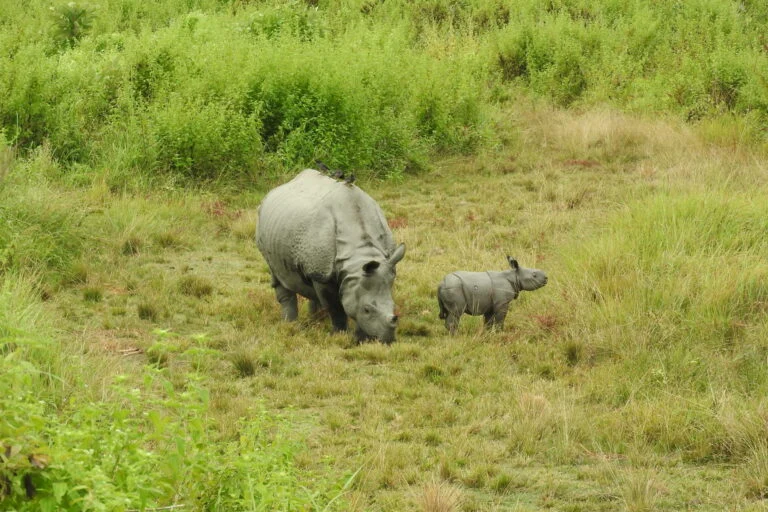
Assam, India — In the dense, alluvial grasslands of the Eastern Himalayas, a quiet revolution is taking place. Once a landscape haunted by the absence of its most iconic resident, Manas National Park (MNP) is witnessing the triumphant return of the greater one-horned rhinoceros (Rhinoceros unicornis). A comprehensive decade-long study has now provided the most definitive evidence yet that the reintroduction efforts are not merely keeping the species on life support, but are fostering a self-sustaining, adapting population.
The study, covering the period between 2012 and 2021, reveals a narrative of resilience. After being wiped out by civil unrest and poaching in the late 1990s, the rhino population in Manas has been painstakingly rebuilt through a combination of wild-to-wild translocations and the release of rehabilitated orphans. The findings, recently published and led by veteran wildlife biologist Deba Kumar Dutta, offer a granular look at how these prehistoric giants are reclaiming their ancestral home.
I. Main Facts: A Population Reborn
The re-establishment of rhinos in Manas National Park is anchored by two primary conservation strategies: the Indian Rhino Vision 2020 (IRV2020) and the rhino rehabilitation program conducted by the Centre for Wildlife Rehabilitation and Conservation (CWRC).
Between 2006 and 2021, a total of 42 rhinos were introduced to the park. Of these, 22 were translocated from the high-density populations of Kaziranga National Park and Pobitora Wildlife Sanctuary, while 20 were rehabilitated individuals—often calves orphaned by floods or poaching elsewhere—raised in captivity before being released into the wild.
Key Findings of the 2012–2021 Study:
- Successful Breeding: A total of 35 births were recorded during the study period, signaling that the habitat is conducive to reproduction.
- The F1 Milestone: For the first time, the study tracked the "F1 generation"—rhinos born in Manas to reintroduced parents—and confirmed that these individuals are now successfully breeding themselves.
- Adaptation Metrics: Translocated rhinos and rehabilitated rhinos exhibit vastly different behavioral patterns, particularly regarding their home ranges and proximity to human settlements.
- Seasonal Syncing: Birth patterns show a strong correlation with the monsoon season, indicating that the rhinos are syncing their reproductive cycles with the peak availability of nutritional resources.
II. Chronology: From Extinction to Recovery
The story of Manas is one of the most dramatic "boom-and-bust-and-boom" cycles in conservation history. Understanding the current success requires looking back at the dark period that preceded it.
The Era of Loss (1980s – 2003)
During the late 1980s and 1990s, the Bodoland region of Assam faced significant socio-political instability. The resulting civil unrest led to a breakdown in park administration. By the early 2000s, the entire rhino population of Manas—once numbering over 100—had been lost to poaching. The park, a UNESCO World Heritage site, was placed on the "List of World Heritage in Danger" in 1992.

The Dawn of IRV2020 (2005 – 2008)
As peace returned to the region, the Indian Rhino Vision 2020 was launched. This was a partnership between the Assam Forest Department, World Wide Fund for Nature (WWF), and the International Rhino Foundation. The goal was ambitious: to increase the rhino population in Assam to 3,000 and distribute them across seven protected areas to mitigate the risk of a single catastrophe (like a disease outbreak or massive flood) wiping out the species.
The Reintroduction Phase (2006 – 2021)
- 2006: The first rehabilitated rhinos from CWRC were released into Manas.
- 2008: The first wild-to-wild translocations occurred, with rhinos moved from Pobitora Wildlife Sanctuary.
- 2011: Manas was removed from the UNESCO "Danger" list, acknowledging the improved security and conservation efforts.
- 2012–2021: This period marked the critical observation window for the recent study, focusing on how the new residents were settling into the 950-square-kilometer park.
III. Supporting Data: Reproductive Success and Behavioral Divergence
The study utilized an array of sophisticated monitoring tools, including radio telemetry (VHF collars), camera traps, and direct field observations. The data provides a complex picture of how "origin" affects a rhino’s life in the wild.
Reproductive Indicators
Of the 35 calves born during the study:
- 19 calves were born to translocated females.
- 9 calves were born to rehabilitated females.
- 5 calves were born to F1 generation females (those born in Manas).
- 2 calves were found with unidentified mothers.
The study found a notable difference in the Age at First Calving (AFC). F1 females (born in the park) had their first calves at an average age of 5.65 years, which is considered optimal for the species. In contrast, rehabilitated rhinos—those who spent their early years in human care—calved much later, at an average of 9.2 years. This suggests that while rehabilitated rhinos can successfully integrate, their early trauma or captive upbringing may delay their reproductive maturity.
Home Range and Spatial Use
One of the most striking findings involves the "home range"—the area an animal uses for its daily activities.
- Translocated Rhinos: These individuals, captured from the wild as adults, retained their natural wariness and instinct. They occupied massive home ranges averaging 339 square kilometers, often pushing into the remote, less-disturbed northern reaches of the park.
- Rehabilitated Rhinos: These animals exhibited "human imprinting." Their home ranges were significantly smaller, averaging just 52 square kilometers. They tended to stay in the central areas of the park, closer to forest guard camps and human activity.
- F1 Generation: Interestingly, the rhinos born in the park occupied a middle ground, with home ranges averaging 79 square kilometers.
The Monsoon Connection
The researchers noted that 14 of the births occurred between May and September. Unlike Kaziranga, where the monsoon brings devastating floods that force rhinos to flee, the higher elevation of Manas makes the monsoon a period of plenty. The abundance of water and lush grass during these months provides the high-protein diet necessary for lactating mothers.

IV. Official Responses: Caution Amidst Celebration
While the data is overwhelmingly positive, experts and officials warn that the population remains in a "recovery phase" and is not yet out of the woods.
Deba Kumar Dutta, the study’s lead author and a member of the IUCN/SSC Asian Rhino Specialist Group, emphasized that breeding is the ultimate litmus test for conservation. "Breeding and calving are among the most important indicators that reintroduced rhinoceroses have adapted well to their new environment," Dutta stated. However, he noted that the population has not yet reached its "full reproductive potential," partly due to the lingering effects of past poaching.
Yadvendradev Jhala, a senior scientist and former Dean of the Wildlife Institute of India, provided a more sobering perspective. He cautioned against complacency, noting that the recovery of megaherbivores is a multi-generational process. "The reintroduction has been remarkably successful but should not be viewed with complacency since it can easily be reversed," Jhala said.
Jhala further argued for a "metapopulation" management strategy. Because the Manas population is still relatively small, it cannot be treated as an isolated island. It requires "occasional immigrants" from Kaziranga or Pobitora to ensure genetic vigor and prevent the long-term decay associated with inbreeding.
V. Implications: The Road Ahead for Manas
The success in Manas serves as a global blueprint for rewilding projects, but it also highlights the logistical and biological hurdles that remain.
1. Genetic Diversity and the Inbreeding Risk
With a small founder population, the risk of inbreeding is a looming threat. If closely related individuals continue to mate, the population could see a rise in genetic defects or a decrease in immune system resilience. Future conservation plans must include the periodic introduction of "new blood" from other populations to maintain a healthy gene pool.

2. Habitat Management and Invasive Species
The study underscores that the rhinos’ success is tied to the health of the grasslands. Currently, Manas faces a quiet invasion of woody species and weeds like Chromolaena odorata and Mikania micrantha, which choke out the native grasses rhinos eat. Sustained habitat management—including controlled burning and manual removal of invasives—is as critical as anti-poaching patrols.
3. Human-Wildlife Interaction
The "human-imprinted" behavior of rehabilitated rhinos presents a unique challenge. Because these rhinos are less afraid of people, they are more likely to wander into nearby villages or graze with domestic cattle. This increases the risk of disease transmission (such as anthrax or foot-and-mouth disease) and potential human-rhino conflict. Managing the "wildness" of rehabilitated individuals remains a complex task for park rangers.
4. Security and Monitoring
The early years of the study were marred by the poaching of several adult males, which skewed the sex ratio and disrupted breeding. While protection has been vastly improved, the high value of rhino horn on the black market means that Manas must remain a "fortress" for the foreseeable future.
Conclusion
The greater one-horned rhino’s return to Manas National Park is a testament to what is possible when political will, scientific rigor, and community support converge. The 35 calves born in the last decade are more than just numbers; they are a living bridge between a tragic past and a hopeful future. As the F1 generation takes its place as the new stewards of the grasslands, Manas stands as a beacon of hope for endangered species worldwide, proving that even after local extinction, the wild can—with enough help—find its way back.
