

Introduction: A New Frontier of Financial Risk
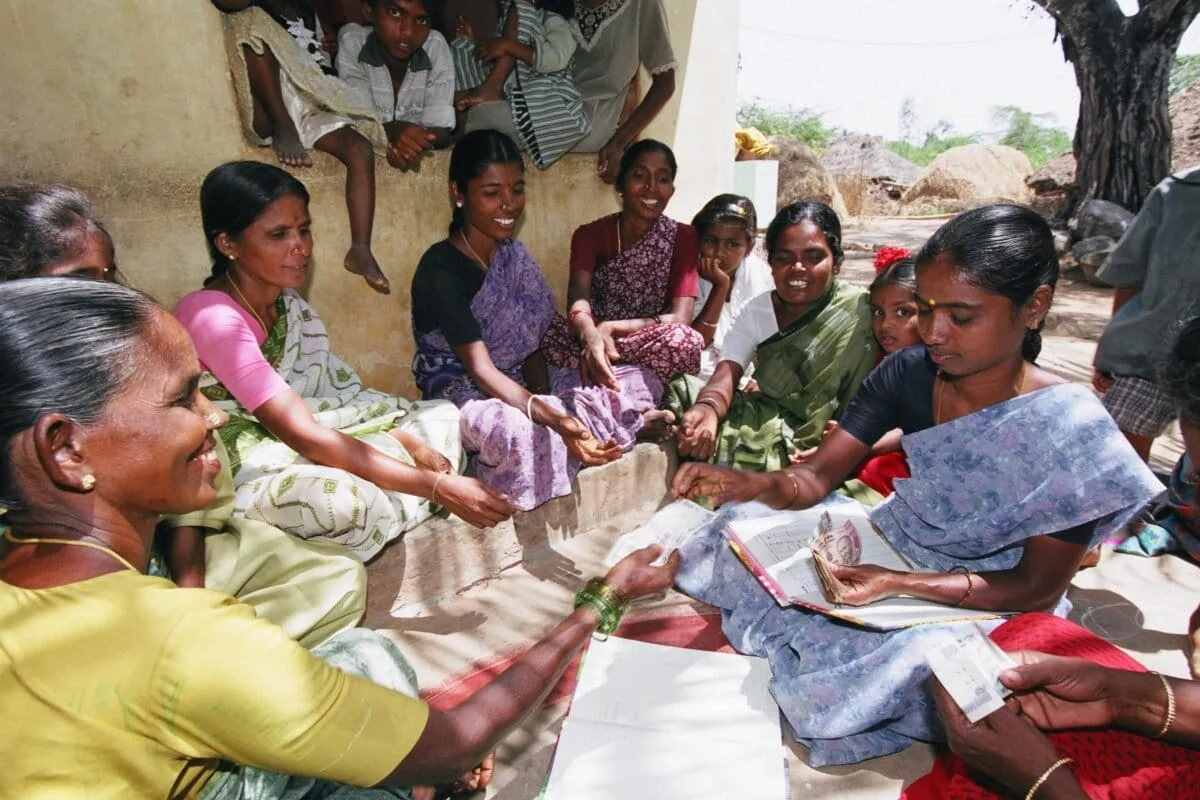
For decades, India’s microfinance institutions (MFIs) have served as the backbone of financial inclusion, providing a vital bridge between formal banking systems and the country’s most vulnerable populations. By offering small, collateral-free loans to low-income entrepreneurs and rural households, these institutions have empowered millions. However, a new and formidable shadow is stretching across this sector.
According to a comprehensive policy brief recently released by the New Delhi-based Climate and Sustainability Initiative (CSI), the very demographic that MFIs serve—the rural poor and small-scale farmers—is now standing on the front lines of the climate crisis. The report, titled “Micro Loans, Macro Shocks: How is Climate Risk Reshaping India’s Microfinance Industry,” warns that the industry’s massive ₹3.81 trillion (approximately $45 billion) portfolio is increasingly exposed to environmental hazards that are no longer "black swan" events, but recurring economic disruptors.
As erratic monsoons, record-breaking heatwaves, and devastating floods become the "new normal," the intersection of microcredit and climate vulnerability is creating a precarious financial landscape that demands urgent structural reform.
I. Main Facts: The Vulnerability of the Portfolio
The core of the crisis lies in the concentration of credit. The CSI policy brief reveals that a staggering 60% of the total microfinance portfolio in India is concentrated in agriculture and allied activities. This includes direct farming, agro-based enterprises, animal husbandry, and fisheries. Because these livelihoods are intrinsically tied to weather patterns, any deviation in the climate directly impacts the borrower’s ability to generate income and, consequently, their ability to repay loans.
The Exposure Breakdown:
- Agriculture and Allied Activities (60%): The most volatile segment, encompassing crop cultivation and livestock.
- Non-Agro Activities (32%): Includes small-scale trading, transport, handicrafts, and micro-businesses. While less direct, these are often "second-order" victims of climate shocks (e.g., a flood destroying a village market).
- Housing and Infrastructure (3.6%): Loans for home repairs or small constructions.
- Other Non-Income Generating Activities (4.4%): Primarily loans for water access and clean energy solutions.
The report underscores that when a climate event occurs—such as a prolonged drought in Central India or a cyclone in Odisha—the economic shock is "macro" in scale, even if the loans are "micro." The resulting financial strain on borrowers leads to a spike in non-performing assets (NPAs) for MFIs, threatening the stability of the entire sector.
II. Chronology: From Economic Growth to Climate Instability
The evolution of India’s microfinance sector has been marked by rapid expansion and periodic crises, but the current climate-driven threat represents a fundamental shift in risk profiling.
The Expansion Phase (2010–2020):
Following the Andhra Pradesh microfinance crisis of 2010, the sector underwent rigorous regulatory overhauls by the Reserve Bank of India (RBI). This led to a decade of robust growth, with MFIs reaching deep into the "hinterlands" of Bihar, West Bengal, and Uttar Pradesh. Credit became a tool for upward mobility, particularly for women’s self-help groups (SHGs).
The Emerging Threat (2021–2024):
As the portfolio grew to its current ₹3.81 trillion, the frequency of extreme weather events began to outpace traditional risk assessment models. The period between 2022 and 2024 saw India experience some of its hottest years on record and increasingly unpredictable monsoon cycles.
The 2025 Forecast:
A pivotal 2025 report co-authored by the Agri3 Fund, HSBC India, and MicroSave Consulting highlights a sobering milestone: India’s 120 million smallholder farmers are now facing unprecedented financial instability. This report claims that climate change has already begun to systematically erode farm incomes, with a documented reduction of 15% to 18% in annual earnings for those most exposed. This income vacuum is directly linked to the rising default rates observed in rural micro-credit clusters.
III. Supporting Data: Regional Hotspots and Vulnerability Mapping
The CSI policy brief provides a granular look at how climate risk is distributed geographically across the Indian subcontinent. The data suggests that the microfinance industry is most heavily invested in the regions that are the most environmentally fragile.
1. The High-Risk East (33% Portfolio Share)
Eastern India, comprising Bihar, Odisha, Jharkhand, West Bengal, and the Andaman and Nicobar Islands, holds the largest share of the MFI portfolio. Simultaneously, it is ranked as the most climate-vulnerable region.

- Primary Hazards: Frequent cyclones, coastal erosion, and catastrophic flooding of the Ganga-Brahmaputra delta.
- Economic Impact: The high credit concentration in these states means that a single major cyclone can jeopardize nearly a third of the national MFI portfolio.
2. The Moderate South (28% Portfolio Share)
The southern states, including Tamil Nadu, Andhra Pradesh, and Karnataka, show moderate climate vulnerability.
- Primary Hazards: Groundwater depletion and seasonal droughts. While the region has better infrastructure, the reliance on irrigation makes animal husbandry and agro-enterprises sensitive to rainfall deficits.
3. The Volatile Central and Northeast (18% and 3% Shares)
Central India faces moderate to high vulnerability due to heat stress and erratic rainfall, affecting the "soybean and pulse belt." Meanwhile, the Northeast, despite having the lowest portfolio exposure (3%), is classified as highly vulnerable.
- Northeast Hazards: Landslides, flash floods, and extreme rainfall. The CSI brief notes that the lack of infrastructure in this region exacerbates the financial impact of every climate event.
4. The Low-Risk North and West (7% and 11% Shares)
The Western region (Maharashtra, Gujarat) and Northern region (Punjab, Haryana, Rajasthan) generally face low to moderate risks, with the notable exception of Jammu and Kashmir, which is flagged for high vulnerability due to its mountainous terrain and glacial instability.
IV. Official Responses and Institutional Perspectives
The findings from the CSI and the Agri3 Fund have sparked a call to action among policy researchers and financial institutions. The consensus is that the microfinance sector can no longer afford to treat "environmental risk" as a separate category from "credit risk."
The CSI Stance:
The Climate and Sustainability Initiative emphasizes that the "intersection of high credit concentration and high climate vulnerability" is a systemic threat. Their policy brief argues for a "climate-sensitive approach," which includes the integration of climate data into credit scoring and the development of more flexible repayment schedules that account for seasonal disasters.
The Agri3 and HSBC Perspective:
The collaborative report by Agri3 and HSBC India suggests that the 15-18% drop in farm income is a signal for MFIs to diversify. They advocate for "climate-smart" lending—funding that helps farmers transition to drought-resistant crops or more resilient livestock breeds. By helping the borrower become more resilient, the MFI protects its own assets.
The Industry Voice:
While MFI associations have historically focused on interest rate caps and recovery practices, there is a growing internal movement to lobby for "Parametric Insurance." This would involve insurance products that pay out automatically based on weather triggers (e.g., a certain level of rainfall or temperature), providing immediate liquidity to both the borrower and the lender during a crisis.
V. Implications: The Future of Micro-Lending in a Warming World
The implications of this data are profound for the future of poverty alleviation in India. If the microfinance sector does not adapt, the "macro shocks" described by the CSI could lead to several damaging outcomes:
1. The "Poverty Trap" Escalation:
When a climate disaster hits, a borrower who cannot repay their loan often loses access to future credit. Without a financial safety net, these individuals may fall back into extreme poverty, undoing decades of developmental progress.
2. Increased Cost of Capital:
As global investors become more sensitive to ESG (Environmental, Social, and Governance) factors, MFIs with high exposure to climate-vulnerable regions may find it more expensive to raise funds. This increased cost would likely be passed on to the end borrower in the form of higher interest rates.
3. The Necessity of Product Diversification:
The report highlights that only 4.4% of the portfolio is currently dedicated to water and clean energy. There is a massive opportunity—and necessity—to shift lending toward "adaptation finance." This includes loans for solar-powered irrigation, rainwater harvesting, and climate-resilient housing.
4. Data-Driven Lending:
MFIs will need to move away from traditional "area-based" lending to "risk-based" lending. Utilizing satellite imagery and long-term weather forecasts will become as essential as checking a borrower’s credit history.
Conclusion
The CSI policy brief serves as a definitive wake-up call for India’s financial architects. The ₹3.81 trillion microfinance industry is no longer just a tool for economic empowerment; it is a barometer for the country’s climate resilience. As the lines between environmental science and high finance continue to blur, the survival of India’s rural economy will depend on how quickly its lenders can learn to weather the storm.
The message is clear: in the era of the climate crisis, micro-loans can no longer ignore macro-shocks. The path forward requires a radical reimagining of what it means to be a "sustainable" financial institution in one of the world’s most climate-vulnerable nations.
