

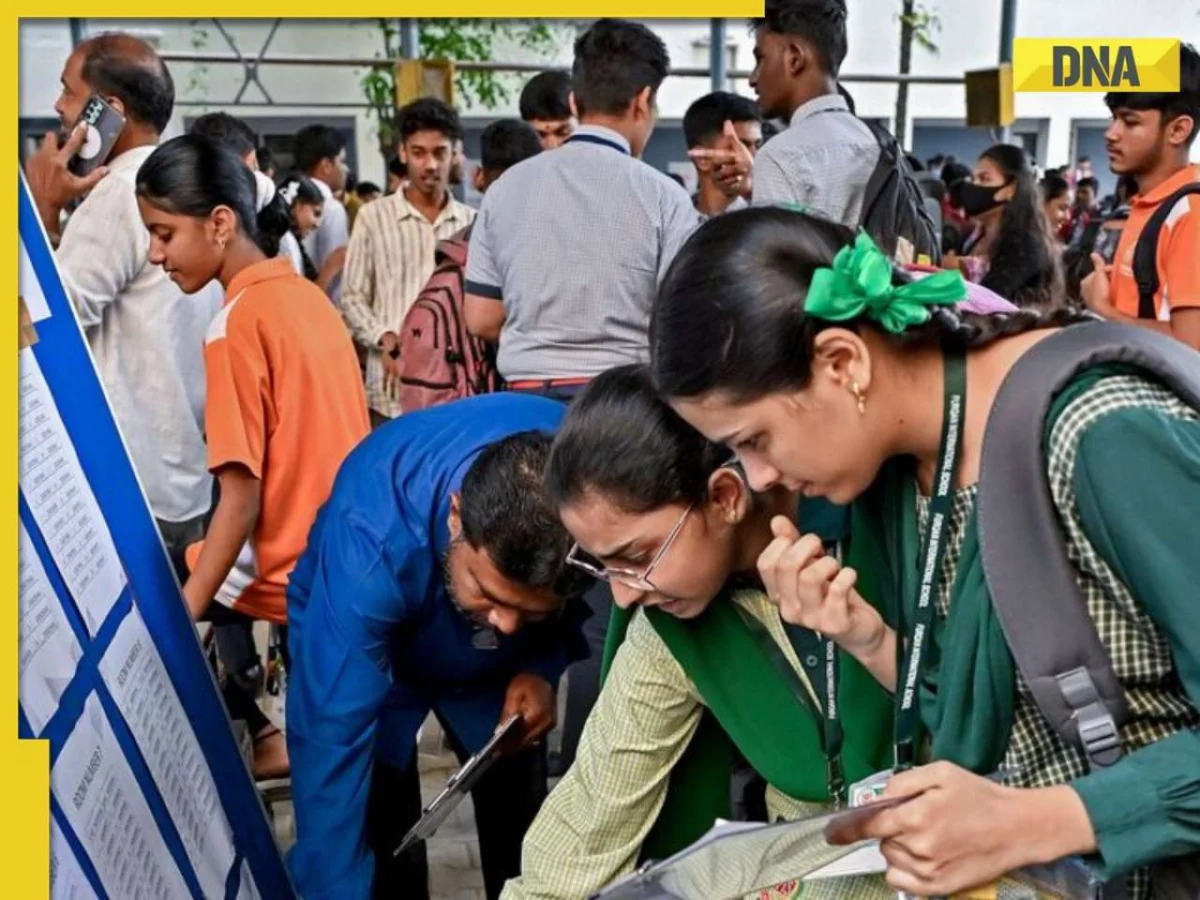
New Delhi: In a move designed to uphold academic integrity and ensure student confidence, the Central Board of Secondary Education (CBSE) has officially commenced the post-result review process for its Class 12 examinations of 2026. This critical window offers students an avenue to scrutinize their performance, address any potential discrepancies, and ensure their hard-earned marks accurately reflect their knowledge and effort. The board has reiterated its commitment to a transparent and student-centric evaluation system, acknowledging that even with stringent protocols, minor errors can occasionally arise during the assessment of millions of answer scripts.
The announcement comes as a vital reassurance to students who eagerly await the finalization of their academic journeys, as Class 12 results often serve as a crucial determinant for higher education admissions and future career trajectories. The CBSE’s proactive approach in facilitating this review underscores its dedication to fairness and accuracy in the examination process.
Understanding the Post-Result Review: A Chronological Breakdown
The CBSE has meticulously structured the post-result review process into distinct phases, providing students with a clear roadmap to follow. This phased approach allows for a systematic examination of answer scripts, ensuring that all concerns are addressed thoroughly.
Phase 1: Accessing Scanned Answer Sheets (May 19 – May 22)
The initial and arguably most crucial step for students is the opportunity to obtain scanned copies of their evaluated answer books. The CBSE has designated a specific application window for this service, running from May 19th to May 22nd, 2026.
)
During this period, students can formally request their scanned answer sheets through the official CBSE portal. This facility is designed to empower students by providing them with direct access to their assessed work. Upon receiving the scanned copies, students are strongly advised to undertake a meticulous review of each answer. This involves carefully comparing the marks awarded against the official marking scheme, which is often made available by the board.
The primary objectives of this initial review are to identify:

- Unchecked Answers: Instances where an answer, despite being attempted by the student, has been inadvertently missed by the examiner.
- Calculation Errors: Mistakes in the totaling of marks awarded for individual questions or sections.
- Discrepancies in Marking: Situations where the marks awarded do not appear to align with the quality of the answer provided, based on the established marking scheme.
- Discrepancies in Transfer of Marks: Errors where marks awarded to a question were not correctly transferred to the total score.
Board officials have emphasized that this stage is critical for students to meticulously note down any irregularities or concerns they observe. This detailed documentation will form the basis for their subsequent applications for verification or re-evaluation. It is recommended that students approach this review with a calm and analytical mindset, focusing on factual discrepancies rather than subjective opinions.
Phase 2: Verification of Marks and Re-evaluation (May 26 – May 29)
Following the thorough examination of their scanned answer sheets, students can proceed to the next stage of the review process: the formal application for verification of marks or re-evaluation. The CBSE has scheduled this application window from May 26th to May 29th, 2026.
)
This phase allows students to formally lodge their specific concerns regarding the marking of their papers. It is imperative that students clearly articulate the nature of the discrepancy they wish to be addressed. For instance, if a student believes a particular answer was under-marked, they should specify the question number and provide a brief justification based on their understanding of the marking scheme and their answer’s content.
Upon receiving these applications, the CBSE will dispatch the relevant answer scripts to an expert panel. This panel, comprising experienced examiners, will meticulously re-examine the specific areas of concern highlighted by the student. Their task is to verify the original marking, rectify any identified errors, and ensure that the marks awarded are consistent with the CBSE’s evaluation guidelines.
)
The board has reiterated that this mechanism is a cornerstone of its commitment to fairness and aims to ensure that every deserving student receives the accurate marks they have earned.
Official Statements and the Rationale Behind the Process
The CBSE Controller of Examinations, Sanyam Bhardwaj, has been a vocal proponent of the board’s transparent evaluation practices. He recently highlighted that with the sheer volume of answer scripts processed – approximately 1.25 crore annually – the possibility of minor errors, despite rigorous checking procedures, cannot be entirely eliminated.
)
"Our evaluation system is designed to be as robust and fair as possible," Bhardwaj stated. "However, when dealing with such a vast number of assessments, occasional human errors or procedural oversights can occur. The post-result review process is our commitment to addressing these anomalies and ensuring that every student’s hard work is accurately recognized."
He further emphasized that the structured nature of the review process is a testament to the board’s student-friendly approach. "We understand the immense pressure and importance of these examinations for our students. Therefore, we have created a clear and accessible pathway for them to seek redressal if they believe there has been an error in their evaluation," he added.
)
Potential Outcomes of the Review: A Word of Caution
While the review process is designed to benefit students, the CBSE has also been transparent about the potential outcomes. It is crucial for students to understand that the re-evaluation process can lead to changes in marks in either direction.
-
Increase in Marks: If the review confirms that an error was made in the student’s favor – such as an unchecked answer, an under-calculation, or an instance of under-marking – their marks will be revised upwards accordingly. This is the outcome most students hope for and is a direct result of the review process functioning as intended.
)
-
Decrease in Marks: Conversely, if the re-evaluation reveals that the original marking was overly generous, or if calculation errors led to inflated scores, the student’s marks could be revised downwards. This is a less common but entirely possible outcome. The CBSE’s stance on this is that accuracy and fairness take precedence, and a revised score, even if lower, reflects the true assessment.
This dual possibility underscores the importance of students approaching the review with a well-founded belief in a genuine error, rather than simply seeking an arbitrary increase in their scores. The board’s advisory is clear: students should be prepared for any outcome that accurately reflects the re-evaluation.
)
The Enduring Significance of the Class 12 Board Examination
The Class 12 board examination marks a pivotal juncture in a student’s academic and personal development. The marks obtained in these examinations often serve as the primary criterion for admission into prestigious universities and colleges, both domestically and internationally. Furthermore, these scores can significantly influence a student’s choice of career path and their eligibility for various scholarships and professional courses.
In this context, the accuracy of the evaluation process is paramount. The CBSE’s post-result review mechanism plays a vital role in:
)
- Ensuring Academic Equity: By providing a channel for correction, the board ensures that all students are evaluated on a level playing field, where genuine errors do not hinder their academic progression.
- Fostering Student Trust: The transparency and accessibility of the review process help build and maintain student confidence in the examination system. Knowing that there is a mechanism to address potential mistakes instills a sense of reassurance.
- Upholding Educational Standards: The meticulous review process contributes to the overall integrity of the CBSE examinations, reinforcing their credibility as a benchmark for academic achievement.
- Providing a Grievance Redressal Mechanism: For students who feel their performance has been unfairly assessed, the review offers a structured and official channel to voice their concerns and seek a resolution.
Ultimately, the CBSE’s commitment to facilitating a comprehensive post-result review for its Class 12 students in 2026 demonstrates a dedication to academic excellence, fairness, and the holistic development of its student fraternity. This process serves as a critical safeguard, ensuring that the culmination of years of hard work is reflected accurately in the final examination results.
