

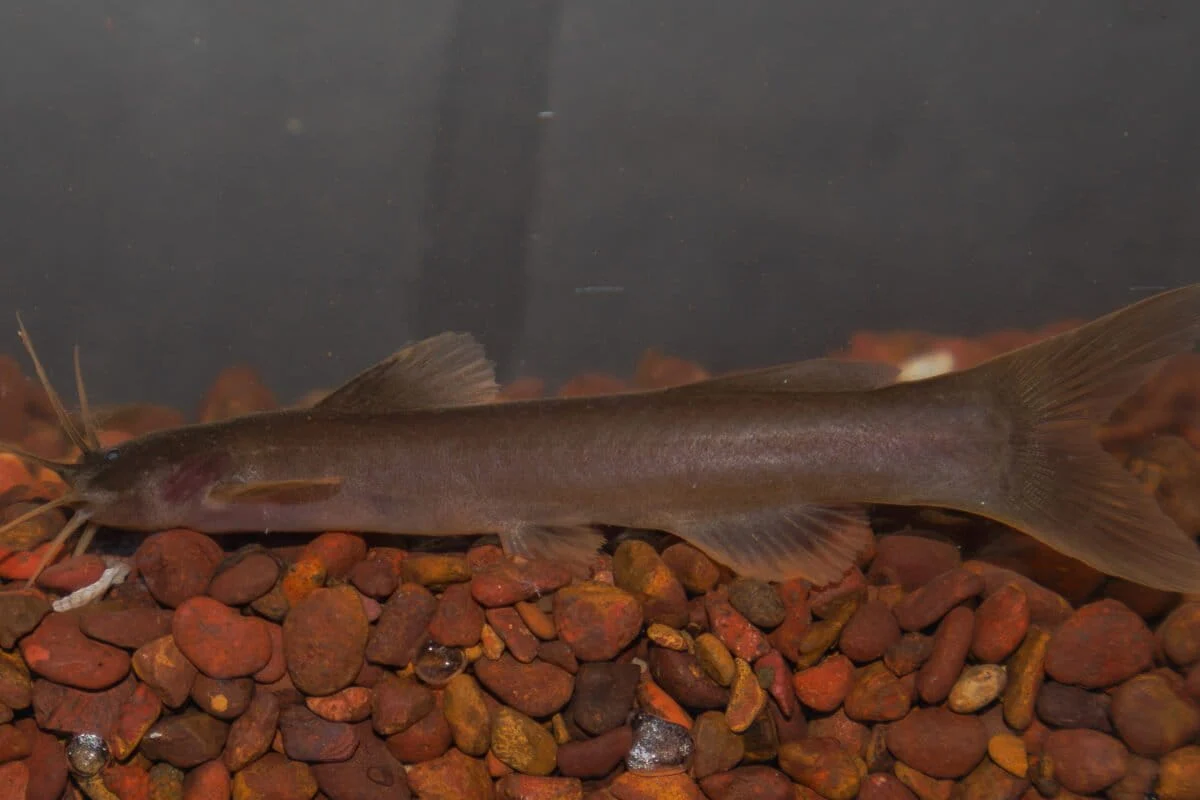
The Western Ghats, a UNESCO World Heritage site and one of the world’s eight “hottest hotspots” of biological diversity, has once again yielded a secret from its ancient, rain-drenched folds. Researchers have formally described a new species of freshwater catfish, Amblyceps vayavy, found in the northern reaches of the mountain range across the states of Maharashtra and Goa.
The discovery, published in the prestigious taxonomic journal Zootaxa, underscores the immense, yet frequently overlooked, biodiversity of India’s west-flowing river systems. However, the joy of discovery is tempered by a sobering reality: this sensitive species inhabits a landscape increasingly under siege from infrastructure development, mining, and habitat fragmentation.
Main Facts: Introducing Amblyceps vayavy
The newly identified species belongs to the genus Amblyceps, commonly known as "torrent catfishes." These are small, specialized fish adapted to life in fast-moving, well-oxygenated hill streams. While the genus is widely distributed across South and Southeast Asia, with 24 identified species, its presence in the Western Ghats was long thought to be an anomaly.
Key Characteristics and Etymology
The species name, vayavy (pronounced vah-yhav-yah), is derived from the Sanskrit-origin word for “northwest” in both Konkani and Marathi. This name pays homage to its geographical distribution in the northern Western Ghats. Morphologically, A. vayavy is distinct from its congeners, characterized by specific body proportions and sensory arrangements that allow it to thrive in the turbulent waters of the Kundalika and Ragada rivers.
Habitat and Ecological Role
Amblyceps vayavy is more than just a taxonomic entry; it is a biological barometer. According to lead author Balaji Vijaykrishnan, an independent researcher, these catfishes are "indicators of good water quality." They require clear, silt-free, and fast-flowing water to survive. Their presence suggests a relatively undisturbed aquatic environment, particularly in the upper reaches of the rivers where human intervention remains minimal.

Rarity in the Region
Until recently, the genus was believed to be largely restricted to Northern and Northeastern India. The discovery of A. accari in 2016 (central Western Ghats) and A. crassioris in 2023 (Eastern Ghats) began to shift this narrative. A. vayavy now stands as the second species of this genus known from the Western Ghats, though its population appears alarmingly sparse compared to its northern cousins.
Chronology: A Five-Year Quest for a "Ghost" Fish
The journey to describe Amblyceps vayavy began not in a laboratory, but through the observant eyes of a citizen scientist.
- 2020: The Initial Spark: Mumbai-based citizen scientist Neil Soares discovered an unusual specimen of Amblyceps in the Kundalika River near Kolad, Maharashtra. Recognizing that the only known Western Ghats species, A. accari, was restricted to much further south, Soares alerted professional ichthyologists.
- 2020–2025: Intensive Sampling: Over the next five years, a team comprising Balaji Vijaykrishnan and researchers Tejas Thackeray and Abhishek Shirke from the Thackeray Wildlife Foundation embarked on an exhaustive search. They conducted over 30 surveys in the Kundalika River system, covering various seasons and micro-habitats. Despite these efforts, the fish proved elusive; only three specimens were found in Maharashtra during this period.
- 2021–2025: The Goan Connection: Expanding their search southward, the team conducted more than 20 surveys in the tributaries of the Mahadayi River in Goa. In the Ragada River, they finally secured a single specimen that would eventually serve as the holotype—the definitive physical example used to describe the species.
- April 2025: Formal Recognition: After rigorous morphological comparisons and peer review, the findings were published in Zootaxa, officially introducing Amblyceps vayavy to the world.
Supporting Data: The Challenge of Rarity and Specialization
The data gathered during the five-year study highlights a stark contrast between the Amblyceps populations in the Western Ghats and those in other parts of Asia.
Population Density Disparities
In North and Northeast India, Amblyceps species are often abundant. Researchers note that a single hour of sampling in those regions can yield between 3 and 30 specimens. In contrast, the Western Ghats team conducted over 50 surveys over five years to find a grand total of four specimens. This suggests either an incredibly low population density or a highly specialized lifestyle that makes them difficult to capture.
Nocturnal and Micro-habitat Specialization
Freshwater fish expert Beta Mahatvaraj explains that Amblyceps are nocturnal. They spend daylight hours tucked under rocks or within crevices in the riverbed. This behavior, combined with the fact that they occupy "micro-habitats"—specific, small-scale environments—makes population estimates notoriously difficult. If a river segment is sampled during the day or during a dry season when water levels drop, the species may go entirely undetected.

Taxonomic Isolation
The Western Ghats act as a series of "evolutionary islands." The west-flowing rivers are relatively short and flow directly into the Arabian Sea, creating isolated habitats with limited connectivity. This isolation drives high levels of endemism (species found nowhere else). A. vayavy is likely endemic to these specific northern west-flowing systems, making the survival of these specific river stretches critical to the species’ existence.
Official Responses and Environmental Concerns
The discovery of A. vayavy comes at a time of heightened environmental tension in the region. The very rivers where the species was found are currently the subject of intense developmental debate.
The Railway Controversy
In Goa, a major point of contention is the proposed doubling of the existing railway track that passes through the Bhagwan Mahaveer Wildlife Sanctuary and the Mollem National Park. This project, spearheaded by Rail Vikas Nigam Limited (RVNL), aims to increase coal transportation capacity but has faced stiff resistance from environmentalists.
Gaps in Impact Assessments
The Environment Impact Assessment (EIA) report for the railway project, prepared by RVNL and the Wildlife Institute of India (WII), has come under fire. The citizen-led group "Amche Mollem" has pointed out critical omissions in the report. They argue that while the railway alignment intersects numerous perennial streams—the exact habitat of A. vayavy—the EIA contains no evaluation of the impact on freshwater fish.
"Construction-related debris deposition can smother the spawning grounds of resident species," Amche Mollem stated in a public appeal. "Despite their ecological significance, freshwater fish are entirely absent from the WII’s assessment."

Expert Warnings
Beta Mahatvaraj warns that specialized fish like the torrent catfish are the first to disappear when a river is disturbed. "Silt deposition from construction can cut off access to breeding grounds under rocks," he notes. "If water stagnates or oxygen levels drop due to flow alterations, these fish simply cannot survive."
Implications: The Race Against "Linnean Extinction"
The description of Amblyceps vayavy is a victory for taxonomy, but it serves as a warning for conservation. The study highlights several broader implications for India’s natural heritage.
1. The Role of Citizen Science
The fact that this discovery began with a citizen scientist, Neil Soares, underscores the importance of public engagement in conservation. As professional researchers are limited by time and funding, "community eyes" on the ground are increasingly responsible for identifying new species in rapidly changing landscapes.
2. The Vulnerability of West-Flowing Rivers
While India’s large east-flowing rivers (like the Kaveri and Krishna) are well-studied, the smaller, torrential west-flowing rivers remain "under-explored frontiers." These rivers host highly localized species that are vulnerable to even minor changes in land use. The discovery of A. vayavy suggests that many more species may be waiting to be found in these small coastal systems.
3. The Risk of "Silent Extinction"
Balaji Vijaykrishnan emphasizes that taxonomic studies are vital because they "give a species a name," which is a prerequisite for legal protection. However, with the current pace of habitat alteration—driven by sand mining, damming, and infrastructure projects—scientists fear a "Linnean Extinction," where species go extinct before they are ever discovered or named.

The case of A. crassioris, a relative of the new catfish, serves as a grim precedent; it is now nearly extinct in its original discovery site due to rampant sand mining.
Conclusion
The discovery of Amblyceps vayavy is a reminder that the Western Ghats still hold mysteries that challenge our understanding of Indian ecology. However, the rarity of the species and the looming threats to its habitat suggest that the window for protecting such specialized life forms is closing. For A. vayavy to survive another century in the torrents of the northwest, conservation efforts must move beyond large mammals and forests to include the "hidden" biodiversity of the riverbeds—the small, sensitive creatures that signal the health of the water that sustains the entire region.
