

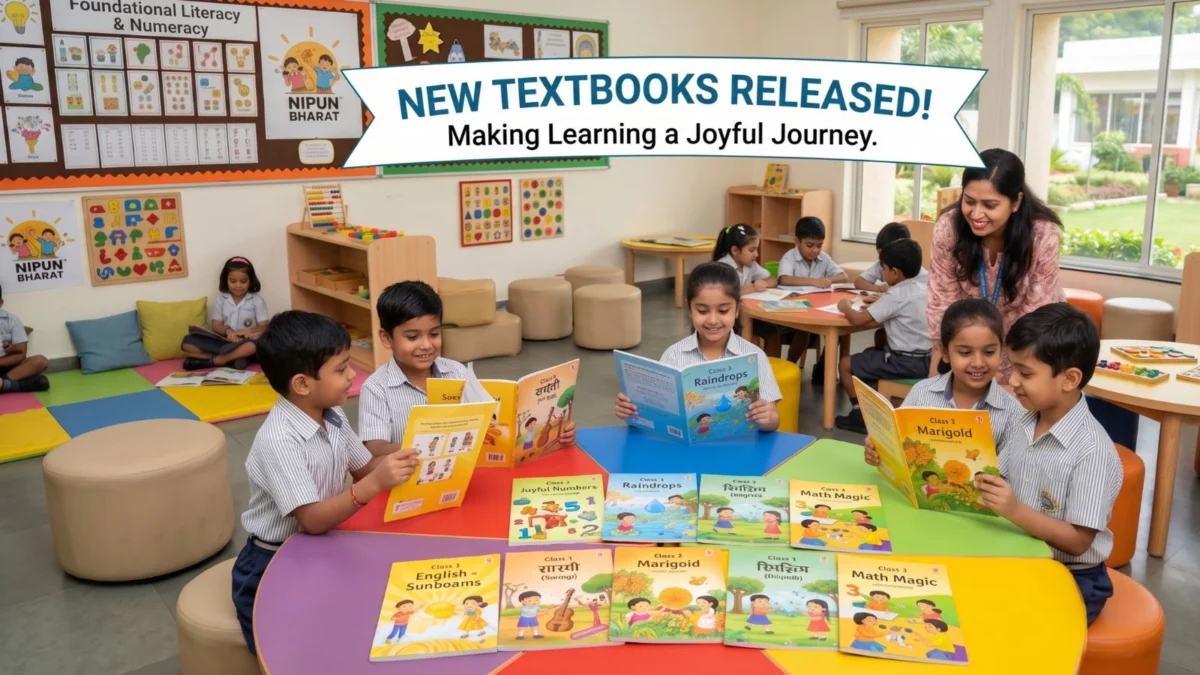
Chennai, May 19, 2026 – Tamil Nadu is embarking on a significant educational reform, aiming to foster a more engaging and effective learning environment for its youngest students. School Education Minister Rajmohan officially launched nine new textbooks today, meticulously crafted for students in grades one through three, aligning with a revamped curriculum designed to nurture individual talents and achieve robust learning outcomes. This initiative marks a pivotal step in the state’s commitment to strengthening its foundational education system, emphasizing a child-centric approach that transcends rote memorization and embraces holistic development.
The newly released textbooks are not merely conduits of information; they are envisioned as dynamic tools for learning. Their design philosophy is rooted in the understanding that young minds thrive on interaction, imagination, and active participation. By weaving educational content into the fabric of stories, songs, and interactive activities, the state aims to make the learning process not only comprehensible but also deeply enjoyable for children. This approach is expected to significantly enhance their overall learning capabilities and ignite a lifelong passion for knowledge.
Beyond pedagogical innovation, the textbooks boast an aesthetically pleasing design, utilizing vibrant colors and engaging layouts to capture young learners’ attention. Crucially, the content has been carefully curated to address a broad spectrum of developmental needs. It meticulously incorporates elements that foster the development of motor skills, crucial for physical coordination and dexterity. Simultaneously, it emphasizes the cultivation of socio-emotional skills, equipping children with the tools to understand and manage their emotions, build healthy relationships, and develop empathy. The integration of values and life skills further ensures that education extends beyond academics, preparing students to become well-rounded, responsible citizens.
The release of these new textbooks is a cornerstone of a broader educational strategy that also addresses the practical aspects of school reopening. Following a review meeting of the School Education Department, Minister Rajmohan announced that all government, government-aided, and private schools across Tamil Nadu will reopen on June 1, marking the end of the summer vacation. This timely announcement allows families ample time to prepare for the upcoming academic year. Furthermore, a seamless distribution plan has been put in place, with textbooks already dispatched to all districts. The distribution to schools will commence on the day of reopening, ensuring that students have access to their new learning materials from the very first day of the academic year.
In a significant move to alleviate financial burdens on families and ensure equitable access to educational resources, the minister also instructed that all free welfare schemes, including the distribution of textbooks, notebooks, and school bags for the 2026-2027 academic year, will be executed on the school reopening day itself. This consolidated distribution strategy streamlines the process and guarantees that every student, regardless of their socio-economic background, will receive the necessary supplies to commence their studies without delay. This commitment to providing essential learning materials underscores the state’s dedication to creating an inclusive and supportive educational ecosystem.
The New Curriculum: A Paradigm Shift in Early Learning
The introduction of these nine textbooks represents a tangible manifestation of Tamil Nadu’s commitment to a forward-thinking educational philosophy. The curriculum underpinning these books has been meticulously developed to move away from traditional, often passive, methods of instruction. Instead, it champions a dynamic and interactive approach that acknowledges the unique developmental trajectory of young children. The emphasis is on creating an environment where learning is an adventure, not a chore.
H3: Fostering a Child-Centric Learning Environment
At the heart of this new curriculum lies the principle of child-centricity. This means that the learning experience is designed around the needs, interests, and developmental stages of the child. The textbooks are envisioned as facilitators of this process, employing a variety of engaging techniques to capture and sustain young learners’ attention.
- Storytelling as a Pedagogical Tool: Stories have a profound ability to connect with children on an emotional level, making abstract concepts relatable and memorable. The new textbooks integrate narratives that not only entertain but also subtly convey educational messages, fostering comprehension and critical thinking skills. These stories are designed to be culturally relevant and age-appropriate, sparking curiosity and imagination.
- The Power of Music and Rhyme: Songs and rhymes are natural learning aids for young children. They enhance memory retention, improve language development, and make learning fun. The curriculum incorporates musical elements and rhythmic patterns to teach foundational concepts in an enjoyable and accessible manner.
- Interactive Activities for Active Engagement: Passive learning is being replaced by active participation. The textbooks feature a range of interactive activities, puzzles, games, and hands-on exercises that encourage children to explore, experiment, and discover. This hands-on approach not only solidifies learning but also develops problem-solving skills and a sense of accomplishment.
H3: Holistic Development: Beyond Academics
The new curriculum recognizes that education is not solely about academic prowess but also about nurturing well-rounded individuals. The textbooks have been meticulously designed to address various facets of a child’s development:
- Motor Skills Development: The importance of fine and gross motor skills in early childhood cannot be overstated. Activities within the textbooks are designed to enhance children’s dexterity, coordination, and physical control. This could include drawing, cutting, pasting, and engaging in playful physical exercises that promote both fine and gross motor development.
- Socio-Emotional Learning (SEL): The ability to understand and manage emotions, build positive relationships, and make responsible decisions is crucial for a child’s overall well-being and future success. The new textbooks incorporate themes and activities that promote empathy, cooperation, self-awareness, and conflict resolution, laying the foundation for strong social and emotional intelligence.
- Values Education: Instilling strong moral values from an early age is a cornerstone of responsible citizenship. The curriculum integrates lessons on honesty, integrity, respect, kindness, and responsibility through age-appropriate scenarios and discussions.
- Life Skills Integration: The world is constantly evolving, and equipping children with practical life skills is essential. The textbooks aim to introduce foundational concepts related to health, hygiene, safety, and environmental awareness, preparing them for the challenges and opportunities of everyday life.
H3: Aesthetic Appeal and Engaging Design
The visual appeal of learning materials plays a significant role in a child’s engagement. The new textbooks have been developed with a keen eye for aesthetics.
- Vibrant Color Palettes: The use of bright, appealing colors is not merely for visual delight; it is strategically employed to make the content more engaging and to differentiate various learning concepts. Colors can evoke emotions, aid in memory recall, and make learning materials more attractive to young eyes.
- Illustrations and Graphics: The textbooks are replete with captivating illustrations and graphics that bring the content to life. These visuals are designed to be clear, informative, and appealing, aiding comprehension and stimulating imagination. They serve as visual anchors for the textual information, making it more accessible to young learners.
Chronology of Educational Advancement
The release of these new textbooks is the culmination of a sustained effort by the Tamil Nadu government to modernize its education system. While the immediate focus is on grades one to three, the underlying curriculum reform is expected to extend to higher grades in the coming years.
- Early 2025: Initial conceptualization and planning for a curriculum overhaul for early grades begin. Subject matter experts, educators, and child development specialists are engaged to define the learning objectives and pedagogical approaches.
- Mid-2025: Development of the new curriculum framework and the identification of key learning outcomes for grades one to three commence. This phase involves extensive research into global best practices in early childhood education.
- Late 2025: Textbook content development begins, with a strong emphasis on integrating stories, songs, interactive activities, and holistic developmental aspects. The aesthetic design of the textbooks is also a significant focus during this period.
- Early 2026: Draft textbooks are prepared and undergo rigorous review by educational authorities, subject experts, and a panel of experienced teachers. Feedback is incorporated to refine the content and design.
- April 2026: Printing and production of the nine new textbooks for grades one to three commence, ensuring a sufficient supply for all students across the state. Simultaneously, the logistics for textbook distribution are finalized.
- May 19, 2026: Tamil Nadu School Education Minister Rajmohan officially releases the nine new textbooks, marking a significant milestone in the state’s educational reform.
- June 1, 2026: All government, government-aided, and private schools reopen after summer vacation. Distribution of the new textbooks, along with notebooks and school bags under various welfare schemes, begins on this day.
Supporting Data and Official Statements
The rationale behind this ambitious reform is grounded in the understanding that the foundational years of education are critical for a child’s lifelong learning journey. While specific statistical data on the impact of the new curriculum will only emerge after its implementation, the government’s decision is informed by broader educational research and the desire to address existing challenges.
Minister Rajmohan, in his address during the textbook release, emphasized the transformative potential of this initiative. "Our goal is to create a learning environment where every child feels empowered, curious, and excited to learn," he stated. "These new textbooks are not just books; they are gateways to knowledge, creativity, and personal growth. We are investing in the future of Tamil Nadu by ensuring our youngest citizens receive the best possible start in their educational journey."
An official release from the School Education Department further elaborated on the design philosophy: "The textbooks have been developed with a deep understanding of child psychology and learning patterns. By incorporating elements that appeal to their senses and intellect, we aim to make learning an intuitive and joyful experience. This child-centric approach will foster critical thinking, problem-solving abilities, and a strong sense of self-efficacy among our students."
The distribution plan, as outlined by the minister, highlights the government’s commitment to equitable access. "We understand the importance of timely access to learning materials. The seamless dispatch and distribution of textbooks, notebooks, and school bags on the reopening day itself will ensure that no child is left behind due to a lack of resources. This is part of our continuous effort to strengthen our welfare schemes and make education accessible to all."
Implications for the Future of Education in Tamil Nadu
The introduction of these new textbooks and the accompanying curriculum reform carry profound implications for the future of education in Tamil Nadu. This initiative is not merely an incremental change; it represents a paradigm shift that has the potential to redefine early childhood education in the state.
H3: Enhanced Learning Outcomes and Reduced Learning Gaps
By adopting a more engaging and effective pedagogical approach, the state anticipates a significant improvement in learning outcomes. Children who are actively involved in their learning are more likely to grasp concepts deeply and retain information for longer periods. This, in turn, could lead to a reduction in learning gaps and a stronger academic foundation as students progress through their educational careers. The focus on holistic development will also ensure that students are not just academically proficient but also emotionally intelligent and socially adept.
H3: Cultivating a Generation of Lifelong Learners
The emphasis on making learning enjoyable and relevant to children’s lives is expected to foster a genuine love for learning. When children associate education with positive experiences, they are more likely to become lifelong learners, continuously seeking knowledge and adapting to new challenges. This is a crucial objective in today’s rapidly evolving world.
H3: Strengthening the Teacher-Student Relationship
The interactive nature of the new textbooks and the emphasis on diverse learning activities will likely encourage more dynamic classroom interactions. Teachers will be empowered to facilitate engaging discussions, guide exploration, and provide personalized support to students. This shift can strengthen the teacher-student relationship, making educators not just instructors but also mentors and facilitators of learning.
H3: A Model for Other States and Educational Institutions
Tamil Nadu’s proactive approach to educational reform, particularly in the early childhood sector, has the potential to serve as a model for other states and educational institutions across the country. The comprehensive nature of the reform, encompassing curriculum development, textbook design, and equitable distribution, offers a blueprint for similar initiatives. By prioritizing a child-centric, holistic, and engaging approach, the state is setting a new standard for early education.
H3: Long-Term Economic and Social Benefits
Investing in quality early childhood education has significant long-term economic and social benefits. A well-educated populace is more productive, innovative, and engaged in civic life. By equipping its youngest citizens with strong foundational skills and a positive attitude towards learning, Tamil Nadu is investing in its future workforce and contributing to the overall socio-economic development of the state. This reform is a testament to the government’s foresight and commitment to building a brighter future for its citizens.
