By [Your Name/News Desk]
The Western Ghats, a majestic mountain range stretching 1,600 kilometers along the western coast of India, has long been celebrated as one of the world’s most critical biodiversity hotspots. While much of the public’s attention focuses on its charismatic megafauna—the tigers, elephants, and lion-tailed macaques—a recent and exhaustive systematic survey has turned the spotlight toward a much smaller, yet equally vital, group of inhabitants: the Odonata.
A comprehensive study conducted between 2021 and 2023 has mapped the distribution and diversity of dragonflies and damselflies (collectively known as odonates) across this UNESCO World Heritage site. The findings, published in a recent scientific report, underscore the region’s status as a global evolutionary ark, harboring nearly half of India’s total odonate species and a staggering number of endemic varieties found nowhere else on Earth.
The Core Findings: A Hub of Endemism
The systematic survey confirms that the Western Ghats is a powerhouse of odonate diversity. According to the data, the region is home to approximately 222 of India’s roughly 504 known odonate species. Of these, 95 species are strictly endemic to the Western Ghats, meaning they evolved within these specific microclimates and are found in no other geographical location.
During the active survey period, researchers documented 143 distinct species belonging to 71 genera and 11 families. This tally included 76 species of dragonflies (Anisoptera) and 67 species of damselflies (Zygoptera). To put these numbers into perspective, this single survey managed to record nearly 65% of all odonate species known to inhabit the Western Ghats and approximately 28% of India’s total odonate diversity.
"The Western Ghats act as a biological island," explains the study’s lead author, Pankaj Korapade. "The high level of endemism we see today is the result of millions of years of isolation. Even after the Indian subcontinent split from the supercontinent of Gondwana, the Ghats remained a refuge, trapping and evolving a unique set of fauna that adapted to its specific monsoon-driven cycles and freshwater systems."
Chronology of the Survey: 2021–2023
The research was not a mere snapshot but a sustained effort to capture the seasonal fluctuations of these winged insects. Spanning three years, the study targeted 144 sites across five Indian states: Gujarat, Maharashtra, Goa, Karnataka, and Kerala.
Phase 1: Site Selection and Habitat Mapping
Beginning in early 2021, the team identified a wide array of freshwater habitats. Odonates are semi-aquatic; their larvae (nymphs) develop in water, making them excellent bio-indicators of aquatic health. The researchers selected sites ranging from fast-flowing mountain streams and cascading waterfalls to stagnant ponds, marshes, and riparian corridors.
Phase 2: Seasonal Sampling
The majority of the fieldwork was conducted during the pre-monsoon and post-monsoon periods. These windows are critical because odonates are most active when the weather is warm and water sources are either replenishing or stabilized. The survey involved rigorous visual encounters and specimen documentation to ensure a high degree of accuracy.
Phase 3: Data Synthesis and Analysis
By late 2023, the team began synthesizing the data, comparing their field observations with historical records and the IUCN Red List of Threatened Species. This phase revealed the stark contrasts in diversity between the northern and southern reaches of the mountain range.
Supporting Data: Regional Disparities and Sampling Bias
One of the most intriguing aspects of the study is the geographical distribution of species. While the entire Western Ghats is diverse, the "richness" is not spread evenly.
The Kerala Paradox
Kerala emerged as the undisputed crown jewel of odonate endemism. Despite having significantly fewer survey sites than its northern neighbors, Kerala recorded 33 endemic species. This high concentration highlights the state’s southern rainforests as a critical evolutionary refugium.
The Maharashtra Sampling Effort
In contrast, Maharashtra recorded the highest overall number of species during the survey. However, the authors are careful to provide context for this figure. Maharashtra was subjected to a much more intensive sampling effort, with 105 survey sites and 161 individual visits. Kerala, by comparison, had only 14 survey sites and 20 visits.

The data suggests that if Kerala were surveyed with the same intensity as Maharashtra, its recorded species count and endemism rates would likely dwarf all other regions. This "sampling bias" is a common challenge in biodiversity research, but it serves to underscore the untapped potential of the southern Western Ghats.
State-by-State Endemism Breakdown:
- Kerala: 33 endemic species
- Maharashtra: 12 endemic species
- Karnataka: 6 endemic species
- Goa: 4 endemic species
- Gujarat: 0 endemic species (within the survey sites)
Official Responses and Expert Perspectives
In an interview regarding the study’s implications, Pankaj Korapade emphasized that India holds roughly 8% of the world’s total odonata fauna. "When you consider that nearly 200 species are endemic to the Western Ghats alone, you realize the global responsibility India has in protecting this specific lineage," Korapade stated.
Conservationists argue that the "dragonfly" is often overlooked in policy-making because it lacks the "glamour" of large mammals. However, experts point out that odonates are apex predators in the insect world. They control mosquito populations and serve as a primary food source for birds and amphibians. Their absence or decline is often the first sign of a collapsing ecosystem.
"Odonates are the ‘guardians’ of our freshwater," says a representative from the Chatur Ullu Lab, which provided imagery for the study. "If the water is polluted or the flow is disrupted by a dam, the dragonflies are the first to disappear. They tell us a story about the health of our environment that we can’t afford to ignore."
The Conservation Gap: Data Deficiencies
While the survey celebrated diversity, it also uncovered a worrying lack of information regarding the survival of many species. The study cross-referenced its findings with the International Union for Conservation of Nature (IUCN) Red List, revealing a significant "knowledge gap."
Of the 143 species recorded:
- 100 species were classified as Least Concern, meaning their populations are currently stable and widespread.
- 22 species were listed as Data Deficient (DD). This is a critical category; it means scientists do not have enough information to even guess whether the species is thriving or on the brink of extinction.
- 16 species had not yet been evaluated by the IUCN.
- Near Threatened: Two species, Phylloneura westermanni (the Myristica Bambootail) and Heliogomphus promelas, were categorized as Near Threatened.
- Vulnerable: Protosticta sanguinostigma and Cyclogomphus ypsilon were identified as Vulnerable, indicating a high risk of extinction in the wild.
The high number of "Data Deficient" and "Not Evaluated" species suggests that current conservation efforts may be flying blind. Without knowing the population trends of these endemics, local governments cannot create effective protected areas.
Implications: Threats to the Freshwater Frontier
The study concludes with a sobering assessment of the threats facing the Western Ghats. The very habitats that support these ancient insects are under siege from several fronts:
- Habitat Fragmentation and Land-Use Conversion: As forests are cleared for agriculture (such as tea, coffee, and rubber plantations), the specialized micro-habitats required by endemic damselflies disappear.
- Linear Infrastructure: The construction of roads, railway lines, and power grids through sensitive forest corridors disrupts the flight paths of odonates and leads to the pollution of nearby streams.
- Hydropower Projects: Odonates rely on specific water flow velocities. Large-scale damming alters the thermal and physical properties of rivers, making them uninhabitable for native nymphs.
- Pollution and Tourism: Unregulated tourism in the Ghats leads to plastic waste and chemical runoff in pristine streams, directly impacting the larval stages of dragonflies.
- Climate Change and Forest Fires: Shifting monsoon patterns and increased frequencies of forest fires threaten the delicate balance of the riparian zones, which are the primary breeding grounds for these species.
The Road Ahead: A Call for Long-Term Monitoring
The 2021–2023 survey serves as a vital baseline, but the researchers insist it must be the beginning, not the end, of the story. The paper calls for more intensive, long-term surveys, particularly in the under-sampled regions of Karnataka and Kerala.
"We need a shift in how we view conservation in the Western Ghats," the study notes. "Protection should not just be about the forest canopy, but about the water that flows beneath it. Prioritizing freshwater habitats for protection is the only way to ensure that these ‘dragons and damsels’ continue to patrol our skies."
As the world grapples with a global decline in insect populations—often referred to as the "insect apocalypse"—the Western Ghats stands as a rare stronghold of diversity. The survival of its 222 odonate species is not just a matter of regional pride, but a necessity for the ecological integrity of the Indian subcontinent.
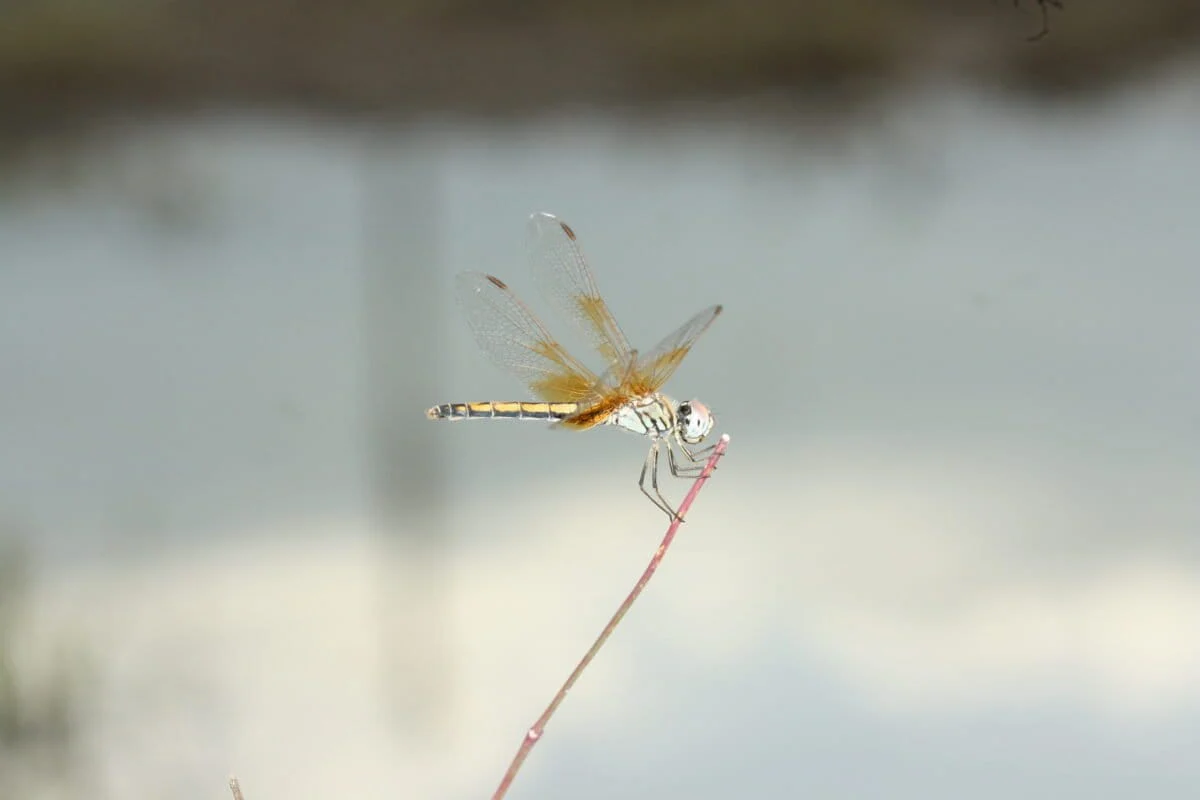
Banner Image: A long-legged marsh glider (Pachydiplax longipennis), a common yet vital member of the odonate family. Photo courtesy of Chatur Ullu Lab.