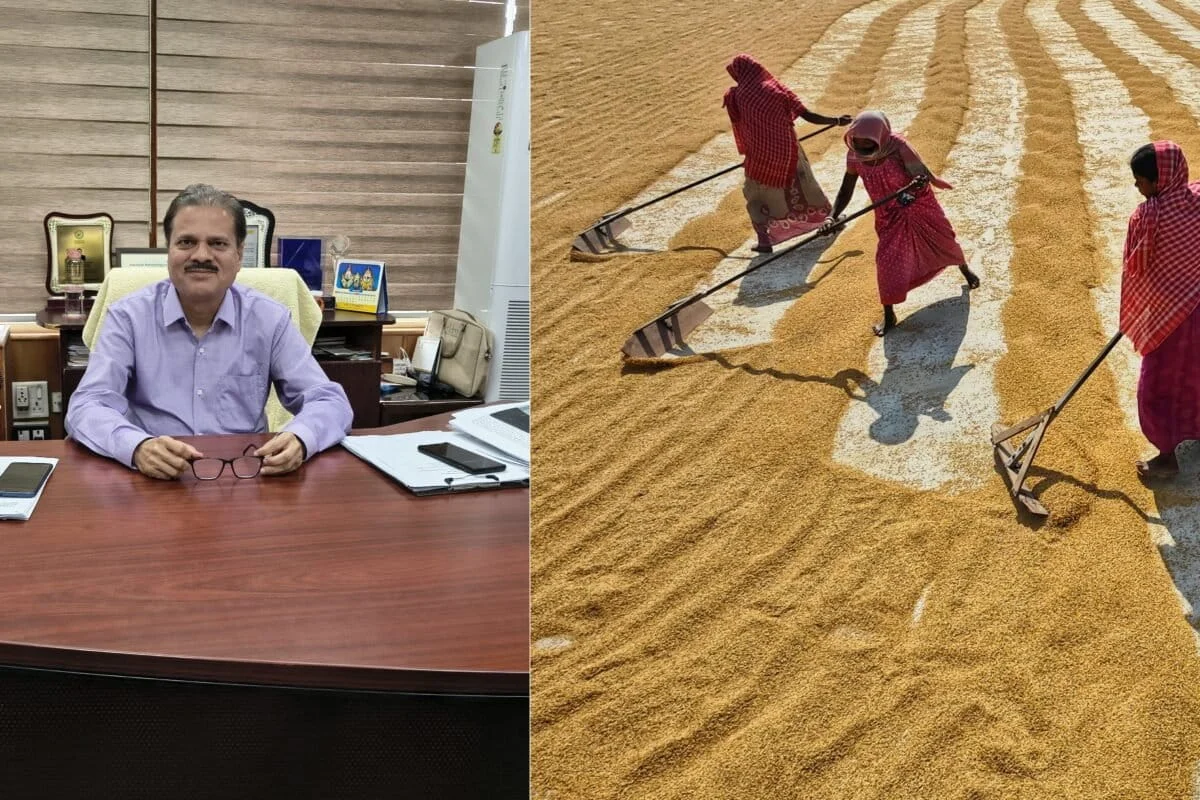
As India grapples with record-breaking heatwaves and the looming shadow of El Niño, the nation’s primary weather agency, the India Meteorological Department (IMD), is undergoing its most significant transformation in decades. In a landscape where climate change is making weather patterns increasingly erratic and localized, the traditional methods of forecasting are no longer sufficient to protect lives and livelihoods.
In a comprehensive dialogue, Mrutyunjay Mohapatra, the Director General of Meteorology at the IMD, outlined the shifting paradigms of heat, the integration of artificial intelligence into weather models, and the urgent transition toward "impact-based" forecasting. As temperatures soar and the monsoon becomes more unpredictable, the IMD is moving beyond mere data dissemination to a strategy focused on "early warning and early action."
Main Facts: The New Reality of Indian Heat
The nature of heat in the Indian subcontinent has fundamentally altered over the last fifty years. According to IMD data spanning from 1970 to 2020, there has been a consistent rise in maximum (daytime), minimum (nighttime), and mean temperatures. However, the most concerning development is not just the heat itself, but the synergy between temperature and moisture.
![Both daytime and nighttime temperatures have risen: IMD chief [Interview]](https://imgs.mongabay.com/wp-content/uploads/sites/30/2026/05/29112801/imd-collage-1200x800.jpg)
The Humidity Factor and "Feels-Like" Temperatures
One of the most critical scientific insights shared by Mohapatra is the relationship between global warming and atmospheric moisture. For every 1° Celsius rise in global temperature, the air’s capacity to hold moisture increases by approximately 7%. This increase in relative humidity means that even if absolute temperatures remain consistent with historical records, the "feels-like" temperature—the heat index—is significantly higher.
The Danger of Warm Nights
A secondary, often overlooked threat is the rise in nighttime temperatures. When daytime temperatures exceed 40°C and nights remain warm, the human body is deprived of its cooling-off period. This lack of physiological recovery affects sleep and cardiovascular health, creating a cumulative stress effect that can be fatal for vulnerable populations, particularly those without access to mechanical cooling or adequate shelter.
Chronology: From General Trends to Granular Precision
The IMD’s approach to forecasting has evolved through several distinct phases, moving from national-level generalizations to localized, household-specific goals.
![Both daytime and nighttime temperatures have risen: IMD chief [Interview]](https://imgs.mongabay.com/wp-content/uploads/sites/30/2026/05/29113327/pexels-teysa-tugadi-1282097472-25211861-scaled-e1780034632856-768x512.jpg)
- The Historical Phase (Pre-2020): Forecasting was primarily information-based. Monsoon predictions were seasonal and focused on the country as a whole. Heatwave classifications were based on simple departures from "normal" temperatures or fixed thresholds like 45°C.
- The Granular Shift (2020–2021): Recognizing that a single national forecast was insufficient for a country of India’s size, the IMD began providing monthly, seasonal, and region-wise forecasts. In 2021, the agency strengthened "extended-range" forecasts, providing weekly updates for the subsequent four weeks.
- The Impact-Based Era (Current): The IMD transitioned from telling people what the weather would be to what the weather would do. This involves linking weather warnings (color-coded green, yellow, orange, and red) to specific socio-economic impacts, such as flood risks in low-lying areas or crop damage.
- The Future: "Har Ghar Mausam": The current trajectory aims for the "Har Ghar Mausam" initiative, a vision where every household can access hyper-local weather information. This involves moving from district-level data to block-level, and eventually, panchayat and village-level monitoring.
Supporting Data: The Metrics of Progress and Challenge
To meet the demands of a changing climate, the IMD has significantly expanded its physical and digital infrastructure.
- Observational Network: Rainfall monitoring, which previously relied on 3,000 stations, now utilizes a block-level system covering 7,200 blocks. The total number of weather stations is expected to surpass 10,000 within the current year.
- Radar Expansion: India currently operates 50 Doppler weather radars. To achieve the high-resolution data required for hyperlocal forecasting, the IMD has set a target to increase this number to 126 in the coming years.
- Forecast Accuracy: Over the last decade, overall forecast accuracy has improved by 40-50%. Currently, accuracy stands at approximately 84%. The IMD’s goal is to bridge the remaining gap, targeting an additional 10-12% improvement to handle the complexities of climate-induced volatility.
- Dissemination Reach: Approximately 20 million farmers now receive direct weather updates via WhatsApp. Furthermore, flash flood guidance systems are now operational for nearly 100,000 watersheds across the country.
Official Responses: Coordination and Last-Mile Connectivity
Mrutyunjay Mohapatra emphasizes that a forecast is only as good as the action it inspires. The bridge between "early warning" and "early action" is the current focus of the National Disaster Management Authority (NDMA) and the IMD.
Bridging the Awareness Gap
Mohapatra recounted an incident in Delhi where a rickshaw pullers’ association approached the IMD, stating they were not receiving timely heatwave information. This feedback led to the creation of dedicated WhatsApp groups for association leaders, who then used blackboards in local markets to display temperature warnings and safety precautions. This grassroots model is now being viewed as a template for other urban centers.
![Both daytime and nighttime temperatures have risen: IMD chief [Interview]](https://imgs.mongabay.com/wp-content/uploads/sites/30/2026/05/29112351/AP26141205970351-768x512.jpg)
Sector-Specific Applications
The IMD has moved beyond general public service to develop specialized products for critical sectors:
- Agriculture: Collaboration with Krishi Sakhis and Pashu Sakhis to reach rural farmers.
- Infrastructure: Specific warnings for railways, national highways, and the power sector.
- Health: Direct coordination with the Indian Medical Association and ministries of health and labor to mitigate heat-related mortality.
- International Cooperation: India now shares its flash flood guidance and forecasting data with neighboring nations, including Nepal, Bhutan, Bangladesh, and Sri Lanka, positioning itself as a regional leader in climate resilience.
Implications: The Road Ahead for Policy and Technology
As climate change reduces the predictability of weather patterns—characterized by a decrease in moderate rainfall days and an increase in extreme, localized events—the IMD is looking toward the "Fourth Industrial Revolution" for solutions.
The Role of Artificial Intelligence (AI)
Traditional physical models are computationally expensive and time-consuming, often taking several hours to process a single forecast. During rapidly evolving extreme weather events, these hours are a luxury the country cannot afford. Mohapatra notes that AI and machine learning (ML) can generate data-driven solutions within minutes. While physical models remain the backbone of meteorology, AI-based systems are becoming essential for hyperlocal, real-time updates.
![Both daytime and nighttime temperatures have risen: IMD chief [Interview]](https://imgs.mongabay.com/wp-content/uploads/sites/30/2026/05/29113810/pexels-shantumsingh-17609960-768x512.jpg)
The Necessity of a National Meteorological Policy
The increasing availability of weather data from open-source platforms and private players has created a double-edged sword: more information, but also more confusion. Mohapatra confirmed that the Ministry of Earth Sciences has formed an expert group to draft a National Meteorological Policy. This framework, encouraged by the World Meteorological Organization (WMO), aims to standardize weather information, ensure accuracy, and streamline the response of various state agencies.
The 2024 Monsoon and El Niño
The immediate concern for the nation remains the 2024 monsoon. The IMD has predicted rainfall at 92% of the Long Period Average (LPA), which falls into the "below-normal" category. While El Niño conditions historically correlate with weaker monsoons in 60-70% of cases, Mohapatra remains cautiously optimistic. He asserts that India’s resilience—both institutional and individual—has reached a point where "below-normal" rainfall no longer automatically translates to catastrophe, provided that adaptive measures are strictly followed.
Conclusion
The transformation of the IMD reflects a broader global necessity: the need to adapt scientific institutions to a planet that no longer follows the rules of the past. By integrating humidity into heat assessments, expanding radar networks to the village level, and embracing AI, India is attempting to stay one step ahead of a warming atmosphere. However, as Mrutyunjay Mohapatra points out, the ultimate success of these systems lies in the "last mile"—ensuring that the rickshaw puller on a Delhi street or the farmer in a remote village not only receives the warning but has the means to act upon it.