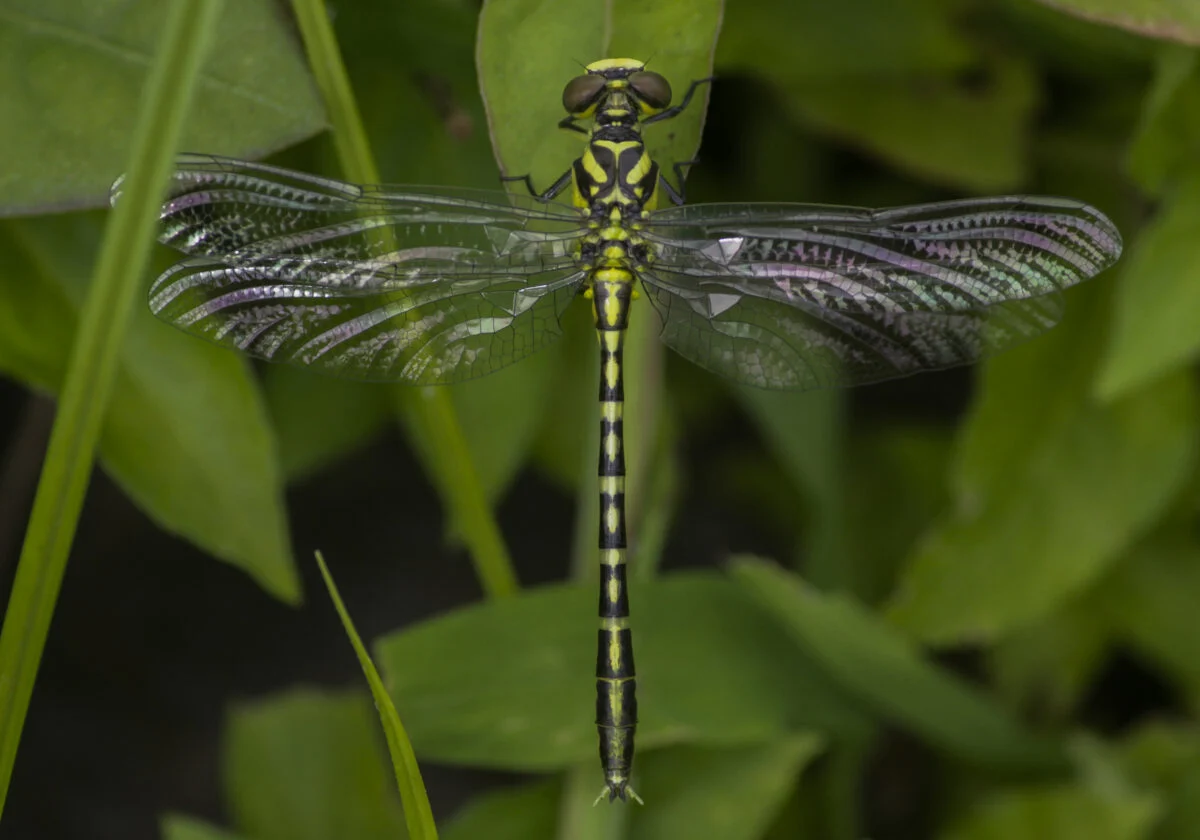
The headlines across Indian media outlets last month were nothing short of alarming: “One-third of India’s dragonflies likely extinct,” “Scientists sound alarm,” and “35% drop in populations.” These reports followed the publication of the first-ever comprehensive study on odonates—the order of predatory insects comprising dragonflies and damselflies—in the Western Ghats, a global biodiversity hotspot.
However, behind the sensationalism lies a more nuanced scientific reality. While the study indeed highlights significant gaps and potential threats, it also marks a milestone in Indian entomology. Led by Dr. Pankaj Koparde, head of the Chatur Ullu Lab at MIT World Peace University in Pune, the research provides the first robust baseline for a taxon that has long flown under the radar of conservation priorities.
In an era of rapid climate change and habitat loss, these "living jewels" serve as more than just aesthetic wonders; they are critical ecological indicators. This report explores the findings of the Chatur Ullu Lab, the biological marvels of odonates, and the urgent need for a systematic approach to insect conservation in the Indian subcontinent.
![A scientist’s search for dragons and damsels [Interview]](https://imgs.mongabay.com/wp-content/uploads/sites/30/2026/05/28000548/Crimson-Marsh-Glider-banner-1200x800.jpg)
Main Facts: The "Missing 35%" and the Reality of Odonatology
The catalyst for the recent media frenzy was a two-year extensive field study conducted across the Western Ghats. The research team surveyed 144 sites across five Indian states: Gujarat, Maharashtra, Goa, Karnataka, and Kerala. Of the 222 odonate species known to inhabit the region, the team recovered 143 species—approximately 65% of the total.
The "missing 35%" became the focal point of public concern. However, Dr. Koparde clarifies that "absence of evidence is not evidence of absence." The failure to record 79 species does not definitively equate to extinction, but rather highlights three critical factors:
- Sampling Disparity: Due to accessibility and permit restrictions, 100 of the 144 sites were located in Maharashtra, leading to an uneven distribution of data across the Ghats.
- Seasonality: Many odonates are highly seasonal. A survey conducted in a specific month might miss species that emerge only during the monsoon or the peak of summer.
- Rarity: Some species are naturally rare or restricted to extremely specific micro-habitats, making them difficult to detect during rapid surveys.
Despite these caveats, the study confirms that the Western Ghats—particularly the southern stretches in Kerala—remain a powerhouse of endemism. In Kerala alone, 31 of the 83 species recovered were endemic to the region, showcasing a biological richness that is increasingly under threat from habitat fragmentation.
![A scientist’s search for dragons and damsels [Interview]](https://imgs.mongabay.com/wp-content/uploads/sites/30/2026/05/28000738/Field-work-2-768x576-1-768x512.jpg)
Chronology: From Ancient Aviators to Modern Research
To understand the significance of this study, one must look at the evolutionary and research timeline of Odonata in India.
The Evolutionary Timeline
Dragonflies are among the most ancient insect groups to take flight, with ancestors dating back over 300 million years to the Carboniferous period. Unlike many other insects that evolved later, dragonflies have maintained a relatively stable body plan, perfected for aerial predation. Their presence in the Western Ghats is an evolutionary legacy, with many species remaining isolated in the "sky islands" of the Ghats since the Gondwana split.
The Research Gap
For decades, Indian biodiversity research focused heavily on "charismatic megafauna" such as tigers and elephants. Insects, despite making up the bulk of animal biomass, were largely ignored. Odonatology in India was historically restricted to a few dedicated taxonomists. It is only in the last 15 years that a new wave of researchers, including Dr. Koparde, began utilizing modern tools—such as Geographic Information Systems (GIS), molecular phylogenetics, and citizen science—to map these insects.
![A scientist’s search for dragons and damsels [Interview]](https://imgs.mongabay.com/wp-content/uploads/sites/30/2026/05/28001511/Team-Photo-e1779907539404.jpeg)
The Study Period (2022–2024)
Supported by the Department of Science and Technology (DST), Government of India, the Chatur Ullu Lab’s study represents the culmination of years of pilot surveys. The two-year window was designed to create a baseline that future researchers can use to measure actual population declines, rather than relying on anecdotal evidence.
Supporting Data: The Biological Prowess of Odonates
The study’s findings are bolstered by the extraordinary biological characteristics that make odonates essential to their ecosystems.
Aerial Mechanics: The "Four-Wheel Drive" of Insects
Dragonflies possess a unique muscular structure that allows them to control each of their four wings independently. This gives them a "reverse gear"—a rarity in the insect world. While most insects rely on halteres (appendages that act as gyroscopes) for balance, dragonflies lack these, instead using independent wing movement to hover, fly backward, and change direction instantaneously. This maneuverability makes them the apex predators of the insect world, hunting mosquitoes, flies, and even other dragonflies mid-air.
![A scientist’s search for dragons and damsels [Interview]](https://imgs.mongabay.com/wp-content/uploads/sites/30/2026/05/28001249/Fig-8.-Cyclogomphus-ypsilon-1200x840.jpg)
Vision Beyond Human Comprehension
The visual system of a dragonfly is arguably the most complex in the animal kingdom. Humans are trichromatic, possessing three opsin genes to see red, blue, and green. In contrast, some dragonfly species possess up to 15 different opsin genes.
- Compound Eyes: They have nearly 360-degree vision through eyes containing up to 15,000 individual lenses.
- Spectrum: They can perceive ultraviolet light and polarized light, allowing them to detect prey against the glare of water surfaces with unerring accuracy.
The Longest Migration
The study also highlights the importance of the Pantala flavescens, or the Globe Skimmer. This dragonfly undertakes a 17,000-kilometer annual migration from India to East Africa and back, crossing the Indian Ocean. This is the longest recorded migration of any insect, surpassing even the famous Monarch butterfly of North America.
Official Responses and Expert Perspectives
The research has sparked a broader dialogue among the scientific community regarding the "taxonomic impediment"—the lack of experts and funding for lesser-known species.
![A scientist’s search for dragons and damsels [Interview]](https://imgs.mongabay.com/wp-content/uploads/sites/30/2026/05/28002245/Long-legged-Marsh-Glider-scaled-e1779908141633-768x512.jpg)
Dr. Koparde emphasizes that the "extinction" headlines, while perhaps well-intentioned in their alarm, miss the scientific point. "The truth is that we lack the baseline data to say we have lost these many species," he noted. "But now that we have created this baseline, we can revisit these sites year after year to build a robust database."
The Funding Crisis
A 2023 paper titled The Current State of Odonatology in India, co-authored by Koparde and Andrea Phillott of FLAME University, highlighted that funding remains the single greatest barrier. Because dragonflies do not have the same public appeal as large mammals, securing government or private grants for long-term monitoring is a constant struggle for researchers.
The Role of Citizen Science
In response to the lack of formal funding, the "DragonflySouthAsia" movement has emerged as a powerful tool. With over 10,000 members on Facebook and thousands of research-grade observations on platforms like iNaturalist, enthusiasts are filling the data gaps that professional scientists cannot cover alone.
![A scientist’s search for dragons and damsels [Interview]](https://imgs.mongabay.com/wp-content/uploads/sites/30/2026/05/28001843/Fig-7.-Elattoneura-souteri-1200x840.jpg)
- AI Integration: The Chatur Ullu Lab is currently developing an eBird-equivalent for dragonflies, incorporating AI-based identification modules to help laypeople contribute accurate data.
Implications: Urbanization and the Future of Conservation
The study’s implications for urban planning and wetland management are profound. Odonates are "ecological thermometers"; their presence or absence tells a story about the health of a landscape.
Urban Adaptability vs. Sensitivity
Research on the Mula River in Pune revealed a stark contrast in species distribution based on water quality:
- Pollution-Tolerant Species: The "Ditch Jewel" (Brachythemis contaminata) and the "Saffron-faced Blue Dart" (Pseudagrion rubriceps) thrive in urbanized, polluted stretches. They establish themselves not because they prefer filth, but because the lack of competition from sensitive species allows them to dominate.
- Sensitive Indicators: Species like the "River Heliodor" (Libellago indica) and various gomphids (clubtails) disappear at the first sign of chemical runoff or habitat degradation.
The Southern Ghats as a Refugium
The high level of endemism in Kerala and the southern Western Ghats suggests that these areas act as a "refugium"—a place where species have survived while disappearing elsewhere. However, as infrastructure projects and climate-induced shifts in monsoon patterns continue, even these strongholds are at risk.
![A scientist’s search for dragons and damsels [Interview]](https://imgs.mongabay.com/wp-content/uploads/sites/30/2026/05/28002832/Fig-4.-Calocypha-laidlawi-768x512.jpg)
A Call for "Invertebrate Diplomacy"
The study concludes that the future of Indian biodiversity depends on a shift in conservation philosophy. Protecting a forest for a tiger is beneficial, but protecting a stream for a damselfly requires a different, more granular level of environmental protection—one that focuses on water chemistry, micro-climates, and the preservation of small, seasonal wetlands.
As Dr. Koparde and his team at the Chatur Ullu Lab continue their work, the message is clear: the 35% "missing" species are a wake-up call. Whether they are truly gone or merely hiding in the unexplored folds of the Western Ghats remains to be seen. What is certain is that without sustained funding, public engagement, and habitat protection, the vibrant colors of India’s dragonflies may eventually fade into history.