

The legal system is traditionally viewed as the bedrock of societal stability, a realm defined by its stoic adherence to procedural discipline and the cold application of reason. To the layperson, the courtroom is a sanctuary of solemnity, characterized by elevated benches, the rustle of black robes, and the gravity of life-altering decisions. However, beneath this veneer of absolute decorum lies a rich, often unacknowledged history of the legal profession—one populated by vanity, wit, bruised egos, and a recurring sense of the absurd.
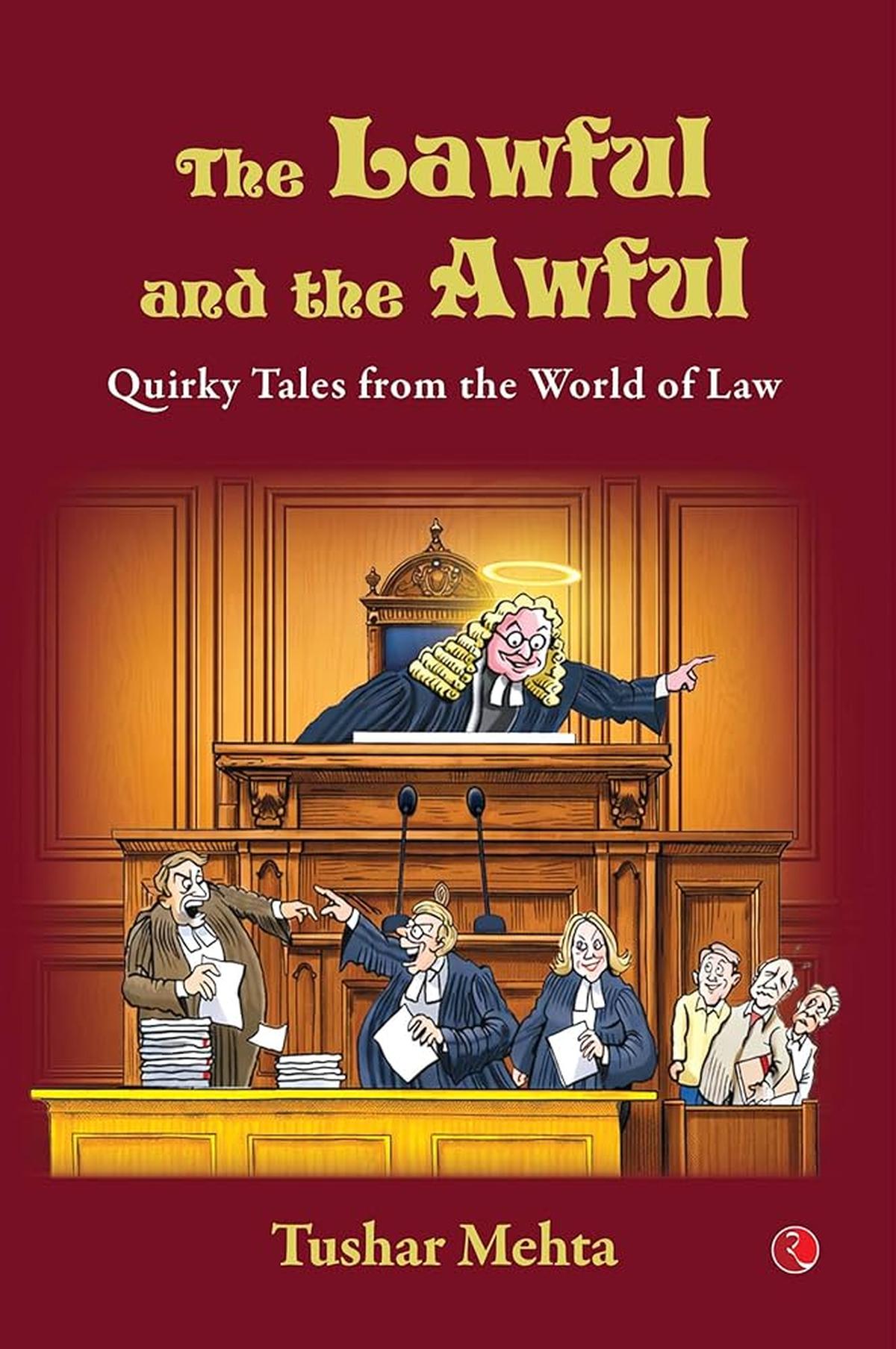
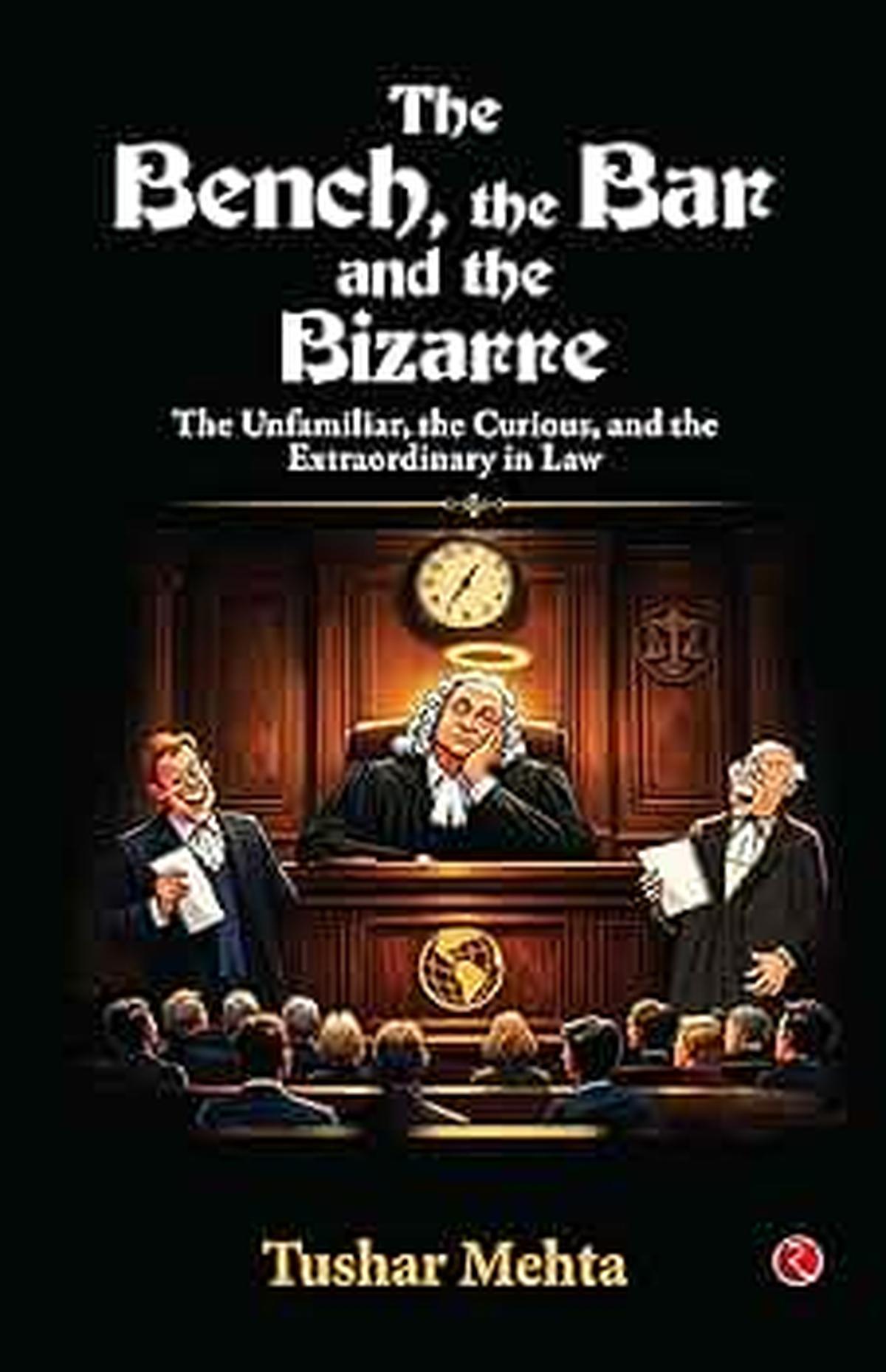
In his two recently released volumes, The Lawful and the Awful: Quirky Tales from the World of Law and The Bench, the Bar, and the Bizarre: The Unfamiliar, the Curious, and the Extraordinary in Law, the Solicitor General of India, Tushar Mehta, pulls back the curtain on this hidden world. Rather than focusing on the Indian judiciary, Mehta explores the eccentricities of foreign legal systems, using humor not merely as entertainment, but as a sophisticated lens for institutional analysis. These works suggest that the administration of justice, for all its structural rigidity, remains a profoundly human—and therefore occasionally ridiculous—endeavor.
Main Facts: A Dual Exploration of Legal Oddities
The release of these two volumes marks a significant literary contribution from one of India’s highest-ranking legal officers. While Tushar Mehta’s professional life is spent navigating the complexities of constitutional law and state representation, these books reveal a scholar’s fascination with the fringes of the legal world.
The Scope of the Work
The two books serve as a compendium of documented legal history. The Lawful and the Awful focuses largely on the historical and temperamental aspects of the judiciary, exploring how personality often bleeds into the process of adjudication. The Bench, the Bar, and the Bizarre takes a more contemporary turn, addressing the anxieties of the modern courtroom, including the influence of social media, the supernatural in legal disputes, and the emerging threat of Artificial Intelligence (AI).
Methodology and Documentation
A critical aspect of Mehta’s work is his commitment to academic rigor. Despite the "quirky" subject matter, the books are meticulously footnoted. Mehta emphasizes in his preface that these are not apocryphal legends or "lawyer jokes" passed down through oral tradition, but documented legal history. By rooting the comedy in verified transcripts and historical records, Mehta reinforces the idea that in the world of law, truth is frequently more bizarre than fiction.
Chronology: From Frontier Justice to the Digital Age
The narrative arc of Mehta’s exploration spans centuries, tracing the evolution of judicial behavior from the lawless frontiers of the American West to the hyper-connected digital courtrooms of the 21st century.

The Era of the "Lion" Judges
Mehta begins by examining the "Bench without Borders," where he compares judges to lions in a jungle—intensely possessive of their jurisdiction. This historical perspective looks at figures like Judge Phantly Roy Bean of Val Verde County, Texas. Known as "The Law West of the Pecos," Bean dispensed justice from his tavern, the Jersey Lilly Saloon, during the late 19th century. His "courtroom" was a barrel, and his enforcer was a pet black bear named Bruno. Bean’s brand of justice, while absurd, highlights a period where the law was synonymous with the personality of the individual on the bench.
The "Bloody Assizes" and 17th-Century Rigor
Moving further back, Mehta references Lord Chief Justice Jeffreys and the "Bloody Assizes" of 1685. Jeffreys conducted summary trials across England, sentencing hundreds to death. Historical accounts suggest his choice of venue was often dictated by his appetite for fine food and drink rather than the requirements of justice. This period serves as a grim reminder of how judicial authority, when untethered from modern human rights frameworks, could be both theatrical and terrifying.
The Rise of the Modern Jurist
The chronology moves into the 20th and 21st centuries with a detailed portrait of U.S. Supreme Court Justice Antonin Scalia. Mehta dedicates a significant portion of his writing to Scalia, whom he describes as "The Court of One." Scalia’s era represents a shift where wit and linguistic precision became tools of judicial warfare, with his dissents rewriting the possibilities of legal prose and institutional critique.
Supporting Data: Case Studies in the Bizarre
To illustrate his points, Mehta provides a wealth of case studies that demonstrate how courts have been forced to adjudicate matters that seem to defy logic or the boundaries of the physical world.
The "Divinity Virus" and Judicial Excess
In The Bench, the Bar, and the Bizarre, Mehta introduces the concept of the "Divinity Virus"—a term for judges who mistake their institutional power for personal infallibility. He cites the 2010 case of Judge Talmadge D. Littlejohn in Mississippi, who ordered everyone in his court to recite the Pledge of Allegiance. When a lawyer refused on principle, he was charged with contempt. This data point serves as a warning of how quickly judicial authority can slide into "spectacle and outright misuse" when unchecked by humility.
Adjudicating the Supernatural: Stambovsky v. Ackley
One of the most insightful chapters, "Law beyond the Living," recounts the New York case of Stambovsky v. Ackley. In this instance, a homeowner had widely publicized her house as being haunted in national magazines. When a buyer later sought to rescind the contract upon discovering the "reputation" of the house, the court ruled that because the seller had promoted the ghosts, she was "estopped" from denying their existence in a legal context. This case is used by Mehta to show how courts must sometimes apply cold legal principles (like caveat emptor) to inherently absurd scenarios.
The Perils of "Robo-Research"
Addressing modern technology, Mehta highlights the dangers of AI in legal drafting. He discusses recent instances where lawyers, relying on ChatGPT and similar tools, submitted filings containing "hallucinated" or entirely fake case citations. This data underscores a timely warning: technology is only as effective as its users, and the "legal profession has its share of both those who work hard and those who work hardly."
Official and Authorial Perspectives
The significance of these books is amplified by the professional standing of their author. As the Solicitor General of India, Tushar Mehta’s perspective carries the weight of a practitioner who understands the high stakes of the "serious" legal world.
Humor as Institutional Analysis
Mehta’s perspective is that humor is not a distraction from the law, but a vital part of it. By highlighting the "awful" and the "bizarre," he provides a critique of judicial temperament. His writing suggests that the "theatricality" of the courtroom is a double-edged sword; it provides the gravitas necessary for public confidence, but it can also mask the "defensive behaviors" and "displays of dominance" that hinder true justice.
The British Tradition: Megarry’s Miscellany
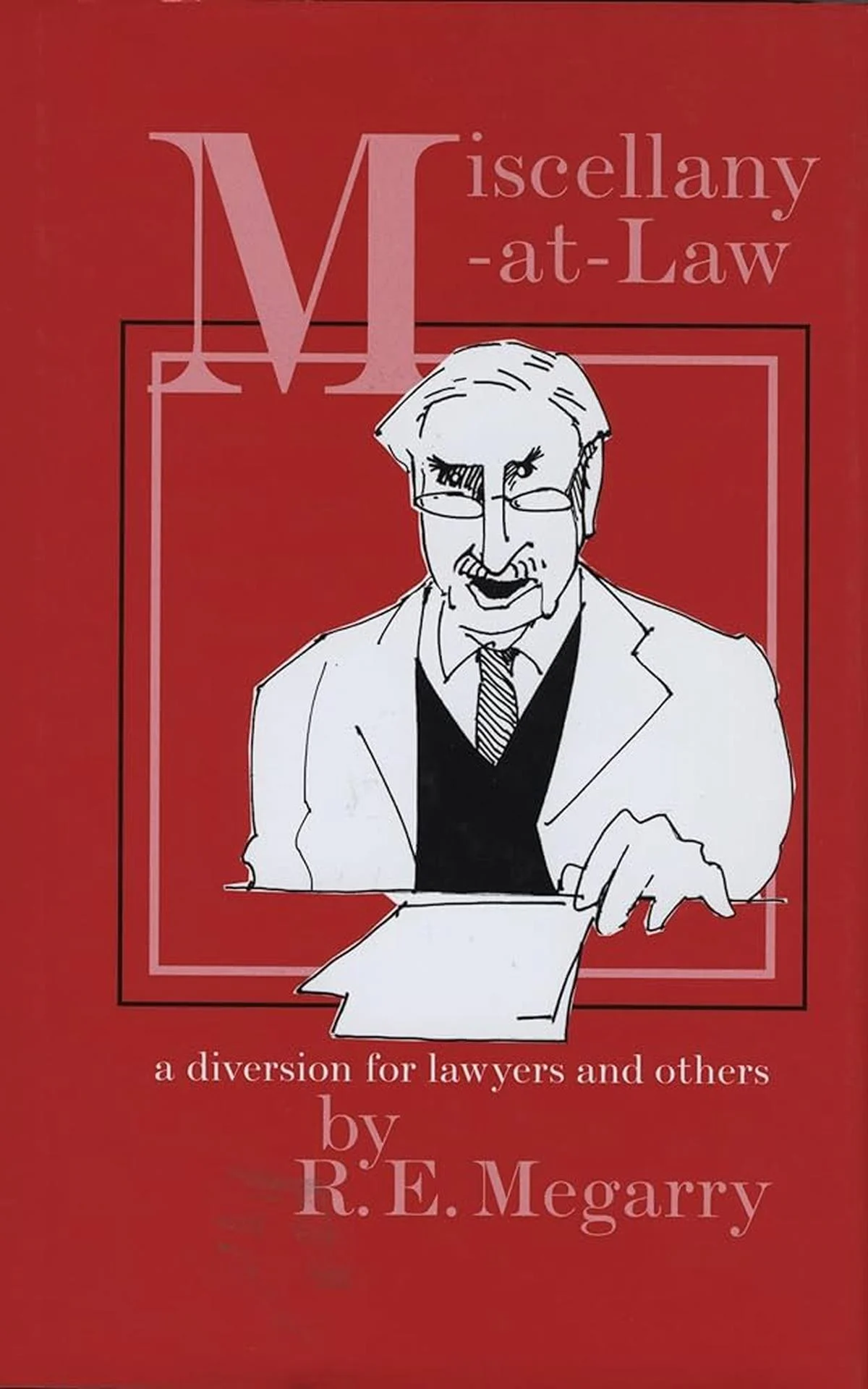
Mehta’s work is positioned within a long-standing tradition of legal humor. He draws parallels to Sir Robert Megarry’s Miscellany-at-Law series. Megarry, a former Vice-Chancellor of the Supreme Court of England and Wales, also used documented oddities—such as a court debating if horses should wear diapers or if bees could be classified as "trespassers"—to sharpen the understanding of legal doctrine. Like Megarry, Mehta argues that comedy does not displace doctrine; it clarifies it.
Implications: What the Absurd Reveals About the Law
The implications of Mehta’s excavations are profound for both the legal fraternity and the general public. These books serve as more than just a collection of anecdotes; they are a study of the human condition within a rigid system.
The Humanization of Justice
The primary implication of Mehta’s work is the humanization of the judiciary. By showing that judges and lawyers are susceptible to vanity, anger, and technological embarrassment, the books bridge the gap between the "elevated bench" and the common citizen. It suggests that the law is a living, breathing entity shaped by human fallibility.
A Warning Against Judicial Hubris
Through the "Divinity Virus" chapter, Mehta sends a clear message about the dangers of unchecked judicial power. The implication is that the legitimacy of the legal system rests not just on the law itself, but on the temperament of those who administer it. When a judge loses their sense of humor or their awareness of their own humanity, the system risks becoming a parody of itself.
The Future of Legal Practice
Finally, the books touch upon the vertiginous shift toward AI and social media. The implication for the future of the bar is that while technology will change the mechanics of law, the essence of the profession—judgment, reason, and the navigation of human conflict—cannot be automated. The "hallucinations" of AI serve as a metaphor for the hallucinations of a legal system that forgets its grounding in reality.
In conclusion, Tushar Mehta’s The Lawful and the Awful and The Bench, the Bar, and the Bizarre are essential readings for understanding the "hidden world" of law. They remind us that while the law aims for the divine, it is practiced by the decidedly human. By documenting the bizarre, Mehta ensures that the comedy of the courtroom is preserved not just for a laugh, but as a permanent record of the enduring, eccentric spirit of justice.
