PATNA, BIHAR — In a move that environmentalists describe as a "stunning reversal" of India’s clean energy trajectory, the Bihar state government has announced a massive policy shift to address a burgeoning energy crisis. As the conflict in West Asia continues to destabilize global Liquefied Petroleum Gas (LPG) supply chains, Bihar has officially designated the resulting shortage an "anthropogenic disaster." To mitigate the impact on its most vulnerable citizens, the state has initiated a program to distribute 100 kilograms of coal monthly to every household holding a ration card.
This decision marks a significant departure from the national "Ujjwala" mission, which for years has sought to transition Indian kitchens from solid fuels to clean-burning gas. With over 17.9 million households eligible for this coal subsidy, Bihar is poised to burn an estimated 1.79 million tonnes of coal every month for domestic cooking—a figure that has sent shockwaves through the public health and environmental sectors.
Chronology of a Crisis: From Conflict to Carbon
The transition back to coal was not an overnight decision but the result of a rapidly deteriorating energy landscape. The ongoing geopolitical instability in West Asia has severely disrupted the critical maritime corridors through which India imports the bulk of its LPG. By early 2024, these disruptions manifested as acute shortages in several Indian states, with Bihar—a state with high logistics costs and a massive population—feeling the brunt of the supply vacuum.
On March 30, the Bihar government convened a high-level Crisis Management Group (CMG) to brainstorm alternatives to the drying supply of cooking gas. The group’s conclusion was both pragmatic and controversial: coal, which is abundant in the eastern belt of India, would serve as the temporary surrogate for LPG.
Following this meeting, the Food and Consumer Protection Department issued formal guidelines on April 21. These guidelines officially categorized the LPG shortage as an "anthropogenic disaster," a legal distinction that allows the state to bypass certain bureaucratic hurdles and mobilize resources under emergency protocols.

By May, the Bihar State Mining Corporation Limited (BSMCL) was designated as the nodal agency to oversee the procurement and logistics of this massive undertaking. The agency has since invited applications from wholesalers, with each vendor being authorized to handle up to 10,000 metric tonnes of coal annually to ensure the supply reaches more than 50,000 fair price shops across the state’s 38 districts.
The Magnitude of the Shift: Supporting Data and Scale
The scale of Bihar’s coal distribution plan is unprecedented in modern Indian policy. To understand the impact, one must look at the demographics of energy consumption in the state.
According to the National Food Security Act (NFSA) dashboard, approximately 17.9 million households in Bihar are covered under the act. By promising 100 kg of coal to each of these families, the state is effectively introducing 1.79 million tonnes of coal into the domestic environment every 30 days. For perspective, Bihar’s total coal consumption in the 2024-25 fiscal year reached 41.87 million tonnes—a six-fold increase from a decade ago. This new policy will push those numbers even higher, further cementing the state’s dependence on fossil fuels.
The policy also highlights a stark disparity between LPG "penetration" and "usage." While government data suggests that 23 million families in Bihar have LPG connections—including 12 million beneficiaries of the Pradhan Mantri Ujjwala Yojana (PMUY)—the National Family Health Survey (NFHS) reveals a different reality. In rural Bihar, only 29.8% of households consistently use LPG for cooking. The primary barriers have long been the rising cost of refills and the availability of free, albeit hazardous, biomass. By providing coal through the Public Distribution System (PDS), the government is filling a gap that LPG, due to its current price and scarcity, cannot.
Official Responses: A Balancing Act Between Hunger and Health
The government’s stance is one of reluctant necessity. When questioned about the environmental and health implications, officials emphasize the "emergency" nature of the situation.

Birendra Kumar Prasad, Joint Secretary of the Food and Consumer Protection Department, remained cautious in his communication with the media. "A policy regarding this has not yet been finalized in its entirety," he stated, noting that until specific regulations are fully gazetted, the department is limited in what it can disclose. However, the intent remains clear: to prevent a total breakdown of domestic food security.
Narendra Kumar, a member of the Bihar State Pollution Control Board (SPCB), offered a more blunt assessment of the state’s dilemma. "Nothing can be one-sided," he said. "Gas is the only clean alternative, but if there is no fuel, we cannot let people die of hunger. Right now, there is no choice. We have to strike a balance."
However, this "balance" is viewed with skepticism by others. Environment lawyer Gopal Krishna, Director of the East India Research Council, suggests a more strategic motive behind the move. "LPG shortages have hit commercial activities—restaurants, street vendors, and small industries—severely," Krishna noted. "I believe the government’s target is to eventually normalize the use of coal in commercial sectors. They are testing the waters by first distributing it to ration card holders."
The Public Health Trade-off: A Step Backward
The most stinging criticism of the coal policy comes from the health and environmental sectors. Bihar already struggles with some of the most hazardous air quality levels in the world. A 2025 report by the Centre for Research on Energy and Clean Air (CREA) found that PM2.5 levels exceeded national standards in 20 out of 23 monitored cities in Bihar.
Nandikesh Sivalingam, Director of CREA, warned that the state is trading one crisis for another. "To solve an energy shortage, the state is creating a public health catastrophe," Sivalingam said. He pointed out that while thermal power plants have scrubbers and filters to control particulate matter (PM) emissions, household coal stoves—known as angithis—have none. The smoke is released directly into living spaces.

The Indoor Pollution Factor:
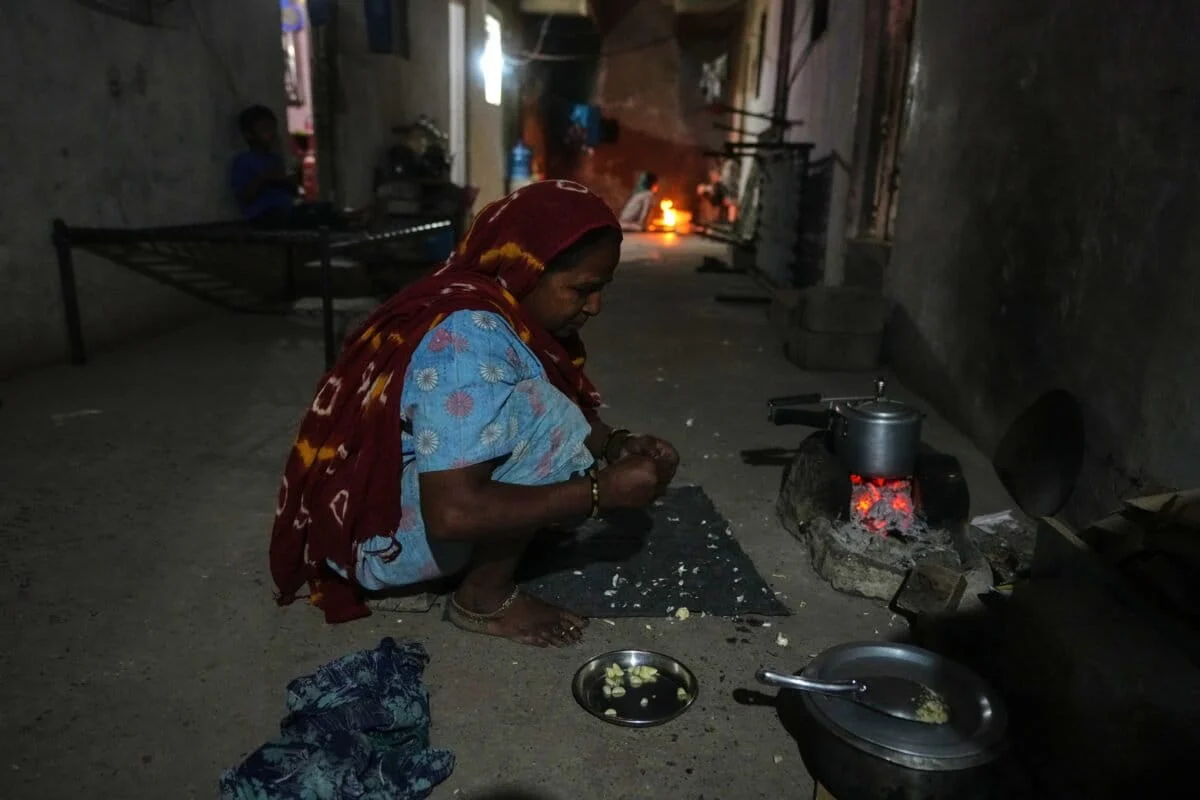
Prabhakar Kumar, a sociology faculty member at Patna University, highlighted the specific risks to the urban poor. In cities like Patna, Gaya, and Bhagalpur, low-income families often live in single-room, poorly ventilated tenements. "They lack the open space to cook outdoors. Cooking with coal inside these tiny rooms will lead to a massive spike in indoor pollution and respiratory diseases," Kumar explained. Furthermore, the use of open coal fires in densely populated slums significantly increases the risk of accidental fire outbreaks.
The Climate Impact:
The policy also directly contradicts the Graded Response Action Plan (GRAP) designed by the Bihar SPCB in 2019, which specifically sought to ban the use of coal and firewood in hotels and open spaces to curb Patna’s air pollution. By distributing coal on a state-wide scale, the government is effectively undermining its own environmental regulations.
Logistical Nightmares and Social Resistance
Beyond the macro-level concerns of health and climate, the policy faces a daunting implementation challenge at the grassroots level. The burden of this "coal revolution" falls squarely on the shoulders of the state’s 50,000+ fair price shop dealers.
Ashok Kumar, a ration dealer in the Nalanda district, expressed the anxiety shared by many of his peers. "I serve 450 ration card holders. That means I will receive 45,000 kg of coal every month," he said. "Where am I supposed to store it? My shop is designed for grain, which must be kept dry and clean. Coal is bulky, dirty, and a fire hazard."
The logistical costs—renting additional storage space, hiring labor to move the heavy sacks, and the risk of theft—are currently unaccounted for in the government’s plan. Dealers have already begun writing to Block Supply Officers, demanding that the state provide either the infrastructure or the funds to manage the coal.

Furthermore, there is the question of whether the beneficiaries even want the coal. For many, the transition to LPG was not just about health, but about time. Krishna Devi, a daily wage laborer in Muzaffarpur, noted that coal is an "impractical" fuel for the working poor. "We leave for work early. Gas is instant. If we use coal, we waste an hour just waiting for the fire to catch. For us, time is money."
Implications: A Precedent for the Future?
As Bihar prepares to roll out this massive coal distribution network, the long-term implications for India’s energy policy remain unclear. If the conflict in West Asia persists and LPG prices remain volatile, will other states follow Bihar’s lead?
The move suggests a fragile "energy security" that relies on the most carbon-intensive fuels when cleaner supply chains fail. Experts like Bhargava Krishna of the Sustainable Futures Collaborative argue that the government should have looked forward rather than backward. "The focus should have shifted toward electricity—induction stoves and solar cooking—rather than reverting to coal," he said.
For now, Bihar stands at a crossroads. While the distribution of coal may keep the stoves lit in millions of homes in the short term, the cost—measured in hospital admissions, environmental degradation, and the undoing of years of "clean cooking" advocacy—may be felt for decades to come. The "anthropogenic disaster" of the LPG shortage may soon be eclipsed by the anthropogenic disaster of a state returning to the age of coal.