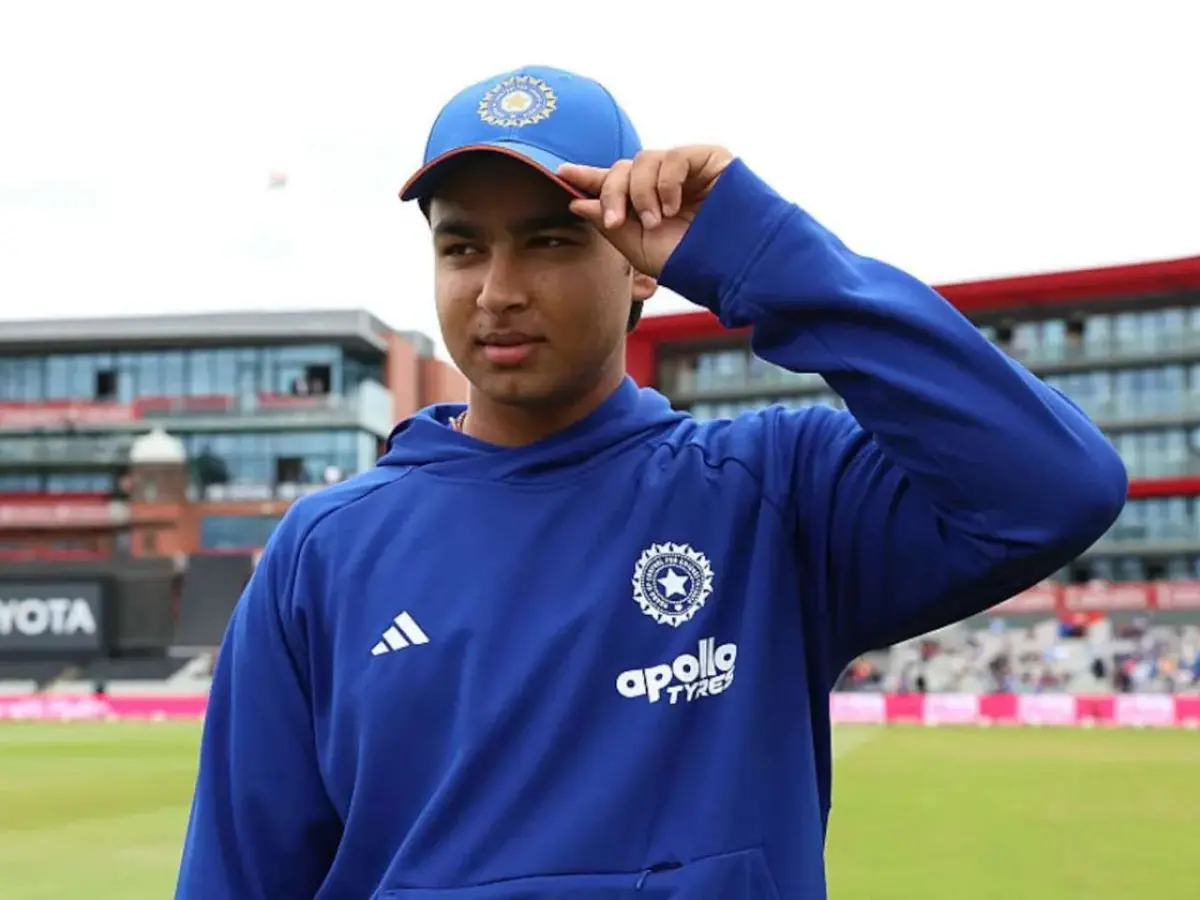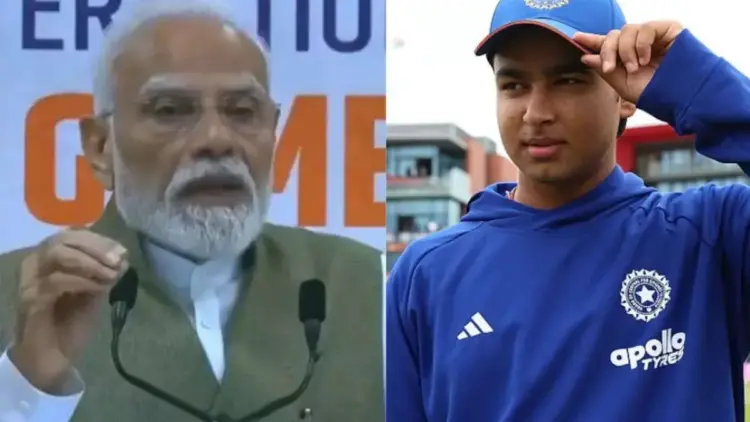
New Delhi, India – October 15, 2026 – A moment of spontaneous joy and national pride unfolded at the prestigious Ashoka Hotel in Delhi on Thursday, as Prime Minister Narendra Modi addressed India’s victorious contingent from the Aichi-Nagoya Asian Games. Amidst a ceremony honouring the nation’s sporting heroes, a particular interaction between the Prime Minister and young cricket prodigy Vaibhav Sooryavanshi captured the hearts of many, underscoring the burgeoning talent pipeline in Indian sports. PM Modi’s remark about the impressive performance of "15-year-olds" on the world stage elicited a visibly delighted reaction from Sooryavanshi, a key member of the gold medal-winning men’s cricket team, creating a light-hearted yet deeply significant highlight of the evening.
The felicitation ceremony, a customary gesture of appreciation from the government, served as a platform to celebrate India’s remarkable achievements at the recently concluded Asian Games. While every athlete present was a testament to dedication and excellence, the focus momentarily shifted to the youthful exuberance embodied by Sooryavanshi, whose broad smile became a symbol of the nation’s bright sporting future. The incident, quickly circulated across social media platforms, highlighted not only the Prime Minister’s engaging style but also the profound impact of national recognition on young athletes.
The Core of the Moment: Youthful Talent in the Spotlight
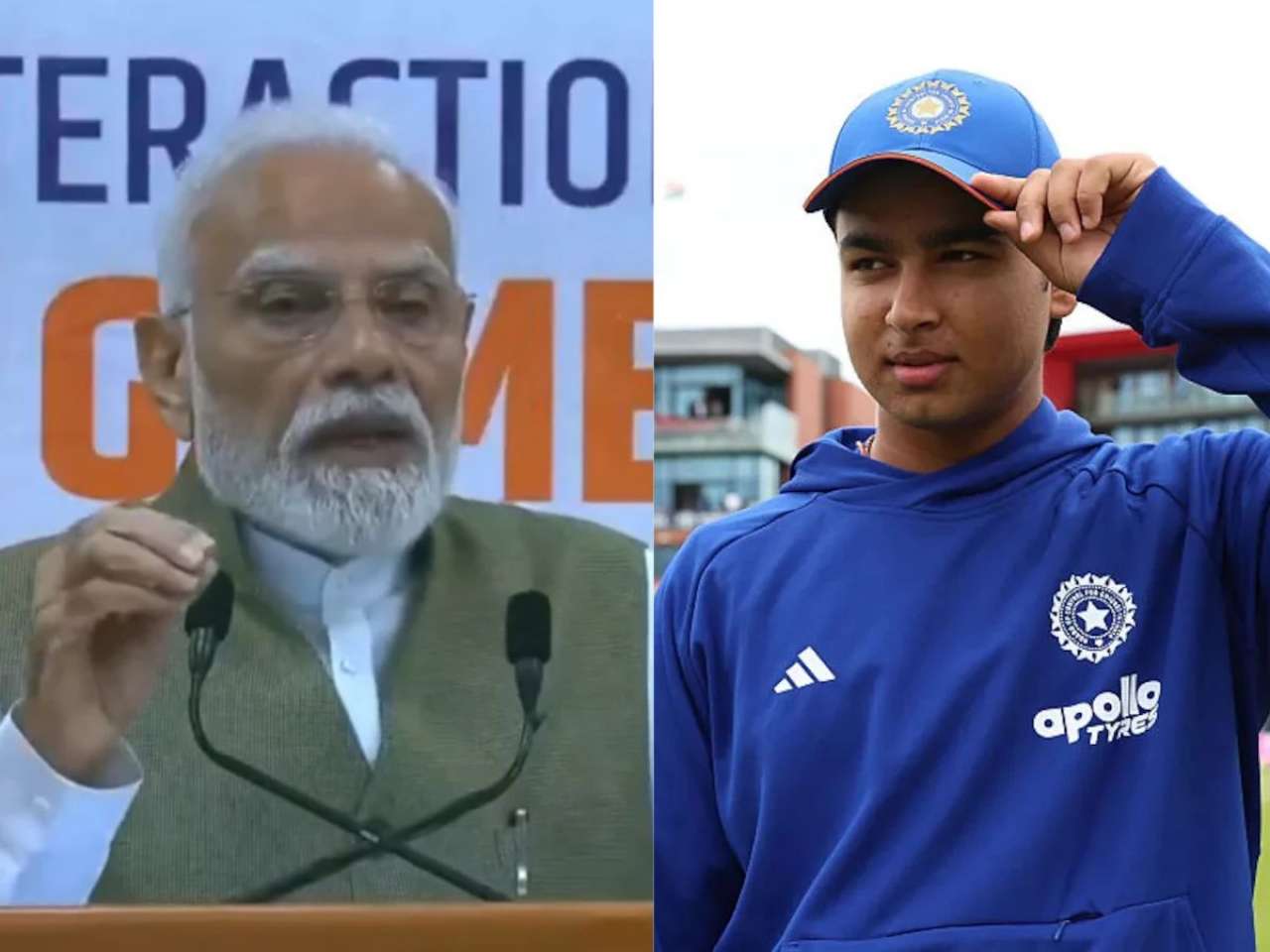
The central theme of the Prime Minister’s address revolved around India’s unprecedented success and the changing landscape of its sporting culture. PM Modi particularly emphasized the remarkable emergence of young athletes who are now fearlessly competing and clinching medals on international platforms. It was this specific commendation of the younger generation that resonated profoundly with Vaibhav Sooryavanshi, the teenage sensation whose pivotal role helped secure a historic gold medal for India in the men’s cricket event at the Asian Games held in Tokyo.
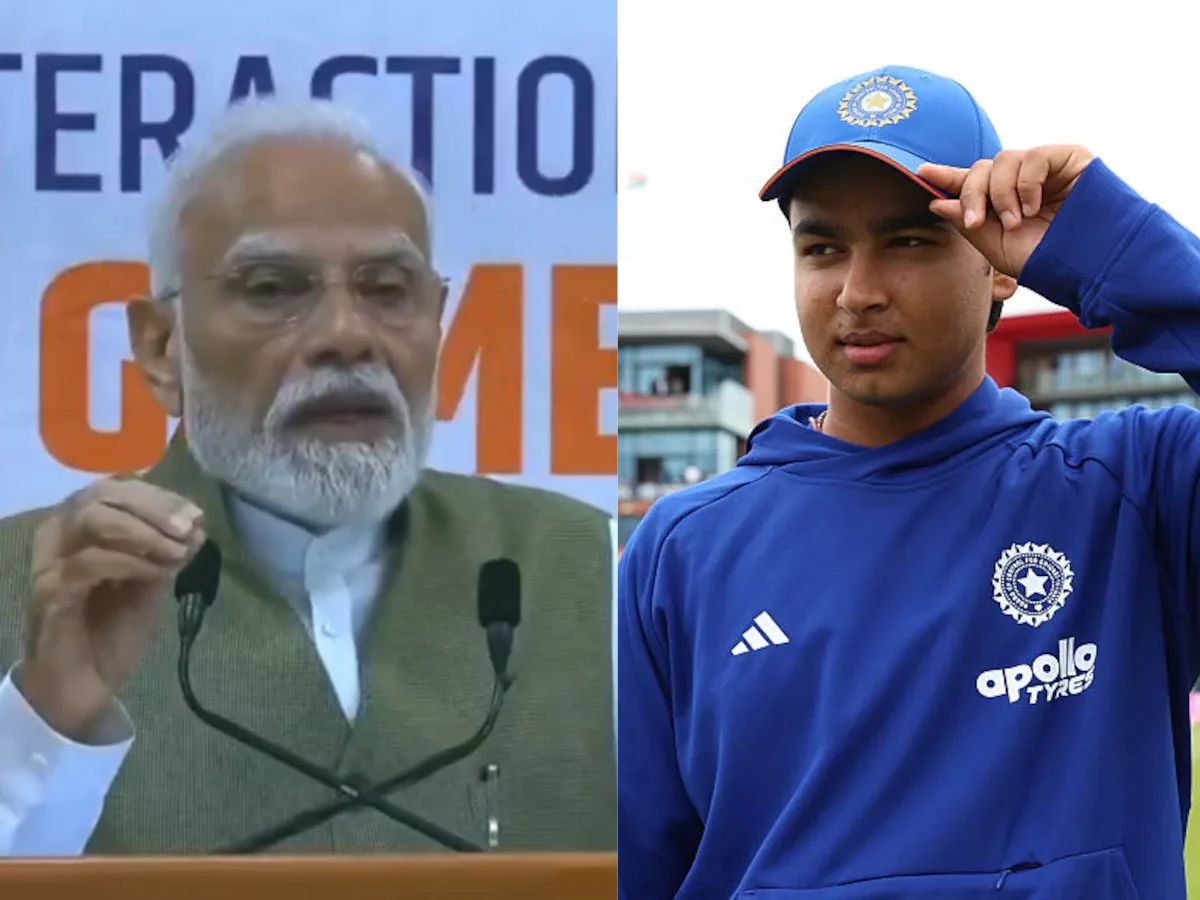
As the Prime Minister spoke with characteristic vigour about the "incredible fact that 15-year-olds are now winning medals for India on the world stage," cameras instinctively panned to Sooryavanshi. The young cricketer, seated amongst his accomplished peers, initially registered a subtle smile that quickly blossomed into an unmistakable grin, reflecting a mix of pride, humility, and perhaps a touch of youthful bashfulness. This candid reaction encapsulated the sentiment of an entire generation of athletes benefiting from enhanced support and opportunities. The moment was not just about a Prime Minister’s words; it was about the validation and recognition of a dream shared by millions of aspiring young Indians.
)
A Chronology of Pride: Unfolding at the Felicitation
The evening at the Ashoka Hotel was meticulously planned to honour the collective spirit and individual brilliance of the Indian contingent. From the moment the athletes began to arrive, there was an palpable buzz of excitement and camaraderie.
Setting the Stage for Celebration:
The grand ballroom of the Ashoka Hotel was adorned with national colours, banners celebrating India’s medal tally, and screens displaying highlights from the Asian Games. Athletes, coaches, and dignitaries filled the hall, creating an atmosphere charged with national pride. The anticipation built steadily as the evening progressed, leading up to the arrival of Prime Minister Modi.

PM Modi’s Stirring Address:
Upon his arrival, Prime Minister Modi was greeted with a rousing applause. His speech began with a broad acknowledgment of the entire squad, praising their dedication, perseverance, and the sacrifices made to bring glory to the nation. He meticulously highlighted achievements across various disciplines, ensuring that every sport, from the established powerhouses like hockey and boxing to emerging successes in athletics and shooting, received its due mention. The cricketers, celebrated for their historic gold, were naturally among those receiving special accolades.
The Pivotal Remark:
The defining moment came when PM Modi shifted his focus to the demographic shift in India’s sporting achievements. He declared, "This time in the Asian Games, there were many players on Team India whose age was only 15 to 17 years. At such a young age, these players have enhanced the pride of the country with their spectacular performances. They have won the hearts of the countrymen. This shows that for success, age is not a restriction. In sports, it is the start made at a young age that becomes an added advantage."
)
Sooryavanshi’s Endearing Reaction:
As these words reverberated through the hall, the spotlight, both literal and metaphorical, fell on Vaibhav Sooryavanshi. While PM Modi’s statement was a general commendation, the cameras, acutely aware of Sooryavanshi’s youthful presence and recent triumph, lingered on him. His smile, initially a shy acknowledgment, visibly widened, betraying a sense of personal connection to the Prime Minister’s words. It was a genuine, unscripted reaction that resonated deeply with viewers and attendees alike, instantly becoming a talking point.
The Social Media Echo:
The candid exchange quickly transcended the confines of the ballroom, spreading rapidly across social media platforms. A clip of the moment, accompanied by the caption "VAIBHAV SURYAVANSHI REACTION WHEN PM MODI PRAISED HIM – The entire Team India started teasing Vaibhav after PM Modi praised him," went viral. This online amplification further cemented the moment’s status as a memorable highlight of the felicitation ceremony, showcasing the human element behind national achievements. The subtle teasing from his teammates, as alluded to in the tweet, further underscored the camaraderie and joyous atmosphere of the event.
)
Beyond the Applause: Future Vision:
PM Modi continued his address, outlining the government’s forward-looking strategies for sports development. He elaborated on initiatives aimed at nurturing talent from a very young age: "Therefore, it is our effort that in sports, the identification of talent should happen at a young age. For children between 5 and 15 years of age, we are especially focused on identifying sporting talent and its training. In the coming years, thousands of new players will get opportunities to advance through Khelo India and Emerging Khelo India."
Honouring Women Athletes:
The Prime Minister also took a significant moment to laud the extraordinary contributions of India’s women athletes. "Friends, I would like to especially praise our daughters. Out of the 85 medals won by India, 38 medals were won by our women athletes, and 11 gold medals are included in them. These medals are not just a number. This is a picture of a new India," he stated, highlighting the growing empowerment and success of women in sports.
)
The ceremony concluded with a vote of thanks, leaving attendees with a reinforced sense of national pride and an optimistic outlook for India’s sporting future, underscored by the memorable interaction between the nation’s leader and one of its youngest sporting stars.
Supporting Data: A Nation on the Rise in Sports
The felicitation ceremony was not merely a symbolic gesture but a reflection of tangible progress in Indian sports, backed by impressive statistics and strategic initiatives.
)
The Ascent of Vaibhav Sooryavanshi:
While specific detailed biographical information about Vaibhav Sooryavanshi remains somewhat guarded due to his burgeoning career, his inclusion and performance in the Asian Games squad speak volumes. As a "teenage sensation," his journey from local cricket circuits to representing India on an international multi-sport event stage at such a young age is a testament to his innate talent, rigorous training, and the scouting networks in Indian cricket. His "key role" in the gold medal victory implies crucial contributions, likely through impactful batting performances or vital spells with the ball, demonstrating maturity beyond his years under pressure. His presence among the senior squad at the Asian Games highlights the increasing trend of fast-tracking promising young talent, a strategy that often pays dividends in the dynamic T20 format.
India’s Dominance in Cricket at the Asian Games:
The gold medal won by the Indian men’s cricket team was a historic achievement, marking a significant milestone for the sport within the multi-sport event framework. Cricket, particularly the T20 format, has gained increasing acceptance in events like the Asian Games, offering a global platform for its expansion. India’s victory underscored its supremacy in the sport, even with teams often comprising a mix of established and emerging players. This success not only added to the national medal tally but also bolstered cricket’s case for greater inclusion in future major international events, potentially even the Olympics. The tactical brilliance, combined with individual heroics from players like Sooryavanshi, propelled India to the top, showcasing the depth of talent available in the country.
)
India’s Overall Asian Games Performance:
The Aichi-Nagoya Asian Games proved to be a landmark event for India. The figure of "85 medals," with "38 medals won by our women athletes" including "11 gold medals," represents a significant leap from previous editions. This impressive tally reflects a holistic improvement across various sports, driven by better infrastructure, scientific training, and increased government support. The performance signals India’s growing stature as a sporting nation, moving beyond traditional strongholds to embrace a wider array of disciplines. The substantial contribution from women athletes is particularly noteworthy, symbolizing a societal shift towards greater empowerment and opportunity for women in what were once predominantly male domains.
The ‘Khelo India’ and ‘Emerging Khelo India’ Initiatives:
PM Modi’s mention of ‘Khelo India’ and ‘Emerging Khelo India’ is crucial context. Launched in 2018, the Khelo India programme is a flagship government initiative aimed at strengthening the grassroots sports ecosystem in India. Its objectives include:
)
- Mass Participation: Encouraging widespread participation in sports from a young age.
- Talent Identification: Systematically identifying sporting talent at the school and college levels.
- Nurturing Talent: Providing financial assistance, training, and infrastructure to promising athletes.
- Building Infrastructure: Developing state-of-the-art sports facilities across the country.
‘Emerging Khelo India’ likely refers to an expansion or a more focused sub-programme designed to cater to the next wave of talent identified through the initial Khelo India framework, perhaps with an emphasis on specific age groups (like 5-15 years as mentioned by PM Modi) or particular sports. These initiatives are not just about producing elite athletes but also about fostering a sports culture, promoting fitness, and instilling values like discipline and teamwork among the youth. The promise of "thousands of new players will get opportunities to advance" through these programmes indicates a long-term vision for sustainable sports development.
The Rise of Youth in Indian Sports:
Sooryavanshi’s story is part of a larger narrative of young athletes making their mark. Across disciplines, from shooting to athletics, gymnastics to badminton, India has seen a steady rise in teenage and early-twenties athletes achieving international success. This trend is a direct result of improved coaching, better access to facilities, increased exposure to international competitions, and a shift in parental attitudes towards sports as a viable career path. These young achievers become role models, inspiring an even younger generation, creating a virtuous cycle of talent development.
)
Official Responses: A Vision for Sporting Excellence
Prime Minister Narendra Modi’s speech at the felicitation ceremony was more than just a congratulatory address; it was a clear articulation of the government’s philosophy and ongoing commitment to sports development.
Reinforcing Government’s Stance on Youth and Sports:
The Prime Minister’s direct quote, "This shows that for success, age is not a restriction. In sports, it is the start made at a young age that becomes an added advantage," serves as a powerful endorsement of the government’s youth-centric sports policy. It acknowledges that early immersion and identification of talent are critical for achieving peak performance at the international level. This statement resonates deeply with the Ministry of Youth Affairs and Sports’ overarching goal to make India a sporting powerhouse by leveraging its demographic dividend. The emphasis on the 5-15 age group for talent identification and training through Khelo India initiatives is a direct policy response to this understanding.
)
Beyond Medals: Building a Sporting Nation:
While celebrating the medals, PM Modi consistently frames these achievements within the broader context of national character and identity. His praise for women athletes — "These medals are not just a number. This is a picture of a new India" — goes beyond mere statistics. It projects an image of an inclusive, progressive nation where gender is no barrier to excellence. This narrative aligns with the government’s ‘Nari Shakti’ (Women Power) initiatives, extending empowerment into the realm of sports.
The Prime Minister’s engagement with athletes, as seen in the light-hearted exchange with Sooryavanshi, also demonstrates a personal connection and an effort to foster a supportive environment for sportspeople. Such interactions, particularly from the highest office, boost morale and provide a sense of direct recognition that is invaluable to athletes, especially the younger ones. The message is clear: the government views sports as a critical component of national development, contributing not only to physical well-being but also to national pride and soft power.
)
Implications: Paving the Way for a Sporting Superpower
The moments from the Asian Games felicitation, particularly the Prime Minister’s interaction with Vaibhav Sooryavanshi, carry significant implications for the future of Indian sports and national identity.
Inspiring a Generation:
The image of a young athlete beaming in response to the Prime Minister’s recognition is a powerful source of inspiration. It sends a clear message to millions of aspiring young Indians that dedication to sports can lead to national recognition and even personal interaction with the nation’s leader. This kind of visible encouragement from the highest echelons of power can motivate more children and their parents to consider sports as a serious and rewarding career path, potentially leading to increased participation at the grassroots level.
)
Reinforcing Policy and Investment:
PM Modi’s remarks about early talent identification and the Khelo India programmes are not just rhetoric; they reinforce the government’s sustained investment in sports infrastructure, coaching, and athlete support. This commitment signals a long-term vision, assuring athletes and sports federations that resources will continue to be allocated towards building a robust sporting ecosystem. The success at the Asian Games and the recognition of young talent will likely further bolster these initiatives, potentially leading to increased budgetary allocations and expanded programmes.
Elevating Cricket’s Stature in Multi-Sport Events:
India’s gold in men’s cricket at the Asian Games, and the subsequent recognition, significantly elevates cricket’s profile within the multi-sport event landscape. With discussions ongoing about cricket’s inclusion in future Olympic Games, such victories and the high-level recognition they receive strengthen the argument for its broader acceptance. The T20 format, in particular, is seen as accessible and exciting for a global audience, and India’s success reinforces its appeal. This could pave the way for more cricketing nations to participate in similar events, diversifying the sport’s global reach.
)
Sooryavanshi’s Trajectory and the Weight of Expectation:
For Vaibhav Sooryavanshi, this moment of national spotlight brings both immense opportunity and considerable expectation. Being singled out, even indirectly, by the Prime Minister places him firmly in the public eye. While it’s a huge morale booster, it also adds pressure to maintain and exceed his current performance levels. His future career will be closely watched, and his continued success will serve as a benchmark for other young athletes emerging from India’s sports development programmes. He now embodies the promise of a generation, carrying the hopes of a nation keen to see its young talent flourish on the global stage.
A Narrative of ‘New India’:
Ultimately, the entire event, and particularly the interaction with Sooryavanshi, contributes to the larger narrative of a ‘New India’ – a nation that is youthful, aspirational, and globally competitive. It highlights a country that is not only excelling economically but also making significant strides in areas like sports, leveraging its young population and empowering its women. This image of a dynamic and capable India, driven by the energy and talent of its youth, is a powerful message to both its citizens and the international community.
)
The felicitation ceremony, therefore, was far more than a simple awarding of honours. It was a reaffirmation of India’s commitment to sports, a celebration of its young heroes, and a glimpse into a future where age is truly no barrier to achieving greatness for the nation. The smile on Vaibhav Sooryavanshi’s face will undoubtedly serve as a lasting emblem of this hopeful and ambitious journey.