

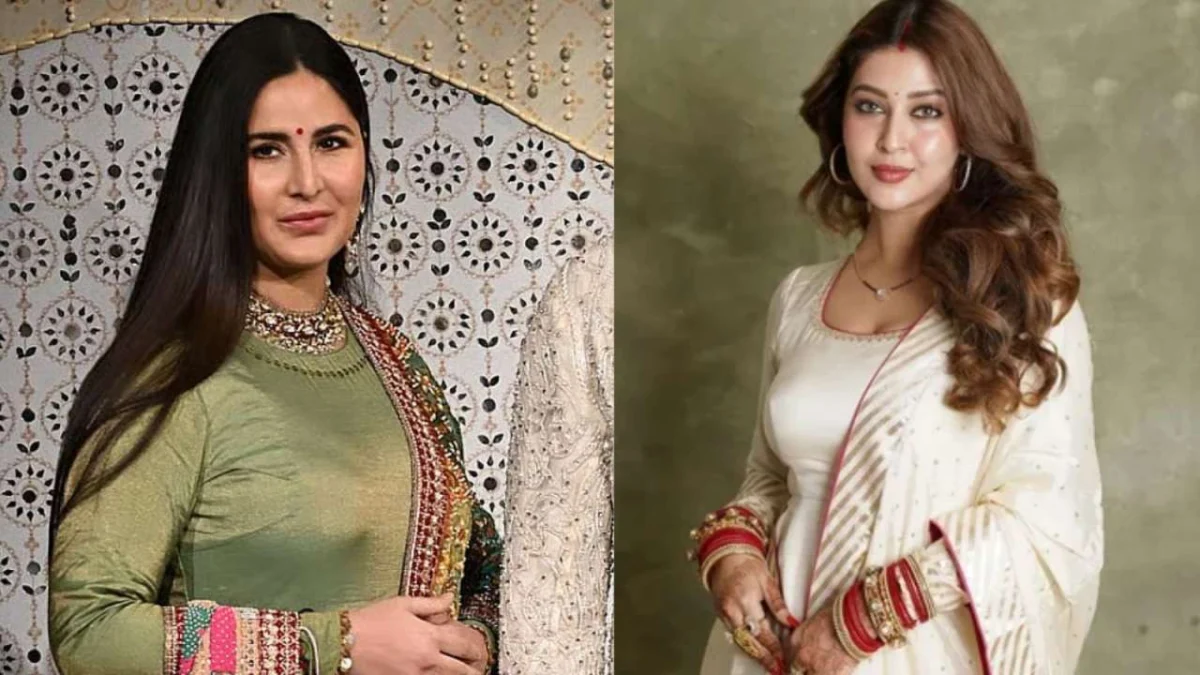
Mumbai, India – September 17, 2026 – In a powerful display of solidarity, television actress Sonarika Bhadoria has spoken out against the insidious practice of postpartum body-shaming, specifically in response to the online vitriol directed at Bollywood star Katrina Kaif. Kaif, who recently made her first public appearance since the birth of her child, faced unwarranted scrutiny and criticism regarding her post-pregnancy physique. Bhadoria’s impassioned defense highlights a growing concern within the entertainment industry and society at large: the relentless judgment of women’s bodies during a period of significant physical and emotional transformation.
Bhadoria, renowned for her portrayal of Goddess Parvati in the popular television series "Devon Ke Dev Mahadev," took to social media to voice her unequivocal support for new mothers. While not directly naming Kaif in her initial statement, her message resonated deeply with those who have witnessed the targeted online attacks. Bhadoria’s stance underscores a critical societal failing – the tendency to objectify and judge women’s bodies, particularly in the vulnerable postpartum phase, rather than offering compassion and understanding.
)
The Unveiling of Scrutiny: Katrina Kaif’s Postpartum Appearance and the Online Backlash
The genesis of this discourse lies in Katrina Kaif’s attendance at the Ambani family’s Ganesh Chaturthi celebrations in Mumbai. This event marked one of Kaif’s initial public outings following the birth of her child in November 2025. As is often the case with high-profile figures, Kaif’s appearance was met with intense media attention and, unfortunately, a barrage of negative comments on social media platforms. These comments predominantly focused on her physical appearance, with many users making unsolicited and often cruel remarks about her body.

This wave of online negativity is not an isolated incident. Celebrities, and indeed countless women worldwide, frequently find themselves subjected to intense scrutiny of their postpartum bodies. The societal expectation for women to swiftly “bounce back” to their pre-pregnancy physique, often perpetuated by media portrayals and unrealistic beauty standards, places an immense and unfair pressure on new mothers. This pressure can exacerbate the already challenging journey of recovery, hormonal changes, and the immense responsibilities of caring for a newborn.
)
Sonarika Bhadoria’s Resolute Stand: A Call for Empathy and Respect
Sonarika Bhadoria’s intervention serves as a much-needed counter-narrative to the prevailing culture of body shaming. Her message, disseminated through her personal social media channels, directly addresses the cruelty inherent in judging a woman’s body after childbirth.
)
"This isn’t just about Katrina," Bhadoria articulated, broadening the scope of her concern to encompass all mothers. "It’s about every mother judged while her body is still healing. It is deeply cruel to scrutinize a woman’s body after childbirth. Her body grew, carried, and delivered a human being. It doesn’t owe anyone an explanation for what it looks like afterwards."
)
This powerful statement dismantles the notion that a woman’s body is a public commodity, subject to constant evaluation and critique. Bhadoria emphasizes the extraordinary feat of pregnancy and childbirth, highlighting that the physical changes are a natural consequence of this life-giving process. The implication is clear: a mother’s body, in its postpartum state, deserves respect and admiration, not judgment or shame.
)
Beyond Aesthetics: The Multifaceted Realities of Postpartum Recovery
Bhadoria’s advocacy extends beyond simply defending Kaif. She aims to educate and enlighten, shedding light on the often-overlooked physical and emotional realities of postpartum recovery. She stresses that societal discourse frequently reduces women’s postpartum experiences to mere aesthetic concerns, ignoring the profound biological and psychological shifts that occur.
)
"Postpartum changes such as stretch marks, softer stomachs, changes in breasts, hair loss, and fatigue are normal but often overlooked, alongside the emotional and physical challenges of motherhood," Bhadoria noted. This statement serves as a crucial reminder that the postpartum period is a complex phase characterized by significant physical adaptation and emotional adjustment.
)
The visible changes—stretch marks, a softened abdomen, alterations in breast size and shape, hair thinning, and persistent fatigue—are not flaws but rather badges of honor, testament to the incredible journey of pregnancy and birth. Bhadoria’s message encourages women to embrace these changes as part of their personal narrative, rather than feeling compelled to conceal or apologize for them.
)
A Message of Empowerment: "Your Postpartum Body is Not Your Shame"
Central to Bhadoria’s message is the powerful declaration: "Your postpartum body is not your shame; it is your story, your strength, your proof." This empowering statement reframes the postpartum body from a source of insecurity to a symbol of resilience and life creation.
)
Bhadoria vehemently argues against the notion that a postpartum body is a "lesser" version of a woman’s previous physique. Instead, she posits that it is a transformed entity, carrying the evidence of a profound experience. She urges for mindfulness and empathy before any commentary is made on a woman’s weight or appearance, especially in the delicate postpartum period.
)
Her words are a direct appeal to society’s collective consciousness, urging a shift in perspective from criticism to celebration. The implication is that instead of focusing on perceived imperfections, we should acknowledge the immense strength and sacrifice involved in bringing a new life into the world.
)
Addressing the Broader Societal Imperative
Sonarika Bhadoria’s public stance transcends celebrity gossip and enters the realm of significant social commentary. Her outspokenness on the issue of postpartum body shaming contributes to a larger movement advocating for greater body acceptance and challenging unrealistic beauty standards.
)
The actress’s message is not only for the women experiencing postpartum changes but also for those who are part of their support system and for society at large. She implores for a conscious effort to move away from a culture that teaches women to feel ashamed of their bodies, particularly those that have nurtured and delivered children.
)
"You are a mother. You are powerful. You are worthy," she declared, directly addressing new mothers. "Your bodies are not ruined and are carrying proof of a chapter that cost them more than anyone will understand. Society should stop teaching women to hate the bodies that carried their children and should learn to show compassion instead."
)
This final sentiment encapsulates the core of her advocacy: a plea for a paradigm shift in how we perceive and treat postpartum bodies. It calls for a society that nurtures, supports, and celebrates the incredible strength and resilience of women, rather than subjecting them to undue pressure and judgment.
)
The Lingering Impact and the Path Forward
The conversation sparked by Sonarika Bhadoria’s intervention is a crucial one. It shines a spotlight on the pervasive issue of body shaming, particularly in the context of motherhood. While the online world can be a breeding ground for negativity, it can also be a powerful platform for positive change. Bhadoria’s willingness to use her voice to advocate for a more compassionate and understanding approach to postpartum bodies is commendable.
)
As more prominent figures like Bhadoria speak out, the hope is that this will contribute to a broader societal awakening. The goal is to create an environment where new mothers feel empowered, supported, and celebrated, not judged or shamed for the natural and extraordinary transformations their bodies undergo. The path forward involves a collective commitment to empathy, education, and the dismantling of unrealistic societal expectations that place undue pressure on women during one of the most significant periods of their lives. The message is clear: a mother’s body is a testament to life, strength, and love, and it deserves nothing less than profound respect and unwavering admiration.
