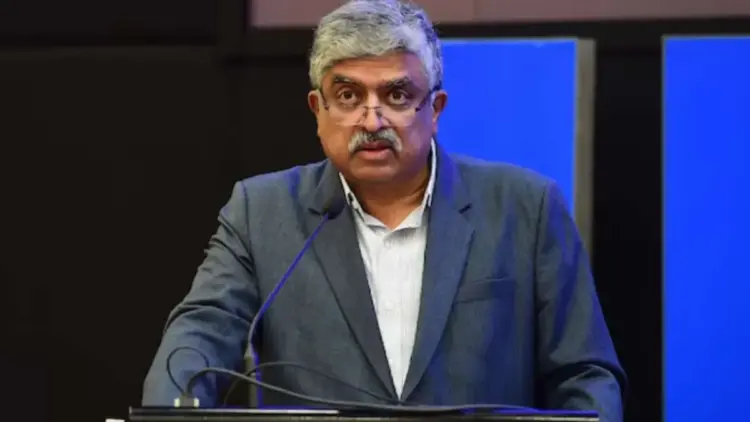
Bengaluru, India – October 14, 2026 – In a move that could fundamentally reshape the landscape of Indian examinations, Nandan Nilekani, the visionary co-founder of Infosys and a leading figure in India’s digital revolution, has put forth a radical proposal to combat the persistent scourge of paper leaks: the creation of question papers by artificial intelligence at the eleventh hour. Speaking at the prestigious Bloomberg New Economy Forum 2026, Nilekani, who is currently heading a six-member task force on exam reforms for the central government, articulated a vision where the very concept of a static, pre-prepared question paper becomes obsolete.
This groundbreaking suggestion stems from the urgent need to address the rampant malpractices that have plagued numerous high-stakes examinations in India, including the National Eligibility cum Entrance Test (NEET) and others conducted by bodies like the National Testing Agency (NTA), Staff Selection Commission (SSC), and Railway Recruitment Boards (RRB). The recurring incidents of paper leaks have not only undermined the integrity of the examination system but have also caused immense distress and financial burden to millions of aspiring students and their families. Nilekani’s proposal, if implemented, would necessitate a significant shift towards a fully computer-based testing (CBT) model, a transition that the task force is actively exploring.
The Genesis of a Revolutionary Idea: AI as a Bulwark Against Leaks
The core of Nilekani’s proposal lies in leveraging the power of artificial intelligence to generate examination papers dynamically. He argued that the current system, which relies on a pre-determined question paper, inherently creates an "economic incentive" for leaks and subsequent sale. This established paper, once in circulation, becomes a commodity, fueling a shadow economy that preys on the aspirations of students.
"Why do we need to have something called ‘a question paper’?" Nilekani posited during his address. "Because that creates an economic incentive for it to be sold. One way to look at how to solve it is to have a massive bank of questions, and only at the last minute generate the question paper for the day."
This "last-minute generation" model, powered by sophisticated AI algorithms, would mean that a unique set of questions, tailored for the specific examination, would be created just hours, or even minutes, before the exam commences. This would drastically reduce the window of opportunity for any malfeasance, making it virtually impossible for question papers to be leaked and disseminated in advance. The AI would draw from an expansive, meticulously curated question bank, ensuring variety and preventing any predictability.
While Nilekani did not delve into the specifics of how a large question bank itself could be secured against leaks, the primary focus of his proposal is to eliminate the tangible "product" – the pre-printed question paper – that is currently the target of leak syndicates. The idea is to make the act of leaking a question paper technologically infeasible.

The Imperative Shift: Embracing Computer-Based Testing
The successful implementation of Nilekani’s AI-driven question paper generation hinges entirely on a widespread adoption of computer-based testing (CBT). The dynamism of AI-generated papers is only achievable in a digital environment where questions can be instantly assembled and delivered to individual computer terminals.
"The committee is looking at how to make sure all exams are done on CBT," Nilekani stated, underscoring the task force’s commitment to this technological shift. "That requires a network of locations. We have 1,50,000 locations where young candidates can take a test and that needs to be expanded."

This statement highlights a critical challenge: the availability of adequate infrastructure. While India boasts a substantial number of potential testing locations, the expansion and standardization of these facilities to accommodate a nationwide CBT rollout for all major exams is a monumental undertaking. This includes ensuring reliable internet connectivity, robust hardware, and standardized examination protocols across diverse geographical regions.
The report by The Hindu, which details the NTA’s efforts to collaborate with the All India Council for Technical Education (AICTE) to identify suitable IT infrastructure and government institutions for establishing testing centers, further reinforces the scale of this infrastructural challenge. The deliberate avoidance of private centers due to integrity concerns underscores the government’s resolve to build a secure and transparent testing ecosystem.

Addressing the Digital Divide: A Crucial Hurdle
A significant concern that remains to be addressed is the potential for the digital divide to exacerbate existing inequalities. Nilekani’s proposal, while innovative, does not explicitly detail how it would cater to students in remote areas with limited internet access or those from economically disadvantaged backgrounds who may have less familiarity with digital interfaces.
The expansion of CBT infrastructure must be accompanied by a comprehensive strategy to bridge this digital divide. This could involve:

- Establishing more physical testing centers: Prioritizing the development of accessible testing centers in rural and underserved areas.
- Providing digital literacy training: Offering preparatory programs to familiarize students with computer-based examination formats.
- Ensuring robust internet connectivity: Investing in infrastructure development to guarantee reliable internet access at all testing locations.
- Exploring hybrid models: Investigating the feasibility of hybrid examination formats that combine elements of online and offline testing for certain regions or subjects.
The success of this ambitious reform hinges on ensuring that no student is left behind due to technological limitations.
A Task Force Driven by Urgency and Stakeholder Engagement
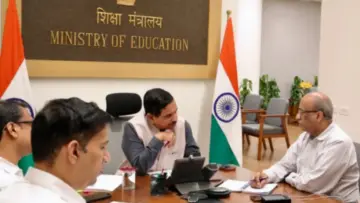
The establishment of the six-member task force on exam reforms, spearheaded by Nandan Nilekani, was a direct response to the mounting public outcry and political pressure following a series of high-profile paper leaks. The resignation of Education Minister Dharmendra Pradhan in July underscored the gravity of the situation.

The task force, comprised of eminent figures such as former ISRO chief S. Somanath and former IB director Tapan Deka, was given a three-month mandate to deliver its recommendations. In this short but intensive period, the panel has reportedly conducted 18 internal meetings and engaged in extensive consultations with over 40 stakeholders, including students, parents, and representatives from various examination bodies. The sheer volume of over 50,000 suggestions received from the public highlights the widespread desire for meaningful reform.
This robust stakeholder engagement is a positive sign, indicating a commitment to a holistic and inclusive approach to exam reforms. The feedback gathered from these diverse groups will be crucial in shaping the final recommendations and ensuring their practical applicability.

Broader Implications and the Future of Examinations
Nandan Nilekani’s proposal to use AI for generating question papers at the last minute, coupled with a push for computer-based testing, represents a paradigm shift in how examinations are conducted in India. If successfully implemented, this could:
- Dramatically reduce paper leaks: By eliminating the tangible pre-prepared question paper, the primary avenue for leaks would be closed.
- Enhance exam integrity: Restoring faith in the fairness and credibility of the examination system.
- Improve efficiency and speed: CBT can often lead to faster result declaration and streamlined administrative processes.
- Facilitate data analytics: Computer-based exams generate vast amounts of data that can be analyzed to identify trends, improve question banks, and understand student performance patterns.
- Promote digital literacy: The widespread adoption of CBT will naturally encourage greater digital literacy among the youth.
However, the path forward is not without its challenges. The infrastructural requirements, the need to address the digital divide, and the development of robust AI systems capable of generating diverse and high-quality question papers will require significant investment, meticulous planning, and sustained political will.

The Bloomberg New Economy Forum provided a platform for Nilekani to articulate a vision that is both audacious and necessary. As India continues its journey of digital transformation, applying cutting-edge technologies like AI to solve deep-rooted societal problems like exam malpractices is a logical and promising step. The coming months will be critical as the task force finalizes its recommendations, and the nation awaits the dawn of a new era in its examination system – an era potentially defined by AI-powered integrity and equitable access. The success of this initiative could serve as a global model for leveraging technology to safeguard educational merit and nurture future generations.