
A Pivotal Debate Ignites Over India’s Manufacturing Prowess
New Delhi, India – India’s ambitious drive to establish itself as a global electronics manufacturing powerhouse, significantly propelled by the Production Linked Incentive (PLI) scheme, has found itself at the heart of an intense economic debate. At the forefront of this discussion is the nation’s burgeoning role in Apple iPhone production, which, despite impressive growth, has triggered questions regarding the true extent of economic value India is retaining from these operations.
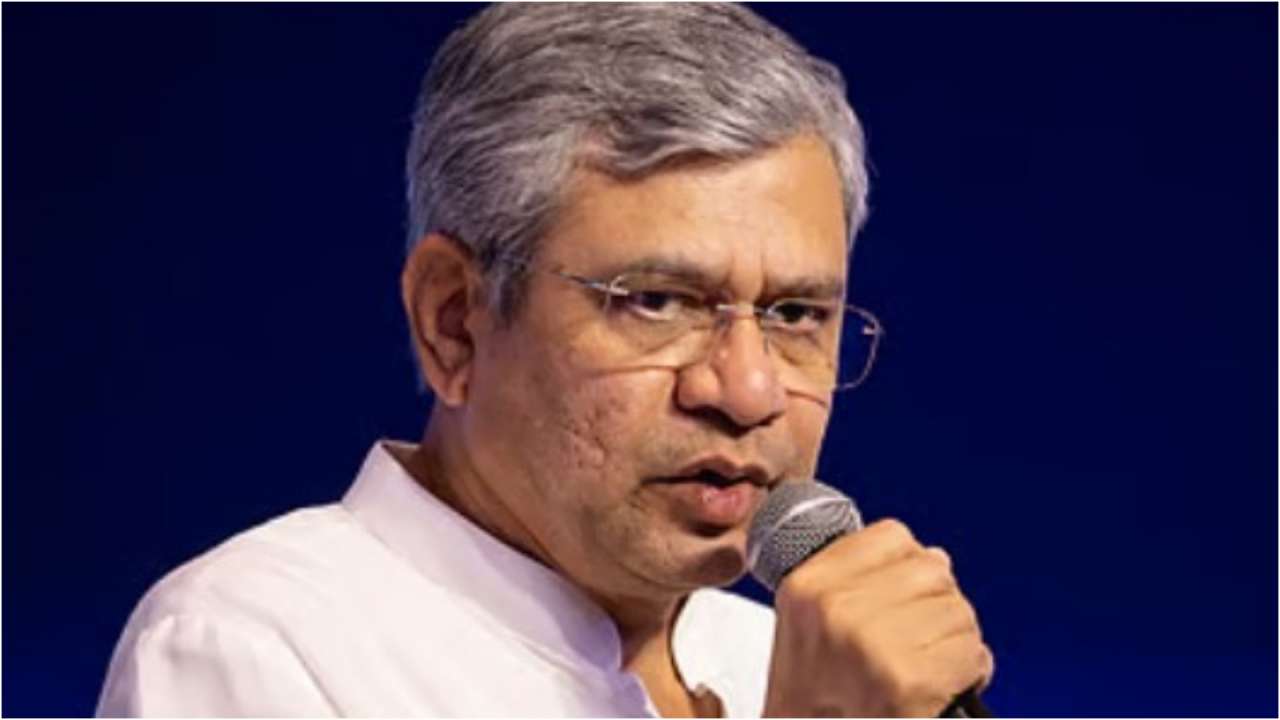
Union Minister for Electronics and Information Technology, Ashwini Vaishnaw, has mounted a robust defense of the government’s strategy, directly countering a recent Bloomberg report that questioned the depth of India’s manufacturing gains. The report suggested that despite substantial government incentives, India might primarily be serving as an assembly hub, with the most expensive and high-value components still largely imported. This contention has opened a wider discourse on the efficacy of the PLI scheme and India’s broader industrial policy.
The central question revolves around whether India is genuinely evolving into a competitive electronics manufacturing hub, fostering a deep ecosystem of component suppliers and technological innovation, or merely attracting assembly operations that offer limited value addition. The stakes are immense, touching upon job creation, foreign exchange earnings, technological sovereignty, and India’s aspiration to integrate more deeply into global supply chains.

The Core of the Contention: Value Addition vs. Assembly
The Bloomberg report, featuring Opinion columnist Andy Mukherjee, provided a granular examination of India’s progress by literally dismantling an iPhone. Speaking from Hong Kong’s electronics hub, Sham Shui Po, Mukherjee meticulously analyzed the origins of the device’s major components, highlighting India’s continued dependence on overseas suppliers for critical, high-value parts.
While acknowledging India’s significant strides in electronics manufacturing, Mukherjee pointed out a crucial distinction. Indian factories, he observed, have advanced beyond merely importing fully assembled mainboards. They now import bare circuit boards and locally install electronic components, marking a definite improvement in technical capability and a step up the value chain. This shift, according to Mukherjee, had positively impacted India’s mobile trade balance by an estimated $2.1 billion within a year, underscoring tangible progress. Furthermore, the report noted India’s escalating importance in Apple’s global supply chain, with approximately one in every four iPhones now reportedly manufactured in the country. This represents a monumental leap for a nation that, not long ago, was heavily reliant on mobile phone imports.

However, the report underscored a persistent challenge: India’s substantial reliance on international suppliers for a host of critical components. These include the sophisticated memory chips, powerful processors, high-resolution displays, precision camera lenses, and advanced batteries – all elements that constitute a significant portion of an iPhone’s total cost. Mukherjee contended that the aggregate value of these imported components often surpasses the value India derives from exporting the finished phones. This observation directly challenges the narrative of robust domestic value addition, raising pertinent questions about whether the government’s generous PLI incentives are truly fostering a deeper, more integrated manufacturing ecosystem or primarily subsidizing assembly operations, leaving the high-value intellectual property and production processes firmly outside Indian borders.
Official Rebuttal: Minister Vaishnaw’s Robust Defense
In a spirited counter-argument delivered via social media on Tuesday, October 27, Union Electronics and IT Minister Ashwini Vaishnaw pushed back against Bloomberg’s critique with a flurry of government figures, painting a starkly different picture of the PLI scheme’s impact. Vaishnaw asserted that the Centre had disbursed approximately Rs 19,000 crore in mobile manufacturing incentives. However, he emphasized that this investment had yielded far greater returns for the national exchequer and economy.

"Mobile PLI stats as follows," Vaishnaw declared in his post, before listing the impressive outcomes. He highlighted that the government had collected a substantial Rs 25,000 crore in direct taxes from the electronics manufacturing sector, already surpassing the incentive payout. More significantly, he pointed to an astounding Rs 3 lakh crore collected in Goods and Services Tax (GST) from the same sector, showcasing a massive economic multiplier effect.
Beyond fiscal contributions, the Minister stressed the profound impact on employment. Vaishnaw stated that the broader electronics manufacturing sector now employs an impressive 25 lakh (2.5 million) people, with 12 lakh (1.2 million) directly engaged in mobile manufacturing. This figure alone represents a significant boost to job creation, a primary objective of the government’s industrial policies. Concluding his assertive defense, Vaishnaw directly addressed the critics with the unequivocal phrase, "Cope harder!!" – a clear indication of the government’s confidence in its strategy and its dismissal of what it perceives as unfounded skepticism.

Beyond Incentives: The Economic Ripple Effect
Vaishnaw’s figures suggest a strong return on investment for the PLI scheme, portraying it not merely as a handout but as a catalyst for broader economic activity. The collection of direct taxes exceeding the incentives paid implies that the manufacturing units are profitable and contributing directly to the nation’s revenue. The gargantuan GST collection further indicates a vast ecosystem of consumption and supply chain activities stemming from the increased production. Moreover, the creation of millions of jobs, particularly in a labor-intensive sector like manufacturing, aligns perfectly with India’s demographic dividend and the urgent need for employment generation. These statistics, from the government’s perspective, are undeniable proof that the PLI scheme is working as intended, transforming India’s industrial landscape.
The Chronology of India’s Mobile Manufacturing Ascent
India’s journey in mobile manufacturing has been a dramatic transformation. For decades, the country was heavily reliant on imports for its mobile phone needs, a significant drain on foreign exchange reserves. The "Make in India" initiative, launched in 2014, marked a strategic pivot, aiming to foster domestic manufacturing across various sectors, with electronics identified as a key area.

The Production Linked Incentive (PLI) scheme for Large Scale Electronics Manufacturing, introduced in 2020, was a game-changer. Designed to encourage both domestic and global companies to increase their production in India, the scheme offered financial incentives linked to incremental sales of manufactured goods. The objectives were multi-fold: to reduce import dependence, boost exports, create employment, and ultimately, integrate India more deeply into global value chains.
Government figures presented in Parliament in July 2025 painted a picture of rapid progress. The large-scale electronics manufacturing PLI scheme had successfully attracted Rs 12,390 crore in cumulative investment. This investment, in turn, had generated a staggering Rs 8.44 lakh crore in production by June 2025. Mobile phone exports under the scheme had reached an impressive Rs 4.65 lakh crore, underscoring India’s growing capability not just to serve its vast domestic market but also to become a significant global exporter.

This growth has been significantly bolstered by global geopolitical shifts and corporate strategies, particularly Apple’s "China-Plus-One" approach. As global supply chains sought to de-risk and diversify away from a heavy concentration in China, India emerged as a compelling alternative, offering a large domestic market, a growing skilled workforce, and supportive government policies. Apple and its manufacturing partners, including Foxconn, Wistron (now acquired by Tata Electronics), and Pegatron, have substantially expanded their presence and production capacities in India, making the country an increasingly critical node in their global manufacturing network.
Global Shifts and Strategic Imperatives
The decision by multinational corporations like Apple to ramp up production in India is not merely a response to incentives but also a strategic alignment with broader global trends. The quest for supply chain resilience, coupled with rising labor costs in traditional manufacturing hubs and geopolitical considerations, has made diversification a critical imperative for global giants. India, with its massive domestic consumer base, improving infrastructure, and policy support, presents a formidable proposition. This confluence of factors has propelled India from a minor player to the world’s second-largest mobile phone manufacturer, a testament to both government policy and global economic reorientation. In February 2025, Minister Vaishnaw highlighted that smartphones had become India’s largest export category, with overseas shipments reaching an estimated $30 billion in 2025, further solidifying the sector’s economic importance.

Deeper Dive: The Criticality of Component Localisation
Despite the undeniable progress in assembly and overall production volumes, the Bloomberg report’s core concern about India’s continued dependence on overseas suppliers for critical components remains a pertinent point of discussion. The distinction between "assembly" and "deep manufacturing" is crucial here. While India has become adept at assembling sophisticated devices, the high-value intellectual property, specialized machinery, and complex manufacturing processes for components like advanced memory chips, powerful processors, high-resolution displays, intricate camera lenses, and long-lasting batteries still reside predominantly outside India.
This dependence has significant implications for "economic value retention." When a substantial portion of the bill of materials for a finished product is imported, the net foreign exchange earnings and the overall value added within the domestic economy are curtailed. It means that while jobs are created in assembly, a large share of the economic benefit flows out of the country to the component manufacturers. This reliance also exposes India to global supply chain vulnerabilities and price fluctuations. For instance, the report highlighted that rising global memory prices, partly driven by the insatiable demand from artificial intelligence applications, could make the economics of phone manufacturing in India more challenging if domestic sourcing alternatives are not developed.

The Elusive Goal of a Comprehensive Ecosystem
Building a comprehensive component manufacturing ecosystem is a monumental undertaking. It requires not only massive capital investment but also cutting-edge research and development, a highly specialized workforce, and a robust ancillary industry. Countries like South Korea, Taiwan, and China have invested decades and trillions of dollars to achieve their current levels of technological self-sufficiency in electronics components. For India, the challenge is not just to attract manufacturing but to foster an environment where design, engineering, and high-tech component production can thrive indigenously. Without this deeper integration, the economic gains, while significant, might remain concentrated at the assembly level, limiting India’s ability to capture a larger share of the global value chain.
The High-Stakes Semiconductor Ambition: A Separate but Related Battleground
The debate over value addition in mobile manufacturing naturally extends to India’s burgeoning ambition in semiconductor manufacturing – an even more complex and capital-intensive frontier. As Andy Mukherjee noted in the Bloomberg report, "Now India wants to move into advanced semiconductors, which are a lot harder to make." Despite billions of dollars in proposed subsidies and incentives, Mukherjee observed that India has so far only managed to establish capabilities in "testing and packaging" – crucial steps in the semiconductor value chain, but still far from the highly sophisticated fabrication (fab) processes required for producing advanced chips.

"A real high-end fab is still years away," Mukherjee argued, suggesting that India might be better served by leveraging its existing strengths in engineering and design. He also proposed investing public money in industries like clothing and footwear, which have the potential to generate employment for tens of millions of people, aligning with a more employment-centric industrial policy. These comments reflect a broader philosophical debate within India’s economic policy circles: should the nation prioritize capital-intensive, strategically important technologies with potentially fewer direct jobs, or focus on labor-intensive sectors that can absorb a larger workforce?
The Rajan-Vembu Schism: Economic Pragmatism vs. Strategic Autonomy
This very debate found prominent expression in the differing views of former Reserve Bank of India (RBI) Governor Raghuram Rajan and Zoho founder Sridhar Vembu.

Raghuram Rajan’s Perspective: In a September 2026 interview with Frontline magazine, Rajan articulated strong reservations about India’s aggressive push to build a large domestic semiconductor industry. His argument hinged on economic logic and the inherent nature of the chip manufacturing industry. Rajan questioned the feasibility of complete self-sufficiency, pointing out that even leading chip-making nations rely heavily on imported machinery, specialized materials, and other critical inputs. "When I see people say that India needs to make semiconductor chips [by pouring several billion dollars], my question is, why? This is the most easily smuggled thing on Earth," Rajan stated, implying that chips can be sourced internationally even in times of geopolitical tension. He questioned the prudence of investing billions of dollars in a manufacturing process that is globally distributed and where sourcing from international markets might be more cost-effective and efficient. Rajan’s argument is directly relevant to the broader PLI debate, as both involve fundamental questions about the optimal allocation of public funds, the extent of India’s desired dependence on global supply chains, and whether the economic returns truly justify the substantial government support.
Sridhar Vembu’s Counter-Argument: Rajan’s position drew sharp criticism from Sridhar Vembu, the influential founder of Zoho Corporation. Vembu staunchly defended India’s semiconductor ambitions, advocating for the nation to cultivate its own indigenous technological capabilities. His argument was rooted in the principle of strategic autonomy and the potential risks associated with perpetual reliance on overseas suppliers for critical technologies. Vembu emphasized that assuming international suppliers would always be willing or able to provide crucial technology, especially in a world marked by geopolitical uncertainties and technological protectionism, would be a strategic miscalculation. For Vembu, investing in domestic semiconductor manufacturing, despite its challenges, is a matter of national security and long-term economic resilience, ensuring that India controls its technological destiny.

The disagreement between Rajan and Vembu encapsulates the fundamental divergence in approaches to India’s industrial strategy. One perspective prioritizes cost efficiency, global integration, and maximizing returns on investment, suggesting that India should play to its existing strengths. The other emphasizes the imperative of strategic independence, national security, and developing control over technologies deemed critical for future economic and geopolitical power, even if it entails higher initial costs and longer gestation periods.
Implications for India’s Industrial Policy and Future Trajectory
The ongoing debate over India’s iPhone manufacturing push and its semiconductor ambitions carries profound implications for the nation’s future industrial policy. It forces a critical examination of how public money should be spent to foster domestic manufacturing capacity, the optimal degree of dependence on global supply chains, and whether the projected economic returns genuinely justify the substantial government support.

The government, as articulated by Minister Vaishnaw, views the expansion of electronics manufacturing as irrefutable proof of the PLI model’s effectiveness. The scheme has undeniably attracted significant investment, boosted production, and made India a formidable player in the global mobile phone market. It has shifted India from being a net importer of mobile phones to a significant exporter, a turnaround that is often cited as a success story of the "Make in India" initiative.
However, critics and economists like Andy Mukherjee and Raghuram Rajan compel a deeper inquiry: is this growth truly transformative, leading to the domestic production of high-value components and advanced technologies, or is it primarily a story of successful assembly? The central question remains whether India can move beyond being an assembly hub to becoming a genuine innovation and manufacturing powerhouse for critical components.

The Path Forward: Balancing Ambition with Reality
For India, the path forward involves a delicate balance of ambition and pragmatism. The progress in mobile manufacturing is a significant achievement, but the ultimate success of the PLI scheme and India’s broader industrial policy will be measured by its ability to foster a deeper, more resilient domestic ecosystem. This means:
- Enhancing Value Retention: Incentivizing the local manufacturing of critical components such as displays, camera modules, memory chips, and batteries. This requires targeted policies, R&D investment, and skill development programs.
- Investing in R&D and Design: Moving beyond manufacturing to actively participate in the design and intellectual property creation stages of electronics, which offer significantly higher value addition.
- Skill Development: Creating a workforce equipped with the advanced technical skills required for complex manufacturing processes, R&D, and engineering.
- Strategic Alignment: Carefully evaluating which high-tech sectors warrant massive public investment (like semiconductors) based on a thorough cost-benefit analysis that considers both economic returns and strategic imperatives.
- Leveraging Existing Strengths: While pursuing high-tech goals, not neglecting labor-intensive sectors where India has a competitive advantage and can create large-scale employment.
In conclusion, India’s iPhone manufacturing boom is far more than just a metric of how many phones are assembled within its borders. It serves as a potent symbol and a crucial testing ground for the nation’s broader industrial ambitions. The debate it has ignited underscores the complex challenges and opportunities India faces in its quest to become a leading global manufacturing economy. The journey towards true economic value retention and technological self-sufficiency is ongoing, marked by both undeniable progress and vigorous debate over the optimal strategies to achieve its grand vision.