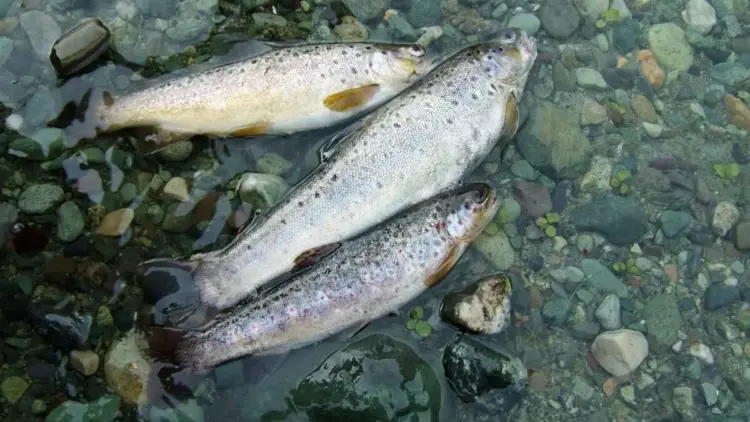
NAINITAL, UTTARAKHAND — In the emerald waters of Naini Lake, a high-stakes biological rescue mission is faltering. What was intended to be a triumphant return for the Asela—the native Himalayan snow trout (Schizothorax richardsonii)—has instead become a grim case study in the limits of species reintroduction within degraded ecosystems.
On April 27, 2026, a team of scientists from Kumaun University’s Department of Zoology released approximately 350 lab-bred fingerlings into experimental cages in Naini Lake. It was the first phase of an ambitious captive-breeding program aimed at reviving a species that has been listed as "Vulnerable" on the IUCN Red List since 2010 and has been considered locally extinct in these waters for nearly three decades.
However, within weeks of the release, the project met a harrowing setback. Reports from program staff and local observers indicate that more than half of the fingerlings in Naini Lake have perished. Similar reports of high mortality are emerging from neighboring Bhimtal, Sattal, and Naukuchiatal. The deaths have ignited a fierce debate among ecologists: Can a species be forced back into a habitat that has been fundamentally altered by pollution, invasive species, and a warming climate?
A Legacy of Decline: The Chronology of the Asela’s Disappearance
The snow trout was once the apex of the Kumaon region’s aquatic hierarchy. Throughout the early 20th century and into the 1980s, the Asela thrived in the cold, oxygen-rich waters of the Himalayan foothills. As a "cold-water" specialist, the fish became a vital bio-indicator; its presence signaled a healthy, pristine environment.

The decline began in earnest during the late 1980s. The convergence of three factors—unchecked sewage discharge from the growing tourist town of Nainital, the resulting drop in dissolved oxygen, and the introduction of the Common Carp (Cyprinus carpio)—created a "perfect storm" for the native trout. By the mid-1990s, the snow trout had virtually vanished from Naini Lake, replaced by the hardier, more aggressive exotic carp introduced during the British colonial era.
The current revival effort began years ago in the laboratories of Kumaun University. Using advanced aquaculture technologies, including Biofloc—a system that utilizes beneficial bacterial colonies to treat waste and provide nutrition—and Recirculating Aquaculture Systems (RAS), scientists successfully bred the Asela in a controlled environment.
By early 2026, the first batch was ready. Following the April launch in Naini Lake, the initiative was expanded in June to include Bhimtal, Sattal, and Naukuchiatal. The plan was to keep the fingerlings in protective cages for six months to acclimatize them to the lake water before releasing them into the open lake in October. But the "acclimatization" phase has proven lethal.
A Lake on Life Support: The Data Behind the Decay
The central challenge to the snow trout’s survival is the physical state of Naini Lake itself. Experts describe the water body not as a self-sustaining ecosystem, but as a patient on "life support."

"Naini Lake is effectively on a ventilator," says Vishal Singh, Executive Director of the Centre for Ecology, Development and Research (CEDAR). Singh, who has spent two decades studying Himalayan ecosystems, points to the lake’s artificial aeration system as evidence of its fragility. Since 2007, the lake has relied on 30 underwater aerator pipes to pump oxygen into its depths. Without these pipes, oxygen levels would plummet to levels incapable of supporting most fish life.
However, the "ventilator" is breaking down. Harpinder Veer Singh Randhawa, Director of Global Aqua Treatment Technology—the firm responsible for the aeration system—revealed that a major pipe burst in 2019 has never been fully repaired. "The system needs a complete overhaul. We submitted a proposal for funding and approval to government authorities over a year ago, but we are still waiting for the green light," Randhawa says.
The environmental data is equally concerning. Snow trout require water temperatures between 8°C and 22°C to thrive. Recent data from the Directorate of Coldwater Fisheries Research (DCFR) shows that Naini Lake’s surface temperatures now routinely exceed 25°C during the summer months. In July 2026, temperatures hit a record 27°C.
"If the water stays at 27°C for more than eight hours, snow trout simply stop feeding," explains Ashutosh Mishra, head of the Department of Aquatic Environment Management at Govind Ballabh Pant University of Agriculture and Technology. Mishra notes that while the snow trout is often associated with lakes, it is biologically a river fish. "They evolved in snow-fed, flowing rivers like the Bhagirathi. A stagnant, warming lake is not their natural home."

Official Responses: Divergent Perspectives on Success
The high mortality rates have created a rift between the project’s leaders and independent observers.
Professor Harish Chandra Bisht, who heads the captive-breeding program at Kumaun University, remains optimistic. He acknowledges the challenges—including the damaged aeration system and rising temperatures—but maintains that the program is a necessary step in ecological adaptation. "Some mortality is inevitable in any reintroduction program," Bisht says. "We have introduced more fingerlings to ensure a viable population remains. The goal is to help them adapt to the current environment, even if it is not perfect."
However, an official working near the Naini Lake cages, speaking on the condition of anonymity, offered a much bleaker assessment. "The scientists might say 50%, but from what we see daily, more than 80% of the fingerlings in the Naini cage are already dead. They are simply not suited for this water anymore."
The Lake Development Authority (LDA), the primary governing body for the region’s water bodies, has remained largely tight-lipped. When asked for monthly water quality data, the LDA declined to release the figures. Manish Kumar Singh, the newly appointed secretary of the LDA, pivoted to broader policy, stating that all town activities fall under the "Uttarakhand Action Plan on Climate Change (UAPCC)."

Ecologists like Vishal Singh argue that these plans often exist only on paper. "There is a massive gap between policy and implementation. These plans are either not being executed on the ground, or they are not inclusive enough to involve the local communities who actually live by the lake," Singh says.
The Invasive Threat and the Drying Recharge
Even if the water quality were to improve, the snow trout faces a biological enemy: the Common Carp. This exotic species is more resilient to pollution and low oxygen.
"As long as common carp occupy the lake, snow trout survival in Naini Lake appears impossible," says Suresh Chandra, head of the Hill Environment and Resource Management division at the DCFR. Chandra notes that shifting weather patterns are also skewing the fish populations. "The warming water is resulting in a decline in female populations across several species, which threatens the long-term viability of any self-sustaining population."
Furthermore, the lake’s very existence is being threatened from above. Naini Lake is recharged by Sukhtal Lake, a seasonal water body located at a higher elevation. In recent years, Sukhtal has been subjected to unplanned construction and encroachment, disrupting the natural drainage and groundwater recharge systems. Without the steady "feeding" from Sukhtal, Naini Lake’s water level and its ability to flush out pollutants are severely compromised.

Implications: Can We Bring Back the Past?
The struggle of the snow trout in Naini Lake raises a profound question for 21st-century conservation: Is it possible to revive a species when the climate and habitat it once depended on have fundamentally changed?
The Kumaun University project is a testament to human ingenuity—the ability to breed a sensitive species in a lab using Biofloc and RAS technology is a significant scientific achievement. However, the transition from the lab to the "real world" highlights a disconnect. If the lake behaves more like a "polluted aquarium" than a living ecosystem, reintroduction may be little more than a cosmetic exercise.
For the snow trout to truly return, experts suggest that a "habitat-first" approach is required. This would include:
- Complete Restoration of the Aeration System: Moving beyond temporary fixes to ensure consistent oxygenation.
- Strict Sewage Management: Eliminating the nutrient runoff that fuels algal blooms and depletes oxygen.
- Restoration of Recharge Zones: Protecting Sukhtal Lake from further encroachment to ensure the hydrological health of the entire catchment.
- Invasive Species Management: Finding ways to reduce the dominance of the Common Carp to give the native Asela a competitive chance.
As the Himalayan region continues to warm at a rate higher than the global average, the window for such interventions is closing. For the remaining fingerlings in the cages of Naini Lake, the next few months will be a test of endurance. Whether they will survive to reproduce and establish a new generation—a process that takes at least three years—remains a matter of grave doubt.

For now, the dead fingerlings floating in the cages serve as a silent warning: You cannot bring back the inhabitant until you have fixed the home.