


New Delhi, India – For over a decade, Amazon’s Alexa has been synonymous with smart home convenience, a digital assistant adept at controlling lights, playing music, and answering simple queries. It served as a functional, albeit somewhat robotic, digital butler. However, a seismic shift is underway. Amazon has officially launched Alexa+ in India, a next-generation voice assistant powered by generative artificial intelligence, promising an interaction experience so profoundly different it blurs the lines between human and machine conversation. This rollout, following its debut in the US earlier this year, marks a strategic pivot for Amazon, positioning Alexa not merely as a command interpreter but as a truly conversational and empathetic AI agent.
The Transformation of a Digital Companion: From Commands to Conversation
Main Facts:
Alexa+, Amazon’s latest iteration of its ubiquitous voice assistant, is now available in India. This advanced version distinguishes itself through its foundational reliance on generative AI, enabling more fluid, natural, and context-aware conversations. Michele Butti, Vice President, Alexa International, underscored the magnitude of this evolution, stating in an interview with indianexpress.com on the sidelines of the India launch, "The experience is very different." Unlike its predecessors, Alexa+ moves beyond pre-scripted responses, understanding nuanced requests and engaging in extended dialogues without requiring repeated wake words. It boasts a more natural-sounding voice, shedding the robotic tones of earlier versions, and is designed to comprehend complex requests much like a sophisticated chatbot.
A cornerstone of the India launch is the profound localisation effort. Alexa+ is not merely a global model adapted; it has been meticulously fine-tuned to be "authentically Indian." This involves understanding the subcontinent’s rich culture, its unique sense of humour, historical context, and diverse values. Crucially, it supports English, Hindi, and Hinglish (a blend of Hindi and English), catering to India’s multilingual landscape. Beyond conversation, Alexa+ is poised to become an "agentic AI," capable of performing real-world actions like booking restaurants via EasyDiner, ordering food through Swiggy and Zomato, and even assisting with gift purchases, signifying a significant expansion of its utility.
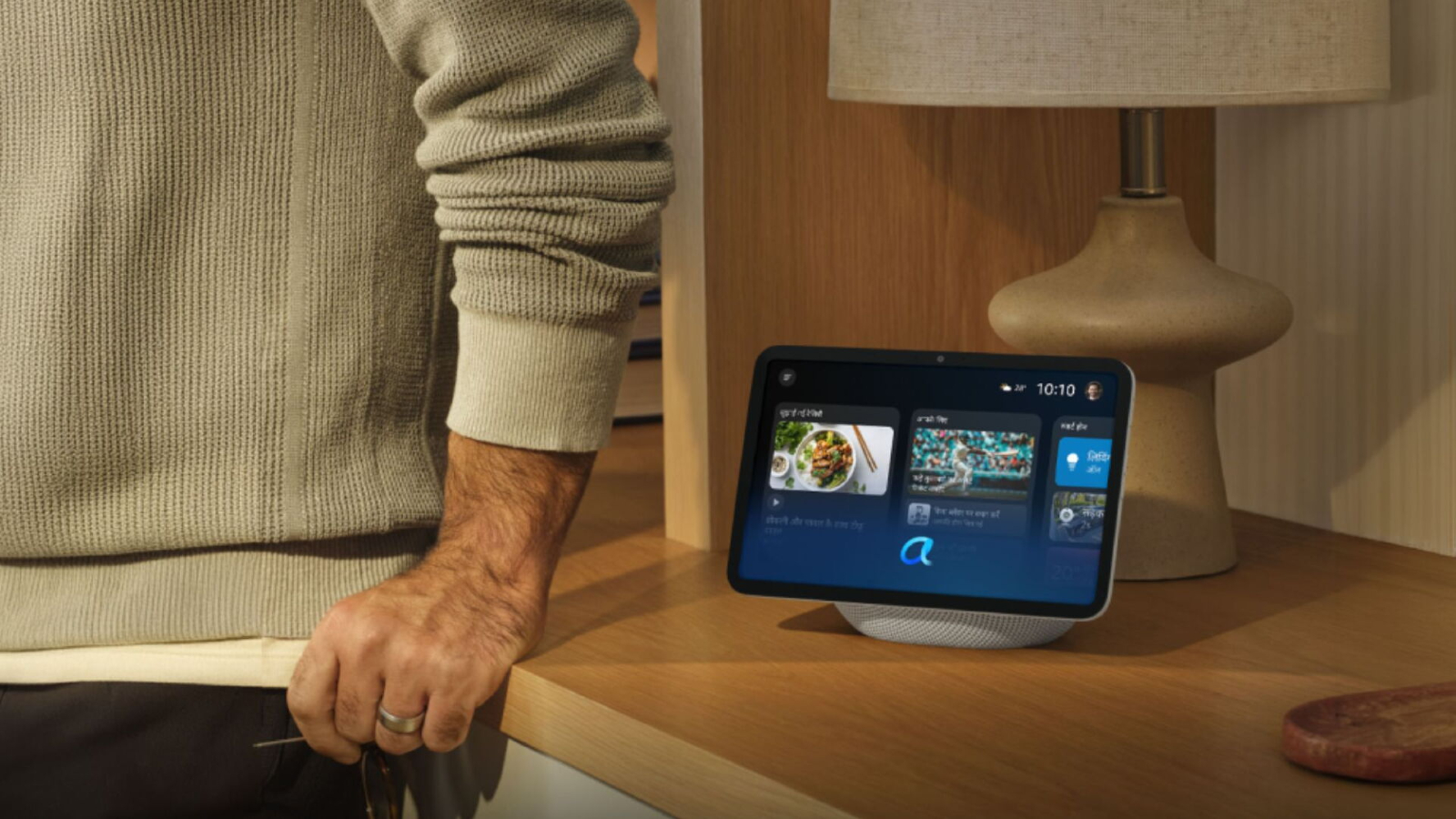
The service is initially offered through an Early Access programme on screen-equipped Echo Show devices. Post this phase, Alexa+ will be complimentary for Amazon Prime members, while non-Prime users will have the option to subscribe for Rs 2,000 per month for a standalone subscription.
Chronology:
Amazon’s journey with Alexa began years ago, establishing it as a pioneer in the smart home ecosystem. Early versions excelled at deterministic tasks: "Alexa, turn on the lights," "Alexa, play music." Users interacted with it primarily as a utility, a convenient tool for automating tasks and retrieving specific information. The digital butler metaphor held true, where commands yielded predictable, if somewhat impersonal, results.
The seeds of this transformation were sown when Amazon announced its next-generation Alexa last year, signaling a clear intent to integrate advanced AI capabilities. This vision materialized with its rollout in the United States earlier this year, where users began experiencing the more conversational and intuitive interactions. The Indian launch now extends this cutting-edge technology to a market of immense strategic importance for Amazon, recognizing India’s rapid digital adoption and unique linguistic and cultural tapestry. This latest iteration represents a significant leap from a command-and-response system to an intelligent, proactive, and context-aware assistant, pushing the boundaries of what consumers expect from their voice AI.
The Nuance of Voice: Distinguishing Alexa+ from Text-Based Chatbots
Michele Butti elaborated on the fundamental differences between voice-based interactions and text-based chatbots, a distinction crucial to understanding Alexa+’s design philosophy. "When you ask a question to a chatbot, you can get a very long answer. You can quickly go through the visual information and say, ‘There’s a part I don’t like; it’s too long.’ You can even, without reading it all, say, ‘Hey, just summarise this,’ or ‘Tell me more about this.’ That’s not the way I meant it," Butti explained, highlighting the user’s ability to skim and manipulate text output.
However, voice interactions demand a different approach. "Imagine if every time you had to wait to read through the entire answer. It would be very slow. The way the voice experience works is actually quite different from the way a chatbot can answer with graphs, images, numbers, long answers and bullet points." This underscores the need for conciseness, clarity, and an intuitive understanding of user intent in a voice-first environment. Alexa+ is engineered to deliver information efficiently and naturally, recognizing that spoken dialogue requires different pacing and presentation than written text.
The ‘Authentically Indian’ Imperative: Localisation Beyond Language
Official Responses:
The ambition to make Alexa+ "authentically Indian" was a recurring theme during the launch. Butti detailed the extensive efforts undertaken: "We wanted to be authentically Indian and be able to understand the culture, the sense of humour, the history, the values and our customers here. Alexa+ is not a chatbot or a single large English model. It has to do much more. It has to take actions in the real world. It has to be able not just to play music, but now also to book a restaurant." This statement emphasizes that localisation extends far beyond mere language translation; it’s about embedding a deep cultural understanding into the AI’s core.
Teena Sidana, Country Manager, Alexa, Amazon India, provided further insight into the technical challenges and solutions tailored for the Indian context. "The technology we use is our own Automatic Speech Recognition (ASR) that is fine-tuned for Indian homes today," Sidana stated. She articulated the unique environmental factors prevalent in Indian households: "In a chatbot, where you are just typing or speaking, you don’t need the ability to deal with a noisy home in the background. It’s one person, one device. You type your answer, you get a longish response, and you’re okay with it. But with a voice-based interaction, everybody’s in the background, there’s a pressure cooker, the TV is on, and there’s a child talking. The microphones have to be fine-tuned to listen only to that person, that wake word and that command, and adapt to the household." This "far-field technology," as Butti later elaborated, involves a unique combination of hardware and multiple microphones designed to isolate the user’s voice from ambient noise, ensuring accurate command reception even from a distance.
Beyond noise cancellation, linguistic complexities were a major focus. "There are colloquialisms and the way we mix languages when we talk. Nobody speaks in proper English or proper Hindi all the time. Everything is mixed-language and code-mixed in India. So, all of these nuances that are unique to India also had to be taken into account when it comes to voice – how it handles code-mixing, how it talks and how it reacts," Sidana added. This capability to seamlessly understand and respond in Hinglish (a blend of Hindi and English) or other code-mixed speech patterns is vital for natural interaction in India.
Furthermore, the emotional intelligence of Alexa+ has been a key development. Sidana envisions an Alexa that adapts to the user’s emotional state: "You need to have that voice. You have to have the right emotions. If I am sad, she needs to recognise that and respond: ‘Oh, you are sad, let me give you some nice music to cheer you up.’ If I am happy, it’s like, ‘It’s a great day for you. Let me help you with something upbeat. Do you want to celebrate today and order your favourite snacks?’ So that is, I think, the true personality or use of Alexa, where she can adapt to your choices, your preferences, your household and the local, authentic Indian context around you." This level of contextual awareness and emotional responsiveness represents a significant stride towards human-like interaction.
Butti also highlighted the integration with local services: "We had to make sure that when we brought Alexa+ to Indian customers, it was already connected with all the services and content and was able to keep working with multiple smart home providers, including the majority being actually Indian manufacturers and providers." This ensures that Alexa+ is immediately functional and relevant within the existing Indian digital and smart home ecosystem.
Intent, Memory, and Agentic AI: The Pillars of Alexa+’s Intelligence
Alexa+’s enhanced capabilities stem from its advanced understanding of user intent and its ability to maintain conversational context. Butti explained that the new system is designed to differentiate between a direct command and a conversational query. "When we started at the very beginning, without customising the Alexa experience, we noticed that customers felt it was overly verbose. Now, we have trained Alexa to better recognise the customer’s intent. When you ask Alexa, ‘Turn on the light,’ you are not there to chat. Sometimes, it doesn’t even answer; it just executes the command, and that’s it." This streamlined approach for utilitarian commands improves efficiency.
However, for more complex or exploratory queries, Alexa+ shifts gears. "But when you ask, ‘What’s new around the world?’ then you are in a different state. Based on that, she’ll tailor her response and give you a quick answer. If you ask, ‘What was the score of my favourite team yesterday?’ – boom, you get the answer," Butti elaborated. The system intelligently adapts its verbosity and depth of response based on the perceived user need.
The ability to gauge a user’s emotional or mental state is another breakthrough. "If you say, ‘I had a really heavy day, and my boss made my day miserable,’ that’s a very different intent. The beauty of this technology is that it’s so much smarter that it can understand the customer’s state and respond accordingly," Butti affirmed. This demonstrates a move towards empathetic AI, capable of offering relevant comfort or assistance. Sidana reinforced this, stating, "The ability of an LLM or generative AI is that it can adapt to the way you want the responses to be."

A crucial feature underpinning this intelligent interaction is memory. The revamped Alexa uses memory to maintain conversational context, allowing users to interrupt, clarify, or change requests naturally without having to repeat previous information. It also stores user preferences, such as dietary restrictions or favourite sports teams, to personalize interactions over time, making it truly a tailored experience.
Furthermore, Amazon is venturing into "agentic AI" with Alexa+. This means the assistant is designed to perform real-world tasks on behalf of users. The partnerships with local services are instrumental here: Swiggy and Zomato for food delivery, EasyDiner for restaurant table bookings, and even Chef Sanjeev Kapoor for recipes. News providers like PTI and India Today are integrated for region-specific news updates. This functional expansion transforms Alexa from an information provider into a capable task executor, significantly enhancing its utility within the home.
Implications: Reshaping the Smart Home and AI Landscape in India
The launch of Alexa+ carries profound implications for Amazon, the smart home market, and the broader adoption of AI in India.
Broader Impact on AI Adoption:
Butti acknowledged the competitive landscape of AI, but emphasized a different approach. "I think you don’t need to understand or know anything about AI. It’s so intuitive. Sure, it’s entirely based on LLMs and Gen AI, but the point is that it has this super intelligence that allows you to go very deep into science or talk about sports," he stated. Amazon’s strategy is to keep the complex AI mechanisms in the background, offering an intuitive, voice-first interface that democratizes access to advanced generative AI. "With Alexa+, it’s a much easier way to interact with AI and get the benefits of this new technology than using a chatbot, where you still have to download a dedicated app, learn what works and what doesn’t, and figure out which model you need to use," Butti added, highlighting the seamless integration within existing Echo devices.
Redefining the Smart Home Experience:
Alexa+’s arrival is set to redefine the smart home experience in India. Sidana underscored its design for diverse households: "There are going to be multigenerational households. There will be somebody who listens to their morning bhajan on it and there will be a kid who asks for help with science, their schedule or their calendar. It is designed for anybody and everybody to interact naturally with the device and ask for whatever they need or whatever their preferences might be, without having to learn something entirely new. It’s not a coding device. It’s not just a science-learning device. It’s not a PhD device or an app." This universal accessibility is critical for widespread adoption in India’s varied demographic landscape.
The smart home concept, while still nascent, is growing rapidly in India. Sidana reported significant engagement, with over 1.1 billion smart home interactions recorded in the past year across devices like bulbs, plugs, switches, and air conditioners, many from Indian manufacturers. Alexa+ is poised to accelerate this growth by making smart home control more intuitive and integrated into daily life. Its ability to act as an "agent" for tasks like food ordering and restaurant bookings moves it beyond simple device control, making it an indispensable part of household management.
Competitive Landscape and Future Outlook:
By integrating generative AI and agentic capabilities, Amazon is directly challenging the dominance of text-based large language models like OpenAI’s ChatGPT and Google’s Gemini, but with a distinct voice-first, home-centric strategy. The subscription model for non-Prime members also signals a premium offering, reflecting the advanced technology and expanded utility. While privacy concerns are always paramount with AI, Butti emphasized that "privacy is protected and customers stay in control of what Alexa listens to and what it doesn’t," a crucial assurance for users.
The future for Alexa+ in India appears promising, with Amazon’s commitment to deep localisation, real-world task execution, and an intuitive user experience. This evolution from a functional device controller to an intelligent, conversational, and empathetic digital agent could significantly reshape how Indian households interact with technology, making AI a more integrated and natural part of everyday life. The transition signifies not just an upgrade, but a fundamental rethinking of the role a voice assistant can play in a digitally evolving nation.
