

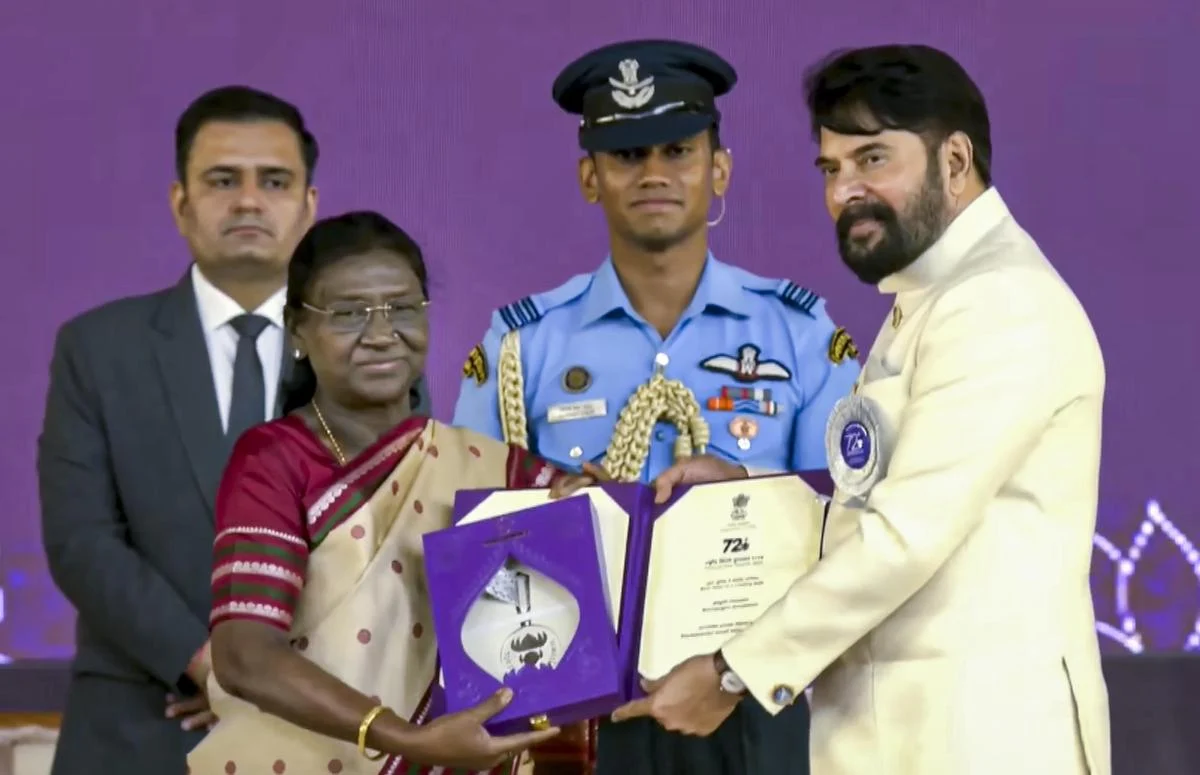
New Delhi, September 22, 2026 – The hallowed halls of Indian cinema resonated with applause and admiration as President Droupadi Murmu presented the 72nd National Film Awards for 2024 at a grand ceremony held in Ekta Nagar, Gujarat, near the iconic Statue of Unity. This year’s ceremony marked a significant milestone, with veteran Kannada actor Anant Nag being bestowed with the coveted Dadasaheb Phalke Award, the highest recognition in Indian cinema. The event celebrated a diverse spectrum of talent, recognizing outstanding achievements across feature films, non-feature films, and cinematic contributions.
The day was a testament to the vibrant and evolving landscape of Indian cinema, with accolades showered upon artists and technicians who have consistently pushed creative boundaries and captivated audiences. From seasoned veterans to emerging talents, the 72nd National Film Awards underscored the richness and diversity of storytelling that defines the Indian film industry.
A Luminary’s Recognition: Anant Nag and the Dadasaheb Phalke Award
The pinnacle of the evening was the presentation of the Dadasaheb Phalke Award to Anant Nag, a name synonymous with versatile acting and a career spanning over five decades. President Murmu personally conferred the prestigious honor upon the veteran actor, acknowledging his profound and indelible contribution to Indian cinema. The award recognizes an individual’s outstanding contribution to the growth and development of Indian cinema.

Anant Nag, a beloved figure in the Kannada film industry and beyond, has delivered memorable performances in a myriad of films across multiple languages, including Kannada, Malayalam, Telugu, Tamil, and Hindi. His ability to seamlessly transition between diverse roles, from comedic to intense dramatic portrayals, has earned him widespread critical acclaim and a devoted fan following. His cinematic journey, marked by artistic integrity and a commitment to nuanced storytelling, has inspired generations of actors and filmmakers.
Speaking after receiving the award, a visibly moved Anant Nag expressed his profound gratitude. "It’s a great feeling to receive this honour," he told reporters, his voice filled with emotion. "In a way, I feel the Padma Bhushan was a rehearsal for this big award, with all the excitement and anticipation that came with it. I dedicate this award to Kannadigas and Karnataka." This sentiment highlights his deep-rooted connection to his home state and the people who have supported his illustrious career. The Dadasaheb Phalke Award, often described as the "Oscar of India," is a fitting tribute to Anant Nag’s enduring legacy and his significant impact on the narrative tapestry of Indian cinema.
A Celebration of Excellence: Best Actor and Actress Awards
The Best Actor awards saw a powerful display of talent from across the nation. Renowned Malayalam actor Mammootty clinched the Best Actor award for his impactful performance in the critically acclaimed supernatural drama Bramayugam. Directed by Rahul Sadasivan, Mammootty’s portrayal of Kodumon Potty, a malevolent and formidable spirit, garnered widespread praise for its intensity and depth. This marks Mammootty’s fourth National Award for Best Actor, an extraordinary feat that places him in the esteemed company of legendary actor Amitabh Bachchan, who also holds the record for four Best Actor wins.

In the female acting category, Yami Gautam was recognized with the Best Actor (Female) award for her compelling performance in the Hindi feature film Article 370. Directed by Aditya Suhas Jambhale, the film itself was lauded, and Gautam’s portrayal of an intelligence officer was singled out for its strength and conviction.
Adding to the excitement, Kartik Aaryan received the Best Actor (Male) award for his inspiring portrayal of Paralympian gold medallist Murlikant Petkar in the biographical sports drama Chandu Champion. Directed by Kabir Khan, the film showcases Aaryan’s dedication and commitment to embodying the spirit of the celebrated athlete.
Tamil cinema also shone brightly with actor Dhanush receiving a Special Mention for his nuanced performance in the period drama Captain Miller. His ability to bring depth and authenticity to his roles continues to be a hallmark of his career.

Article 370 Reigns Supreme: Best Feature Film and Directorial Accolades
The Hindi feature film Article 370, directed by Aditya Suhas Jambhale, was crowned the Best Feature Film, a significant recognition for its impactful storytelling and technical prowess. The film’s success was further amplified by Yami Gautam’s Best Actress win, highlighting its overall strength.
The Best Direction award was presented to Rajkumar Periasamy for his work on the Tamil movie Amaran. His visionary direction has been lauded for its artistic merit and compelling narrative.
Adding another feather to his cap, actor-turned-director Randeep Hooda received the Best Debut Film of a Director award for Swatantrya Veer Savarkar. This recognition marks a significant step in his directorial journey, showcasing his burgeoning talent behind the camera.

Beyond the Leading Roles: Supporting Actors and Technical Brilliance
The National Film Awards also celebrated the crucial contributions of supporting actors and technicians. Sanjay Mishra, a veteran of Bollywood, was honored with the Best Actor in a Supporting Role award for his powerful performance in Bhakshak. Reflecting on his win, Mishra expressed his gratitude, stating, "For over three decades, I have tried to be honest to every character that came my way. This honour belongs as much to the directors, producers, writers, technicians and fellow actors I have had the privilege of working with as it does to the audience, who have embraced my work with so much love over the years. I remain deeply grateful."
In the supporting actress categories, Sachana Namidass received the Best Actress in a Supporting Role award for the Tamil movie Maharaja. Ropashree Varkady was recognized with the second Best Actress in a Supporting Role award for her performance in the Kannada movie Mithya.
The technical categories also witnessed exceptional talent being recognized. For Pushpa: The Rule, the film was awarded Best Costume Design, and Sukumar received the Best Screenplay award, underscoring the film’s comprehensive excellence. R Kalaivann bagged the Best Editing award for the Tamil movie Amaran, highlighting the intricate craft of film editing.

Musical Triumphs and Cinematic Innovation
The realm of music and background score was equally celebrated. Shashwat Sachdev of Dhurandhar fame received the Best Music Direction award for the songs in Article 370. G V Prakash Kumar was honored for his exceptional background score in Amaran. "This is the first time I’m coming to the city. I’m very excited to see the Statue of Unity, and this is my third National Film Award. So, I’m very happy to receive it," Prakash Kumar shared, expressing his delight at both the award and the unique venue.
The Best Non-Feature Film award was presented to Bhangaar, directed and produced by Sumira Roy, who accepted the award with grace. Sanjeev Shrivastava was honored with the Best Film Critic award in Hindi, recognizing his discerning insights into the world of cinema.
A New Era for National Film Awards: Decentralizing the Celebration
The choice of Ekta Nagar in Gujarat’s Narmada district as the venue for the 72nd National Film Awards is a deliberate and significant shift. The Ministry of Information and Broadcasting has announced a new initiative to host the National Film Awards ceremony in different parts of the country in the coming years. This move aims to decentralize the prestigious event, bringing the celebration of Indian cinema closer to diverse regional audiences and showcasing the nation’s rich cultural and cinematic tapestry. The Statue of Unity, a symbol of national integration, provided a grand and inspiring backdrop for this year’s ceremony, setting a precedent for future events.

This strategic decision signifies a commitment to fostering a pan-Indian appreciation for cinema, allowing artists and enthusiasts from various regions to experience and participate in this esteemed national celebration. It also serves as a platform to highlight the unique cinematic landscapes and contributions of different states.
Looking Ahead: A Glimpse into the Future of Indian Cinema
The 72nd National Film Awards stand as a powerful testament to the dynamism and artistic prowess that define Indian cinema. The recognition of Anant Nag with the Dadasaheb Phalke Award is a moment of immense pride for the entire film fraternity. The awards also highlight the burgeoning talent and the consistent excellence demonstrated by actors, directors, and technicians across various film industries.
As the National Film Awards embark on a new journey, extending its reach across the country, it promises to further invigorate and inspire the creation of diverse and compelling cinematic narratives. The success of films like Article 370 and the impactful performances by actors like Mammootty, Yami Gautam, and Kartik Aaryan underscore the industry’s ability to produce content that is both critically acclaimed and commercially significant. The year 2024, as celebrated through these awards, has undoubtedly been a remarkable year for Indian cinema, setting a high bar for the years to come. The continued dedication to artistic expression, coupled with a broader national outreach, ensures a bright and promising future for the world of Indian films.
