

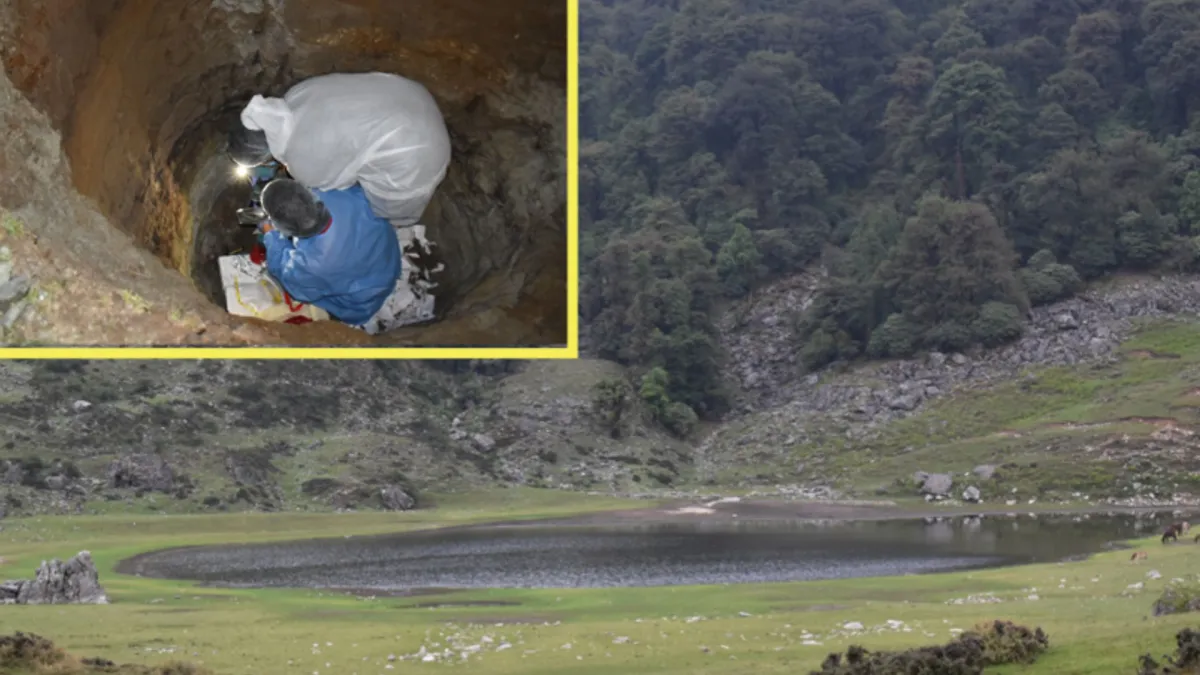
The study, a collaborative effort between the Indian Institute of Technology (IIT) Roorkee, the Indian Institute of Science Education and Research (IISER) Mohali, the Birbal Sahni Institute of Palaeosciences, the Inter-University Accelerator Centre, and the Indian Institute of Geomagnetism, has provided the first continuous 15,000-year record of the region. Most strikingly, the team discovered human genetic signatures dating back 8,300 years—predating any known physical archaeological evidence in the area by a staggering 5,000 years.
Main Facts: A Genetic Breakthrough in High-Altitude Archaeology
For decades, the history of human presence in the Himalayas was dictated by the "visible" record: pottery shards, stone tools, and the ruins of permanent settlements. These physical artifacts suggested that humans began inhabiting the high-altitude valleys of Uttarakhand roughly 3,300 years ago. However, the study published in Quaternary Science Reviews presents a different reality using a cutting-edge technique known as sedimentary ancient DNA (sedaDNA) analysis.
By analyzing a 178-centimeter-thick core of sediment extracted from Toli Lake, researchers identified human DNA in layers corresponding to the mid-Holocene period. This suggests that nomadic or migratory groups were navigating these treacherous peaks as far back as 8,300 years ago. These early inhabitants likely followed seasonal game or sought new resources as the great glaciers of the last Ice Age began their slow retreat.

The discovery is a testament to the power of "molecular fossils." Even when humans do not leave behind buildings or tools, they leave behind biological traces—skin cells, hair, and waste—which wash into water bodies and become entombed in the anaerobic (oxygen-poor) layers of lake mud. This study marks the first time such metagenomic data has been successfully used to reconstruct the human and ecological history of a lake in the Central Himalayas.
Chronology: 15,000 Years of Environmental Flux
The researchers reconstructed a detailed timeline of the Toli Lake region, dividing its history into three distinct environmental epochs:
1. The Post-Glacial Dawn (15,000 to 9,500 Years Ago)
As the world began to emerge from the Last Glacial Maximum, the Himalayas remained a harsh, forbidding landscape. The sediment record from this era describes a cold, arid environment. Toli Lake was little more than a shallow, quiet pool. Biological activity was minimal, and the surrounding vegetation was sparse, dominated by hardy species capable of surviving a landscape still shaking off the grip of the Ice Age.
2. The Holocene Climate Optimum (9,500 to 3,600 Years Ago)
This period marked a radical transformation. As the Earth’s orbit and atmospheric conditions shifted, the Indian Summer Monsoon (ISM) intensified. This brought unprecedented levels of rainfall to the region, turning the arid valleys lush and green. Lake levels rose significantly, and biodiversity exploded. It was during the peak of this fertile window, around 8,300 years ago, that the first human DNA appears in the record. The environment had become hospitable enough to support seasonal migration, allowing humans to push deeper into the high-altitude zones.

3. The Arid Shift and the Rise of Settlement (3,600 Years Ago to Present)
Approximately 3,600 years ago, the climate began to cool and dry once more. However, despite the less favorable weather, human presence did not diminish; it evolved. The record shows a transition from transient, nomadic visits to permanent habitation. By 2,100 years ago, the chemical signatures in the mud change dramatically, indicating that humans were no longer just passing through—they were actively reshaping the landscape.
Supporting Data: The Forensic Tools of Paleoclimatology
To build this 15,000-year narrative, the multidisciplinary team utilized a "multi-proxy" approach, combining genetics with organic chemistry.
- sedaDNA (Sedimentary Ancient DNA): This served as the primary biological tracker. Unlike traditional DNA studies that require bones or teeth, sedaDNA captures the "ghosts" of an entire ecosystem. The team identified not only human DNA but also the genetic signatures of plants like domesticated rice and tropical guava. The presence of guava is particularly telling, as it suggests either long-distance trade or a climate warm enough to support subtropical species at high altitudes.
- n-Alkanes (Leaf Wax Biomarkers): Plants produce a waxy coating on their leaves to prevent water loss. These waxes contain long-chain hydrocarbons called n-alkanes, which are incredibly durable. By measuring the length of these carbon chains in the sediment layers, scientists could determine whether the organic matter came from aquatic plants (indicating high water levels) or land-based grasses and trees (indicating a drier or more forested environment).
- PAHs (Polycyclic Aromatic Hydrocarbons): These are the chemical residues of fire. By tracking the concentration of soot particles and PAHs, the researchers identified a massive spike in fire activity around 2,100 years ago. This spike was too consistent to be purely natural, signaling the use of "slash-and-burn" techniques by early settlers to clear land for agriculture and livestock grazing.
Official Interpretations: Rethinking Human Adaptation
The research team emphasizes that this study bridges a critical gap between geology and archaeology. "The genetic evidence suggests that migratory or nomadic groups were utilizing these mountain valleys much earlier than we thought," the researchers noted. This challenges the traditional "physical-first" model of archaeology, suggesting that humans were much more mobile and adaptable to post-glacial shifts than previously credited.
However, the scientists also issued a note of academic caution. They pointed out that while DNA confirms human presence, it does not necessarily define human activity. To gain a higher "temporal resolution"—a frame-by-frame look at how these people lived—future studies will need to look for secondary markers. These include fungal spores like Sporormiella, which thrive on the dung of domesticated herbivores, providing a "smoking gun" for when pastoralism and animal husbandry began in the high Himalayas.

Furthermore, the team acknowledged that they only analyzed a select number of samples for ancient DNA. While the results are groundbreaking, they represent the beginning of a new field of inquiry rather than its conclusion.
Implications: A Baseline for the "Third Pole"
The significance of the Toli Lake study extends far beyond historical curiosity. The Himalayas are often referred to as the "Third Pole" because they contain the largest reserve of freshwater outside the polar regions. This ecosystem is currently on the front lines of the global climate crisis.
By documenting how the Himalayan environment responded to natural fluctuations—such as the intensification of the Indian Summer Monsoon and the subsequent drying periods—the study provides a vital baseline for modern climate modeling. It shows that the region is hyper-sensitive to temperature changes, with biodiversity and water levels fluctuating wildly in response to global shifts.
Moreover, the study illustrates the long-term impact of human interference. The transition from nomadic migration to permanent settlement 2,100 years ago left a permanent mark on the chemical composition of the lake. As modern human pressure on the Himalayas increases through tourism, infrastructure, and industrialization, the Toli Lake record serves as a warning of how quickly these "fragile" ecosystems can be altered.

Conclusion
The mud of Toli Lake has proven to be more than just silt; it is a meticulously kept diary of the Earth. By proving that humans were roaming the Uttarakhand peaks five millennia earlier than recorded, the researchers from IIT Roorkee and their partners have rewritten a chapter of Indian prehistory.
This research demonstrates that the history of our species is often hidden in the places we least expect—not just in the stones of ruins, but in the microscopic fragments of DNA and the waxy residue of ancient leaves. As the world continues to warm, understanding this 15,000-year history will be essential in predicting how the Himalayas, and the billions of people who depend on them for water, will survive the coming century.
