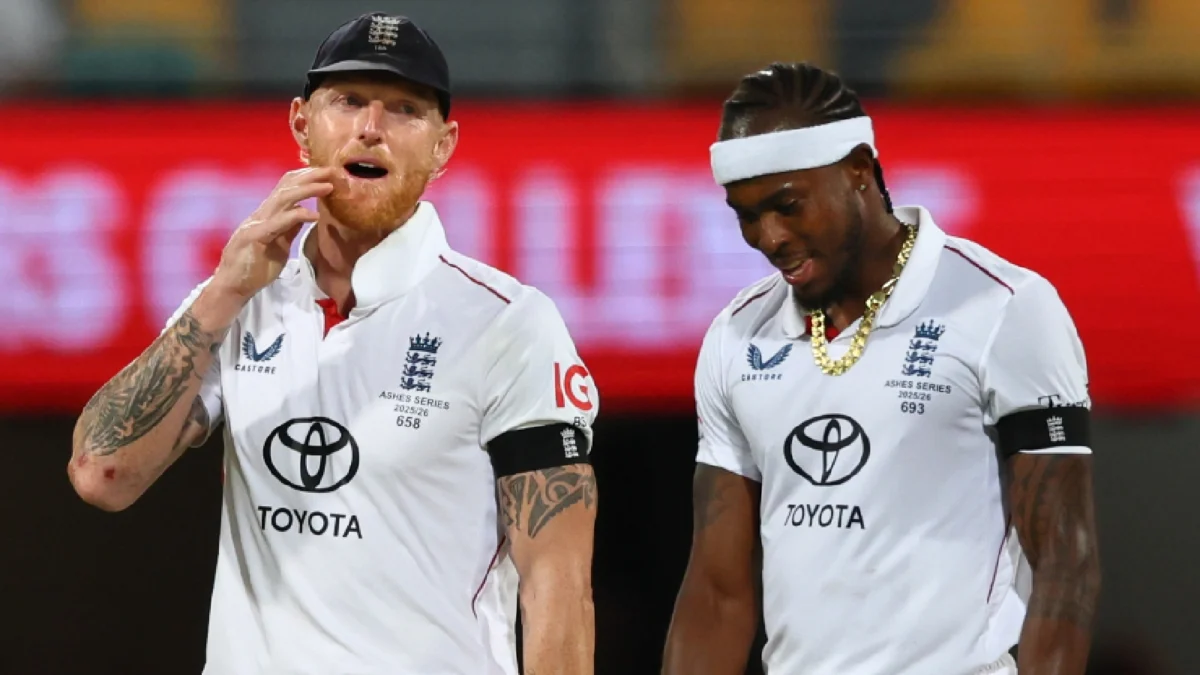
LONDON, England – June 3, 2026 – The ever-intensifying conflict between international duty and the lucrative world of franchise cricket has once again seized headlines, with England captain Ben Stokes stepping forward to vehemently defend Jofra Archer. The talismanic fast bowler’s absence from England’s first Test against New Zealand, following his commitments in the Indian Premier League (IPL), has ignited a fierce debate, drawing sharp criticism from former players and placing the England and Wales Cricket Board (ECB) in a precarious position.
Archer, a pivotal figure in England’s white-ball triumphs and a feared Test prospect, concluded his IPL stint with Rajasthan Royals on May 29, just days before the commencement of the Test series. His subsequent unavailability for the opening fixture, coupled with coach Brendon McCullum’s candid remarks on Tuesday about Archer needing "a little bit of a break" and requiring assessment for the second Test starting June 17, has fuelled speculation regarding his long-term commitment to the red-ball format and the national team.
The saga underscores a fundamental shift in the global cricketing landscape, a reality Stokes passionately articulated during his pre-match press conference on Wednesday. While acknowledging the yearning for all top players to be available for every international fixture, Stokes emphasized that such an ideal no longer aligns with the contemporary realities of the sport, warning of dire consequences if national boards fail to adapt.
Main Facts: The Nexus of National Duty and Franchise Ambition
Jofra Archer, England’s potent fast bowler, found himself at the epicentre of a burgeoning controversy following his decision to prioritize his IPL commitments with Rajasthan Royals, concluding on May 29, over immediate national duty for the first Test against New Zealand. This choice rendered him unavailable for the opening match and cast a shadow over his participation in the second Test, scheduled to begin on June 17.
England Test captain Ben Stokes, speaking on Wednesday, launched a robust defence of Archer, attributing the situation to the seismic changes brought about by the proliferation of global franchise leagues. Stokes highlighted the unprecedented opportunities now available to cricketers, which were non-existent a decade or two ago, and cautioned against a rigid approach that could alienate star players like Archer, potentially leading to their permanent disengagement from international cricket. He unequivocally asserted Archer’s unwavering commitment to playing for England, arguing that his current unavailability for a single Test does not diminish his national allegiance.
However, Stokes’ defence stands in stark contrast to the scathing critique from former New Zealand international and prominent broadcaster Simon Doull. Earlier on Wednesday, Doull lambasted Archer’s absence as "ludicrous," questioning the rationale behind paying a player a substantial sum (reportedly up to a million pounds a year) if they are not available for crucial national assignments. Doull’s comments echoed a growing sentiment among traditionalists who lament the perceived erosion of Test cricket’s primacy in the face of burgeoning T20 wealth.
Adding another layer of complexity, England head coach Brendon McCullum had on Tuesday expressed uncertainty regarding Archer’s availability for the second Test, indicating the player was currently on "a little bit of a break" and would need further assessment. This succession of statements from key figures has intensified the debate surrounding player welfare, the demands of the modern cricket calendar, and the enduring tension between club and country.
Chronology of a Modern Dilemma
The narrative surrounding Jofra Archer’s availability and commitment has unfolded rapidly, reflecting the quick-fire nature of modern cricket news cycles:
- May 29, 2026: Jofra Archer concludes his commitments with Rajasthan Royals in the Indian Premier League (IPL). His team’s campaign, having progressed deep into the tournament, meant he was engaged until the final stages of the lucrative T20 competition.
- Early June 2026: England’s first Test against New Zealand commences. Archer is not part of the squad, having been granted leave to recover post-IPL. This absence immediately sparks discussions among cricket pundits and fans.
- June 2, 2026 (Tuesday): England head coach Brendon McCullum addresses the media, offering insights into Archer’s status. He states that Archer is currently "having a little bit of a break at the moment" and would require assessment before any decision could be made about his availability for the second Test. McCullum’s comments, while seemingly pragmatic, subtly cast doubt on Archer’s immediate return to the red-ball setup.
- June 3, 2026 (Wednesday, Morning): Former New Zealand cricketer and respected commentator Simon Doull delivers a sharp critique on Sky Sports. Doull labels Archer’s absence as "ludicrous" and questions his commitment to Test cricket, particularly given his significant central contract with the ECB. His passionate outburst quickly gains traction across social media and cricketing forums.
- June 3, 2026 (Wednesday, Afternoon): England captain Ben Stokes faces the media in his pre-match press conference. Stokes uses the platform to launch a staunch defence of Archer, emphasizing the changed landscape of global cricket and the need for adaptability. He directly addresses the "club vs. country" debate, warning that a failure to manage players’ franchise commitments could result in England losing talent permanently. Stokes reiterates Archer’s dedication to the national cause despite his current unavailability.
- Ongoing (Post-June 3, 2026): The debate continues to rage, with opinions divided between those who prioritize national representation above all else and those who advocate for greater player autonomy and recognition of the financial realities of modern sport. The focus now shifts to Archer’s assessment ahead of the second Test and the ECB’s broader strategy for managing its multi-format stars.
Supporting Data: The Shifting Sands of Global Cricket
The current debate surrounding Jofra Archer is not an isolated incident but rather a microcosm of a larger, systemic shift within international cricket. Several factors contribute to this evolving landscape:
The Proliferation of Franchise Leagues
The last two decades have witnessed an explosion in the number and financial muscle of T20 franchise leagues worldwide. Beyond the trailblazing Indian Premier League (IPL), which boasts unprecedented player salaries and global viewership, competitions like Australia’s Big Bash League (BBL), Pakistan Super League (PSL), Caribbean Premier League (CPL), South Africa’s SA20, and the recently launched Major League Cricket (MLC) in the USA, alongside England’s own The Hundred, have created a year-round calendar of high-stakes, high-reward opportunities.
These leagues offer financial incentives that often dwarf central contracts offered by national boards. For a player like Archer, who has faced significant injury setbacks, securing substantial income through shorter, less physically demanding T20 formats can be a pragmatic career choice, offering both financial security and a reduced workload compared to the rigours of Test cricket. The fear, as Stokes articulated, is that forcing players to choose rigidly could push them towards exclusive franchise careers, depriving international cricket of its biggest stars.
Player Workload Management and Injury Concerns
Jofra Archer’s career, while brilliant, has been punctuated by debilitating injuries. His recurring elbow issues, back stress fractures, and various other ailments have kept him off the field for extended periods. This history makes workload management a critical consideration for both the player and the national board. The intensity of Test cricket, particularly for a fast bowler, is immense, demanding peak physical condition and sustained effort over five days.
After a grueling IPL campaign, even if relatively short for an individual player, the immediate transition to Test match intensity without adequate rest and rehabilitation is a significant risk. The "break" mentioned by McCullum is likely not merely a holiday but a crucial period for recovery, assessment, and preparation to mitigate future injury risks. The ECB, having invested heavily in Archer’s rehabilitation, would be loath to see him break down again due to insufficient rest. This reality often clashes with the traditional expectation of immediate availability for national duty.
England’s "Bazball" Philosophy and Archer’s Role
Under the leadership of Stokes and McCullum, England’s Test team has embraced an aggressive, attacking brand of cricket dubbed "Bazball." This philosophy relies heavily on dynamic players who can shift momentum rapidly, with fast bowlers capable of generating pace and aggression being paramount. Archer, with his express pace, bounce, and ability to deliver crucial breakthroughs, perfectly embodies this ethos. His presence significantly enhances England’s attacking arsenal, making his absence all the more keenly felt.
The question then arises: how does England maintain its "Bazball" momentum without its full complement of aggressive talent? While the squad boasts other formidable fast bowlers, Archer’s unique skill set makes him an almost irreplaceable asset in certain conditions. His absence forces a re-evaluation of tactics and places added pressure on other bowlers to step up, potentially impacting the consistency of England’s attacking approach.
The ECB’s Balancing Act: Central Contracts and NOCs
The England and Wales Cricket Board (ECB) operates with a central contract system designed to secure the services of its top players for national duty. These contracts provide financial stability and are meant to give the ECB primary claim over a player’s availability. However, the rise of franchise leagues complicates this, as players often seek "No Objection Certificates" (NOCs) from their national boards to participate in these leagues.
The ECB, like other boards, faces a delicate balancing act. Denying NOCs outright could lead to player resentment and potential talent drain. Granting them too freely, however, risks undermining international commitments. The current situation with Archer highlights the inherent tension in this system. The ECB must weigh the financial well-being and career aspirations of its players against the imperative of fielding its strongest possible team for international fixtures, especially Test matches, which remain the pinnacle of the sport for many traditionalists.
Official Responses: Diverse Perspectives on a Shared Challenge
The differing viewpoints expressed by Ben Stokes, Brendon McCullum, and Simon Doull highlight the multifaceted nature of the "club vs. country" debate, each reflecting a distinct perspective within the cricketing fraternity.
Ben Stokes: The Pragmatic Captain’s Defence
Stokes’ defence of Archer was not merely a gesture of camaraderie but a strategic articulation of the modern cricketing reality. His key arguments revolved around:
- The Changed Landscape: Stokes explicitly stated that the points made by critics often stem from a bygone era. "A lot of the points that people would be making around Jof and that situation I think are to do with the landscape back when they were playing. It’s completely different now," he observed. This acknowledges the immense financial and professional opportunities that franchise leagues now offer, opportunities that simply didn’t exist 10, 15, or 20 years ago. He understands that players are professionals with finite careers.
- Player Autonomy and Opportunity: Stokes recognized that players now have choices. "There’s so much more out there for players," he noted, hinting at the need for national boards to adapt rather than dictate. He implicitly supports a player’s right to pursue these opportunities, particularly given the often-brief nature of a sporting career.
- The Risk of Alienation: Perhaps his most potent argument was the warning against a hardline stance. "There is a situation where it could get messy and players like Jofra might not play for England again if you handle it a different way, and that’s not good for anyone." This is a stark warning that a rigid, unaccommodating approach could lead to England losing top talent permanently, a scenario no captain or coach would desire. It suggests an understanding that national boards must collaborate with players rather than confront them.
- Unaltered Commitment: Despite the current unavailability, Stokes emphasized Archer’s deep-seated commitment to England. "Jof, I think, has shown that he is committed and loves playing for England. Just because he’s not available for this first test match does not change that," he affirmed. This seeks to separate a player’s immediate physical availability from their overarching loyalty to the national team.
Stokes’ stance reflects a modern captain’s pragmatic understanding of player management in an increasingly complex cricketing ecosystem. He prioritizes maintaining a strong relationship with a key player and adapting to the current realities, rather than clinging to an outdated ideal.
Brendon McCullum: The Nuanced Coach’s Assessment
McCullum’s comments, delivered a day before Stokes’, were more understated but equally telling. His statement that Archer was "having a little bit of a break at the moment" and "needs to be assessed" implies a blend of player welfare and strategic planning.
- Player Welfare: McCullum, himself a veteran of numerous T20 leagues and known for his player-centric approach, likely understands the physical and mental toll of constant cricket. A "break" after an intense IPL campaign is not necessarily a sign of disinterest but a necessity for recovery and injury prevention, especially for a bowler with Archer’s history.
- Strategic Management: The need for "assessment" indicates that Archer’s return to Test cricket is not a foregone conclusion but a managed process. This suggests the coaching staff is carefully monitoring his physical condition, fitness levels, and readiness for the rigours of the red-ball game, rather than rushing him back prematurely.
- Team Balance: While McCullum champions aggressive cricket, he also values a balanced and fit squad. Bringing back an underprepared or potentially injured Archer could be counterproductive for both the player and the team.
McCullum’s comments, therefore, reveal a more measured, behind-the-scenes approach to managing a star player, balancing the immediate needs of the team with the long-term well-being of the individual.
Simon Doull: The Traditionalist’s Scathing Critique
Simon Doull’s reaction was an impassioned outcry from a traditionalist perspective, representing the views of many former players and fans who prioritize international cricket above all else. His criticism was sharp and direct:
- "Ludicrous" and Unjustifiable: Doull’s use of the word "ludicrous" highlights his absolute incredulity at the situation. He finds it unfathomable that a centrally contracted player, supposedly committed to his national team, would be unavailable for a Test match immediately after a franchise league.
- Financial Discrepancy: His emphasis on Archer’s "million pound a year" contract underscores his belief that such a substantial remuneration should come with an absolute commitment to national duty. He questions the value proposition if the player is not consistently available for the format considered the pinnacle.
- Perceived Lack of Commitment to Test Cricket: Doull’s most damaging accusation was that Archer "has no interest in playing Test cricket." While perhaps an exaggeration, it reflects the frustration that the allure of T20 leagues might be diminishing players’ passion for the longer format, especially when availability clashes.
Doull’s comments embody the generational gap in perspective, where the purity and primacy of Test cricket are held sacrosanct, and any perceived deviation or prioritization of franchise cricket is viewed with deep suspicion and disappointment. His perspective, while harsh, resonates with a significant segment of the cricketing world.
Implications: A Glimpse into Cricket’s Future
The Jofra Archer saga is more than just a debate about one player’s availability; it’s a profound commentary on the future trajectory of international cricket and the intricate relationship between national boards, players, and the burgeoning T20 franchise ecosystem.
For Jofra Archer: A Career at a Crossroads
For Archer himself, these developments place his career at a crucial juncture. While Stokes’ defence offers vital support, the public scrutiny and criticism, particularly from figures like Simon Doull, will undoubtedly weigh on him. His injury history means that managing his workload is paramount, and choosing rest over an immediate Test return can be a legitimate, medically advised decision. However, repeated absences, regardless of the reason, could lead to a perception of him being a "part-time" Test cricketer, potentially impacting his long-term legacy and his standing within the England Test setup. He faces the challenge of proving his unwavering commitment to Test cricket through his performances when available, while also navigating a schedule that often forces difficult choices.
For England Cricket: Selection Headaches and Strategic Adaptations
England’s Test team, under the dynamic leadership of Stokes and McCullum, thrives on aggression and consistency. Archer’s express pace and wicket-taking ability are integral to this "Bazball" philosophy. His repeated unavailability, even if managed, creates significant selection headaches and forces strategic adaptations. It tests the depth of England’s fast bowling resources and places additional pressure on other bowlers to fill a considerable void.
More broadly, the ECB faces the immense task of developing a coherent strategy for managing its multi-format stars. This includes reviewing central contract terms, establishing clear guidelines for NOCs for franchise leagues, and potentially exploring a tiered contract system that differentiates between red-ball and white-ball specialists. The current situation demands a proactive approach to prevent a mass exodus or a weakening of the national Test side. The challenge is to retain top talent without compromising the integrity of international cricket.
For International Cricket: The Enduring "Club vs. Country" Debate
The Archer controversy amplifies the global "club vs. country" debate, a discussion that has plagued cricket for years but has reached a fever pitch with the expansion of franchise leagues. The financial might of competitions like the IPL means that players can earn astronomical sums in a relatively short period, often exceeding what national contracts offer over an entire year. This economic reality gives players unprecedented leverage and forces national boards to reconsider their traditional demands.
The long-term implication for international cricket, particularly Test cricket, is concerning. If more players prioritize franchise commitments over national duties, the quality and prestige of Test matches could suffer. There’s a growing fear that Test cricket, the traditional pinnacle of the sport, might become a secondary concern for an increasing number of elite players. This raises fundamental questions about the future structure of the global cricket calendar, the need for international windows, and whether a more harmonized approach between national boards and franchise leagues is achievable. Without such harmony, the fragmentation of the sport’s talent pool could become an irreversible trend, ultimately diluting the spectacle of international competition.
The Jofra Archer situation is a potent reminder that cricket stands at a critical juncture, navigating the currents of tradition, commercialism, and player aspirations. The decisions made today will shape the sport’s identity for generations to come.