

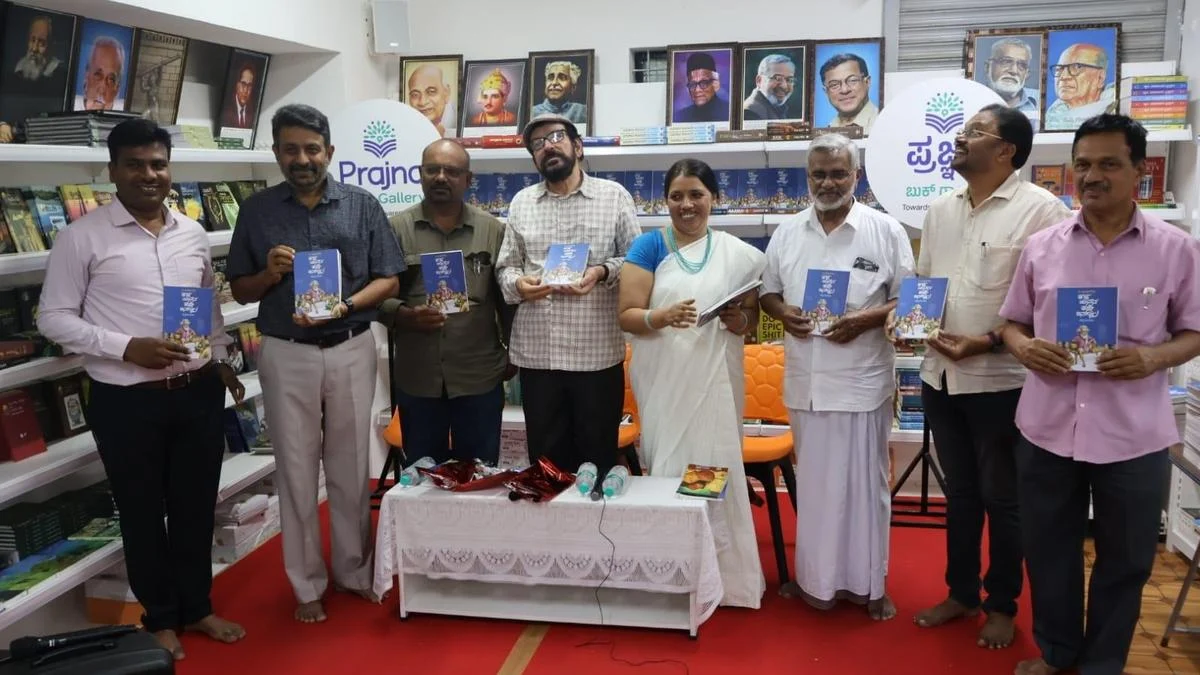
The launch event, held in the heart of Shivamogga, was more than a mere book release; it was a retrospective on two decades of social commentary that bridged the gap between the sophisticated political corridors of power and the humble tea stalls of rural Mandya. Published by Prajna Book Gallery, the work encapsulates the twilight of a generation of rural intellectuals whose voices, though local in dialect, were universal in their critique of the human condition.
Main Facts: The Culmination of a Literary Legacy
Kalamavana Kadedinagalu represents the final chapter of a narrative journey that began over twenty years ago in the pages of Lankesh Patrike, the iconic tabloid founded by the legendary P. Lankesh. The column, Bayaluseeme Kattepurana, became a household name by documenting the fictional yet hyper-realistic conversations of a group of villagers gathered at a local canteen.
The book focuses on the final days of Kalamava, the group’s moral anchor and senior-most figure. Through his impending departure, the author explores themes of modernization, the erosion of communal values, and the shifting tides of Karnataka’s political identity. The characters—Kalamava, Jummi, Whatisse, Seera, and Ugri—act as archetypes of the rural psyche, offering a window into the "innocent wisdom" of the Mandya district’s agrarian heartland.
The launch ceremony featured prominent literary figures, including poet Akshatha Humchadakatte and theatre director Sasvehalli Sathish, who reflected on how these characters moved from the printed page to the stage, and finally into the collective memory of the Kannada-speaking public.
Chronology: From Tabloid Columns to Global Solitude
The evolution of Kalamavana Kadedinagalu is a testament to the longevity of the characters created by B. Chandregowda. To understand the book’s significance, one must trace its development through four distinct phases:
1. The Lankesh Era (1990s – 2010s)
For over twenty years, B. Chandregowda contributed Bayaluseeme Kattepurana to Lankesh Patrike. During this period, the column established its unique format: a "canteen conversation" style. While the rest of the media focused on high-level policy, Chandregowda focused on how those policies were digested over tea and snacks in a village in Mandya.
2. The Theatrical Expansion
As the column gained a cult following, its dramatic potential was recognized by theatre activists in Shivamogga. Performers like Sasvehalli Sathish began adapting the dialogues for the stage. This era saw the characters traveling across Karnataka, from the southern plains to northern districts like Vijayapura, transforming "column characters" into living, breathing cultural icons.
3. The New Jersey "Exile" (2025)
The genesis of the final book occurred unexpectedly in the United States. While spending six months with his son in New Jersey last year, B. Chandregowda found himself in a state of creative solitude. Distanced from the physical reality of Karnataka but hyper-aware of its shifting socio-political climate through digital media, he felt a "troubled instinct" to return to his characters. It was in this suburban American setting that the "Last Days of Kalamava" were penned, serving as the author’s emotional bridge back to his roots.
4. The Shivamogga Launch (June 21, 2026)
The culmination of this journey occurred this week with the formal release of the book. The event served as a homecoming for the author and a farewell to the characters who had occupied his creative mind for a quarter of a century.
Supporting Data and Literary Context: The Anatomy of "Kattepurana"
The success of Chandregowda’s work is rooted in its linguistic and sociological precision. The "Katte" (a raised platform or meeting place) is a central institution in Karnataka’s village life, serving as an informal parliament.
Character Archetypes and Linguistic Innovation
The character "Whatisse" provides a primary example of Chandregowda’s sharp observational skills. Named for his verbal tic—starting every sentence with "what I say"—the character represents the rural individual’s attempt to navigate a world increasingly dominated by English-medium education and globalized jargon.

Socio-Political Realism
According to data discussed during the launch, the column’s longevity was attributed to its "honest ambivalence." Poet Akshatha Humchadakatte noted that the characters were not "idealized" peasants. They exhibited:
- Selective Loyalties: Favoring politicians based on caste or local affiliation.
- Sharp Critique: Simultaneously criticizing those same politicians when they failed to deliver on basic promises.
- Authentic Dialect: The use of Mandya-specific Kannada, which provided a sense of belonging to readers who felt alienated by the "Standard Kannada" used in mainstream news.
The "Anubhava Mantapa" Comparison
A significant data point in the reception of the work is its comparison to the 12th-century Anubhava Mantapa—the democratic platform established by Basavanna. During a performance in Vijayapura, a senior citizen famously equated Kalamava’s moral authority to that of Allama Prabhu, the 12th-century mystic. This comparison underscores the weight these characters carry as modern-day philosophers of the common man.
Official Responses and Keynote Addresses
The launch event was marked by deep reflections from the author and his peers, providing insight into the book’s purpose.
The Author’s Perspective: B. Chandregowda
Addressing the audience, Mr. Chandregowda spoke of the internal conflict that led to the book’s creation. "In solitude, far from home [in New Jersey], I was deeply troubled by the social and political developments unfolding back in Karnataka," he remarked. He revealed that the book was a necessary closure, an update on the real-life inspirations behind his characters—some of whom, he humorously noted, took exception to their names being used in his columns over the years.
The Critic’s Perspective: Akshatha Humchadakatte
Poet Akshatha Humchadakatte, who released the book, emphasized the author’s "creative insight." She praised the book for not shying away from the contradictions of the rural populace. "The column captures the voice of the common person—with all its contradictions, selective loyalties, and innocent wisdom," she said. She highlighted that the book is a rare piece of literature that documents the "honest ambivalence" of a society in transition.
The Performer’s Perspective: Sasvehalli Sathish
Sasvehalli Sathish, who famously portrayed "Whatisse" on stage, spoke of the profound emotional impact the characters had on audiences. He recalled the Vijayapura performance as a turning point, realizing that the "canteen talk" he was performing was actually a form of modern folk wisdom that resonated across different regions of the state.
Implications: The Future of Rural Narratives in a Digital Age
The release of Kalamavana Kadedinagalu carries several implications for the future of Kannada literature and regional journalism.
1. The Preservation of Dialect
By documenting the specific linguistic nuances of the Mandya region, Chandregowda has provided a linguistic archive. As regional dialects continue to be diluted by the influence of mass media, this book stands as a permanent record of a specific way of speaking and thinking.
2. The "End of an Era" for Column-Based Literature
The conclusion of Bayaluseeme Kattepurana marks the end of a specific type of long-form, character-driven journalism that was popular in the late 20th century. In an era of 280-character tweets and 15-second videos, the success of this 20-year-old narrative suggests there remains a significant, albeit underserved, audience for deep, serialized social commentary.
3. Sociological Reflection on Rural Decay
The "Last Days of Kalamava" is not just a title; it is a metaphor for the fading of a certain moral order in rural Karnataka. The book implies that the "village elder" figure, who prioritized communal well-being and moral uprightness over partisan politics, is becoming a relic of the past.
4. Theatre as a Bridge
The event highlighted the continued importance of theatre in keeping literary works alive. The synergy between Chandregowda’s writing and Shivamogga’s theatre activists demonstrates how literature can transcend the page to become a communal experience, ensuring that even those who do not read the column can engage with its themes.
In conclusion, Kalamavana Kadedinagalu is more than a book; it is a tribute to the "common person" of Karnataka. As Kalamava takes his final bow, B. Chandregowda has ensured that the voices of the village canteen will echo in the halls of Kannada literature for generations to come. The work stands as a reminder that the most profound political insights often come not from the capital, but from a shared plate of snacks and a hot cup of tea in a dusty village square.
