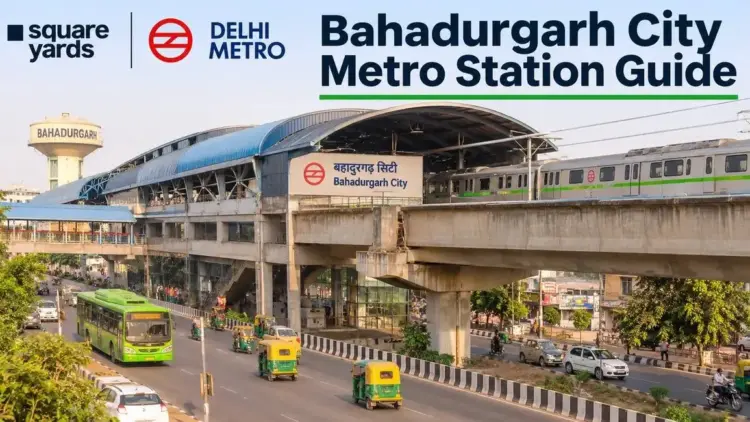
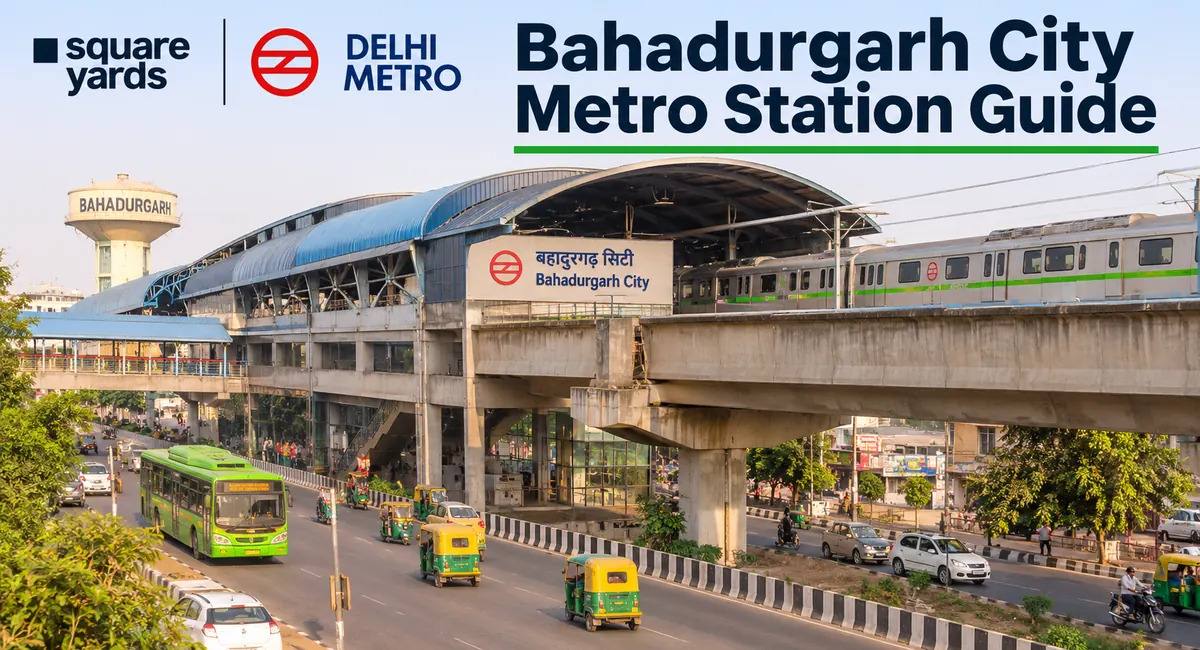
Bahadurgarh, Haryana – Since its inauguration in mid-2018, the Bahadurgarh City Metro Station has emerged as a vital lifeline for thousands of commuters, bridging the industrial and residential landscapes of Haryana with the heart of the National Capital Territory (NCT). Situated on the Delhi Metro’s Green Line (Line 5), this elevated facility represents a significant milestone in the expansion of the Delhi Metro Rail Corporation (DMRC) into the National Capital Region (NCR).
This comprehensive report explores the station’s operational dynamics, its historical significance, the intricacies of its transit routes, and the broader socio-economic implications for the city of Bahadurgarh.
1. Main Facts: The Station at a Glance
The Bahadurgarh City Metro Station is strategically located on National Highway 9 (NH-9), commonly known as Rohtak Road. It serves as a crucial transit point for the Jhajjar district, facilitating seamless movement between the industrial outskirts and Delhi’s commercial hubs.
| Detail | Information |
|---|---|
| Station Name | Bahadurgarh City (formerly Bus Stand Metro Station) |
| Line | Green Line (Line 5) |
| Station Code | BUSS |
| Location | NH-9 (Rohtak Road), Bahadurgarh, Haryana |
| Structure | Elevated, two side platforms |
| Inauguration Date | June 24, 2018 |
| Accessibility | Divyang-friendly with step-free access and elevators |
| Interchange Capability | Via Green Line extensions to Red, Blue, and Pink Lines |
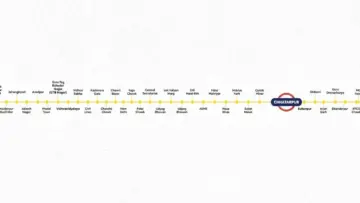
The station is positioned just one stop away from the western terminus of the Green Line, Brigadier Hoshiar Singh station. To the east, it connects directly to the Tikri Border, marking the transition from Haryana into Delhi.
2. Chronology: From Concept to Connectivity
The arrival of the Delhi Metro in Bahadurgarh was part of the DMRC’s ambitious Phase III expansion. The development was designed to decongest the heavy vehicular traffic on the Rohtak Road corridor and provide an eco-friendly alternative to private transport and interstate buses.
- June 24, 2018: The 11.2 km Mundka–Bahadurgarh stretch was officially opened. This extension brought the metro to seven new stations: Mundka Industrial Area, Ghevra, Tikri Kalan, and Tikri Border in Delhi, and Pandit Shree Ram Sharma, Bahadurgarh City, and Brigadier Hoshiar Singh in Haryana.
- Late 2018: Originally named "Bus Stand Metro Station" due to its proximity to the local transport hub, the station was renamed "Bahadurgarh City" to better reflect its role as a central landmark for the township.
- 2022–Present: The station has seen a steady increase in footfall as the industrial sectors of Bahadurgarh—particularly the footwear and manufacturing clusters—have expanded, drawing labor and management from various parts of Delhi.
3. Supporting Data: Operational Efficiency and Schedules
The Bahadurgarh City Metro Station operates with high frequency, adhering to the DMRC’s standards of punctuality. The station features two primary platforms:
- Platform 1: Serves trains heading west toward the terminal station, Brigadier Hoshiar Singh.
- Platform 2: Serves trains heading east toward Delhi, splitting at Ashok Park Main toward either Inderlok (Red Line interchange) or Kirti Nagar (Blue Line interchange).
Weekday Departure Timings
Commuters are advised that the Green Line bifurcates; therefore, passengers must check the destination boards for Inderlok or Kirti Nagar.
| Destination | First Train | Last Train |
|---|---|---|
| Kirti Nagar / Ashok Park Main | 06:03 AM | 11:02 PM |
| Inderlok | 06:15 AM | 10:47 PM |
| Brigadier Hoshiar Singh | 06:04 AM | 11:43 PM |
Note: On Sundays and public holidays, the first train services typically begin later. Passengers are encouraged to use the Delhi Metro Sarthi app for real-time updates.
4. Infrastructure and Commuter Facilities
The station architecture emphasizes accessibility and passenger comfort. As a "Divyang-friendly" station, it incorporates tactile paths and step-free access for persons with disabilities.
Gates and Entry/Exit Points
The station features two functional gates:
- Gate 1: Provides access to the Old Bus Stand, making it a preferred exit for those transferring to local bus services.
- Gate 2: Opens toward Parnala Road, serving the residential and commercial establishments in that sector.
Vertical Circulation and Amenities
To manage the flow of passengers across the elevated structure, the station is equipped with:
- Elevators: Four lifts (two connecting the ground to the concourse and two from the concourse to the platforms).
- Escalators: Four escalators providing upward and downward movement.
- Safety & Health: A dedicated first-aid room is located near the Ticket Office Machine (TOM) room.
- Sanitation: A Sulabh toilet facility is maintained near Gate 1.
Parking Advisory: Currently, the DMRC does not provide dedicated parking for cars or two-wheelers at Bahadurgarh City. Commuters are advised to utilize drop-off points at Gate 1 or Gate 2.
5. Strategic Connectivity: Navigating the NCR
One of the most complex aspects of the Green Line is its dual-branching system. From Bahadurgarh City (Platform 2), the train travels through 18 stations before reaching the Ashok Park Main junction.
Major Interchanges
| Interchange Station | Connecting Line | Access to |
|---|---|---|
| Punjabi Bagh West | Pink Line | Sarai Kale Khan, Majlis Park, Lajpat Nagar |
| Inderlok | Red Line | Rithala, Kashmere Gate, Shaheed Sthal (Ghaziabad) |
| Kirti Nagar | Blue Line | Rajiv Chowk, Noida Electronic City, Vaishali |
Route to New Delhi Railway Station
For travelers heading to New Delhi Railway Station, the journey involves two transfers:
- Green Line to Inderlok.
- Red Line (Platform 2) toward Shaheed Sthal, exiting at Kashmere Gate.
- Yellow Line (Platform 1) toward Millennium City Centre, exiting at New Delhi.
- Estimated Fare: ₹64
- Estimated Time: 74 minutes
6. Financial Dynamics: Fare Structure and Discounts
The DMRC utilizes a distance-based fare system. For residents of Bahadurgarh, the metro offers a cost-effective alternative to taxis or private fuel costs.
Fare Slabs
- Short Distance (Up to 12 km): ₹11 to ₹32.
- Medium Distance (12 to 32 km): ₹43 to ₹54.
- Long Distance (Over 32 km): ₹64.
The Smart Card Advantage
To encourage digital payments and regular commuting, the DMRC offers:
- Standard Discount: 10% off on all journeys made via Smart Card.
- Off-Peak Discount: An additional 10% discount for those entering the system before 08:00 AM, between 12:00 PM and 05:00 PM, and after 09:00 PM.
- Holiday Rates: Reduced fares on Sundays and National Holidays.
7. Socio-Economic Implications and Real Estate Impact
The "Metro Effect" has profoundly influenced Bahadurgarh’s urban development. Historically known as the "Gateway of Haryana," the city was once perceived as a distant industrial suburb. The metro has rebranded it as a viable residential extension of West Delhi.
Industrial Growth
The proximity of the station to the Modern Industrial Estate (MIE) and the Bahadurgarh footwear cluster has improved labor mobility. Technical professionals living in Delhi can now commute to factories in Bahadurgarh in under an hour, enhancing the ease of doing business.
Real Estate Trends
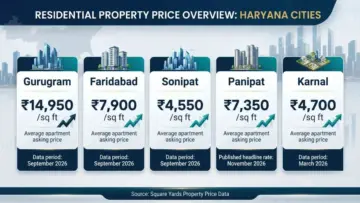
The connectivity provided by the Green Line has led to a surge in residential demand in nearby sectors. According to market data from Square Yards, property values in Bahadurgarh have seen a steady appreciation since 2018.
Current Market Snapshot:
- Sector 35: Popular for builder floors; a 2 BHK (762 sq. ft.) is valued at approximately ₹35 Lakh.
- Sector 14: Known for premium apartments; a 3 BHK (1,500 sq. ft.) can command upwards of ₹92 Lakh.
- Sector 37: High-end builder floors (1,400 sq. ft.) are priced around ₹1.26 Crore.
- Independent Living: Areas like Sector 2 offer independent houses (60 sq. yd.) starting at ₹75 Lakh.
The availability of modern housing at a fraction of Delhi’s real estate prices, combined with metro connectivity, has made Bahadurgarh a "hotspot" for middle-income families and investors.
8. Official Responses and Future Outlook
While the DMRC has successfully integrated Bahadurgarh into the grid, local commuters have frequently requested the addition of parking facilities. Official responses from the DMRC suggest that while space constraints on NH-9 limit large-scale parking lots, the focus remains on "last-mile connectivity" through e-rickshaws and feeder services.
Furthermore, the proposed Magenta Line link at Peeragarhi (currently marked as non-operational for interchange) is expected to further reduce travel time to South Delhi and the IGI Airport once the physical interchange infrastructure is completed.
9. Commuter Best Practices
To ensure a smooth journey from Bahadurgarh City, passengers should keep the following tips in mind:
- Check the Branch: Before boarding Platform 2, verify if the train is destined for Inderlok or Kirti Nagar. For Connaught Place (Rajiv Chowk), the Kirti Nagar branch is faster.
- Last-Mile Timing: The last train to Inderlok leaves significantly earlier (10:47 PM) than the last train to the terminal (11:43 PM). Plan late-night returns accordingly.
- Airport Travel: For IGI Terminal 3, use the New Delhi route to access the Airport Express Line. For Terminal 1, use the Pink Line/Magenta Line interchange at Janakpuri West.
10. Conclusion
The Bahadurgarh City Metro Station is more than just a transit stop; it is a symbol of the shrinking distances within the NCR. By providing a reliable, affordable, and rapid link to the capital, it has unlocked the economic potential of Bahadurgarh, making it a competitive destination for both industries and homeowners. As the DMRC continues to refine its network, this station will remain a cornerstone of Haryana’s integration into the globalized economy of the National Capital Region.
Frequently Asked Questions (FAQ)
- What was the original name of Bahadurgarh City Metro Station?
It was originally named Bus Stand Metro Station when it opened in June 2018. - Is there a direct metro from Bahadurgarh to Noida?
No, passengers must change at Kirti Nagar to the Blue Line heading toward Noida Electronic City. - How far is the Bahadurgarh Railway Station from the Metro?
It is approximately 1.6 km away, a 20-minute walk or a short e-rickshaw ride. - Are there parking facilities available?
No, the DMRC does not currently offer parking at this station. - Which gate is best for the local bus stand?
Gate 1 is the primary exit for the Old Bus Stand.