NEW DELHI – In the sprawling network of the Delhi Metro Rail Corporation (DMRC), few stations possess a history as unique or a future as transformative as the Chattarpur Metro Station. Located on the bustling Mehrauli-Gurgaon (MG) Road in South Delhi, this elevated station on the Yellow Line serves as a critical bridge between the national capital and the corporate hubs of Gurugram.
While thousands of commuters pass through its gates daily to reach spiritual landmarks like the Chhatarpur Mandir or residential clusters in South West Delhi, the station stands as a testament to rapid engineering and strategic urban planning. As Delhi enters Phase 4 of its metro expansion, Chattarpur is poised to transition from a transit point into a major multi-modal interchange.
I. Main Facts: The Gateway to South Delhi
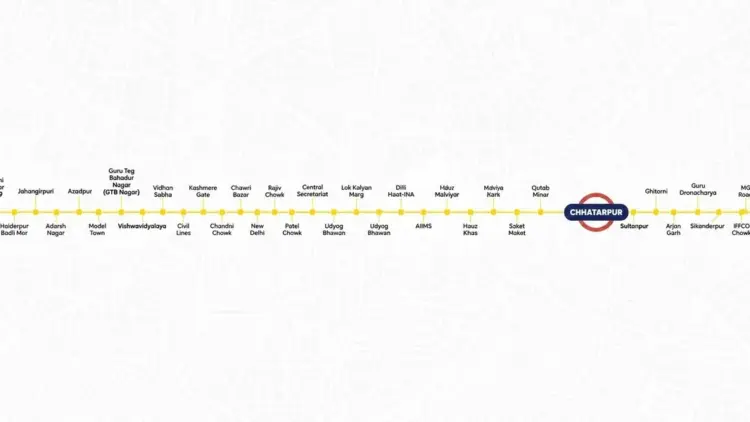
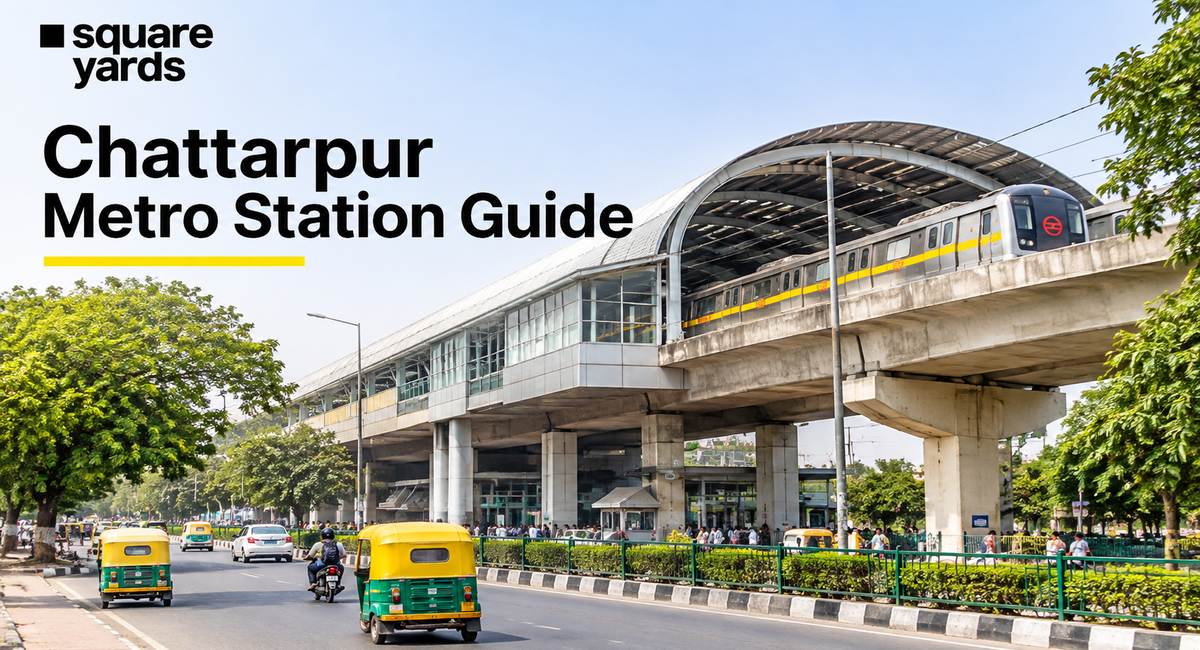
Chattarpur Metro Station (officially spelled "Chhatarpur" by the DMRC) is an elevated facility situated between the Qutab Minar and Sultanpur stations. It serves as a vital artery for the Yellow Line, which remains one of the highest-ridership corridors in the DMRC network, connecting Samaypur Badli in North Delhi to the Millennium City Centre in Gurugram.
Technical Specifications and Layout
The station features a classic elevated design with two side platforms. Platform 1 facilitates travel towards Gurugram, while Platform 2 serves commuters heading toward Central and North Delhi.
| Detail | Information |
|---|---|
| Official Name | Chhatarpur (DMRC) / Chattarpur |
| Line Color | Yellow Line (Line 2) |
| Station Type | Elevated |
| Location | Mehrauli-Gurgaon Road, South Delhi |
| Coordinates | 28.5065° N, 77.1745° E |
| Opened | August 26, 2010 |
| Accessibility | Divyang-friendly (Lifts, Tactile flooring) |
Operational Hours and Entry Regulations
The station opens its gates to the public at 5:22 AM. However, commuters must note that entry and ticket sales cease at 11:52 PM. While the station remains active until the last train departs, no new passengers are permitted into the concourse after this midnight cutoff.
II. Chronology: The "Nine-Month Miracle"
The history of Chattarpur Metro Station is marked by a race against time. Unlike the majority of Delhi Metro stations, which are constructed using reinforced concrete, Chattarpur is an architectural outlier built primarily of steel.
The Land Acquisition Crisis
In 2009, as the DMRC prepared for the 2010 Commonwealth Games, the construction of the Yellow Line extension faced a significant hurdle. A delay in acquiring land for the Chattarpur station threatened to derail the project’s timeline. Initial plans suggested skipping the station entirely to ensure the line reached Gurugram on schedule. However, DMRC officials realized that bypassing Chattarpur would create a 2.7-km gap between Qutab Minar and Sultanpur—a distance deemed too long for efficient metro operations.
Engineering Innovation
To resolve the crisis, the DMRC opted for a revolutionary approach. Instead of the traditional 18-to-24-month concrete construction cycle, engineers designed a modular steel structure.
- Fabrication: Steel components were manufactured in a specialized factory in Gurugram.
- Assembly: These pre-fabricated parts were transported to the site and assembled using high-tensile bolts rather than welding, significantly reducing on-site labor time.
- Completion: The entire station was erected in just nine months, allowing it to open on August 26, 2010, just weeks before the Commonwealth Games commenced.
III. Supporting Data: Connectivity and Logistics
Chattarpur serves as a strategic node for commuters switching between the residential pockets of South West Delhi and the commercial sectors of the NCR.
Train Timings and Frequency
The frequency of trains varies based on peak hours, with higher density during the 8:30 AM – 11:00 AM and 5:30 PM – 8:00 PM windows.
| Direction | First Train | Last Train | Platform |
|---|---|---|---|
| Towards Millennium City Centre (Gurugram) | 6:22 AM | 12:02 AM | Platform 1 |
| Towards Samaypur Badli (North Delhi) | 5:32 AM | 11:20 PM | Platform 2 |
Fare Structure and Estimated Travel Times
Fares are calculated based on the distance traveled. The DMRC offers a 10% discount to Smart Card users, with an additional 10% discount during off-peak hours.
| Destination | Number of Stops | Token Fare | Estimated Time |
|---|---|---|---|
| Hauz Khas | 4 | ₹32 | 11 mins |
| AIIMS | 6 | ₹32 | 15 mins |
| Rajiv Chowk | 13 | ₹43 | 30 mins |
| Kashmere Gate | 17 | ₹43 | 39 mins |
| Millennium City Centre | 8 | ₹43 | 20 mins |
Gate Status and Accessibility
Currently, the station operates through two primary gates. Gate 2 has been cordoned off to facilitate the ongoing Phase 4 expansion work.
- Gate 1: Open (MG Road access, step-free, near food kiosks).
- Gate 2: Closed (Undergoing Phase 4 construction).
- Gate 3: Open (MG Road access).
IV. Official Responses: The Golden Line Interchange
The DMRC has officially confirmed that Chattarpur is undergoing a significant transformation as part of the Delhi Metro Phase 4 project. The station is slated to become a major interchange point for the upcoming Golden Line (formerly known as the Silver Line).
The Aerocity-Tughlakabad Corridor
The Golden Line will span approximately 23.6 km, connecting Aerocity to Tughlakabad. This line is designed to provide a direct link between the Airport Express Line and the Violet Line, with Chattarpur serving as the central anchor for South Delhi commuters.
Construction Progress
In early 2024, DMRC officials reported the successful completion of the tunneling phase between the existing Chattarpur station and the upcoming "Chhatarpur Mandir" station on the Golden Line.
- Integration: The new interchange will likely feature a dedicated walkway or skywalk to ensure seamless transfers between the Yellow and Golden lines.
- Impact: Once operational, this will alleviate pressure on the Hauz Khas and Central Secretariat interchange stations, providing a more southerly alternative for cross-city travel.
V. Implications: Real Estate and Urban Impact
The presence of the Chattarpur Metro Station has fundamentally altered the socio-economic landscape of the surrounding Mehrauli and Chattarpur areas. What was once a collection of farmhouses and rural pockets has evolved into a high-demand residential hub.
The Real Estate Boom
The connectivity provided by the Yellow Line has made Chattarpur a preferred destination for young professionals working in Gurugram or South Delhi. The locality is characterized by "builder floors"—independent apartments that offer a middle ground between high-rise living and independent houses.
| Sample Property Listings near Chattarpur Metro: | Location | Type | Size | Approx. Price |
|---|---|---|---|---|
| Chattarpur Enclave Ph 2 | 3 BHK Builder Floor | 990 sq ft | ₹75 Lakh | |
| Meera Farm | 2 BHK Builder Floor | 800 sq ft | ₹65 Lakh | |
| Andheria Mor Village | 2 BHK Builder Floor | 515 sq ft | ₹28 Lakh | |
| Mehrauli | 3 BHK Apartment | 1,100 sq ft | ₹95 Lakh |
Note: Prices are subject to market fluctuations and building amenities.
Spiritual and Cultural Tourism
The station serves as the primary transit point for the Shree Adya Katyayani Shaktipeeth (Chhatarpur Mandir), the second-largest temple complex in India. During festivals like Navratri, the station handles an influx of over 100,000 additional passengers daily. The DMRC often deploys extra staff and security personnel during these periods to manage the crowd flow at Gate 1 and Gate 3.
Environmental and Traffic Considerations
By providing a robust alternative to road transport on the perennially congested MG Road, the Chattarpur station plays a vital role in reducing the carbon footprint of South Delhi. However, the "last-mile connectivity" remains a challenge. The proliferation of e-rickshaws and autos near the station exits has led to localized traffic bottlenecks, prompting calls for better multi-modal integration (MMI) facilities, which are currently being upgraded alongside the Golden Line construction.
VI. Commuter Guidance: Tips for a Seamless Journey
For those navigating the station, several operational nuances can improve the travel experience:
- The Early Bird Gap: Commuters heading to Gurugram should be aware that the first train departs at 6:22 AM, significantly later than the 5:32 AM start for trains heading toward Samaypur Badli.
- Last-Mile Navigation: While the Chhatarpur Temple is the most famous landmark, it is approximately 0.6 km to 0.9 km from the station. While walkable for some (10-12 minutes), e-rickshaws are the recommended mode for families or the elderly.
- Parking Strategy: The station offers one of the larger parking facilities in South Delhi, with space for 810 two-wheelers and 79 cars. However, due to its popularity with Gurugram-bound commuters who "park and ride," the car section is often full by 9:30 AM on weekdays.
- Smart Card Advantage: Given the long queues for tokens during peak hours and temple festivals, using a DMRC Smart Card or the "DMRC Travel" app for QR tickets is highly recommended.
Final Perspective
Chattarpur Metro Station is more than just a stop on a map; it is a vital organ in Delhi’s transit anatomy. From its rapid-fire steel construction in 2010 to its impending status as a Phase 4 interchange, the station continues to adapt to the needs of a growing metropolis. As the Golden Line nears completion, Chattarpur is set to become one of the most influential transit hubs in the National Capital Region, further bridging the gap between Delhi’s historic past and its high-tech future.