

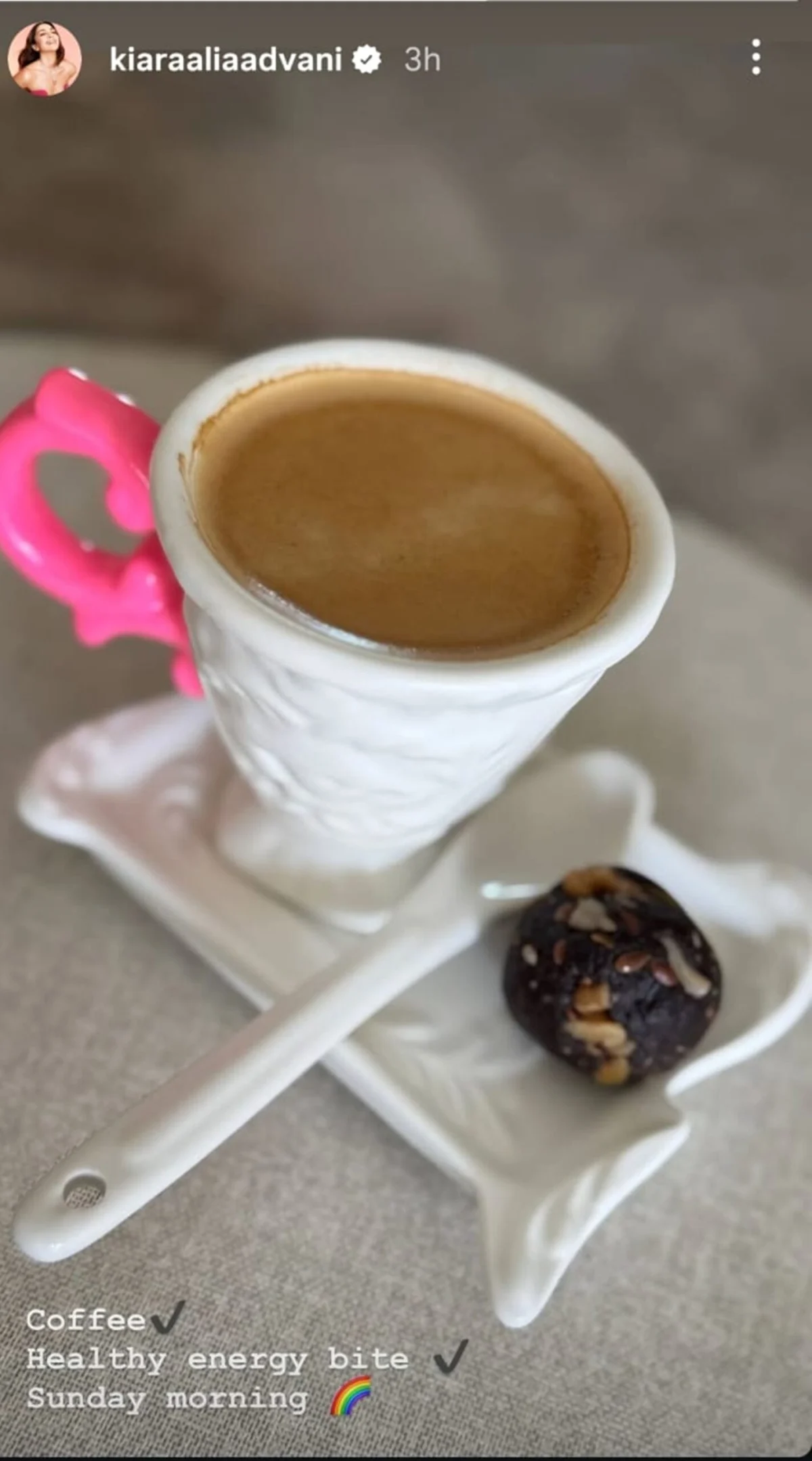
New Delhi — In the era of digital transparency, the morning routines of global icons often serve as a blueprint for millions of followers seeking a blend of productivity and wellness. On May 8, 2026, Bollywood actress Kiara Advani—currently one of the most influential figures in the Indian film industry—offered a glimpse into her personal Sunday ritual. Sharing a post with her millions of followers, the 34-year-old actor, known for her rigorous fitness standards and upcoming role in the high-octane actioner War 2, showcased a minimalist combination: a cup of black coffee paired with a "healthy energy bite."
While the post, captioned simply as "Coffee. Healthy energy bite. Sunday morning," appeared to be a standard lifestyle update, it has reignited a broader conversation among clinical nutritionists and health experts regarding the efficacy of "quick-start" breakfasts. In a world increasingly defined by high-pressure schedules and the pursuit of "aesthetic" wellness, the distinction between a stimulant-driven start and a nutritionally complete meal has never been more critical.
Main Facts: The Anatomy of a Celebrity ‘Quick-Start’
The core of Advani’s shared routine consists of two primary elements: caffeine and a dense, portable snack. In the context of modern dietetics, this is often referred to as a "functional snack" rather than a traditional breakfast.
Kiara Advani, who has maintained a reputation for discipline throughout her career, represents a demographic of high-performing professionals who prioritize mental alertness and physical readiness. However, as her Instagram Stories went viral, health professionals were quick to dissect the physiological impact of this specific pairing.
The "energy bite," a staple in the fitness community, typically consists of a base of Medjool dates or honey, mixed with raw nuts (almonds, walnuts), seeds (chia, flax, or pumpkin), and occasionally oats or cacao. On the surface, this provides a burst of natural sugars and healthy fats. When paired with coffee—a potent central nervous system stimulant—the result is an immediate elevation in heart rate, metabolic speed, and cognitive focus.
Chronology: From Social Media Post to Clinical Critique
The timeline of the public discourse surrounding Advani’s routine unfolded rapidly:
- 08:00 AM IST: Kiara Advani uploads a photo of her Sunday breakfast to Instagram Stories, highlighting her preference for a light, energy-dense start to the day.
- 10:00 AM IST: Social media platforms see a surge in "morning routine" tags, with fans and fitness enthusiasts debating the merits of skipping a heavy traditional breakfast in favor of Advani’s minimalist approach.
- Midday: Nutritionists and clinical experts begin weighing in, using the viral moment as an educational opportunity to discuss the nuances of morning metabolism and the potential pitfalls of relying solely on stimulants.
- Evening: Detailed analyses from experts like Garima Goyal emerge, providing a balanced view that acknowledges the convenience of the routine while warning against its long-term use as a meal replacement.
Supporting Data: The Science of Caffeine and Energy Bites
To understand why this combination is so popular, one must look at the biochemical interaction between caffeine and macronutrients.
The Caffeine Factor
Coffee contains caffeine, which inhibits adenosine receptors in the brain, effectively "fending off" sleepiness. According to data from the Journal of Clinical Sleep Medicine, caffeine consumed in the morning can increase metabolic rate by 3–11%. For an actor like Advani, who may be heading into a physically demanding rehearsal or a workout session, this provides the "ergogenic" (performance-enhancing) benefit needed for high-intensity movement.
The Glycemic Load of Energy Bites
Energy bites are designed to be "low volume, high density."
- Natural Sugars (Dates/Honey): Provide an immediate glucose spike for the brain.
- Healthy Fats (Nuts/Seeds): Slow down the absorption of those sugars, preventing the "crash" often associated with refined carbohydrates.
- Micronutrients: Magnesium from seeds and Vitamin E from nuts support cellular health.
However, supporting data from the Global Nutrition Report suggests that a meal lacking in significant protein (at least 15-20 grams) fails to trigger the release of leptin, the hormone responsible for long-term satiety. This explains why a coffee-and-bite routine often leads to a "hunger peak" just two hours after consumption.
Official Responses: Expert Insights from the Frontlines
Consultant dietitian and fitness expert Garima Goyal provided a comprehensive breakdown of the routine, offering a perspective that bridges the gap between celebrity influence and clinical reality.
"It reflects a modern, quick-start approach that fits busy lifestyles while still staying health-conscious," Goyal noted. She acknowledged that from a clinical nutrition lens, starting the day with coffee offers an immediate boost in alertness. "It may also enhance workout performance if consumed before exercise. However, when taken first thing in the morning, especially without a proper meal, it can increase acidity in some individuals and may not provide sustained energy."

Goyal’s primary concern lies in the "completeness" of the meal. While she praised the energy bite for providing better blood sugar stability than coffee alone, she emphasized the missing components.
"This combination still falls short of being a complete breakfast," Goyal explained. "It lacks sufficient protein and fiber required for prolonged satiety, stable energy release, and metabolic support. Relying only on such quick fixes can sometimes lead to early hunger, cravings, or overeating later in the day."
Her advice to those looking to emulate Advani’s routine is to view it as a "starter" rather than the "main event." She suggests following up this quick fuel with a balanced meal including complex carbohydrates (like oats or whole-grain toast) and high-quality protein (like eggs, tofu, or Greek yogurt).
Implications: The Shift in Modern Eating Habits
The viral nature of Kiara Advani’s breakfast highlights several significant shifts in how society views nutrition and productivity in 2026.
1. The Death of the ‘Big Breakfast’
For decades, the mantra "breakfast is the most important meal of the day" was interpreted as a requirement for a large, calorie-heavy sitting. Modern lifestyles, characterized by intermittent fasting and high-intensity scheduling, have shifted the focus toward "nutrient timing." Advani’s routine implies that for some, a heavy meal is a hindrance to early-morning agility.
2. The Influence of ‘Fit-Fluencers’
When a high-profile actor shares their diet, it carries more weight than a textbook. The implication is that "if I eat like this, I will look and perform like that." This creates a responsibility for celebrities to frame their habits carefully. Advani’s inclusion of the word "Healthy" in her caption reinforces the idea that she is making conscious choices, but it also necessitates the "Disclaimer" provided by experts: what works for a professional athlete or actor with a specialized team may not work for a sedentary office worker.
3. The Gastrointestinal Conflict
One of the most significant implications of the "Coffee-First" culture is gut health. Clinical studies indicate that caffeine stimulates the production of gastrin, which speeds up activity in the colon. For those with sensitive stomachs or conditions like GERD (Gastroesophageal Reflux Disease), the acidity of black coffee on an empty stomach can lead to long-term digestive inflammation. Goyal’s recommendation to pair it with an energy bite is a strategic move to "buffer" the stomach lining, but it is not a total cure-all.
4. Psychological vs. Physiological Energy
There is a growing concern that modern professionals are substituting sleep and genuine nutrition with chemical stimulation. While Goyal notes that "many people function well without caffeine," the social pressure to be "always on" makes coffee a non-negotiable for many. The implication of Advani’s post is that Sunday—traditionally a day of rest—is still a day for "energy" and "bites," suggesting that the drive for productivity rarely takes a day off.
Conclusion: Balance Over Mimicry
Kiara Advani’s Sunday morning routine is a testament to the efficiency of modern wellness—a quick, nutrient-dense, and stimulant-supported start to the day. However, as experts like Garima Goyal point out, the "Advani Approach" should be treated as a specialized tool rather than a universal standard.
The takeaway for the public is clear: while an energy bite and a coffee can bridge the gap between waking up and a mid-morning workout, they do not replace the fundamental pillars of human nutrition—protein, fiber, and hydration. As the "War 2" star continues to inspire through her dedication to her craft and her physique, the medical community continues to remind us that "balance is what sustains health."
For those looking to adopt this routine, the "starter-meal" philosophy remains the safest bet. Enjoy the coffee and the bite for the immediate spark, but ensure the fire is kept burning with a nutritionally complete follow-up. In the high-speed world of 2026, the most successful individuals are likely those who can balance the speed of a "quick-start" with the sustainability of a traditional, balanced diet.
