

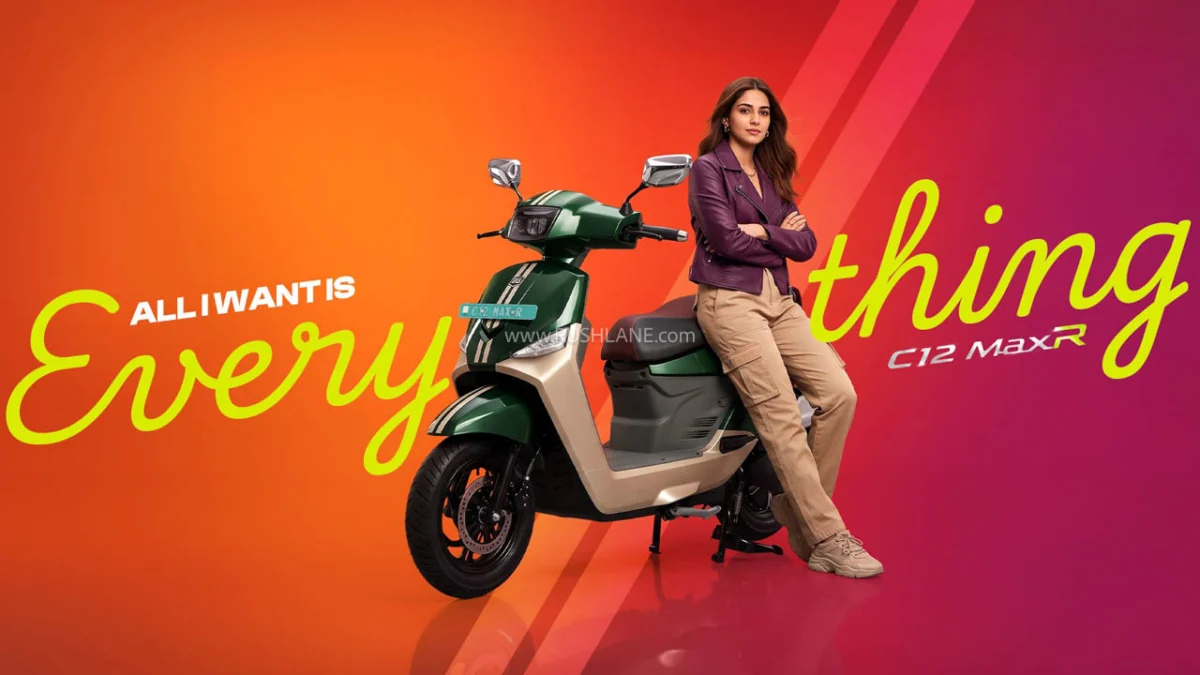
The Indian electric two-wheeler (E2W) landscape is currently undergoing a period of rapid maturation. No longer are consumers satisfied with basic battery-operated cycles; the demand has shifted toward sophisticated, high-performance machines that offer a seamless blend of utility, technology, and aesthetic appeal. In response to this evolving market dynamic, BGauss, a prominent Indian electric mobility startup, has officially announced the launch of its latest offering: the BGauss C12 MaxR.
Positioned as a "sporty electric family scooter," the C12 MaxR is designed to bridge the gap between high-end performance and everyday practicality. With an introductory price starting at Rs 1.45 lakh (effective Ex-showroom), BGauss is targeting the premium commuter segment, offering a vehicle that prioritizes range, intelligent storage solutions, and a robust build quality suited for the rigors of Indian road conditions.
1. Main Facts: The C12 MaxR at a Glance
The BGauss C12 MaxR arrives as a significant upgrade within the company’s existing C12 lineup. It is engineered to cater to the modern Indian family that requires a versatile vehicle for various tasks—ranging from daily office commutes to grocery runs and school drops.
Key Highlights:
- Introductory Pricing: Rs 1.45 Lakh (Effective Ex-showroom).
- Battery & Range: 3.8 kWh LFP battery offering a claimed range of 178 km.
- Performance: Peak power of 4.2 kW with a top speed of 75 km/h.
- Storage Capacity: A massive 38-liter under-seat storage, complemented by several "intelligent" compartments.
- Aesthetics: Available in four premium color palettes, including dual-tone finishes.
- Technology: 5-inch TFT instrument cluster with smartphone connectivity and turn-by-turn navigation.
The C12 MaxR is not merely a transportation tool but a statement of intent from BGauss, signaling their commitment to domestic engineering and consumer-centric design.
2. Chronology: The Evolution of BGauss and the C12 Series
To understand the significance of the C12 MaxR, one must look at the trajectory of BGauss over the last six years. Founded as a subsidiary of RR Global, a giant in the electrical industry, BGauss entered the EV market with a focus on reliability and electrical safety—leveraging the parent company’s decades of expertise.

- The Early Years (2018–2020): BGauss spent its initial years in Research and Development, focusing on the "Indianization" of electric drivetrains. The goal was to create scooters that could withstand extreme heat and monsoon flooding.
- The Launch of the C12 Series: The original C12 series was introduced to provide a sturdier alternative to the lightweight, plastic-heavy scooters flooding the market. It gained traction for its "rugged-yet-refined" approach.
- The RUV350 Influence: Earlier in 2024, BGauss launched the RUV350, a unique "Ride Utilitarian Vehicle" featuring 16-inch wheels. While the RUV350 catered to those seeking motorcycle-like stability, it became clear that a segment of the market still preferred the traditional 12-inch wheel format for better maneuverability in tight city traffic.
- September 2024: The Arrival of C12 MaxR: The MaxR is the culmination of these years of feedback. It retains the traditional scooter form factor (12-inch wheels) but integrates the high-capacity battery and smart features developed for their more expensive models.
3. Supporting Data: Technical Specifications and Utility
The BGauss C12 MaxR is built on a philosophy of "More is More." This is evident when analyzing the technical data and the sheer number of utility features packed into the frame.
Powertrain and Battery Chemistry
At the heart of the C12 MaxR is a 3.8 kWh battery pack. Notably, BGauss has opted for Lithium Iron Phosphate (LFP) cell chemistry. In the Indian context, LFP is often preferred over Nickel Manganese Cobalt (NMC) due to its superior thermal stability and longer life cycle, making it less prone to thermal runaway in high-ambient temperatures.
- Range: The 178 km range (under ideal conditions) ensures that the average urban user only needs to charge the vehicle twice a week.
- Motor: The hub-mounted motor delivers a peak power of 4.2 kW. This allows for brisk acceleration, essential for navigating "stop-and-go" city traffic.
- Riding Modes: The scooter features three distinct modes:
- Eco: Optimized for maximum range.
- Ride: A balance between speed and efficiency.
- Sport: Unlocks the full 75 km/h potential for highway stretches.
- Additional Features: The inclusion of Cruise Control and a Reverse Mode adds a layer of premium convenience rarely seen in this price bracket.
Chassis and Ergonomics
Unlike the RUV350’s 16-inch wheels, the C12 MaxR utilizes 12-inch alloy wheels. This choice lowers the center of gravity and improves the "flickability" of the scooter in congested areas.
- Suspension: Telescopic forks at the front and gas-charged shock absorbers at the rear provide a dampened ride over potholes.
- Braking: A front disc brake combined with a rear drum brake ensures reliable stopping power.
- Ground Clearance: At 160 mm, the scooter is well-equipped to handle unpaved roads and high speed breakers.
- Payload: A 150 kg payload capacity makes it a true "family" vehicle, capable of carrying two adults and luggage comfortably.
The "Intelligent Utility" Suite
BGauss has gone beyond the standard "trunk space" to create a highly organized storage ecosystem:
- 38L Under-seat Storage: Large enough to hold two half-face helmets.
- Flat Floorboard: Designed to accommodate a medium-sized suitcase, a rarity in the current EV market.
- The "Little Extras": A dedicated pop-out umbrella holder, a lockable compartment for documents/wallets, a mobile storage slot with wireless charging, and even a specific niche for a cleaning cloth.
4. Official Responses: The Founder’s Vision
During the launch event, Mr. Hemant Kabra, Founder of BGauss, emphasized that the C12 MaxR is the physical manifestation of the company’s six-year journey. His statement highlighted a shift in how the company views the consumer:

“Over the last six years, we have been focused on building electric mobility around the Indian consumer, and the C12 MaxR brings that philosophy together in one product. We wanted to create a scooter that delivers on the fundamentals of range, performance and reliability, but also recognizes that today’s consumer expects much more from their vehicle.”
Kabra further elaborated on the emotional aspect of vehicle ownership:
“Space, design, lighting, technology and pride of ownership are equally important. The C12 MaxR is our expression of what a complete electric scooter should be. It is engineered for everyday India, while designed to make every ride feel special.”
This official stance suggests that BGauss is moving away from being a "spec-sheet" company to a "lifestyle" brand, focusing on how the vehicle fits into the daily nuances of Indian life—such as the need for an umbrella holder during the monsoon or a secure place for a wallet during a quick dash to the store.
5. Implications: What the C12 MaxR Means for the Indian Market
The launch of the C12 MaxR has several far-reaching implications for the E2W sector in India.

Heightened Competition in the Premium Segment
The Rs 1.40 lakh to Rs 1.60 lakh price bracket is currently the most contested space in the Indian EV market. The C12 MaxR enters a ring currently occupied by the Ather 450X, Ola S1 Pro, and the TVS iQube ST. By offering a larger battery (3.8 kWh) and a more "utilitarian-premium" design, BGauss is positioning itself as the rational choice for families who find the Ather too sporty or the Ola too tech-centric.
The Shift Toward LFP Chemistry
As more manufacturers like BGauss adopt LFP chemistry for their flagship models, we may see a market-wide shift. LFP’s safety profile is a strong selling point for safety-conscious Indian parents, and BGauss’s success with this battery type could force other competitors to reconsider their battery sourcing strategies.
Modernizing the "Family Scooter"
For decades, the "family scooter" (typified by the Honda Activa) was a basic machine. The C12 MaxR proves that a family scooter can be high-tech. The 5-inch TFT display with turn-by-turn navigation and Bluetooth notifications brings a level of sophistication that was previously reserved for enthusiast-grade motorcycles. This "democratization of technology" is likely to become a standard expectation for all new entrants in the segment.
Infrastructure and Service Expansion
With the launch of more complex products like the MaxR, BGauss will need to simultaneously expand its service network. A scooter with integrated wireless charging and advanced TFT screens requires specialized technicians. The success of the MaxR will depend as much on BGauss’s after-sales support as it does on the scooter’s 178 km range.
Conclusion
The BGauss C12 MaxR represents a sophisticated evolution of the electric scooter. By blending high-capacity energy storage with thoughtful, "human-centric" design features—like the umbrella holder and the suitcase-ready floorboard—BGauss has created a product that feels uniquely Indian.

While the introductory price of Rs 1.45 lakh places it in the premium tier, the sheer volume of features and the promise of 178 km of range provide a compelling value proposition. As India continues its transition toward a greener future, the C12 MaxR stands as a testament to the fact that "Made in India" electric mobility is no longer just about the environment—it’s about a better, smarter, and more comfortable way to travel.
