

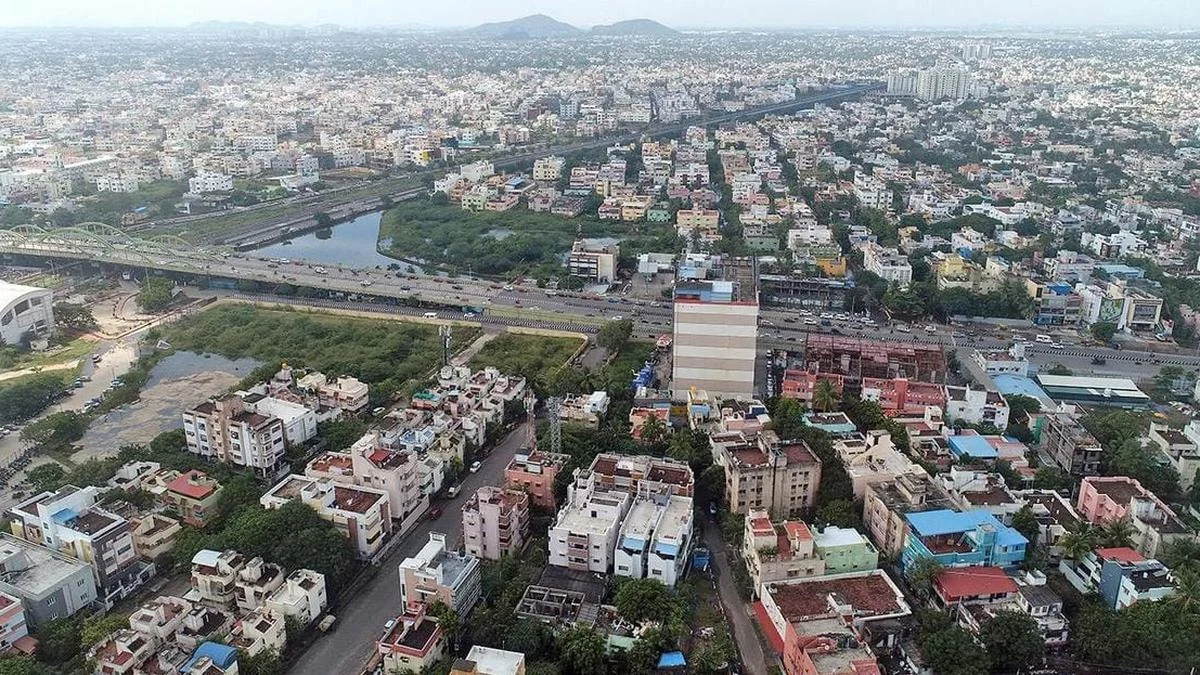
Chennai is experiencing an unprecedented surge in Global Capability Centres (GCCs), marking a significant acceleration in its evolution as a premier hub for multinational corporations. This burgeoning sector, a cornerstone of Tamil Nadu’s economic strategy, is not only attracting substantial foreign investment but is also poised to reshape the state’s commercial real estate landscape and drive broad-based employment growth. Both the previous Dravida Munnetra Kazhagam (DMK) administration and the current Tamilaga Vettri Kazhagam (TVK) government have recognized the immense potential of GCCs, fostering an environment conducive to their expansion through strategic policy initiatives and investment agreements.
The momentum behind Chennai’s GCC growth is palpable, with a consistent influx of prominent global companies establishing their operational and innovation centers in the city. This expansion is a testament to Tamil Nadu’s robust talent pool, its commitment to infrastructure development, and its proactive approach to fostering a business-friendly ecosystem. The ripple effect of this GCC boom is already being felt across Chennai’s commercial real estate market, witnessing a heightened demand for Grade A office spaces and a significant uptick in leasing activities. This phenomenon echoes the transformative impact of the IT revolution that swept through India in the late 1990s and early 2000s, fundamentally altering urban development and economic trajectories.
A Strategic Vision: The Tamil Nadu GCC Corridor and Growth Plan
In a decisive move to cement its position as a leading GCC destination, Tamil Nadu has unveiled the ambitious "Tamil Nadu GCC Corridor and Growth Plan." Announced by the Industries Minister S. Keerthana, this strategic initiative aims to unlock expansion capacity for existing multinational GCCs and attract new entrants by focusing on key commercial arteries: the Pallavaram-Thoraipakkam Radial Road, Mount-Poonamallee High Road, and Rajiv Gandhi Salai. These designated zones will benefit from enhanced Floor Space Index (FSI) and significant upgrades to common and shared infrastructure, creating an integrated ecosystem designed to foster growth and operational efficiency.
Deepak Jacob, Managing Director and CEO of Guidance, the nodal agency spearheading these initiatives, emphasizes the plan’s strategic imperative. "The Tamil Nadu GCC Corridor and Growth Plan is a strategic initiative to unlock expansion capacity for multinational Global Capability Centres already operating in Chennai," he stated. Jacob further elaborated, "Rather than piecemeal project approvals, the government is treating three established commercial corridors as integrated zones with coordinated planning and infrastructure development."
The selection of these corridors is based on their strategic importance and existing infrastructure. The Pallavaram-Thoraipakkam Radial Road, a critical north-south connector for the southern GCC cluster, offers direct connectivity to Chennai International Airport via the Pallavaram Flyover and already hosts established IT infrastructure. The Mount-Poonamallee High Road (SH-55) is emerging as a dynamic commercial corridor with a proven GCC presence, further bolstered by the upcoming Poonamallee Metro Line development, positioning it as a gateway for multinational corporations. Rajiv Gandhi Salai (OMR), the established premier IT corridor, boasts the highest GCC concentration and has demonstrated consistent demand from sectors such as Banking, Financial Services and Insurance (BFSI), automotive, and professional services.
Enhancing Capacity: The Power of Increased FSI
A cornerstone of the GCC Corridor and Growth Plan is the enhancement of Floor Space Index (FSI) in designated zones. This policy intervention allows existing GCC campuses to expand vertically, thereby increasing their built-up area and leasable space without the need for additional land acquisition. This not only streamlines expansion for established players but also makes development more economically viable for real estate stakeholders.
Jerry Kingsley, Head of Research, India, and City Lead for Capital Markets at JLL Chennai, highlights the multifaceted benefits of increased FSI. "The increased FSI will enable developers to build greater floor area and leasable space and it can also support in redesigning projects to higher densities, generating greater development returns and improved margins without needing to purchase additional land, benefiting developers, property owners and investors," he explained. Kingsley further notes that by targeting GCCs, which have a stringent requirement for Grade A infrastructure, the corridor plan ensures sustained demand for premium office spaces.

The influx of skilled professionals drawn to these expanding GCCs is expected to catalyze significant residential development, particularly in the mid-to-premium segments, leading to the launch of new housing projects across the city.
Growth Broadens: A Multifaceted Economic Multiplier
The impact of GCCs extends far beyond the office leasing market. Kanchana Krishnan, City Head and Executive Director at Anarock, a leading real estate consultancy, observes a significant trend: "GCCs accounted for around 55% of Chennai’s office leasing in the first half of 2026, up from 49% in 2025." This highlights the increasing dominance of GCCs in driving commercial real estate demand.
Krishnan further elaborates on the broader economic implications: "GCCs bring high-quality employment, which creates demand for housing, retail, hospitality, schools, healthcare and other social infrastructure. The impact can extend beyond the office market, creating a broader employment-led real estate ecosystem."
Currently, Tamil Nadu is home to over 465 Global Capability Centres, representing approximately 10%-15% of India’s entire GCC ecosystem. The state boasts a pool of 4.5 lakh GCC-ready professionals and added approximately 65,000 GCC jobs in the financial year 2025. Chennai, with 405 GCCs, remains the primary hub, but there is a notable trend of distributed growth, with emerging cities like Coimbatore, Madurai, and Tiruchi housing over 60 GCCs.
A study by Colliers, a commercial real estate services firm, indicates that while Bengaluru and Hyderabad have historically dominated GCC leasing, demand is becoming increasingly broad-based across India. Tier I cities are leveraging competitive costs and specialized industry ecosystems to attract global firms. While Bengaluru and Hyderabad are likely to remain preferred by technology GCCs, and Mumbai and Pune by BFSI operations, Chennai is strategically positioned to attract GCCs from the engineering and manufacturing sectors.
Driving Growth Through Strategic MoUs
The TVK government has actively pursued investment in the GCC sector through a series of Memoranda of Understanding (MoUs) signed at the Vettri Tamil Nadu Investment Conclave and other high-profile events. These agreements underscore the state’s commitment to attracting diverse global enterprises and fostering innovation.
One such significant MoU was signed between Bosch Global Software Technologies and TIDCO, establishing a Global Software Development Centre focused on automotive software and autonomous systems, including crucial R&D and engineering operations. This facility is slated to be located along either OMR or the Mount-Poonamallee corridor, further reinforcing these strategic growth zones.

Chubb, a global insurance giant, also signed an MoU in July to expand its insurance operations in Chennai. The new GCC will be instrumental in handling claims processing, AI-driven underwriting, fraud detection, and captive operations, serving Chubb’s extensive Asia-Pacific portfolio.
Nordex, a leading German wind turbine manufacturer and a global player in renewable energy technology, has committed to establishing a significant GCC in Chennai, concentrating on product engineering and technology innovation. More recently, during a visit to the United Kingdom, Chief Minister C. Joseph Vijay finalized an agreement with Ernst & Young (EY) to establish a GCC in Tamil Nadu, entailing an investment of £1,000 crore.
These substantial investments are anticipated to fuel significant growth in leasing activity in the coming months, bolstering the commercial real estate market.
Redefining Operations: Beyond Back-Office Support
The evolving nature of GCCs signifies a departure from traditional back-office operations. Deepak Jacob clarifies this shift: "These GCCs are not support centres or back-office operations, but encompass much more." He provides compelling examples: Ford’s GCC designs powertrains for cars sold in 150 countries; Bosch is developing cutting-edge autonomous driving technology; Standard Chartered manages mission-critical, 24/7 banking operations; KLA’s algorithms are advancing global semiconductor manufacturing; and AstraZeneca is engaged in global medicine discovery. These are high-value, strategic functions that multinational enterprises deem indispensable and difficult to outsource.
Tamil Nadu is also becoming a preferred destination for first-time India GCC entrants. SMBC (Sumitomo Mitsui Banking Corporation), Japan’s second-largest bank, has established a significant GCC in Chennai focusing on trade finance, banking operations, and technology infrastructure for its Asia-Pacific clientele. HD Supply, a leading industrial and construction distributor, has chosen Chennai for its India GCC to optimize supply chain operations and develop digital commerce platforms for India’s infrastructure and construction sectors. Furthermore, SES (Société Européenne des Satellites), a Luxembourg-based satellite and space technology company, has set up a technology centre in Chennai dedicated to satellite communications, IoT solutions, and space technology applications for Asia-Pacific markets.
Demand Dynamics and Pricing Advantage
GCCs exhibit a diverse range of space requirements, from modest 30,000 sq. ft. to expansive facilities spanning several lakh sq. ft. Kingsley notes, "In Chennai, most moderate-sized GCCs typically opt for conventional office spaces between 30,000 and 50,000 sq. ft., seeking stability and tailored infrastructure for their business needs. Meanwhile, smaller-scale GCCs entering Chennai favour flex spaces, which provide reduced upfront costs, shorter commitments, and the ability to scale during their early operational phase."
A significant competitive advantage for Chennai lies in its rental rates for Grade A office spaces. Current rents hover around ₹76 to ₹78 per sq. ft., offering a substantial cost advantage compared to markets like Bengaluru and Hyderabad. This cost-effectiveness, coupled with a skilled talent pool and robust infrastructure, makes Chennai an increasingly attractive proposition for global companies.

Infrastructure Imperatives for Sustainable Growth
As the GCC corridors gain prominence, industry stakeholders have strongly urged the government to prioritize and strengthen infrastructure in these development zones. A key concern revolves around the expedited completion of Metro Rail projects, as ongoing construction work has led to poor road conditions in several areas. Enhancements in last-mile connectivity and public transportation are crucial to facilitate seamless commuting for the growing workforce.
Beyond office spaces, the development of comprehensive social infrastructure is vital for GCC clusters. This includes the establishment of quality schools, hospitals, hotels, serviced apartments, restaurants, retail outlets, and recreational facilities. The government’s vision should encompass the holistic development of supporting infrastructure alongside the establishment of GCC hubs. Furthermore, fundamental utilities such as drainage, water supply, and robust flood mitigation measures must be treated as core infrastructure priorities to ensure long-term sustainability and resilience.
Krishnan observes a clear employment-led real estate multiplier effect, acknowledging that while attributing price appreciation solely to GCCs can be challenging, the pattern is undeniable. This phenomenon was vividly witnessed during the IT revolution in areas like OMR in Chennai, Whitefield in Bengaluru, and Gachibowli in Hyderabad.
A similar trend is now unfolding in Chennai. Average residential capital values have seen a significant increase, rising from approximately ₹4,935 per sq. ft. in 2020 to ₹7,100 per sq. ft. in 2025, marking a substantial appreciation of about 44%. South Chennai, particularly the OMR/GST growth belt, has emerged as a focal point for residential development, accounting for around 78% of residential launches and 66% of sales in 2025, underscoring the direct correlation between GCC growth and real estate value appreciation.
The current surge in GCCs in Chennai represents a pivotal moment in the state’s economic development. The strategic vision, coupled with proactive policy measures and substantial investments, positions Tamil Nadu for sustained growth, job creation, and a diversified, innovation-driven economy. The integrated approach to infrastructure development and the focus on high-value functions within GCCs signal a transformative era, solidifying Chennai’s status as a global powerhouse.
