

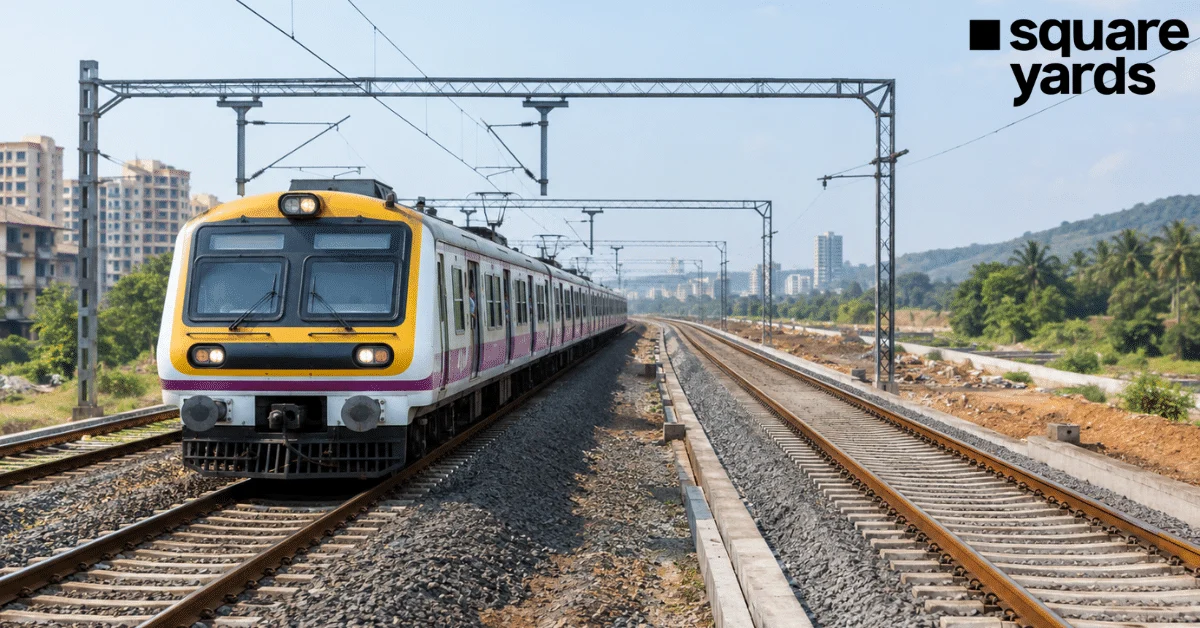
The Mumbai suburban railway network, often described as the "lifeline" of the financial capital, is undergoing one of its most significant transformations in recent years. At the heart of this evolution is the Kalyan-Badlapur rail expansion project—a strategic initiative aimed at doubling the track capacity of a critical 14.60-kilometer stretch. With the Mumbai Railway Vikas Corporation (MRVC) recently inviting bids for a Rs 133.18 crore package to finalize balance works, the project has moved into a decisive construction phase.
This Rs 1,510 crore project, executed under the ambitious Mumbai Urban Transport Project III-A (MUTP-IIIA), represents a paradigm shift in how commuter and long-distance traffic are managed in the Mumbai Metropolitan Region (MMR). By introducing third and fourth lines, the project seeks to resolve decades-old bottlenecks that have long plagued the eastern suburbs.
1. Main Facts: The Scope and Scale of the Expansion
The Kalyan-Badlapur expansion is not merely an addition of tracks; it is a complete overhaul of the existing rail infrastructure in the Thane district. The project spans 14.60 kilometers and aims to provide a dedicated corridor for suburban locals, effectively separating them from the Mail, Express, and freight trains that currently share the same tracks.
Key Project Statistics:
- Total Project Cost: Approximately Rs 1,510 crore.
- Current Tender Value: Rs 133.18 crore (for balance works).
- Corridor Length: 14.60 km.
- Timeline: 365 days for the completion of the latest package.
- Executing Agency: Mumbai Railway Vikas Corporation (MRVC).
- Funding Model: A 50:50 cost-sharing agreement between the Ministry of Railways and the Government of Maharashtra.
The expansion encompasses five key stations: Vitthalwadi, Ulhasnagar, Ambernath, Chikhloli, and Badlapur. While four of these are existing stations requiring significant upgrades, Chikhloli is a greenfield addition designed to fill a critical gap in the network.
2. Project Chronology: From Concept to Construction
The journey of the Kalyan-Badlapur 3rd and 4th lines is a testament to the long-term planning required for urban infrastructure.
- Conceptualization (The MUTP Era): The need for additional lines was identified over a decade ago as the population in the "beyond Kalyan" belt exploded. The project was eventually folded into the MUTP-IIIA portfolio, which focuses on augmenting the capacity of the existing network.
- Funding and Approval: After several rounds of negotiations regarding land acquisition and cost-sharing, the Ministry of Railways and the Maharashtra State Government finalized the funding structure.
- Initial Infrastructure Works: Early phases of the project involved land surveying, soil testing, and the initial clearing of the Right of Way (RoW).
- The 2023-2024 Push: Central Railway data from 2023 highlighted a staggering daily footfall at Badlapur (2.08 lakh) and Ambernath (1.52 lakh), creating an urgent political and administrative mandate to accelerate the project.
- September 2026 (Current Status): The MRVC has invited bids for a Rs 133.18 crore package. This phase focuses on "balance works," which include the final laying of tracks, signaling systems, and the completion of the critical Chikhloli station infrastructure.
3. Supporting Data: The Engineering and Operational Challenge
The technical complexity of adding two lines to a functional, high-traffic corridor cannot be overstated. The project requires the construction of a massive amount of supporting infrastructure to navigate the geographical and urban constraints of the region.
Engineering Infrastructure Breakdown:
- Major Bridges: 2
- Minor Bridges: 49
- Road Overbridges (ROBs): 4
- Road Underbridges (RUBs): 2
- Specialized Structures: 1 overhead pipeline bridge.
The Capacity Crisis
Currently, the two existing tracks between Kalyan and Badlapur are operating far beyond their intended limits. According to railway reports, these tracks handle approximately 136 trains daily, despite having a rated carrying capacity of only 120. This 13% over-utilization leads to a "ripple effect" of delays. When a long-distance Mail train is running late, it occupies the track, forcing suburban locals to wait at signals, which in turn leads to overcrowding on platforms and hazardous travel conditions for commuters.
The introduction of the 3rd and 4th lines will allow for a "quadrupling" of the corridor. In this setup, two tracks will be dedicated exclusively to the suburban "local" trains, while the other two will accommodate fast-moving Express trains and heavy goods traffic.
4. Official Responses and Strategic Intent
The MRVC and Central Railway have emphasized that this project is about more than just speed—it is about "operational resilience."
Officials from the MRVC have noted that the 365-day completion period for the current package is an aggressive timeline intended to bring relief to commuters as quickly as possible. "The separation of suburban and non-suburban traffic is the only sustainable solution for the Kalyan-Badlapur belt," an official source stated. "It allows Central Railway to increase the frequency of local trains without being hamstrung by the schedules of long-distance services."
Furthermore, the joint funding between the State and Center reflects a shared recognition that the eastern suburbs are the new frontiers of Mumbai’s growth. The Maharashtra government has prioritized this corridor as part of its broader "Mumbai 2.0" vision, which seeks to decentralize the city’s commercial hubs and improve the quality of life in satellite towns.
5. The Chikhloli Factor: Filling a Critical Gap
Perhaps the most significant human-centric aspect of this expansion is the creation of the Chikhloli Station. Located 4.34 km from Ambernath and 3.1 km from Badlapur, Chikhloli has long been a "railway desert."
For years, residents of the rapidly growing Chikhloli residential clusters had to travel 3 to 5 kilometers by auto-rickshaw or bus just to reach a railway station. This "last-mile" struggle added 30-45 minutes to their daily commute.
Chikhloli Station Features:
- Modern Amenities: The station will be equipped with multiple platforms, weather-resistant sheds, and modern ticket counters.
- Accessibility: In line with modern Indian Railway standards, the station will feature escalators and multiple Foot Overbridges (FOBs) to ensure smooth passenger movement.
- Urban Integration: The station is being built directly within a residential hub, which is expected to trigger a shift from road-based transport to rail, reducing local traffic congestion.
6. Implications for Real Estate and Urban Growth
The railway expansion is acting as a massive catalyst for the property markets in Thane’s extended suburbs. As Mumbai’s island city becomes increasingly unaffordable, the Kalyan-Badlapur belt offers a viable alternative for middle-class homebuyers.
Real Estate Price Insights (Average per sq. ft.):
| Locality | Price Range (Rs) | Market Characteristics |
|---|---|---|
| Kalyan | 7,000 – 9,500 | Established interchange; high demand for premium housing. |
| Ulhasnagar | 5,000 – 9,000 | Densely developed; focus on redevelopment and commercial growth. |
| Ambernath | 5,000 – 7,000 | Industrial-residential mix; popular for affordable townships. |
| Chikhloli | 4,800 – 12,500 | High growth potential; wide range due to new "lifestyle" projects. |
| Badlapur | 5,000 – 7,000 | Affordable housing hub; significant professional population. |
Analysis of the Real Estate Impact:
- Chikhloli’s Price Surge: The wide price bracket in Chikhloli (up to Rs 12,500) reflects the entry of major developers who are betting on the "station-side" advantage. New gated communities with luxury amenities are being marketed specifically on the promise of the upcoming station.
- The "Satellite Town" Maturity: Towns like Ambernath and Badlapur are evolving from "dormitory suburbs" (where people only sleep) into self-sustaining satellite towns. Better rail connectivity encourages businesses to set up back-offices in these areas, further boosting local economies.
- The Kalyan Transformation: As the western terminus of this specific project, Kalyan is seeing a double benefit. Not only will the Badlapur-bound traffic be streamlined, but the ongoing work at the Kalyan Yard will further decouple mainline and suburban operations, making Kalyan one of the most efficient transit hubs in the country.
7. Conclusion: A Future-Ready Corridor
The Kalyan-Badlapur railway expansion is a cornerstone of the Mumbai Metropolitan Region’s future. By addressing the fundamental issue of track capacity, the project does more than just reduce commute times; it enhances safety, reduces the strain on existing infrastructure, and provides a platform for sustainable urban expansion.
As the 365-day countdown for the balance works begins, the focus will remain on the MRVC’s ability to execute these complex engineering tasks without disrupting the current flow of 136 trains a day. For the millions of commuters who navigate this corridor, the completion of the 3rd and 4th lines—and the opening of Chikhloli station—cannot come soon enough. It represents the transition of the eastern suburbs from a neglected periphery to a central, connected, and thriving part of the Mumbai story.
