

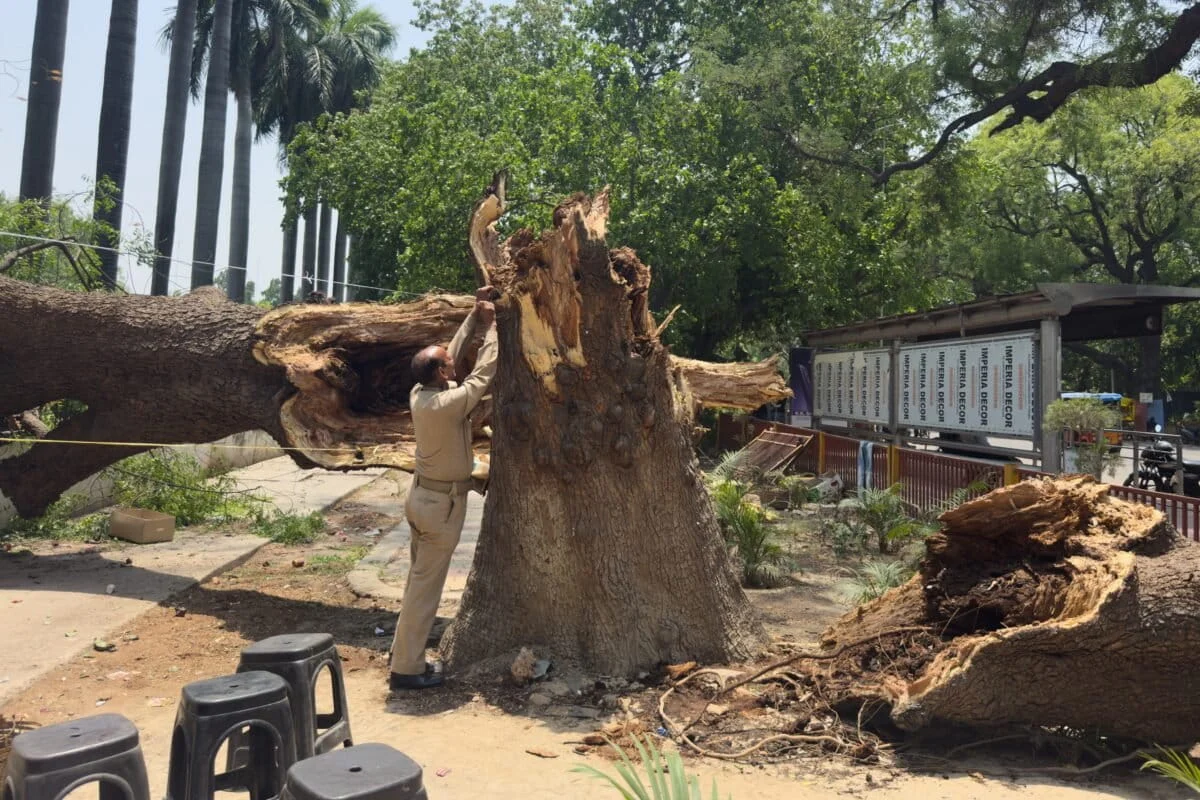
The northern Indian state of Uttar Pradesh is currently grappling with the aftermath of one of the most lethal pre-monsoon storm systems in recent memory. Following a series of violent atmospheric disturbances that peaked on May 13, the state government has confirmed a death toll of 111 individuals. This catastrophe, characterized by unprecedented wind speeds, intense lightning strikes, and destructive hailstorms, has left a trail of devastation across several districts, prompting an emergency response from both state and national authorities.
While dust storms and thunderstorms are a seasonal fixture in the Indo-Gangetic Plain during the transition from spring to summer, the sheer intensity and geographical breadth of this particular event have caught many by surprise. Beyond the tragic loss of human life, the storm has inflicted significant economic damage, destroying homes, decimating livestock, and crippling local infrastructure.
Main Facts: The Scale of the Catastrophe
The impact of the storm system was felt most acutely across the southern and eastern belts of Uttar Pradesh. According to the official statement released by the state government, the casualty list is topped by the district of Prayagraj, where 21 people lost their lives. This was followed closely by Mirzapur with 19 fatalities, Sant Ravidas Nagar with 16, and Fatehpur with 11. Other deaths were scattered across various districts, highlighting the wide-reaching nature of the weather system.
The human toll is accompanied by significant injuries and property loss:
- Human Casualties: 111 confirmed dead; 72 injured.
- Livestock Losses: 170 animals killed, representing a major blow to the rural agrarian economy.
- Infrastructure Damage: At least 200 houses were officially recorded as damaged or destroyed, though local reports suggest the number of partially damaged dwellings could be much higher.
- Wind Velocity: Meteorological stations in Prayagraj and Bareilly recorded gusts reaching a staggering 130 kmph, more than double the speed of a standard seasonal storm.
The state government has moved into a high-alert phase, deploying relief teams and initiating the process of financial restitution for the survivors and the families of the deceased.
Chronology of the Disaster
The April Prelude: A Heatwave Sets the Stage
The roots of the May 13 disaster can be traced back to the unusually high temperatures recorded throughout April. Large swathes of Uttar Pradesh, alongside neighboring Bihar and East Madhya Pradesh, experienced a prolonged period of intense heat, with mercury levels hovering between 40°C and 45°C. This sustained thermal energy acted as a "battery" for the atmosphere, heating the land surface and creating a massive vacuum of low pressure.
May 13: The Convergence of Forces
By the morning of May 13, the atmospheric conditions reached a critical tipping point. Moisture-laden winds from the Bay of Bengal began surging into the northwestern regions of Uttar Pradesh. As these warm, humid southeasterly winds met the parched, superheated air over the plains, the stage was set for violent convection.
By the afternoon and early evening, a "Western Disturbance"—a weather phenomenon originating from the Mediterranean region—introduced a layer of cool, dry air into the upper atmosphere. The interaction between the searing heat at the surface and the cold air above triggered an explosive "atmospheric instability."
The Storm Breaks
As evening fell, the sky darkened rapidly. Residents reported a sudden and violent shift in wind direction. Within minutes, dust storms (locally known as Andhi) gave way to intense thunderstorms. The wind speeds, which usually range from 40 to 60 kmph during such events, escalated to hurricane-like force in districts like Prayagraj and Bareilly, peaking at 130 kmph.
The storm lasted several hours, moving across the state and leaving a path of uprooted trees, fallen electricity poles, and collapsed walls. Lightning strikes were particularly frequent, accounting for a significant portion of the fatalities in rural areas where farmers were caught in open fields.
Supporting Data and Meteorological Analysis
To understand why this storm was so much more lethal than its predecessors, it is necessary to examine the data provided by the India Meteorological Department (IMD).
Wind Speed Disparity
The IMD notes that a typical "Kalbaishakhi" or pre-monsoon storm in North India carries wind speeds that rarely exceed 60 kmph. However, the May 13 event saw multiple districts recording speeds in excess of 100 kmph. At 130 kmph, the wind possesses enough kinetic energy to uproot century-old trees and topple brick structures that are not reinforced.
The Physics of the Storm
According to IMD officials and previous studies on Uttar Pradesh’s weather patterns, the primary driver was the extreme temperature gradient. A study on UP storms indicates that surface temperatures of 40°C are the threshold for "severe" activity. When the April heat pushed temperatures to 45°C, it increased the "Convective Available Potential Energy" (CAPE).

The moisture from the Bay of Bengal acted as fuel. As this moist air rose rapidly due to the heat, it condensed to form massive cumulonimbus clouds. The introduction of the Western Disturbance provided the "trigger," causing the air to churn violently. This resulted in:
- Downbursts: Powerful winds that rush downward from a thunderstorm and spread out rapidly upon hitting the ground.
- Hailstorms: The rapid updrafts carried water droplets into freezing altitudes, resulting in large hail that damaged standing crops and light roofing.
- Intense Lightning: The friction within the massive cloud columns generated high-voltage electrical discharges that proved fatal to those without adequate shelter.
Official Responses and Relief Efforts
The scale of the tragedy has prompted a swift response from the highest levels of government, as well as expressions of sympathy from the international community.
State Government Action
Chief Minister Yogi Adityanath has taken personal charge of the relief operations. In an emergency directive, he ordered district officials to expedite the distribution of aid. The state has announced a compensation package of ₹4 lakh (400,000 Indian Rupees) for the families of each individual who died in the storm.
Furthermore, the Chief Minister has:
- Directed district in-charge ministers to personally visit the affected zones to audit the damage.
- Ordered the immediate restoration of the electricity grid and drinking water supply, which were severely disrupted by fallen infrastructure.
- Mandated that health facilities remain on high alert to treat the 72 injured citizens.
- Authorized compensation for the loss of livestock, recognizing the impact on the rural economy.
Political and International Reaction
The disaster has resonated beyond the borders of Uttar Pradesh. Former Chief Minister Mayawati expressed her condolences via social media, urging the state government to ensure that the support reaches the most vulnerable families so they can "rebuild their lives."
On the international stage, Russian President Vladimir Putin sent a message of condolence to the Indian leadership, acknowledging the loss of life and the suffering caused by the natural disaster. Such international recognition underscores the severity of the event, which is being viewed as a significant humanitarian crisis.
Implications: Climate Change and Future Readiness
The May 13 storm serves as a grim reminder of the increasing volatility of weather patterns in South Asia. While pre-monsoon storms are natural, their growing intensity is often linked by climate scientists to global warming.
The "New Normal" of Extreme Weather
The fact that April recorded temperatures significantly higher than the historical average directly contributed to the violence of the May storm. As global temperatures rise, the Indo-Gangetic Plain is expected to see more frequent "super-cell" thunderstorms. This necessitates a shift in how the state prepares for the "Andhi" season.
Infrastructure Vulnerability
The destruction of 200 houses—mostly kucha houses (made of mud and thatch)—highlights the socio-economic dimension of the disaster. The poor are disproportionately affected by these storms. There is an urgent need for the government to integrate "storm-resilient" housing designs into rural development schemes like the Pradhan Mantri Awas Yojana.
Early Warning Systems
While the IMD did issue alerts, the speed at which the storm intensified suggests a need for more granular, localized "nowcasting." Providing farmers and rural residents with even a 30-minute window of warning via mobile SMS or community sirens could significantly reduce the death toll from lightning strikes and wall collapses.
Agricultural and Economic Resilience
With 170 livestock deaths and unknown amounts of crop damage, the economic recovery for these families will take years. This event highlights the necessity of expanding weather-based insurance cover for small-scale farmers and livestock owners, ensuring that a single night of bad weather does not result in permanent destitution.
In conclusion, the storm that ravaged Uttar Pradesh is more than just a seasonal anomaly; it is a call to action. As the state mourns the 111 lives lost, the focus must now shift from immediate relief to long-term structural resilience against an increasingly unpredictable climate. Through better meteorological tracking, improved rural infrastructure, and swift administrative response, the goal must be to ensure that such a tragedy is never repeated on this scale.
