

By [Your Name/News Agency]
Guwahati, Assam
As the global tea industry grapples with the dual challenges of climate change and shifting consumer preferences, a historic estate on the outskirts of Guwahati is pioneering a new blueprint for survival. Amchong Tea Estate, a 1,782-acre expanse that has witnessed nearly seven decades of Assam’s tea history, has transitioned from a traditional production unit into a sophisticated hub for experiential tourism. With the launch of its "Amchong Leaf" initiative, the estate is attempting to bridge the gap between the industrial reality of tea manufacturing and the sensory curiosity of the modern traveler.

Main Facts: The Urban Tea Oasis
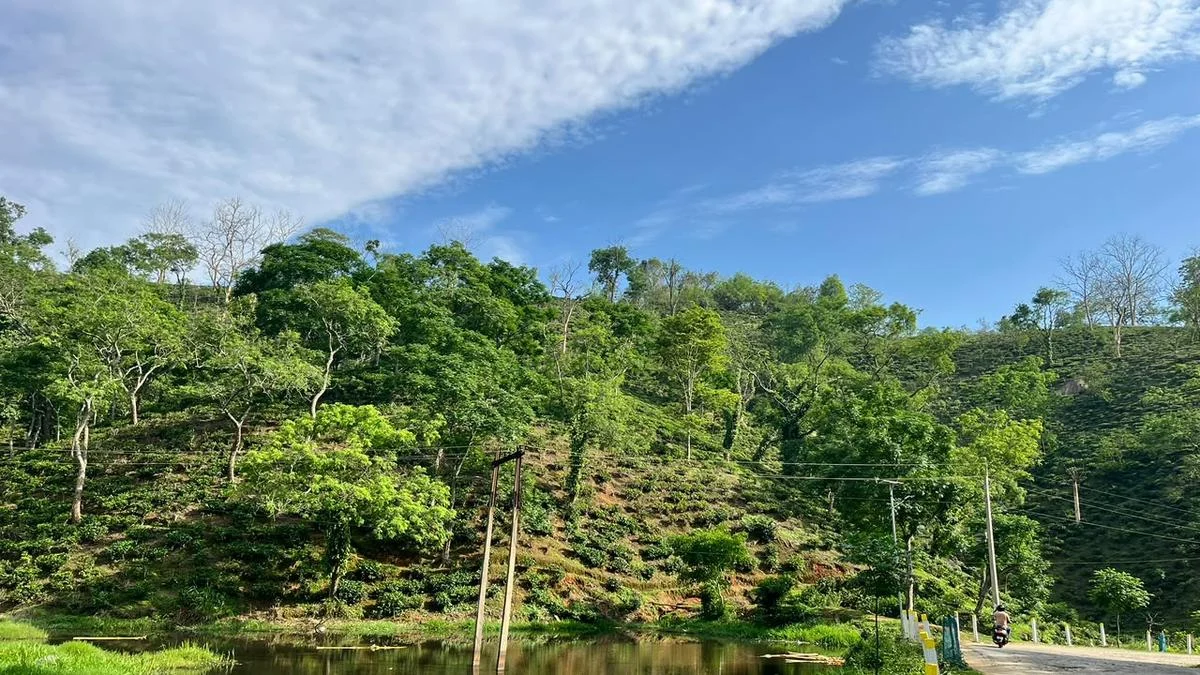
Located just 40 minutes from the heart of Guwahati’s Chandmari district, Amchong Tea Estate stands as a rare geographical anomaly: a sprawling, high-yield plantation operating within the city’s peripheral limits. Established 68 years ago, the estate is currently managed by the third generation of the Bhauram Jodhraj group.
In February 2026, the management officially inaugurated "Amchong Leaf: A Tea Walkthrough Experience." This initiative is not merely a garden tour but a multi-tiered immersive program designed to capitalize on the "slow travel" trend. The estate offers packages ranging from ₹599 to ₹2,499 per person, providing everything from basic garden walks to advanced tea-blending workshops.
The facility features:

- The Tea Leaf Restaurant: A culinary destination serving a fusion of traditional Assamese fare and contemporary global cuisine.
- The Experiential Centre: A museum-style gallery utilizing projection-mapping technology to narrate the history of tea.
- The Viewing Gallery: A high-vantage point overlooking the active processing floor, allowing visitors to witness the Crush, Tear, Curl (CTC) and Orthodox manufacturing processes in real-time.
- A Specialized Tea Tasting Room: A laboratory-style setting where visitors engage in "cupping" sessions under the guidance of industry experts.
Since its launch, the estate has reported a staggering influx of approximately 10,000 visitors per month, signaling a robust appetite for tea-based agro-tourism in Northeast India.
Chronology: From Amsoi to Amchong
The history of Amchong is a microcosm of the broader Assamese tea narrative. For decades, the estate was known locally as "Amsoi." In the pre-digital era, it was a popular but informal destination for school excursions and local picnics—a place defined by rolling hills, mulberry trees, and the freedom of the countryside.
The Early Decades (1950s – 1990s): Under the early management of the Bhauram Jodhraj family, the estate focused exclusively on bulk production. During this period, the estate helped solidify Assam’s reputation as the "Tea Capital of the World," contributing to the state’s massive output of CTC tea, which forms the backbone of the Indian chai market.

The Transition Period (2000s – 2020): As Guwahati expanded, the "narrow roads of Narengi" became a threshold between the encroaching urban sprawl and the preserved greenery of the estate. The management began recognizing that the estate’s proximity to the city was its greatest asset.
The Modern Pivot (2024 – 2026): Recognizing that Assam was approaching the 200th anniversary of its tea industry (dating back to Robert Bruce’s discovery of Camellia sinensis var. assamica in 1823), the Khemka family initiated a total overhaul of the estate’s public-facing infrastructure. The goal was to move beyond the commodity market and into the value-added experience market. This culminated in the February 2026 launch of the "Amchong Leaf" brand.
Supporting Data: The Economics of Experience
The shift toward tea tourism is backed by significant economic data. According to industry analysts, traditional tea profits have been squeezed by rising labor costs and stagnant auction prices. Diversification into tourism provides a secondary revenue stream that is less volatile than the global tea commodity market.

Operational Scale:
- Land Use: Out of the 1,782 acres, a significant portion remains under active cultivation, ensuring the "experiential" side of the business remains rooted in an actual working farm.
- Visitor Demographics: The 10,000 monthly visitors are a diverse mix: 40% are local residents from Guwahati seeking weekend escapes, 35% are domestic tourists from other Indian states, and 25% are corporate groups or international travelers.
- Employment: The tourism initiative has created ancillary jobs in hospitality, tour guiding, and retail, providing employment for the local community beyond traditional plucking and factory work.
Service Tiers:
The estate’s pricing strategy is designed for inclusivity. The entry-level packages allow casual visitors to enjoy the "Steep House" lunch and garden walks, while the premium "T’Journ" and "Blend n Sip" packages cater to connoisseurs willing to pay for expert-led education. The inclusion of ATV rides and 4×4 gypsy safaris adds an "adventure tourism" layer that appeals to younger demographics.
Official Responses: The Visionaries Behind the Leaf
The leadership at Amchong views this transformation as a necessary evolution for the industry.

Ananya Khemka, Director of Bhauram Jodhraj and Amchong Leaf, emphasizes the educational aspect of the project. "Each package offers a different way to experience the estate and understand the journey of tea," Khemka says. "Rather than simply talking about tea, we wanted visitors to walk through the gardens, see how fresh leaves are transformed into finished tea, interact with the people behind every harvest, and understand what goes into producing an exceptional cup."
Khemka further notes that the timing is intentional. "As Assam marks 200 years of its tea industry, the time felt right to create an experience that honors its legacy. Today’s travelers are looking for authentic, immersive experiences, and Assam—with its tea heritage, natural beauty, and culture—is uniquely placed to offer them."
Zameer Sodhi, Head of the Tea Experience at Amchong, highlights the technical precision required to elevate the visitor’s palate. "One can choose from CTC, orthodox black, green, and oolong teas, along with a selection of specialty and seasonal varieties," Sodhi explains. During the "Blend n Sip" sessions, Sodhi’s team uses borosilicate kettles and precise measurements to demonstrate that tea brewing is as much a science as it is an art, rivaling the complexity of high-end coffee cupping or wine tasting.

Implications: The Future of Assam’s Green Gold
The success of Amchong Tea Estate has several significant implications for the region and the wider tea industry.
1. The "Napa Valley" Model for Tea:
Amchong’s model suggests that Assam could follow the trajectory of famous wine regions like Napa Valley or Bordeaux. By creating a high-end "leaf-to-cup" journey, the state can attract high-spending tourists, thereby increasing the "perceived value" of Assam tea. This shift from quantity to quality is essential for the long-term sustainability of the brand.
2. Preservation of Heritage in Urban Spaces:
As Guwahati continues to grow, Amchong serves as a vital "green lung" for the city. By making the estate a profitable tourism destination, the management ensures that the land remains a tea garden rather than being sold off for real estate development. This preserves both the local ecology and the cultural history of the "Amsoi" era.

3. Culinary Diplomacy:
The "Tea Leaf" restaurant plays a crucial role in culinary diplomacy. By serving traditional Assamese dishes like khorikat diya maas (fish cooked on skewers) and til chicken (sesame chicken) alongside wood-fired pizzas, the estate introduces Assamese culture to a global audience in an accessible way.
4. Educational Impact:
The use of projection mapping and experiential centers addresses a significant gap in public knowledge. While most Indians consume tea daily, few understand the history of the "Tea Horse Road," the smuggling of saplings into India, or the intricate fermentation processes required for different tea grades. Amchong is turning a commodity into a curriculum.
Conclusion
Amchong Tea Estate’s transition from a closed industrial site to an open, experiential landmark reflects a broader trend in global agriculture. In an era where consumers demand transparency and "storytelling" behind their products, the "Amchong Leaf" initiative provides a compelling narrative. It is a story of a third-generation business honoring its 68-year-old roots while embracing the technological and social demands of 2026. For the visitor, it is a journey through time—from the nostalgic memories of a picnic at "Amsoi" to a sophisticated, sensory exploration of one of the world’s most beloved beverages. As Assam’s tea industry enters its third century, Amchong stands as a testament to the enduring power of the leaf.
