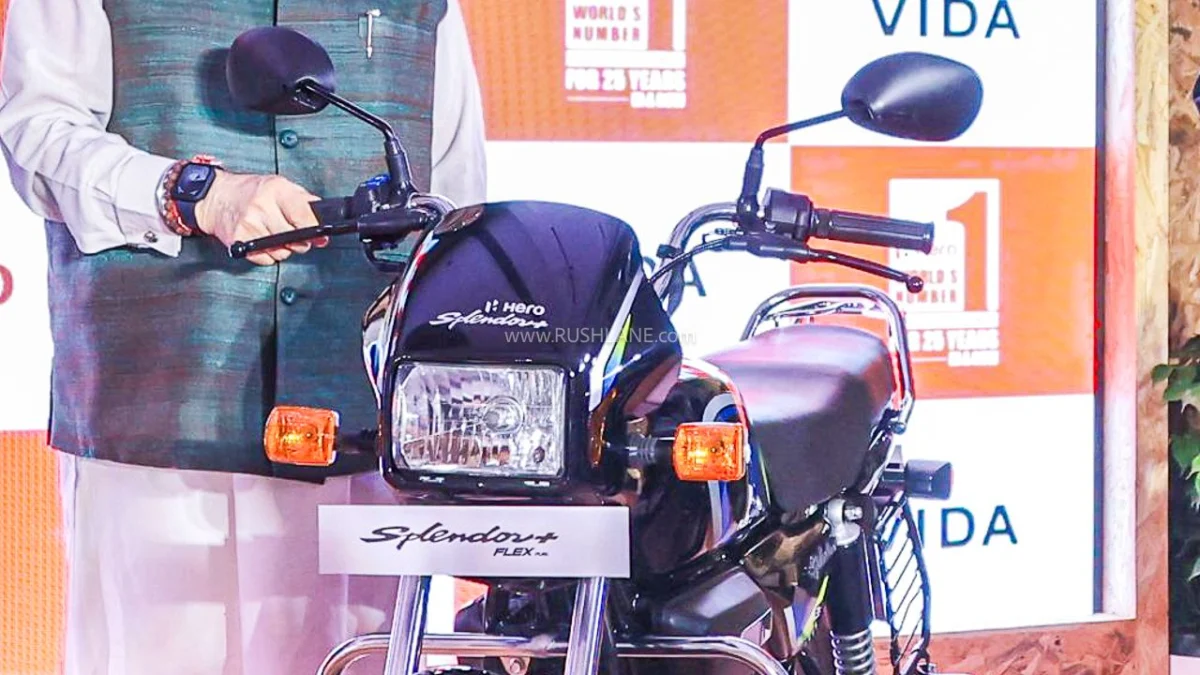
In a landmark move for the Indian automotive industry, Hero MotoCorp, the world’s largest manufacturer of motorcycles and scooters, has officially announced the launch of Flex-Fuel-ready versions of its most iconic and high-volume products: the Splendor+ and the HF Deluxe. This development marks a pivotal shift in the mass-market commuter segment, signaling a transition from conventional fossil fuels toward sustainable, ethanol-based alternatives.
As India intensifies its efforts to achieve energy independence and reduce its carbon footprint, Hero MotoCorp’s introduction of E85-compatible motorcycles represents the first time such technology has been integrated into the country’s highly competitive 100cc segment. These motorcycles are designed to run on ethanol-gasoline blends ranging from E20 (20% ethanol) to E85 (85% ethanol), providing consumers with a versatile and environmentally conscious mobility solution.
Main Facts: The Evolution of India’s Best-Sellers
The launch involves two of the most trusted names in Indian motorcycling history. The Splendor+ and the HF Deluxe have, for decades, been the backbone of rural and urban transport in India. By selecting these models for the Flex-Fuel debut, Hero MotoCorp is targeting the very heart of the Indian consumer base.
Pricing and Market Entry
The financial barrier to entry for green technology has often been a deterrent for mass-market adoption. Hero MotoCorp has addressed this by pricing these variants competitively:
- HF Deluxe Flex-Fuel: Rs 72,792 (ex-showroom, Delhi).
- Splendor+ Flex-Fuel: Rs 82,710 (ex-showroom, Delhi).
These prices place the Flex-Fuel variants at a slight premium over their standard petrol counterparts, a cost justified by the extensive engineering modifications required to handle higher ethanol concentrations.
Technical Specifications: Powering the E85 Revolution
Both motorcycles continue to utilize the reliable 97.2cc, air-cooled, single-cylinder engine that has become synonymous with durability. However, the internal architecture has been significantly overhauled to accommodate the chemical properties of ethanol.

When running on E85 fuel, the engine produces:
- Maximum Power: 6.3 kW (approximately 8.44 hp) at 8,000 rpm.
- Peak Torque: 8.3 Nm at 6,000 rpm.
Hero MotoCorp claims that these motorcycles do not just match the performance of the standard models but offer an "improved performance feel" due to the higher octane rating of ethanol, which allows for optimized combustion timing.
Key Features and Aesthetic Updates
To distinguish the Flex-Fuel variants, Hero has introduced a new "Black with Lime Yellow" graphics suite, giving the bikes a fresh, eco-friendly visual identity. Functional upgrades include:
- i3S Technology: Hero’s proprietary Idle Stop-Start System, which further enhances fuel efficiency by cutting the engine during brief halts.
- Digi-Analogue Instrument Cluster: A modernized dashboard that provides clear readouts of essential trip data.
- Enhanced Safety: The inclusion of a side-stand engine cut-off feature, ensuring the bike cannot be ridden while the stand is deployed.
- Durability Features: Tubeless tyres come as standard, reducing the hassle of punctures on long commutes.
Chronology: The Road to July 2026
The journey toward Flex-Fuel adoption in India has been a multi-year effort involving collaboration between the government and the automotive industry.
- The Policy Foundation (2021-2023): The Government of India advanced its target for 20% ethanol blending (E20) to 2025-26. This prompted manufacturers to update their entire portfolios to be E20 compliant by early 2023.
- Prototype Showcasing (2024): Hero MotoCorp showcased its Flex-Fuel prototypes at various mobility expos, demonstrating the feasibility of running small-capacity engines on high-ethanol blends.
- Official Launch (June 2026): Hero MotoCorp officially unveils the production-ready Splendor+ and HF Deluxe Flex-Fuel models.
- Initial Rollout (July 2026): The first phase of commercial availability begins. The motorcycles will first be available in the National Capital Territory (NCT) of Delhi and select regions of Maharashtra. These areas were chosen due to their existing ethanol production capacity and the presence of early-stage E85 dispensing infrastructure.
- Phased Expansion (Late 2026 onwards): Following the initial launch, Hero plans a nationwide rollout, synchronized with the expansion of ethanol fueling stations across India.
Supporting Data: Why Ethanol? Why Now?
The push for Flex-Fuel vehicles (FFVs) is backed by significant economic and environmental data. India is one of the world’s largest importers of crude oil. By shifting toward ethanol—which can be produced domestically from sugarcane, broken rice, and other agricultural waste—the country stands to save billions in foreign exchange.
The Material Science Challenge
Ethanol is more corrosive than gasoline and has a lower energy density. To ensure the Splendor+ and HF Deluxe could survive E85 blends, Hero engineers had to implement:

- Upgraded Fuel Systems: Use of ethanol-resistant rubber for fuel lines and seals to prevent degradation.
- Revised ECU (Engine Control Unit): A more sophisticated ECU capable of detecting the ethanol-to-petrol ratio and adjusting the air-fuel mixture and ignition timing in real-time.
- Anti-Corrosive Coatings: Internal fuel tank coatings and specialized fuel pump components to prevent rusting and clogging.
Environmental Impact
According to industry estimates, using E85 fuel can reduce carbon monoxide emissions by up to 30-35% and hydrocarbon emissions by 20% compared to conventional gasoline. Since ethanol is a plant-based fuel, the carbon dioxide released during combustion is largely offset by the CO2 absorbed by the plants during their growth, creating a much more favorable lifecycle carbon footprint.
Official Responses: Aligning with National Vision
While Hero MotoCorp has led the charge in the two-wheeler space, the company’s leadership emphasizes that this launch is a contribution to the "Aatmanirbhar Bharat" (Self-Reliant India) mission.
In statements regarding the launch, Hero MotoCorp highlighted that the development of these products was focused on "practicality and affordability." The company views Flex-Fuel as a bridge between internal combustion engines (ICE) and full electrification (EV), providing an immediate way to reduce emissions without requiring the massive infrastructure overhaul and high initial costs associated with battery-powered vehicles.
The Indian government, through the Ministry of Petroleum and Natural Gas, has lauded such initiatives. The government’s roadmap for ethanol blending is not just an environmental policy but an agrarian one. By creating a steady demand for ethanol, the government provides a secondary income stream for farmers, particularly in the "sugar-bowl" states of Uttar Pradesh and Maharashtra.
Implications: A Shifting Automotive Landscape
The launch of the Splendor+ Flex-Fuel is likely to trigger a domino effect across the Indian automotive sector.
Impact on the Two-Wheeler Market
Hero MotoCorp’s move puts immense pressure on rivals such as Honda Motorcycle & Scooter India (HMSI), TVS Motor Company, and Bajaj Auto. While TVS was one of the first to showcase an Apache RTR 200 Fi E100 (100% ethanol) prototype years ago, Hero is the first to bring this technology to the high-volume 100cc commuter segment. If Hero can prove the reliability of these engines, it may gain a significant "first-mover" advantage in regions where ethanol is cheaper than petrol.

Synergies with the Four-Wheeler Segment
The industry is watching closely as other giants follow suit. Maruti Suzuki, India’s largest carmaker, is expected to introduce its own Flex-Fuel vehicle shortly. The simultaneous entry of Hero and Maruti into the Flex-Fuel space suggests a coordinated industry-wide shift. This synergy is crucial because fuel retailers are more likely to install E85 pumps if they see a high volume of both two-wheelers and four-wheelers capable of using the fuel.
Challenges Ahead: The Infrastructure Gap
Despite the technological achievement, the success of the Splendor+ and HF Deluxe Flex-Fuel models depends heavily on fuel availability. Currently, E85 pumps are scarce. For these motorcycles to become a viable choice for the average Indian commuter, the government and Oil Marketing Companies (OMCs) must rapidly scale up the number of ethanol-blending stations beyond metropolitan hubs.
Conclusion
The Hero Splendor+ and HF Deluxe Flex-Fuel versions are more than just new motorcycle variants; they are symbols of a changing energy paradigm. By democratizing green technology through its most affordable and popular models, Hero MotoCorp is attempting to prove that sustainability does not have to be a luxury. As these bikes hit the roads of Delhi and Maharashtra this July, they carry with them the potential to transform India’s agricultural output into a primary source of clean, domestic energy for millions.