

Hyderabad, a bustling metropolis and a burgeoning IT hub, has long been a magnet for diverse populations. Students flock to its educational institutions, young professionals are drawn by the thriving tech industry, families relocate due to work transfers, and a significant number of migrant workers contribute to the city’s rapid infrastructural development. For many of these newcomers, a fundamental yearning persists: the comforting familiarity of home-cooked meals. Beyond the established restaurants and the convenience of cloud kitchens and food delivery apps, a vibrant ecosystem of small, often unlicensed, food establishments operates from rented apartments and humble roadside shops, serving as culinary anchors for those far from their native lands. These hidden gems thrive on word-of-mouth referrals and personal recommendations shared through digital networks, forging a unique connection with their clientele.
The Unplanned Kitchen: A Mother’s Ingenuity and a Student’s Solace
The narrative of these informal culinary ventures is often intertwined with personal aspirations and the need to supplement household incomes. Neha Gupta, a homemaker and mother who relocated to Hyderabad from Uttar Pradesh with her husband, a security guard, found herself in a similar situation. The family’s financial constraints and her commitment to raising her young child made seeking external employment challenging. Drawing upon her lifelong passion and fifteen years of experience in preparing North Indian cuisine, Neha transformed her culinary skills into a source of livelihood.
Eight months ago, from her rented flat in Gopanapalli, Neha launched "Navya Rasoi." What began as a personal initiative to earn an income has now blossomed into a well-regarded establishment with a daily rotating menu. Her offerings include affordable options like parathas priced at ₹49 and an unlimited thali for ₹100 per person. She also incorporates regional specialties such as litti-choka and sattu paratha, catering to a specific palate.
Neha’s entrepreneurial leap was inspired by a keen observation of the living conditions and dietary habits of students residing in nearby PG (Paying Guest) accommodations. She noticed their discontent with the mess food, which often failed to resonate with their familiar tastes and textures. The unfamiliarity of the rotis and the distinct flavor profiles of the curries left many students feeling homesick. Neha, a mother herself, empathized with their plight and recognized an opportunity to provide the kind of wholesome, homestyle meals she would prepare for her own daughter.
Sudheer Kumar, a Master’s student at the University of Hyderabad who migrated from Delhi, echoes this sentiment. He describes the monotonous nature of mess food, characterized by repetitive vegetable preparations, uninspired flavors, and a perceived lack of nutritional value. The blandness of the regular fare led him to actively seek alternatives, a search that ultimately brought him to Navya Rasoi. The promise of authentic, home-cooked food resonated deeply with his own experiences of culinary displacement.
Neha manages Navya Rasoi single-handedly, diligently maintaining an FSSAI (Food Safety and Standards Authority of India) food license, a testament to her commitment to hygiene and quality. She actively engages with her customer base through a WhatsApp group, sharing her daily menu with college groups and fostering a sense of community. Currently, she caters to between 60 to 70 individuals daily, with a significant portion of her clientele arriving through personal recommendations. During vacation periods, when student populations dwindle, her income experiences a predictable dip. Nevertheless, she remains steadfast in her reliance on her culinary expertise to sustain her family, residing in a rented apartment and navigating the inherent uncertainties of her venture.

A Dream That Became a Lifeline: Swadhnika’s Evolution
Further testament to the power of culinary entrepreneurship driven by necessity and passion can be found in the story of Prahlad Rout and his wife Rukmani. Hailing from Odisha, they have been successfully running "Swadhnika Kitchen" near the University of Hyderabad gate for the past eighteen months. Prahlad’s initial foray into the food industry involved working as a helper to a chef in a Kondapur restaurant. However, the meager salary proved insufficient to meet their growing needs, prompting him to explore the idea of establishing their own food establishment.
Today, Swadhnika Kitchen operates with a dedicated team of seven, all of whom are family members compensated for their contributions. The kitchen maintains an extended operational window, running for thirteen hours a day, from 11 am to midnight. They deliberately eschew tiffin services and monthly subscription plans, opting instead for a walk-in model where each day begins with the uncertainty of customer volume. Their pricing strategy is flexible, ranging from ₹49 to ₹200 for both vegetarian and non-vegetarian meal options.
The kitchen’s journey has not been without its trials and adjustments. At one point, they ventured into food delivery services. However, the logistical challenges and financial realities proved discouraging. Staff members would travel several kilometers for a single order, earning a mere ₹40, only to find that the cost of packaging nearly consumed their profit margin. This experience led Swadhnika to cease delivery operations and concentrate solely on attracting walk-in customers.
Initially, their ambition was to exclusively serve authentic Odia cuisine. However, they soon realized that the demand for regional specialties was not substantial enough to sustain their operations. In response, they adopted a more customer-centric approach, actively listening to their patrons’ preferences and incorporating popular Chinese dishes into their menu. This adaptability has been crucial to their sustained success.
Rachit Vardhan, an IT professional who resided in the vicinity for a year, discovered Swadhnika through a friend. He recounts an instance where he returned home too exhausted to cook for himself, leading him to seek an alternative dining option. He had previously tried tiffin services, but found the food often arrived prematurely and was cold by the time he could consume it. Swadhnika offered a welcoming space where he could not only enjoy freshly prepared meals but also socialize with others after a demanding workday. His friend and colleague, Kanishk Seth, began joining him after tasting the parathas at Swadhnika, which evoked nostalgic memories of his mother’s cooking.
The Family at the Tiffin Centre: Preserving Tradition with Freshness
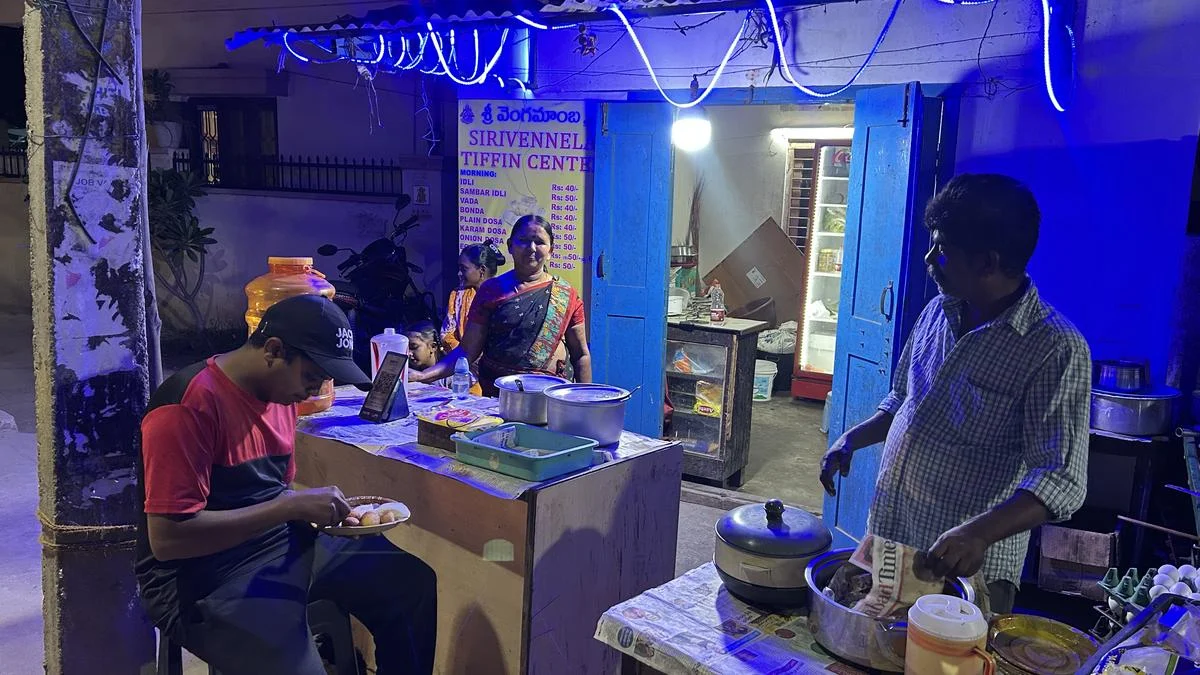
In the bustling area near Lingampalli railway station, Chenna Krishna Amma and her husband manage the "Sirivenella Tiffin Center." They relocated to Hyderabad five years ago from Andhra Pradesh to join their son, who was already employed in the city. As their family expanded and financial pressures mounted, they rented a shop for ₹7,000 per month and began serving South Indian breakfast to the daily stream of commuters.

Their clientele primarily consists of travelers and students from neighboring schools who frequent the center after their classes. While they initially focused solely on South Indian delicacies, starting with idli and dosa at ₹40 per plate, they have since expanded their offerings to include pakoras and other evening snacks, maintaining the same price point.
Their son, Ashok, who manages the shop on Sundays, is actively involved in popularizing the establishment founded by his parents. The core principle that underpins their operation is unwavering: every dish is prepared fresh, and nothing is carried over to the next day. This commitment to freshness is a cornerstone of their culinary philosophy and a significant draw for their customers.
The Unseen Pillars of the City: Trust, Taste, and Tangible Connections
The enduring appeal of these informal kitchens lies in the bedrock of trust they cultivate. They are not mere restaurants or transactional tiffin services; they are extensions of families who have brought their culinary heritage to a new urban landscape. These kitchens, while serving the immediate needs of homesick students, also cater to seasoned IT professionals who, despite years of residency in Hyderabad, still find that the most evocative flavors of home are those prepared by individuals who, like them, have journeyed from afar.
The success of these establishments underscores a critical aspect of urban living: the persistent human need for connection, comfort, and familiarity, particularly through the universal language of food. As Hyderabad continues its trajectory of growth and diversification, these small, often overlooked, culinary havens play a vital role in fostering a sense of belonging and easing the transition for countless individuals navigating a new chapter in their lives. They represent a powerful testament to entrepreneurial spirit, familial dedication, and the profound emotional resonance of a well-prepared meal that carries the essence of home. The article, through these personal narratives, highlights not just the demand for affordable and authentic food but also the deeper emotional and social connections forged within the diverse tapestry of Hyderabad’s migrant population. The writer, an intern, has provided a valuable insight into this often-unseen facet of urban life.
