

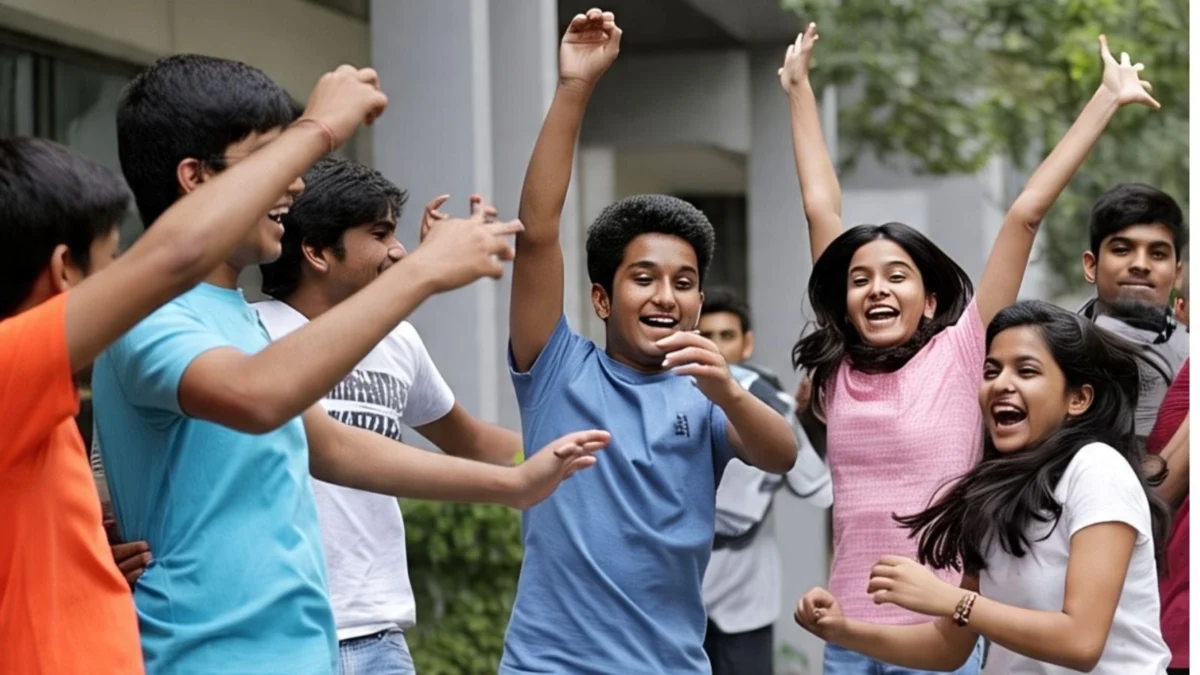
New Delhi, June 6, 2026 – In a significant reprieve for thousands of students who have successfully qualified for the prestigious Joint Entrance Examination (JEE) Advanced, IIT Roorkee has announced a crucial concession regarding the mandatory Class 12 percentage requirement. The decision, made late on Friday night, allows JEE Advanced 2026 qualifiers impacted by the ongoing CBSE marking controversy to participate in the Joint Seat Allocation Authority (JoSAA) counselling and secure seats, provided they submit a revised Class 12 scorecard meeting the eligibility threshold by July 15, 2026. This move addresses a looming crisis that threatened to derail the aspirations of many deserving candidates who found their academic futures jeopardized by alleged errors in the CBSE’s On-Screen Marking (OSM) system.
The announcement, disseminated through IIT Roorkee’s official X handle, directly confronts the mounting anxiety among students who, despite achieving commendable ranks in JEE Advanced, faced potential disqualification due to their Class 12 marks falling below the stipulated cut-off. The controversy stems from widespread complaints regarding marking discrepancies and errors within CBSE’s newly implemented OSM system for Class 12 examinations.
The Genesis of the Crisis: CBSE’s On-Screen Marking System Under Scrutiny
The 2026 academic year marked a pivotal shift for the Central Board of Secondary Education (CBSE) with the full-scale implementation of its On-Screen Marking (OSM) system for evaluating Class 12 board examinations. Designed to streamline the evaluation process, enhance transparency, and reduce potential human errors associated with manual marking, the OSM system encountered significant teething problems. Within weeks of the results being declared, a deluge of grievances emerged from students and parents across the country, citing alleged discrepancies in marks awarded.
Reports indicated instances where answers that were clearly correct were marked as incorrect, and some questions were not evaluated at all. The sheer volume of these complaints, reportedly reaching over 70,000 grievance applications, overwhelmed the system. The situation was further exacerbated by reports of a massive Distributed Denial of Service (DDoS) attack on the CBSE’s grievance portal, which disrupted the re-evaluation and verification processes for a considerable period. This delay in addressing student concerns added another layer of stress and uncertainty for those whose academic progression hinged on accurate Class 12 scores.
The CBSE’s OSM system, while intended to be a technological leap forward, inadvertently created a bottleneck for students aiming for admission to premier engineering institutions like the Indian Institutes of Technology (IITs), which have stringent academic eligibility criteria. The mandatory Class 12 percentage requirement, a long-standing prerequisite for JEE Advanced, became a point of contention as students found their scores being downgraded due to alleged systemic errors.
IIT Roorkee’s Proactive Intervention: A Ray of Hope for Affected Students
IIT Roorkee, as the organizing institution for JEE Advanced 2026, found itself at the forefront of this unfolding crisis. The institution, committed to upholding the integrity of the JEE process and ensuring fairness to its qualifiers, recognized the gravity of the situation. While IIT Roorkee had previously maintained a firm stance against any blanket relaxation of the 75% eligibility norm – citing the multi-board nature of JEE admissions and the prior publication of the criterion – the unique circumstances presented by the CBSE OSM controversy necessitated a nuanced approach.
In a significant policy announcement, IIT Roorkee clarified the path forward for students whose Class 12 scores were impacted by the CBSE marking issues. The institution explicitly stated that affected students are eligible to proceed with filling their choices in the JoSAA counselling process. Crucially, seat allocations will be made based on their JEE Advanced ranks. The critical condition, however, is the submission of a revised Class 12 scorecard that meets the minimum eligibility criteria.
For General, Other Backward Classes (OBC-NCL), and Economically Weaker Sections (EWS) categories, the minimum Class 12 percentage requirement remains at 75%. For Scheduled Castes (SC), Scheduled Tribes (ST), and Persons with Disabilities (PwD) categories, the threshold is 65%. Students are required to submit their revised scorecards, reflecting these percentages, to the dedicated email address, [email protected], by July 15, 2026. Upon receipt and verification of these revised documents, the admission to the allocated seat will be confirmed, provided the eligibility criteria are met.
This decision effectively provides a crucial window for students to rectify their Class 12 scores without being prematurely excluded from the IIT admission process. They can now actively participate in the seat allocation rounds, secure a provisional seat, and await the final confirmation once their academic eligibility is re-established.
The Chronology of Events: From Controversy to Concession
The timeline of events leading to IIT Roorkee’s intervention highlights the escalating nature of the crisis and the subsequent response:
- Early to Mid-May 2026: CBSE declares Class 12 examination results.
- Late May 2026 onwards: Widespread complaints and concerns surface regarding alleged marking errors and discrepancies within the CBSE’s On-Screen Marking (OSM) system. Students begin to notice their scores falling below the mandatory 75% (or 65% for reserved categories) threshold for JEE Advanced eligibility.
- Early June 2026: The CBSE OSM controversy gains significant traction, with media reports detailing the extent of the issues and the growing anxiety among students. Reports of a DDoS attack on the CBSE grievance portal further complicate the re-evaluation and verification processes.
- June 3-4, 2026: Discussions and consultations likely take place between IIT Roorkee (as the JEE Advanced organizing body), JoSAA, and potentially the CBSE to address the escalating crisis.
- June 5, 2026 (Evening): IIT Roorkee issues an official statement on its X handle, announcing the concession for affected JEE Advanced qualifiers. The statement clarifies the eligibility for JoSAA counselling and the procedure for submitting revised scorecards.
- June 5, 2026 (Night): The news spreads rapidly across educational forums and media, bringing immense relief to thousands of students and their families.
Supporting Data and Context: The 75% Rule and its Significance
The 75% Class 12 marks criterion for IIT admissions is a well-established rule, designed to ensure that candidates possess a strong foundational academic background. This rule applies to students from all recognized education boards across India, and its implementation has historically been a non-negotiable aspect of IIT eligibility.
The JEE Advanced exam itself is designed to test a candidate’s problem-solving skills and conceptual understanding in Physics, Chemistry, and Mathematics. However, the prerequisite of a minimum Class 12 percentage acknowledges that a solid academic performance in the secondary school leaving examinations is indicative of a student’s discipline, consistent effort, and ability to grasp fundamental academic concepts.
The challenge in the current scenario was not the validity of the 75% rule itself, but the integrity of the scores upon which its application was based. When alleged systemic errors within the CBSE system led to a significant number of students falling short of this benchmark, it created a deadlock. IIT Roorkee’s previous stance, articulated by its officials, emphasized that the eligibility criteria were published well in advance (as far back as December of the preceding year) and that a multi-board system necessitates uniform application of rules.
However, the scale and nature of the CBSE OSM issues prompted a re-evaluation of the approach. The decision to allow participation in counselling with a conditional submission of revised scores acknowledges that students should not be penalized for systemic failures beyond their control, especially when a viable mechanism for correction exists. The extension of the deadline to July 15, 2026, provides ample time for the CBSE to expedite its re-evaluation and verification processes and for students to obtain their updated scorecards.
Official Responses and Perspectives
The official communication from IIT Roorkee has been clear and direct. The X post stated, "For those students whose Class 12 (or equivalent) marks are less than 75% (for General/OBC-NCL/GEN-EWS categories) or less than 65% (for SC/ST/PwD categories), please note the following: You are eligible to fill in your choices at present and seats will be allocated to you based on your rank. You need to send the revised scorecard with at least 75% or 65% as per your category by July 15, 2026, through the email [email protected]. On receipt of the same, admission will be given to whichever seat is allocated to you at the end of the 4th round."
This statement reflects a pragmatic and empathetic approach from IIT Roorkee, balancing the need to maintain academic standards with the imperative of ensuring fairness to deserving candidates. The institution has also been proactive in addressing other related concerns, such as refuting claims of privacy violations concerning student data, as reported in other outlets.
While the CBSE has been actively working to address the grievances, the onus of resolving the marking discrepancies now lies heavily on its re-evaluation and verification mechanisms. The board’s commitment to expediting these processes is crucial for the successful implementation of IIT Roorkee’s concession.
Implications and the Road Ahead
The decision by IIT Roorkee has far-reaching implications for the JEE Advanced 2026 admission cycle and potentially sets a precedent for future situations involving systemic examination issues.
- Relief for Thousands of Students: The most immediate impact is the immense relief provided to thousands of JEE Advanced qualifiers who were facing the prospect of losing their IIT seats due to circumstances beyond their control. This allows them to continue with the counselling process with renewed hope and reduced anxiety.
- Streamlined Counselling Process: By allowing affected students to participate in JoSAA counselling, IIT Roorkee and JoSAA are preventing a significant disruption to the seat allocation process. Instead of a large-scale re-evaluation of eligibility post-counselling, the conditionality is integrated into the admission confirmation stage.
- Emphasis on Fair Play: The move underscores the importance of ensuring that students are not unfairly penalized for errors in examination systems. It highlights a commitment to a fair and equitable admission process.
- Heightened Scrutiny on CBSE: The controversy and the subsequent intervention by IIT Roorkee will undoubtedly place greater scrutiny on the CBSE’s examination and evaluation processes, particularly its OSM system. The board will be under pressure to ensure the accuracy and reliability of its systems moving forward.
- Potential Precedent: This decision could set a precedent for how premier institutions respond to future instances of widespread examination errors impacting eligibility criteria. It suggests a willingness to accommodate students facing genuine systemic challenges, provided there are clear mechanisms for rectification.
- Logistical Challenges: While the decision is welcome, it also presents logistical challenges for IIT Roorkee and JoSAA in managing the verification of revised scorecards and ensuring timely confirmations. The CBSE’s efficiency in issuing these revised scorecards will be paramount.
In conclusion, IIT Roorkee’s decisive action in response to the CBSE marking controversy has provided a much-needed lifeline to JEE Advanced qualifiers. By allowing conditional participation in the JoSAA counselling process, the institution has demonstrated its commitment to fairness and academic integrity, ensuring that genuine talent is not stifled by systemic glitches. As the July 15 deadline approaches, the focus will shift to the efficient resolution of marking discrepancies by the CBSE and the seamless processing of revised scorecards by IIT Roorkee, ultimately paving the way for a just and equitable admission outcome for the aspiring engineers of tomorrow.
