

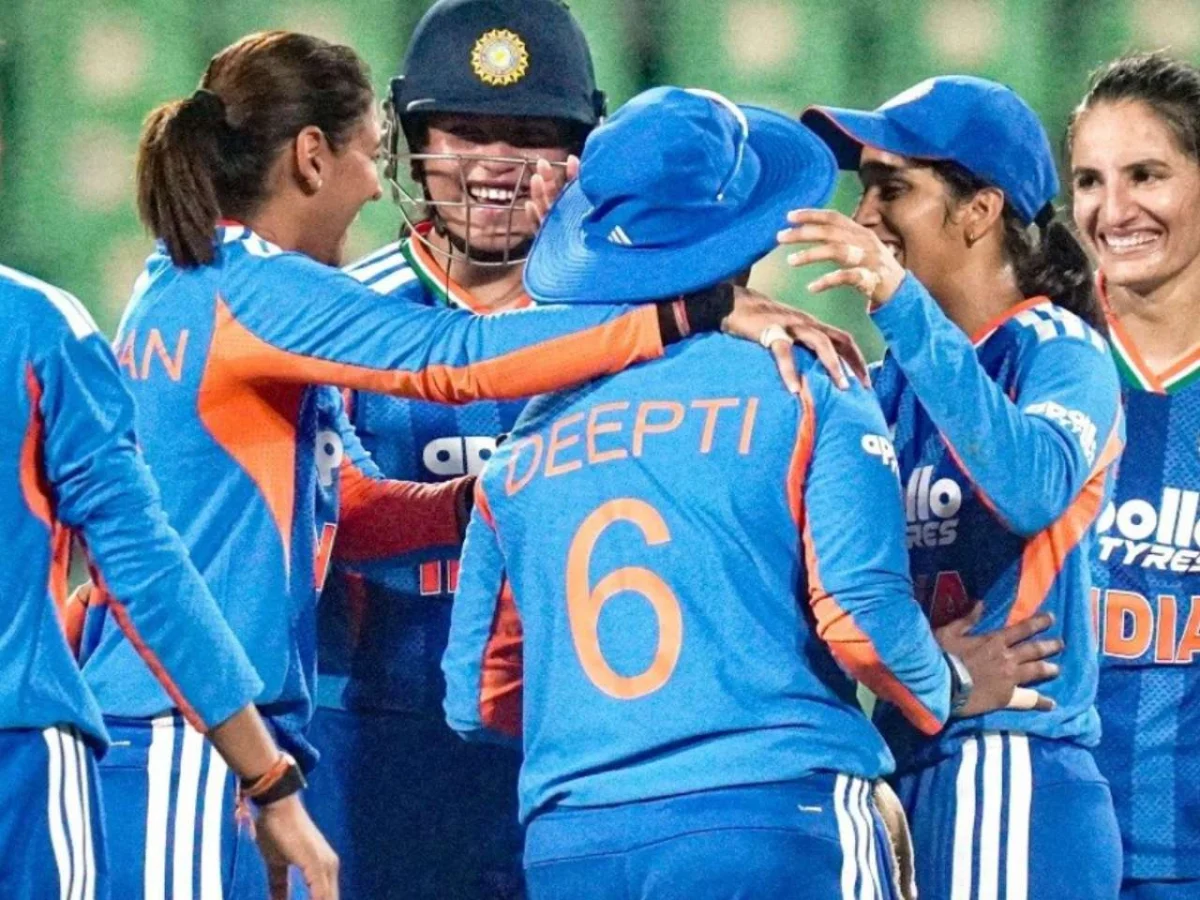
London, UK – The ICC Women’s T20 World Cup 2026 has reached a fever pitch for Team India, whose aspirations of reaching the semi-finals now hinge entirely on a single, high-stakes encounter. Following South Africa’s crucial victory over Bangladesh, India finds itself in a precarious yet clear position: defeat perennial powerhouse Australia in their final Group A match, or face an early exit from the tournament. The cricketing world watches with bated breath as Harmanpreet Kaur’s squad prepares for what promises to be an epic showdown against the reigning champions.
The scenario crystallised on Sunday after South Africa secured a four-wicket win against Bangladesh, propelling the Proteas to eight points from five games in Group A. This result pushed India into a must-win situation, transforming their clash against Australia into an effective quarter-final. With six points from four matches, India holds a significant advantage in Net Run Rate (NRR) at +2.268, far superior to South Africa’s +0.633. This superior NRR is India’s lifeline: a victory against Australia would see them also finish on eight points, allowing them to advance to the semi-finals ahead of South Africa due to their healthier NRR. Conversely, any outcome other than a win will see India’s campaign conclude, leaving them stranded on six points.
The Road to a Decisive Encounter: India’s Tournament Journey
India’s path through the group stage has been a testament to both their potential and the unforgiving nature of top-tier T20 cricket. Their campaign commenced with a resounding victory over arch-rivals Pakistan, a performance that set a confident tone for the tournament. The team showcased their batting prowess and disciplined bowling, demonstrating their intent to compete at the highest level. This was followed by another dominant display against the Netherlands, where the ‘Women in Blue’ further cemented their net run rate advantage with a comprehensive win. These early victories built momentum and instilled a sense of belief within the squad and among their fervent supporters.
However, the narrative took a challenging turn in their encounter against South Africa. This match proved to be a pivotal moment, with the Proteas delivering a performance that exposed some vulnerabilities in the Indian line-up. The defeat meant that India could no longer afford to relax, turning their attention to the remaining fixtures with increased urgency. The loss to South Africa underscored the competitive depth of Group A, highlighting that no opponent could be underestimated and that every point, and indeed every run, could prove crucial.
)
This series of results has culminated in the climactic final group stage fixture against Australia. The journey thus far has been a valuable learning curve for the Indian side, testing their resolve and adaptability. From moments of triumph to periods of introspection, the team has navigated the complexities of a major international tournament, all leading to this singular, defining moment at Lord’s. The pressure is immense, but the experience gained from previous matches, both wins and losses, will undoubtedly be drawn upon as they prepare for their biggest challenge yet.
Decoding the Qualification Metrics: Points, NRR, and Group Dynamics
Understanding the qualification mechanics is crucial to appreciating the gravity of India’s current predicament. In the ICC Women’s T20 World Cup, teams accumulate points based on their match results – two points for a win, one for a tie or no result, and zero for a loss. At the end of the group stage, the top two teams from each group progress to the semi-finals. When two or more teams are tied on points, Net Run Rate (NRR) becomes the deciding factor.

Group A Standings (Prior to India vs. Australia):
- Australia: (Already qualified, likely 1st place)
- South Africa: 8 points from 5 matches (NRR: +0.633)
- India: 6 points from 4 matches (NRR: +2.268)
- Other Teams: (Eliminated or not in contention for semi-final spots)
The scenario is straightforward for India: a win takes them to 8 points, matching South Africa’s tally. Given India’s significantly superior NRR (+2.268 compared to South Africa’s +0.633), a victory of any margin would be sufficient to push them ahead of South Africa and secure the second semi-final berth from Group A. This NRR advantage, meticulously built through their dominant wins against Pakistan and the Netherlands, is now India’s trump card. It removes the added pressure of needing to win by a specific margin, allowing the team to focus purely on securing the two points.
)
Conversely, a loss or a no-result would leave India on six points, thus eliminating them from the tournament. South Africa, having completed all their group stage matches, would then automatically advance. The precision of the NRR calculation means that every boundary, every dot ball, and every wicket taken in previous matches has contributed to this crucial buffer, a testament to the comprehensive nature of their earlier victories. This mathematical clarity provides both immense pressure and a clear objective for Harmanpreet Kaur’s side.
The Australian Juggernaut: A Formidable Opponent
Facing Australia in a must-win game is arguably the toughest challenge in women’s cricket. The Australian women’s team has established itself as an unparalleled force in the global arena, boasting an incredible track record in ICC tournaments, including multiple T20 World Cup titles. Their consistent dominance stems from a deep talent pool, exceptional tactical acumen, and a relentless winning mentality.
)
The Australian squad is replete with world-class players across all departments. Their batting line-up is renowned for its depth, power-hitting capabilities, and ability to adapt to various match situations. From explosive openers to composed middle-order anchors, they possess the firepower to post formidable totals and chase down challenging targets. Their bowling attack is equally potent, featuring a blend of pace and spin that can exploit any conditions and dismantle opposition line-ups. Moreover, their fielding is often cited as a benchmark, with acrobatic catches and sharp ground fielding saving crucial runs and creating pressure.
Historically, clashes between India and Australia have often been enthralling affairs, marked by fierce competition and memorable individual performances. While India has had moments of brilliance against Australia, the latter has generally held the upper hand in crucial knockout or group-deciding matches. This historical context adds another layer of challenge for India; they are not just fighting for a semi-final spot but also battling against the psychological advantage that Australia often carries into such encounters. Overcoming this cricketing giant requires not only exceptional skill but also immense mental fortitude and a belief that they can defy the odds.
)
Voices from the Camp: Confidence and Strategy
In the build-up to this monumental clash, the Indian camp has exuded a mix of cautious optimism and steely determination. Captain Harmanpreet Kaur, a veteran of many high-pressure situations, demonstrated her strategic intent by winning the toss and opting to bat first against Australia at the iconic Lord’s. This decision underscores a clear objective: to put runs on the board and apply pressure on the formidable Australian batting line-up from the outset. Batting first in a high-stakes game often allows a team to dictate the tempo and set a challenging target, particularly on a pitch that might offer assistance to bowlers later in the innings.
Vice-captain Smriti Mandhana, one of India’s premier batters, articulated the team’s readiness and focus. "We are all really looking forward to it," Mandhana stated, acknowledging the magnitude of the moment. "A very important match for us, a must-win for us to go through. Having said that, we’ll stick with the processes and try to put up our best." Her words reflect a pragmatic approach, emphasizing the importance of adhering to their established game plan rather than succumbing to the overwhelming pressure of the occasion. The focus on "processes" suggests a team that has meticulously prepared and trusts their execution, understanding that individual brilliance must be supported by collective effort and strategic discipline.
)
The team management has also stressed the importance of evaluating the pitch and environmental conditions at Lord’s before finalising their strategy. Lord’s, often referred to as the "Home of Cricket," presents its unique challenges, with historical nuances that can influence play. The commitment to playing aggressively, as mentioned by the team, indicates an intent to take the game to the Australians rather than adopting a defensive stance. This proactive mindset is crucial against an Australian side that thrives on exploiting any hesitation from their opponents. The combination of meticulous planning, strategic decision-making, and an aggressive intent will be vital if India is to overcome their formidable rivals.
Semi-Final Implications: The Path Ahead
Should India emerge victorious from their encounter with Australia, they will secure their spot in the semi-finals, joining England and the West Indies, who have already qualified from Group B. The tournament structure dictates that the first semi-final will be played on June 30. While the exact opponent would depend on the final standings of Group B, the prospect of facing either England or the West Indies presents another stern test. Both teams have demonstrated exceptional form in their respective campaigns, making any semi-final clash a challenging affair.
)
Reaching the semi-finals of an ICC T20 World Cup is a significant achievement for any team, and for India, it would represent a validation of their consistent efforts and development in women’s cricket. It provides a platform to compete for the coveted World Cup trophy, an honour that every cricketing nation aspires to. The semi-final stage demands a different level of performance, where nerves, tactical brilliance, and individual heroics often determine the outcome.
For the Indian team, a semi-final berth would also carry immense implications for the growth of women’s cricket back home. Such exposure on a global stage inspires a new generation of cricketers and fans, further elevating the sport’s profile and attracting greater investment and interest. The momentum generated by a strong World Cup performance can have a lasting impact on the domestic structure, player development pathways, and overall fan engagement. The opportunity to play in a World Cup semi-final is not just about the match itself, but about the broader narrative it helps to build for women’s cricket in India.
)
The Broader Significance: Women’s Cricket on the Global Stage
The ICC Women’s T20 World Cup 2026 is more than just a series of cricket matches; it is a global spectacle that showcases the rapid growth, increasing professionalism, and burgeoning popularity of women’s cricket. Tournaments like these are vital for the sport’s development, providing crucial visibility, enhancing competitive standards, and fostering a global fan base.
Over the past decade, women’s cricket has witnessed a transformative period, moving from relative obscurity to a prominent position in the international sporting landscape. Increased investment from national boards and the ICC, improved infrastructure, professionalisation of contracts, and dedicated media coverage have all contributed to this upward trajectory. Players are now household names, inspiring millions with their athleticism, skill, and dedication.
)
For India, a nation where cricket holds an almost religious significance, the performance of the women’s team carries particular weight. The success of the ‘Women in Blue’ has a profound impact on national sentiment and the perception of female athletes. A deep run in the World Cup, especially one culminating in a final or even a victory, would not only bring immense pride but also further accelerate the sport’s growth within the country. It would encourage more young girls to take up cricket, strengthen grassroots programmes, and solidify the position of women cricketers as role models.
The pressure on Harmanpreet Kaur’s team is therefore multifaceted. They are not merely playing for a semi-final spot; they are playing for national honour, for the future of women’s cricket in India, and for the dreams of countless aspiring cricketers. The upcoming clash against Australia at Lord’s is set to be a defining moment, not just for this tournament, but potentially for the trajectory of women’s cricket in one of its biggest markets. The stakes could not be higher, and the world awaits to see if India can rise to the occasion.
