

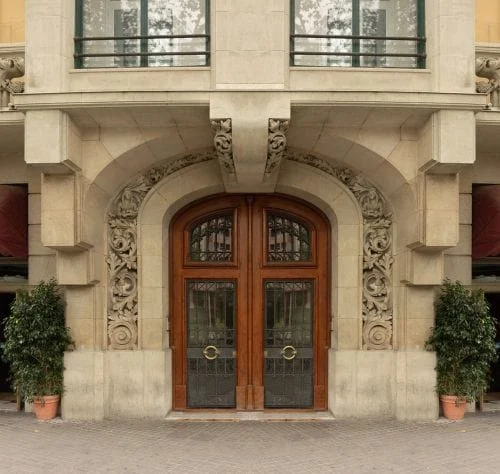
The entrance to a home is far more than a mere point of ingress; it is a profound architectural statement that bridges the private sanctuary of the family with the public world. In the contemporary landscape of residential design, the main gate and door grill have evolved from purely utilitarian security measures into pivotal elements of a property’s character and "curb appeal."
As homeowners increasingly seek to balance the psychological need for safety with the aesthetic desire for personality, the market for door grill designs has expanded into a multi-billion dollar industry. This report explores the latest trends in door grill architecture, the technical requirements for durability, and how these designs are redefining the modern facade.

The Dual Mandate: Security Meets Aesthetic Expression
The primary function of any door grill remains the provision of security. It acts as the first line of defense against unauthorized entry, providing a physical barrier that discourages intruders. However, architects and interior designers now argue that a grill should never make a home feel like a "cage."
The modern design philosophy suggests that the main gate encourages passing observers to form an opinion about the lifestyle and values of the inhabitants. Whether it is the rugged strength of basic iron or the sophisticated transparency of glass-and-metal hybrids, the choice of grill design reflects a homeowner’s priority—be it tradition, modernity, or absolute privacy.

The Evolution of Entrance Design: A Chronological Shift
To understand the current market, one must look at the transition of grill styles over the past century.
- The Era of Heavy Fortification (Pre-1990s): During this period, "Old School Architecture" dominated. Grills were heavy, bulky, and detail-oriented. The goal was to create a massive protective seal. These designs featured thick, hand-forged iron with intricate, often cluttered, scrollwork.
- The Minimalist Turn (2000s–2015): As urban living shifted toward apartments and smaller footprints, "Compact Bar" designs and simple geometric patterns emerged. The focus moved toward "visual lightness," using thinner rods and straight lines to make small entrances feel less claustrophobic.
- The Hybrid Innovation (Present Day): Today’s market is characterized by "Material Fusion." We are seeing the integration of wood, glass, and customized metal sheets. The rise of CNC (Computer Numerical Control) laser-cutting technology has allowed for "Themed Doors" and "Intrinsic View" designs that were previously impossible to manufacture at scale.
A Typology of Modern Door Grill Designs
Homeowners today are presented with a staggering array of choices. Below is a breakdown of the most prominent categories currently influencing residential architecture.
1. Basic and Geometric Ironwork
Simple iron grills remain the backbone of residential security, particularly in developing urban centers. While the basic design honors pure function, the "Geometric Grill" offers a modern twist. By using lighter rods arranged in squares, triangles, or asymmetrical patterns, these grills provide a neat, elegant look that complements contemporary flat-roofed houses.
2. The Luxury of Wood and Metal Hybrids
Professional design and decor experts frequently recommend the combination of wood and iron. The "Wood Grill Design" incorporates iron bars directly into a solid wooden frame. This creates a "statement" entrance that offers the warmth of natural timber with the unyielding strength of metal. This style is often found in high-end villas and independent bungalows.
3. European-Inspired Intrinsic Views
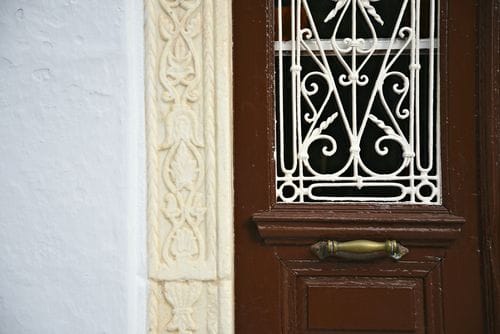
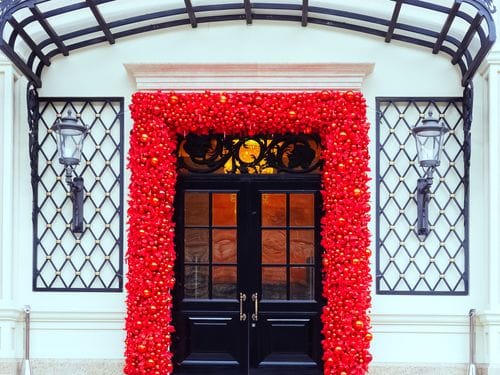
Influenced by architectural trends in the United Kingdom and the United States, the "Intrinsic View" door utilizes heavy ironwork set against transparent or frosted glass. This allows natural light to permeate the foyer while maintaining a formidable barrier. It is a design that prioritizes "transparency with protection."
4. Grand Entrances and Majestic Gates
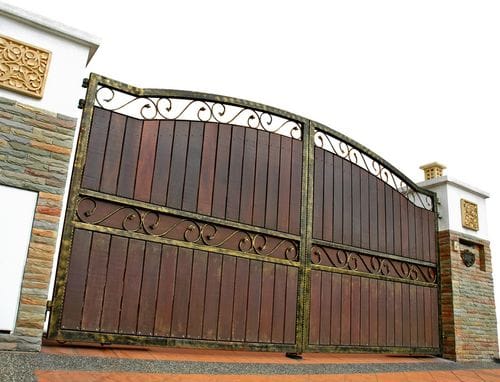
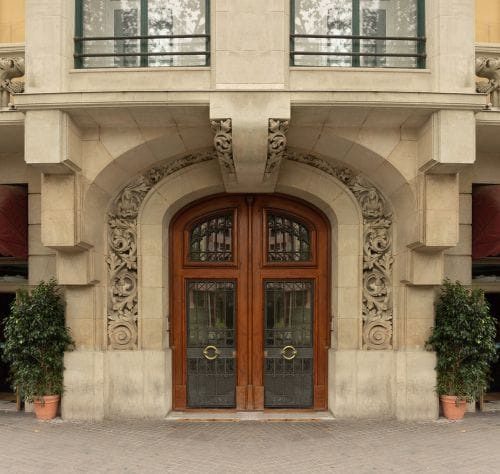
For properties with a front yard or a driveway, the "Grand Entrance" gate serves as the primary perimeter defense. These often feature "molted" or customized iron grills with rustic gold finishes and brickwork pillars. The aesthetic is intentionally royal and majestic, designed to dwarf the entrance and provide a sense of historical grandeur.

5. Industrial and Commercial Latticed Designs
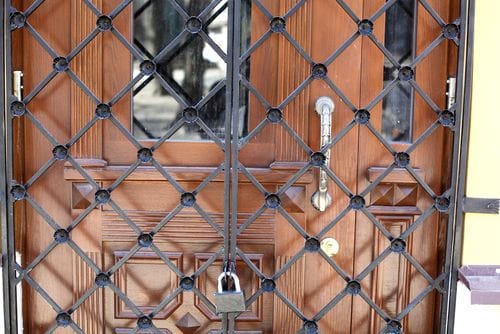
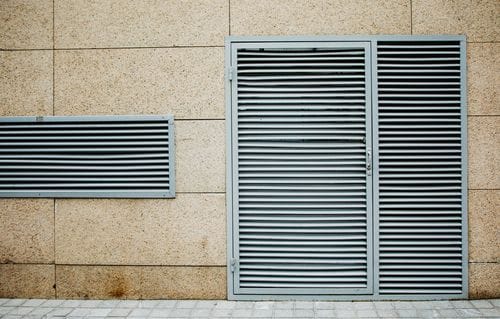
Commonly seen in shops and office spaces, the "Latticed" or gridlock door focuses on stringent security. While traditionally utilitarian, some modern homeowners are adopting this "industrial chic" look, using heavy-duty mesh or tight grids to create a unique, rugged aesthetic.
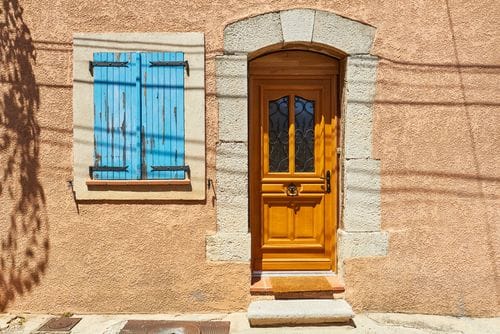
6. The "Pop of Color" Strategy
A significant trend among interior decorators is the use of bright, non-traditional colors to revitalize basic grill designs. By painting traditional iron bars in vibrant orange, deep blue, or forest green, designers can add an element of surprise and modern flair to an otherwise standard facade without the cost of custom fabrication.
Supporting Data: Engineering and Material Standards
The longevity of a door grill is dictated by its material composition and its ability to withstand environmental stressors. A safety door is subjected to a "triad of degradation": heavy monsoon rains, scorching UV exposure, and high humidity.
Material Comparison Table
| Material | Durability | Aesthetic Versatility | Maintenance Level |
|---|---|---|---|
| Wrought Iron | High | Very High (Hand-forged) | Moderate (Requires painting) |
| Stainless Steel | Very High | Moderate (Modern/Sleek) | Low (Rust-resistant) |
| Aluminum | Moderate | High | Very Low (Corrosion-resistant) |
| Mild Steel (MS) | Moderate | High | High (Needs frequent anti-rust coating) |
The Importance of Weatherproofing
Data from industry reports suggest that nearly 40% of grill failures in coastal regions are due to "crevice corrosion." To combat this, experts emphasize four practical manufacturing decisions:

- Galvanization: Coating the iron in zinc to prevent oxidation.
- Powder Coating: A dry finishing process that provides a thicker, more durable protective layer than liquid paint.
- Mesh Integration: Using fine metal mesh panels for ventilation while keeping out insects—a popular "Bonus Option" in tropical climates.
Expert Perspectives: Security and Psychology
Leading architects suggest that the choice of a door grill is as much about psychology as it is about engineering. "The entrance is a transition zone," says a prominent urban designer. "If the grill is too heavy, the home feels like a fortress, which can increase the anxiety of the inhabitants. If it is too light, there is a lack of ‘boundary definition.’ The goal is to find a design that feels ‘sturdy yet welcoming.’"
Security consultants also point toward the "CPTED" (Crime Prevention Through Environmental Design) principles. They argue that a grill should provide "natural surveillance"—meaning the homeowner should be able to see out clearly, but the intruder should feel "exposed" by the design. This explains the rising popularity of "Glass Panels with Grills," which offer clear lines of sight without compromising the physical barrier.
Implications and Future Trends
As we look toward the next decade of residential design, several key implications emerge for the door grill industry:
1. Smart Integration
The "Smart Gate" is no longer a futuristic concept. Modern door grills are now being designed to house biometric scanners, video doorbells, and automated locking mechanisms within the metal framework itself.
2. Sustainability and Recycled Materials
There is a growing demand for "Green Gates." This involves using recycled steel and eco-friendly, low-VOC (Volatile Organic Compound) paints. Some designers are even experimenting with "Living Grills," where metal structures are designed to support climbing plants, creating a "green wall" security barrier.
3. Personalization via CNC Technology
The democratization of laser-cutting technology means that "Customized Metal Sheets" are becoming affordable for the middle-class market. Homeowners can now have their family crest, floral patterns, or even abstract art cut into their security doors, moving away from the "one-size-fits-all" bars of the past.
Conclusion: Summing Up the Entrance Aesthetic
The door grill is the silent guardian of the home. While materials like wood, aluminum, and steel are gaining ground, wrought iron remains the gold standard for those seeking a blend of unprecedented classic beauty and raw strength. Whether one opts for the "Old School" bulky designs or the "Modern Mesh" look, the decision must be informed by a balance of climate-readiness, architectural harmony, and personal security needs.
Ultimately, a well-chosen door grill does not just protect a house; it completes it. It transforms a simple entryway into a curated experience, proving that in the world of modern architecture, safety and style are not mutually exclusive—they are two sides of the same door.
Disclaimer: This report provides information based on current architectural trends and industry data. Homeowners are encouraged to verify material standards and local building codes with qualified contractors before commencing installation.
