

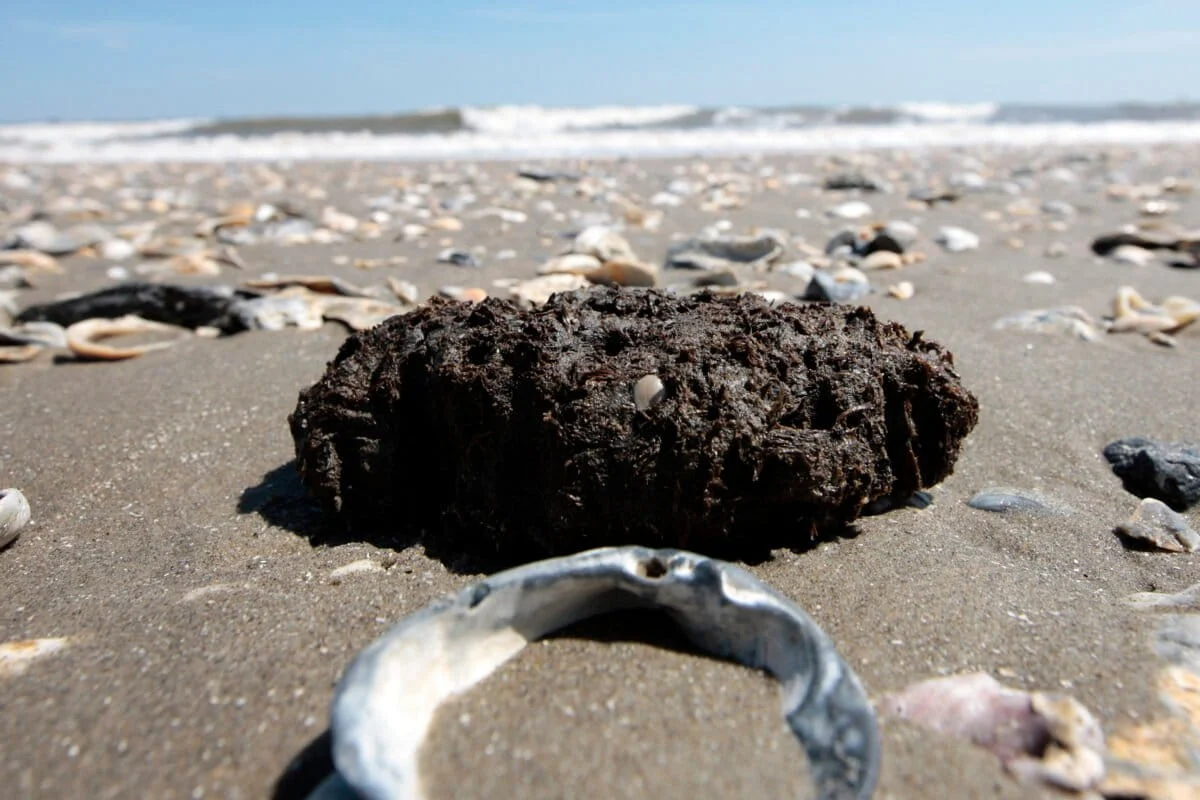
The Indian coastline, stretching over 7,500 kilometers, has long been a victim of a seasonal phenomenon that leaves its pristine sands marred by sticky, black, and toxic remnants of the petroleum industry. Known as "tar balls," these pollutants have historically been treated as a nuisance rather than a catastrophe. However, a significant shift in environmental policy is underway. The Indian government has recently notified draft rules for the management of tar balls, proposing a radical reclassification of this pollution as a "state disaster."
This move signals a hardening of the state’s stance against marine pollution and a commitment to the "polluter pays" principle. By bringing tar ball management under the ambit of the Disaster Management Act, the government aims to create a streamlined, high-priority response mechanism that holds oil companies and shipping magnates accountable for the ecological degradation of India’s shores.
I. Main Facts: The New Regulatory Framework
The Ministry of Environment, Forest and Climate Change (MoEFCC) has released the draft notification, which seeks to formalize the handling, transportation, and disposal of tar balls while assigning clear legal and financial liabilities.
Defining the "State Disaster"
The most striking feature of the draft rules is the proposal to declare tar ball pollution a "state disaster." Under current protocols, disasters are often categorized based on their immediate impact on human life and infrastructure. By categorizing tar balls—remnants of petroleum from oil spills, extraction activities, and ship discharges—as a state disaster, the government empowers state and district authorities to trigger emergency funding and administrative powers under the Disaster Management Act.
The "Generator" Liability
The rules introduce a rigorous accountability framework for "generators." This term is broadly defined to include:
- Oil tankers and shipping vessels.
- Oil exploration and production companies.
- Owners of offshore oil facilities and rigs.
- Transporters of crude and refined petroleum products.
These entities are now mandated to adhere strictly to the National Oil Spill Disaster Contingency Plan (NOSDCP), a protocol managed by the Indian Coast Guard. Any failure to prevent a spill that leads to the formation of tar balls will result in the generator being liable for "environmental compensation." This compensation is not merely a fine; it is designed to cover the total loss, damage to the ecosystem, injury to public health, and the entirety of the expenditure incurred by the government in the cleanup process.
Operational Roles and Disposal
The Central Pollution Control Board (CPCB) is tasked with developing a Standard Operating Procedure (SOP) for the handling of these hazardous materials. Once tar balls wash ashore, the responsibility shifts to district authorities for their collection and transport to Treatment, Storage, and Disposal Facilities (TSDF).
Furthermore, the rules recognize the high calorific value of tar balls. Instead of allowing them to linger in landfills, the draft proposes their disposal through incineration in waste-to-energy plants or as fuel in cement kilns, integrating the cleanup into a circular economy model.
II. Chronology: From Seasonal Nuisance to Legislative Priority
The journey toward these draft rules has been paved by decades of recurring environmental damage and recent scientific breakthroughs that provided the necessary legal evidence for regulation.
- The Annual "Black Tide": For decades, the arrival of the monsoon in India has coincided with the arrival of tar balls. Between May and September, changing wind patterns and ocean currents push weathered oil remnants from the Arabian Sea onto the beaches of Gujarat, Maharashtra, Goa, and Karnataka.
- The 2019 NIO Breakthrough: A pivotal moment occurred in 2019 when researchers from the National Institute of Oceanography (NIO) conducted a study in Goa. Using "biomarker fingerprinting"—a forensic technique that identifies the unique chemical signature of oil—researchers linked tar balls found on Goan beaches directly to the Bombay High offshore oil rig.
- Shifting the Narrative (2020-2022): Following the NIO study, environmentalists and state governments began to lobby for more than just localized cleanups. The evidence proved that tar balls were not just "accidents of nature" but the result of anthropogenic activities, including "tanker-washing"—the illegal practice of cleaning oil tanks with crude oil between voyages.
- The 2024 Draft Notification: In response to mounting pressure and the visible degradation of tourist hotspots, the MoEFCC drafted the new rules. The notification was opened for public suggestions and objections until June 2, 2024, with the intent to implement the final rules one year after their official notification.
III. Supporting Data: The Anatomy of a Tar Ball
To understand the severity of the government’s proposal, one must look at the scientific and economic data surrounding tar balls.
Chemical Composition and Toxicity
Tar balls are not merely "old oil." They are the product of "weathering," a process where the lighter components of spilled oil evaporate, leaving behind a dense, sticky mass.

- Heavy Metals: Analysis of tar balls along the Indian coast has revealed high concentrations of lead, nickel, vanadium, and cobalt.
- Organic Pollutants: They carry Polycyclic Aromatic Hydrocarbons (PAHs), many of which are known carcinogens.
- Environmental Persistence: Unlike light crude, which may disperse, tar balls can persist in the environment for years, eventually breaking down into micro-plastics and micro-oils that enter the marine food chain.
Economic Impact
The economic data highlights the necessity of the "state disaster" status:
- Tourism: In Goa, where tourism accounts for a significant portion of the GDP, tar ball incidents have led to beach closures and a decline in international visitor satisfaction.
- Fisheries: Tar balls contaminate fishing nets and can lead to the "tainting" of seafood, rendering the catch unmarketable and threatening the livelihoods of thousands of traditional fishermen.
- Cleanup Costs: Manual cleanup of a single kilometer of beach can cost millions of rupees, a burden that has historically fallen on state exchequers rather than the companies responsible for the oil.
IV. Official Responses: A Multilateral Approach
The implementation of these rules involves a complex web of national and state-level agencies.
The Indian Coast Guard (ICG)
As the central coordinating authority for the NOSDCP, the Coast Guard’s role will expand. Their response focuses on surveillance and the prevention of spills before they reach the shore. Officials have noted that while they can track large spills via satellite, "operational discharges" (minor leaks and tanker washings) are harder to detect without the stringent reporting requirements now proposed in the draft rules.
The National Remote Sensing Agency (NRSA)
The NRSA will provide the "eye in the sky." By utilizing satellite imagery and radar, the NRSA will assist in detecting oil slicks in real-time. This data will be crucial in identifying the "generator" responsible for a spill, providing the forensic trail needed to levy environmental compensation.
State Governments and District Authorities
State responses have been cautiously optimistic. While the "state disaster" tag provides them with more power and potential federal funding, it also increases their liability. Under the draft rules, state and district authorities themselves can be held liable to pay environmental compensation if they fail to clean up the tar balls in an "environmentally sound manner." This creates a dual-pressure system where both the polluter and the cleaner are held to high standards.
V. Implications: A New Era for Marine Conservation
The notification of these rules carries profound implications for India’s environmental jurisprudence and the global shipping industry.
1. Strengthening the "Polluter Pays" Principle
For the first time, there is a clear legal pathway to link offshore activity with onshore pollution. This will likely lead to an increase in litigation against oil majors and shipping lines. The requirement for generators to pay for "expenditure incurred" means that the cost of environmental negligence will now be factored into the operational budgets of these companies, potentially incentivizing better maintenance and stricter adherence to anti-pollution protocols.
2. Technological Innovation in Disposal
By mandating the use of tar balls in cement plants and waste-to-energy facilities, the government is encouraging a shift toward industrial symbiosis. This reduces the reliance on hazardous waste landfills and provides a secondary fuel source for high-energy industries, though it will require significant investment in specialized transport and incineration technology.
3. Public Health and Ecological Restoration
The classification of tar balls as hazardous waste recognizes the long-term health risks to coastal communities and sanitation workers. Formalizing the cleanup process ensures that workers are provided with appropriate protective gear and that the toxic materials are not simply buried in the sand—a practice that was common in the past but only led to groundwater contamination.
4. International Maritime Repercussions
As India is a major hub for international shipping lanes, these rules may set a precedent for other littoral nations in the Indian Ocean Region. Shipping companies passing through Indian waters will now face much stricter scrutiny. This could lead to a diplomatic push for similar standards across the region to prevent "pollution havens" where ships might otherwise discharge waste with impunity.
Conclusion
The proposed draft rules represent a sophisticated evolution in India’s environmental policy. By bridging the gap between maritime activity and terrestrial disaster management, the Indian government is acknowledging that the health of the ocean is inextricably linked to the safety and prosperity of the land. While the one-year lead time provides industry stakeholders a window to adjust, the message is clear: the days of treating India’s coastline as a free dumping ground for the global oil industry are coming to an end. The success of this initiative will ultimately depend on the rigor of the CPCB’s upcoming operating procedures and the political will to hold powerful economic actors accountable for the "black tide" they leave behind.
