By Automotive Correspondent
The Indian passenger vehicle market continues to exhibit remarkable resilience and growth, as evidenced by the sales performance data for October 2026. The month saw the top 10 best-selling models collectively accounting for 209,116 units, marking a significant 17.4% upward trajectory compared to the same period in 2025. This growth reflects a buoyant consumer sentiment, likely bolstered by festive season demand and a stabilizing supply chain that has allowed manufacturers to meet the burgeoning backlog of orders.
Maruti Suzuki India Limited (MSIL) continues to be the undisputed leader of the Indian roads, securing a staggering seven positions out of the top ten. However, the narrative of the month is not just about volume but also about the shifting preferences of the Indian consumer. While the humble hatchback remains a volume driver, the aggressive growth of the Compact SUV and Mid-size SUV segments suggests a permanent structural shift in the country’s automotive landscape.
The October 2026 Sales Hierarchy: A Detailed Breakdown
The sales chart for October 2026 reveals a mixture of traditional favorites and modern disruptors. The rankings highlight the competitive intensity between India’s "Big Three"—Maruti Suzuki, Tata Motors, and Mahindra & Mahindra.
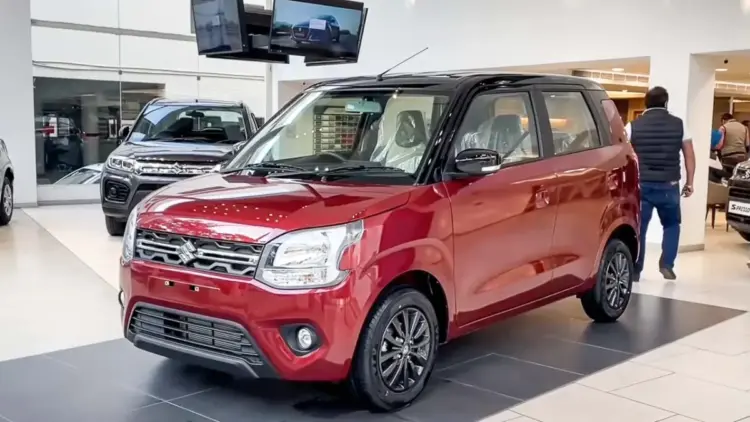
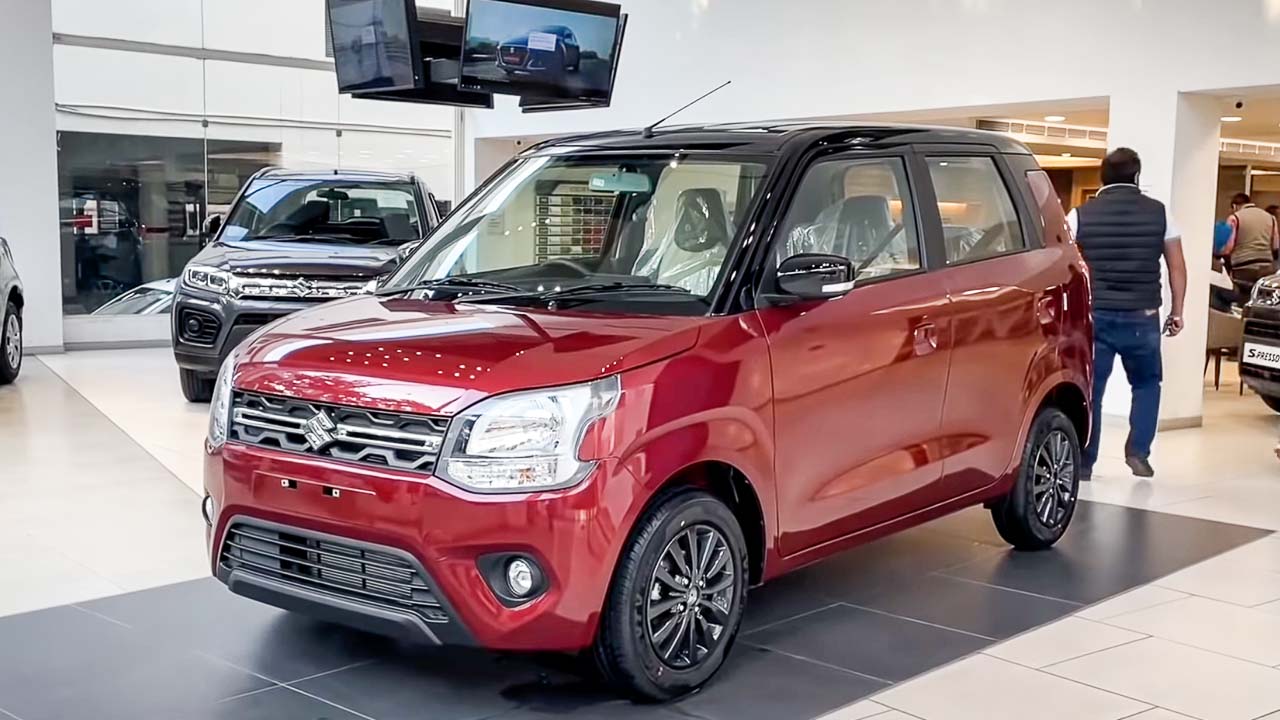
1. Maruti Suzuki WagonR: The Resilient Champion
Reclaiming its throne at the top of the pyramid, the Maruti Suzuki WagonR recorded sales of 23,747 units. This represents a robust 25% Year-on-Year (YoY) growth from the 18,790 units sold in October 2025. The WagonR’s success is attributed to its "tall-boy" design, which offers unmatched cabin space in its price bracket, and its highly efficient S-CNG technology. Interestingly, the model’s performance comes at a time when Maruti has been spotted testing a facelifted version of the hatchback, suggesting that the company is keen to maintain its momentum with updated aesthetics and perhaps enhanced safety features.
2. Maruti Suzuki Brezza: The Growth Outlier
The Maruti Brezza secured the second position, but more importantly, it registered the highest YoY growth among the top ten. With 22,436 units sold, the Brezza saw an 86% increase over the 12,072 units sold in October 2025. This massive jump indicates that Maruti’s strategy to pivot toward the SUV segment is yielding high dividends. The Brezza has successfully shed its image as a conservative choice, now appealing to a younger demographic looking for tech-heavy, reliable compact SUVs.
3. Tata Nexon: Holding the Fort
Tata Motors’ flagship SUV, the Nexon (including the Nexon.ev), took the third spot with 21,966 units. While the numbers are impressive, the growth was largely flat, showing a marginal decline of 1% compared to the 22,083 units recorded in October 2025. Industry analysts suggest that the Nexon, while still a powerhouse, is facing internal competition from the Tata Punch and external pressure from the refreshed Brezza and Maruti Fronx.
4. Maruti Suzuki Baleno: The Premium Hatchback Staple
The Baleno continues to lead the premium hatchback segment with 20,919 units, a 24% increase over the previous year. However, it is worth noting that the Baleno saw a Month-on-Month (MoM) decline; it had topped the charts in September 2026 with over 25,000 units. This fluctuation is common in the festive season as manufacturers balance inventory across different models.
5. Maruti Suzuki Dzire: The Sedan’s Lone Stand
In a market increasingly dominated by SUVs and hatchbacks, the Dzire remains the only sedan to consistently feature in the top 10. It recorded 20,649 units in October 2026, a slight 1% dip from the 20,791 units sold in the same month last year. The Dzire’s numbers are heavily supported by the fleet segment and buyers who still prioritize the "three-box" silhouette and boot space.
Chronology of Market Evolution: 2025 vs. 2026
To understand the October 2026 results, one must look at the preceding twelve months. In late 2025, the industry was grappling with the final stages of semiconductor normalization and a transition toward more stringent emission norms.
- Q1-Q2 2026: Manufacturers began aggressive product refreshes. Maruti Suzuki focused on its "SUV-fication" strategy, while Tata Motors expanded its EV portfolio.
- Q3 2026: The introduction of more advanced ADAS (Advanced Driver Assistance Systems) features in budget-friendly segments became a key differentiator.
- October 2026: The culmination of these efforts resulted in the 17.4% YoY growth. The month benefited from a favorable festive calendar, where both Dussehra and Diwali-related purchases drove showroom footfalls to record highs.
Supporting Data and Statistical Analysis
The following table provides a comparative look at the top 10 models, highlighting the shift in consumer demand over the 12-month period.
| Rank | Model | Oct 2026 Sales | Oct 2025 Sales | YoY Growth | Segment |
|---|---|---|---|---|---|
| 1 | Maruti WagonR | 23,747 | 18,790 | 25% | Hatchback |
| 2 | Maruti Brezza | 22,436 | 12,072 | 86% | Compact SUV |
| 3 | Tata Nexon | 21,966 | 22,083 | -1% | Compact SUV |
| 4 | Maruti Baleno | 20,919 | 16,873 | 24% | Premium Hatch |
| 5 | Maruti Dzire | 20,649 | 20,791 | -1% | Sedan |
| 6 | Maruti Ertiga | 20,641 | 20,011 | 3% | MPV |
| 7 | Tata Punch | 20,525 | 16,810 | 22% | Micro SUV |
| 8 | Maruti Fronx | 20,014 | 17,003 | 18% | Compact SUV |
| 9 | Mahindra Scorpio | 19,353 | 17,880 | 8% | Mid-size SUV |
| 10 | Maruti Swift | 18,866 | 15,542 | 21% | Hatchback |
Key Statistical Takeaway: SUVs (Brezza, Nexon, Punch, Fronx, Scorpio) now occupy 50% of the top 10 list, a significant increase from previous years where hatchbacks held the majority.

Official Responses and Industry Expert Commentary
While official statements from the OEMs were celebratory, they also remained cautious about the future.
Maruti Suzuki Spokesperson: "We are pleased with the performance of our diversified portfolio. The WagonR continues to be a household name, but the exceptional growth of the Brezza and Fronx validates our focus on the SUV segment. We remain committed to offering a variety of powertrains, including CNG and Hybrid, to meet the evolving needs of the Indian customer."
Tata Motors Market Analyst: "The Nexon remains a core pillar of our strategy. While the YoY growth appears flat, it is important to note the high base of 2025. Furthermore, the Punch has shown incredible growth, indicating that our ‘Twin SUV’ strategy for the compact segment is working effectively to capture different price points."
Independent Automotive Consultant, Dr. Rajesh Verma: "The 17.4% growth in the top 10 models is a clear indicator of a ‘K-shaped’ recovery in the automotive sector. While entry-level cars are growing, the real momentum is in the ₹10 lakh to ₹20 lakh price bracket. Consumers are willing to pay a premium for safety, technology, and the SUV form factor."
Strategic Implications for the Near Future
The October 2026 sales data carries several long-term implications for the Indian automotive industry:
1. The SUV Dominance is Permanent
The fact that five of the top ten cars are SUVs—and that the Brezza grew by 86%—suggests that the SUV trend is no longer a "trend" but the new market standard. Manufacturers who do not have a strong SUV portfolio will likely see their market share erode.

2. The Hatchback is Not Dead, But it is Evolving
Despite the SUV surge, the WagonR, Baleno, and Swift still moved over 63,000 units combined. This indicates that for a large section of the Indian population, the hatchback remains the most practical entry point into vehicle ownership. However, the upcoming WagonR facelift suggests that even these "bread and butter" models must innovate to survive.
3. The "Feature War" Intensifies
With models like the Fronx and Punch recording double-digit growth, it is evident that features like 360-degree cameras, ventilated seats, and sunroofs are no longer luxury additions but expected standard equipment. This will lead to higher Average Selling Prices (ASPs) across the board.
4. Mahindra’s Entry into the Volume Game
Mahindra’s Scorpio (Classic + N) at the ninth spot with nearly 20,000 units is a significant achievement. It shows that Mahindra is successfully moving from being a niche "utility" player to a mainstream volume contender, challenging the traditional dominance of Maruti and Hyundai in the top 10 rankings.
5. Inventory Management Challenges
The MoM decline for the Baleno, despite YoY growth, highlights the volatility of festive season logistics. As we move into 2027, OEMs will need to leverage AI-driven demand forecasting to ensure that the right models are available in the right regions to avoid high inventory costs or lost sales.
Conclusion
October 2026 has set a high benchmark for the Indian automotive industry. With 209,116 units sold among the top 10 models alone, the sector is a bright spot in the national economy. Maruti Suzuki’s ability to reinvent its lineup while maintaining its core strengths has kept it at the forefront. However, the flat growth of established leaders like the Nexon and the rapid ascent of newer entrants like the Fronx suggest that the market remains highly dynamic. As we head toward the end of the decade, the focus will likely shift from pure volume to the integration of sustainable technologies and advanced safety, ensuring that the Indian car buyer remains the ultimate winner in this competitive landscape.